|
About The need for education In the words of
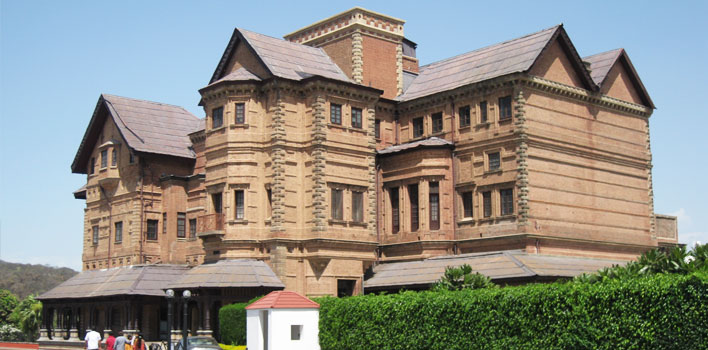
| | About | | One of India’s best public schools, located in the southeast of the Ana Sagar, has now been converted to the Circuit House. One can view the lake and the cenotaph and the shrine of Swami Dayanand, founder of the Arya Samaj movement in India.
Established in 1875 by Lord Mayo, the then Viceroy of India, it was exclusively for the education of the aristocracy and patterned on the British public school pattern. The main building is built of white unpolished marble, constructed in the Indo-saracenic style with a delicately proportioned clock tower, which is 127 ft in height
| | | The need for education | | Concerned at the rising ware of nationalism after the Indian Mutiny of 1857, the British realised that to strengthen their hold in India they, being just a handful, needed to widen their political and psychological management of India and the Indians. Thus they began to focus on education.
In this plan the princes who had remained silent spectators during the mutiny were identified as useful allies and a stabilising force- a force of over 350 main rulers in 1850's who comprised of over two thirds of India, for whom suitable educational institutions became relevant. The credit for originating the idea of Mayo College must be given to Colonel Walter who in his Bharatpur Agency Report in 1869 suggested the opinion of such an esteemed institution in order to ensure to the sons of the aristocracy of this country a liberal and enlightened education.
| | | In the words of | | Mayo College has been called the “Eton Of India” since its founding in 1870 AD. This is best expressed in the words of Lord Lytton, Viceroy of India on his visit to Mayo as the Chief Guest on the Annual Prize Giving day on 5th Dec. 1879. | |
|
|
|
|