|
About Pols of old city Changing times About Known for many reasons Attractions nearby
| | About | | Pol (pronounced "pole") is derived from the Sanskrit word pratoli meaning entrance to an enclosed area. It is a housing cluster comprising many families of a particular group, linked by caste, profession, or religion.
Pols are an integral part of old Ahmedabad. It nurtures in its folds, pages of history, a breath of harmony and a showcase of exquisite architecture. | | | Pols of old city | | The old city comprises many pols in which some of them are virtually small villages, traversed by narrow streets with community wells and chabutras for feeding birds. A Pol is a residential precinct with labyrinthine streets. Gates and secret passages protected these pols. A Pol would have only one, or at the most two entrances (apart from the secret ones), one main street with crooked lanes branching on either side, and walls and gates, which were barred at night. To some extent the house property in the Pol was held in common.
The Pols, of old Ahmedabad are residential units dating back to 1714 with intricately carved facades, which line the streets. Notable in the present day Pols are Mhurat Pol, Mandvi-ni-Pol, and Lakha Patel-ni-Pol.
Pols are densely populated and are like a maze with winding narrow lanes. Some of them contain old beautiful houses with carved wooden facades in traditional Gujarati architectural style.
| | | Changing times | | In earlier times chabutras were an important element of urban design and served to enhance the utilization of space judiciously and aesthetically in pols i.e. traditional urban settlements in Gujarat. Even now, old chabutras in villages and pols are located very prominently in the centre—the place where most community interactions and the celebration of festivals take place.
One can imagine that in the days when community life in the pols was much more vibrant than it is now, chabutras would have had great relevance. But now, as the human population is increasing in size, people are living in box shaped housing colonies in the newer parts of the town. Naturally, everything that was in vogue traditionally is now also going out of favour including chabutras.
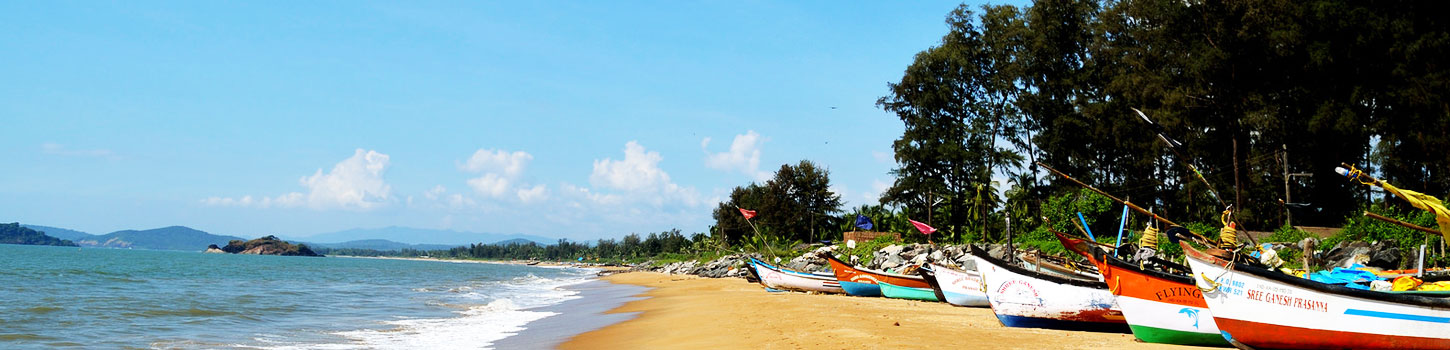
| | | About | | Porbander the birthplace of Mahatma Gandhi situated about 395 Kms from Ahmedabad is a picturesque seaport on the Arabian Sea, known as "White City" because of its white stone construction. Gandhiji's Kirti Mandir, Sudama Mandir, Bharat Mandir, Planetarium, Chowpati etc. are other places of interest. | | | Known for many reasons | | Porbander is Saurashtra's end and has a pleasant beach with beach villas. Other places of interests are Gandhiji's Kirti Mandir, Sudama Mandir, Bharat Mandir, Planetarium, Chowpati etc. Its ancient maritime activities - trade with Arabia, Africa and Persia have given way to a thriving industry of cement and chemical units
The family purchased the ancestral Gandhi house where Gandhi was born in the 18th century, and the Mahatma's father was the hereditary Dewan of Rajkot. The home of Gandhi's childhood is now open to visitors. Known by the name of Kirti Mandir, it contains a Gandhian library, his personal effects, a photo-exhibition on his life and times, a hall for spinning cotton thread and a prayer hall.
Porbander is also the birthplace of Gandhi's wife, Kasturba, was born. A chronological history on the life of the Mahatma is listed here.
It was then known as Sudamapuri in memory of Lord Krishna's friend, and there is a temple dedicated to Sudama here.
Among institutions worth paying a visit are the Arya Kanya Gurukul and Bharat Smriti. The planetarium nearby is a great attraction. Porbandar today is also an industrial town with cement and chemical units. | | | Attractions nearby | | Kirti Mandir: Mohanchand Karamchand Gandhi was born and lived here until he was twelve. It stands in the corner of a large courtyard in the west of town. A swastika on the floor in a small room marks the actual spot. It houses many collections of Gandhian memorabilia. There is also an exhibit of photographs, some with English captions, and a small bookshop.
Nehru Planetarium and Bharat Mandir: The planetarium has afternoon sessions in Gujarati. The large Bharat Mandir is in a garden opposite the planetarium.
Bileshwar: It is approximately 15 kms. east of Porbandar, with a Siva temple dating from the early 7th century. The temple has a multi-storey shikhara, which is more like a pyramid than a spire.
Barda Lion Sanctuary: Is about 14 kms. from Porbandar.
| |
|
|
|
|