|
About Architecture Location
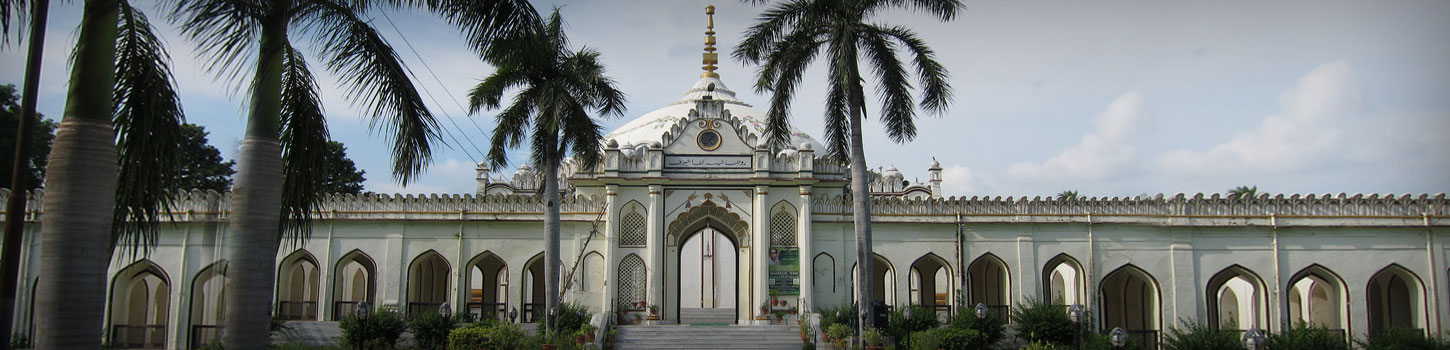
| | About | | The Sarkhej Roza is an elegant architectural creation remarkable for the use of pierced stone trellises and complete absence of arches. This monument houses the tombs of Saint Ahmed Khattu Baksh and also that of Emperor Mehmud Shah Beguda and his queen.
The peaceful atmosphere makes it an ideal retreat.
The suburb of Sarkhej, about 8 kms. southwest of Ahmedabad is noted for its elegant group of buildings, including the Mausoleum of Azam and Mu'assam, built in 1457 by the brothers who were responsible for Sarkhej's architecture. The architecture here is interesting because the style is almost purely Hindu, with little of the Saracenic influence so evident in Ahmedabad.
As you enter Sarkhej, you pass the Mausoleum of Mahmud Begara and, beside the tank and connected to his tomb, that of his queen, Rajabai. Also by the tank is the Tomb of Ahmad Khattu Ganj Buksh, a renowed Muslim saint and spiritual adviser to Ahmed Shah. He was the revered saint whose blessings were invoked while founding Ahmedabad. The palace, with pavilions and a harem, is also around the tank. The Dutch established a factory in Sarkhej in 1620 to process the indigo grown here.
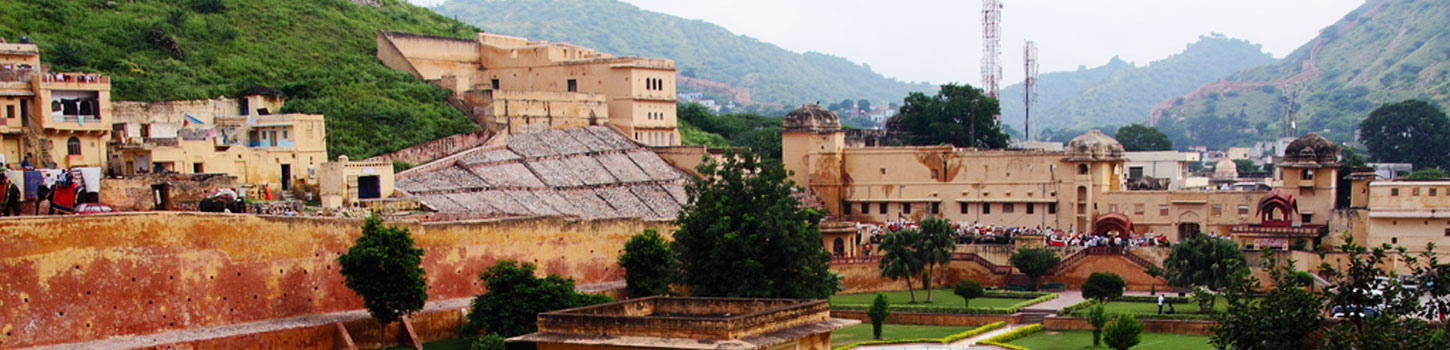
| | | Architecture | | The Roza of Sarkhej is very famous. It is on the bank of a small pond. The architecture of the Roza is so beautiful and the history of Roza is associated with Ahmedabad in such a way that any tourist visiting Ahmedabad would certainly like to visit the Roza. The main and big roza of Saint Ahmed Khatu Ganjbux is in the middle of the complex. There are beautiful carvings on the walls and tombs. Traceries have been carved out in marble stones. The sunlight reflections create beautiful pictures.
The buildings are remarkable for the complete absence of arches and the use of pierced stone trellises. From the archaeological point the most important group of buildings are the tombs and mosques with a palace around the tank of Sarkhej.
The mausoleum is roofed by a large central dome supported by a range of thirteen pillars on each side. The walls are broken up into two storeys and perforated stonework of great variety fills up the space above and below. A porch leads from the dargah into the court of the mosque which has neither the arched facade, nor the minars but a roof of uniform height which is supported by 120 pillars. The chamber housing the sultan Mahmud Begda has a balcony window which projects into the tank. The complex has also preserved the hand written copy of Kuran by Shaikh Ahmed Khattu.
| | | Location | | Sarkhej is about 8 kms. southwest of Ahmedabad | |
|
|
|
|