|
|
| |
| |
| About Chanderi
|
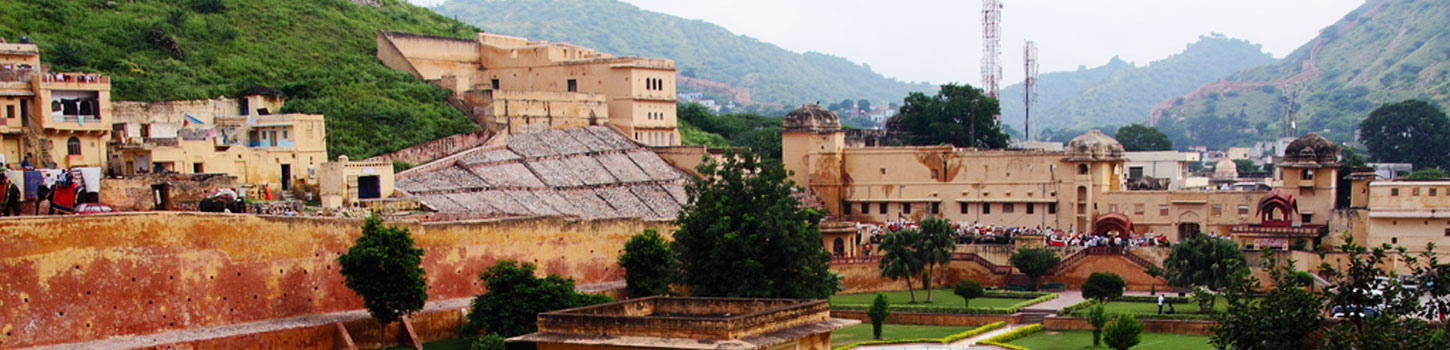
The town dominated the trade routes of Central India on the borders of Malwa and Bundelkhand and became an important military outpost. Today it is a well-preserved medieval town famed for the craft of sari weaving, with beautiful structures executed in the Bundelkhandi style.
It is said that Chanderi’s former prosperity depended on its strategic position as a sort of base camp for armies moving south from the time of the Sultans of Delhi.
However, the documented history of Chanderi goes back to the early 11th century, which is a kaleidoscope of movement and activity prompted, by its strategic location. On the borders of Malwa and Bundelkhand, the town dominated the trade routes of Central India, proximate to the arterial route to the ancient ports of Gujarat as well as to Malwa, Mewar, Central India and the Deccan. Consequently, Chanderi became an important military outpost, prized by rulers with power and repeatedly experienced the might of men who moulded the destiny of Hindustan.
Chanderi also came up as pilgrimage center with the coming up of Jain temples in the 9th and 10th century.
|
| Noted for Sarees
|
Chanderi is also famous for its brocades and muslins, especially for its handwoven Chanderi sarees. Master weavers use silk and cotton to create dazzling weaves, distinguished by beautiful borders. Great care is bestowed on the preparation of the thread. The weavers work in a dark underground room of which the walls are kept damp to prevent dust flying about.
Usually in subtle hues, the Chanderi sarees have sophistication hard to match. They generally have a rich gold border and two gold bands on the pallav. The more exclusive ones have gold checks with lotus roundels all over known as butis.
These sarees have fascinated the Indian lady since ages.
Though the craft from Chanderi is very famous, the architecture of the area is in no way less imposing. Here, the Bundela Rajputs and the Sultan of Malwa influence the architecture. In 1445 Mohammed Khilji built the Koshak Mahal on lines of Mandu architecture. The Jama Masjid , Shahzadi ka Rouza and Battisi Bandi were all built by the Sultans of Malwa in the 15th century.
|
| Places around
|
Chanderi is surrounded by hills, lakes and forests, and there are several monuments of Bundela Rajputs and Malwa Sultans. Some of the interesting monuments are: -
|
| The Fort
|
Dominating the skyline of this lovely old town is a vast Mughal fort. Its main gate is known as the "Khooni Darwaza".
|
| Koshak Mahal
|
The Koshak Mahal is a ruined Muslim palace, still being maintained. Today the town is chiefly known for its gold brocades and saris.
According to historical records, Koshak Mahal was ordered to be built by Mahmud Khilji of Malwa when he passed through Chanderi in 1445 AD. The original plan of the Khilji ruler was to construct a seven-storey palace though only two could be completed during his lifetime. The Mahal is divided into four equal parts and has architecture similar to Mandu.
|
| Badal Mahal Gate
|
A gate without a Mahal, constructed to commemorate some important victory.
|
| Jama Masjid
|
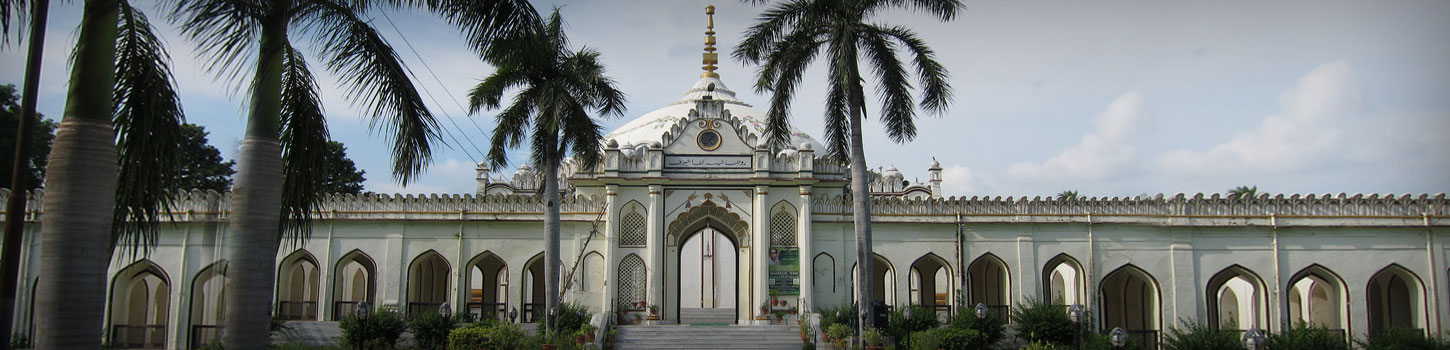
With imposing domes and long arcades, this is possibly the biggest mosque of the erstwhile Madhya Bharat.
|
| Shahzadi Ka Rouza
|
This monument is attributed to some unknown princess, which is decorated on the exterior with ornamental arches and a band of geometrical designs.
|
| Parameshwar Tal
|
Built by Bundela Rajput Kings, the picturesque Parameshwar tank is situated half a mile to the northwest of Chanderi town. It has a well-carved temple and cenotaphs of three Rajput Kings.
|
| Battisi Bavdi
|
Built by Sultan Ghiyasuddin Shah in 1485, the Battisi Bavdi derives its name from a flight of thirty-two steps.
|
| Buddhi (Old) Chanderi
|
A number of 9th and 10th century Jain temples dot this place attracting thousands of Jain pilgrims from all over the country.
|
| Thruvanji
|
26 km South-West of Chanderi is the old village of Thruvanji, with a number of Jain temples of the early medieval period.
Finally, if you have read the ancient love story of Nal and Damyanti, refresh your memories in Narwar, 122 kilometers from Gwalior, another picturesque place with regal fortresses and palaces of Rajput style.
|