|
Introduction The wild population Vegetation Transportation within
| | Introduction | | The Bandhavgarh National Park, located within the district of Sahdol in Madhya Pradesh is nestled among the Vindhya hills. It came into existence in 1968 when the Maharaja of Rewa handed over the area to the government for its formation.
These areas consisted primarily of Sal forests, which are the main tree-cover, found in the entire park along with Bamboo. It was finally declared a tiger reserve under Project Tiger in 1993. Once this became a protected area, the animal population took a drastic turn and began to flourish.
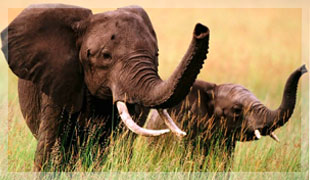
| | | The wild population | | The density of the tiger population here is the highest known in India and so aptly called White Tiger country. It is densely populated with other species like great gaur, or Indian bison, Sambar, Barking deer and Nilgai. This path is frequented by a lot of tigers and so check for the pugmarks. | | | Vegetation | | The Bandhavgarh national park is a jungle consisting mainly of sal trees and it is only in the slightly higher reaches that it changes to a more mixed vegetation of sali, saj, saja, dhobin etc. There are vast stretches of grasslands and bamboo forests. This northern region also consists of a series of rocky ridges with deep crevices cut by perennial streams. The central portion of the park, consisting of the original 106 square kilometers and the fort, is still the main sighting area. This area consists of 32 hills and also some marshy stretches divided by large grasslands and a few water bodies. | | | Transportation within | | Park entry times vary according to season, depending mainly on the time of sunrise and sunset. Traveling within the park is possible in three ways – the first is your own transport with the guide preferable, the second is the numerous authorised 4-wheel drives run by the locals, available from the hotels and rest houses, and the third, and probably the best option, is an elephant ride. These should be booked in advance to avoid disappointments. | |
|
|
|
|