|
|
|
|
| |
| |
| About Bandhavgarh Fort (164 km. from Jabalpur)
|
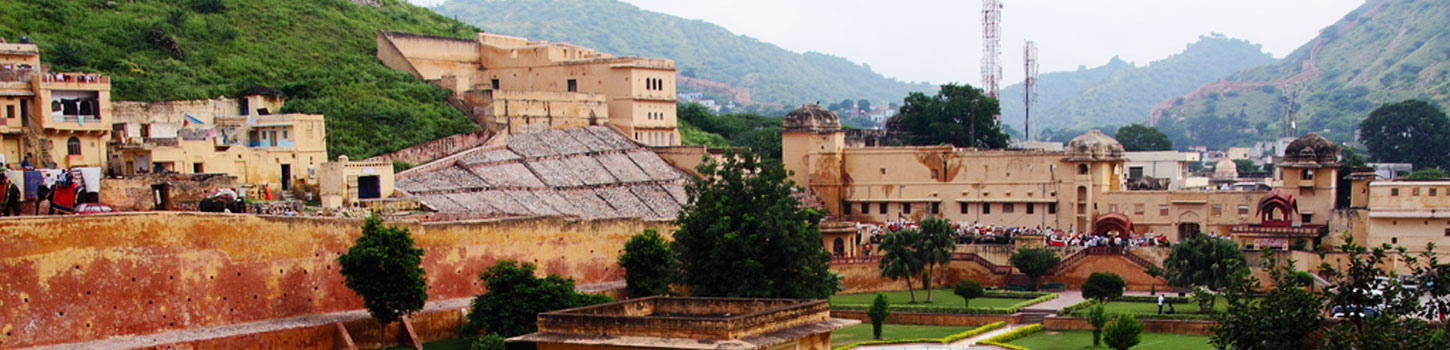
A fort, believed to be nearly two millennia old and inhabited till the beginning of this century, lies right in the middle of the wilderness on the highest point of Bandhavgarh Hill - the most captivating sight among the 32 hills that dot the unspoilt landscape.
Believed to be some 2000 years old, there are references of it in the ancient books, the Narad Panch-Ratna and the Shiva Purana.
Within the Bandhavgarh park is the ancient Bandhavgarh fort and caves. In the recent past, the Maharaja of Rewa last occupied the fort until it was designated as a National Park in 1968. The Bandhavgarh fort, enclosing an area of 560 acres, is an awesome sight. A visit to this fort is highly recommended for a person of any taste.
Surrounding the fort are a large number of smaller hills separated by gently sloping valleys, and caves with inscriptions in an indecipherable language.
|
| Legend
|
This is a fort dating back to the mythological era of Rama and Hanuman from the Hindu epic Ramayana. It is said that the two monkeys who created the setu, or bridge, between India and Lanka were also the architects of the Bandhavgarh fort. Rama and Hanuman used this fort on their journey back to their kingdom from Lanka, which was later handed over by Rama to his brother Lakshmana who came to be known as the Bandhavdhish - lord of the fort. Till recent years the Rewa rulers used this title for entry into the fort.
At the base of the fort is the monolithic statue of Lord Vishnu reclining on the seven-hooded snake, known as Shesh Saya. Statues of all the incarnations of Lord Vishnu are seen in the fort area. 32 man-made caves, having inscriptions, carvings and paintings, surround the fort. In front of the Vishnu statue is located a pool of spring water, said to be the source of the stream known as Charan Ganga. This is one of the three perennial streams flowing through the park.
There are two means of getting to the fort’s entrance. The first being a jeep track which is not recommended for the faint hearted. The second a footpath, rising at quite a sharp gradient, is most preferred. This footpath begins from the left of Shesh Saya.
You will come across many other temples on your way up. There are three temples, belonging to the 12th century. Kabir Das, the famous saint, also lived here in the 16th century. Once inside the fort, you will be amazed at the vastness of the grasslands within. Do keep a look out for the small population of black buck. The view, from the fort, of the surrounding area is just breathtaking!
|
| Information for tourists
|
A walk to each of the numerous lakes within the fort boundaries is a possibility but then keep in mind the exit timings. For those interested in archaeology and other related subjects, this is heaven on earth. The religious minded also have quite a few surprises within the fort.
|
|