India >> South Zone >> Karnataka >> Bangalore
About Bangalore
| Area: | 159.10 sq.kms
|
| Best Time to Visit: | October-February
|
| Climate: | The climate of Bangalore is moderate and pleasant. Summers are mild and winters are cool. The city experiences southwestern monsoon rains from June-August.
|
| Main Languages: | Kannada, Tamil, Telugu, Hindi, Urdu, Konkini and English.
|
| Population: | 5.2 million
|
| Temperature: | Summer - Max: 35 Min: 20 Winter - Max: 28 Min: 14
|
| Introduction: | Bangalore is the well known capital of Karnataka situated on southern Deccan plateau of Karnataka. City has been providing a shelter to more than 6 million people out of the estimated population of Karnataka. The heart of Karnataka, Bangalore is acknowledged worldwide for its
Information technology (IT sector) and consider as the ‘best place for doing business’ in the world. City has contributed a lot to India’s IT industry, and reckon as “Silicon Valley of India” which sounds similar to the Silicon Valley in California.
|


Other Attractions In & Around


|
Attara Kacheri
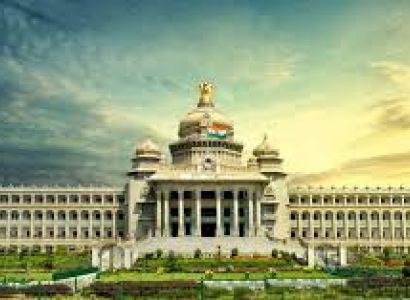
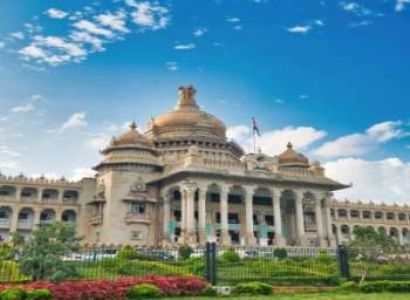
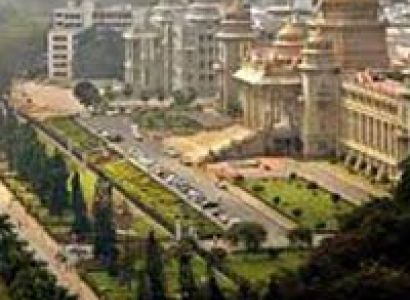
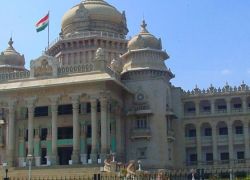
Directly opposite to the Vidhana Souda is the State High court. This magnificent building was constructed in 1867 in the Gothic Style of architecture.. The construction : The offices of the eighteen departments of Revenue and General Secretariat grew to such a size during Tipu's reign that it could not be contained in his palace. So, he constructed a new building and named it Attara Kacheri (meaning eighteen offices or departments) in Hindustani. This two storeyed building is built in European classical style and is now known as the High Court building. This deep red building is a perfect blend to the white columned Vidhana Soudha. Buildings nearby : Within walking distance are the Public Library, the Government Museum, the Visveswaraya Industrial and Technological Museum and the Venkatappa Art Gallery. TOP
|


|
Bal Bhavan
An imaginatively planned children amusement park and recreation center. The main attractions are the toy train, which chugs its way along a ¾ mile route in the Cubbon Park and Dolls museum. The park also contains a 20 million year old fossilized tree a gift from the Geological Survey of India.
The Bhavan has a boating facility, a small fair ground, with a children park, it also organizes hobby classes such as painting, arts and crafts. Children film shows and theatre performances are held at the Vijayaranga Theatre.. Full of excitement : The Bal Bhawan is full of surprises for the children. They can skin along a boat, trot up a pony ride. Chug around in a toy train, and dress up their mind in the theatre. This place is packed with entertainment.
It is a place where children can also see the Doll's museum, which has an interesting collection of dolls and toys from the entire world over.
A mini park has swings, horse rides and tree houses.
It is closed on Mondays and second Tuesdays. TOP
|


|
Bangalore Palace
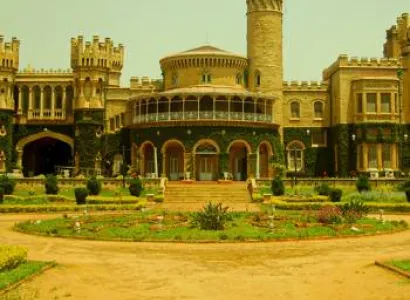
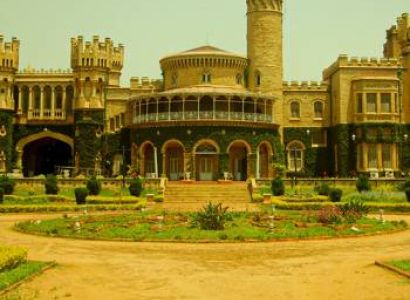
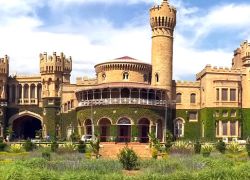
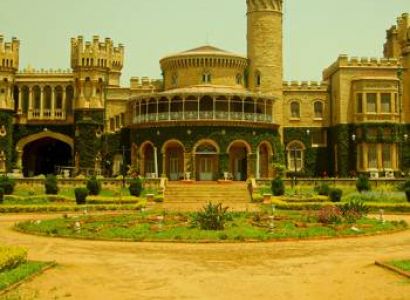
The Bangalore Palace was built in the year 1887 by the Wodeyar dynasty. It is built similar to medieval castles in Normandy and England. It's interiors boasts of elegant woodcarvings and Tudor -style architecture.. The fort : The Bangalore Fort was built by Kempe Gowda and expanded by Tippu Sultan. Within its walls is the well preserved 16th century Ganapathi Temple.
Inspired by the Windsor castle, this palace was built complete with Gothic windows, the foiled windows, battlements and turrets resembling the Daria Daulat Palace in Srirangapatanam. The architectural wonder : The structure has fortified towers and its interiors boast of elegant woodcarvings and Tudor-style architecture, complete with Gothic windows, battlements and turrets. This palace, is largely constructed of wood, and is famous for its carving and paintings. An exquisite door panel at the entrance leads to grand settings inside.
The construction of this 45,000 sq ft palace cost just over Rs 10 lakh. Reverend Garret originally owned the land, on which the palace rests today.
Located between Jayamahal and Sadashivanagar areas, the palace ground has become a venue for various exhibitions, concerts and cultural programs.
The palace is truly a case of an architectural splendour. Inspiration : The building stands in grandeur on palace grounds in the heart of the city. During a trip to England the King, Chamaraja Wodeyar was inspired by Windsor Castle in London, and along similar lines he built this palace in Tudor style.
The palace was earlier surrounded by beautiful gardens in the midst of a vast open area, which have reduced considerably today. TOP
|


|
Bull Temple
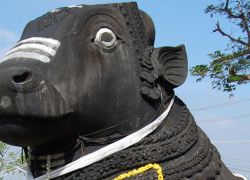
This is one of the oldest temples in Bangalore situated in basavanagudi dedicated to Nandi, the mount of Lord Shiva. Kempe Gowda built this temple in the 16th century. The magnificent Nandi, 15 feet tall and over 20 feet long has been carved out of single granite rock. Farmers offer the first groundnuts to the sacred bull.. Main attraction : In Nov/Dec every year, when the groundnuts have been harvested, a groundnut fair is held near the temple. The farmers offer the first groundnuts to the sacred bull.
Dodda Ganapati, a magnificent image of the Lord, is enshrined adjacent to the Bull temple.
The awesome monolithic deity in this temple, Nandi, draws devotees from all over the country. This 15 feet tall and over 20 feet long monolithic bull is supposed to be older than the temple housing it. It is believed that the source of the river Vishva Bharti originates at the feet of the statue. Main Features of the Temple : One can see in the shrine atop the hill a massive garlanded black and shiny Nandi (Shiva's mount, the bull) ensconced, which dates back to 1786. The size of the Nandi is overwhelming. At the back is a small Lingam shrine. Its modern Gopuram rises, gracefully and majestically. The underground "Sri-Gavi Gandadhareshwara Temple" is equally fascinating, where on every year on January 14th (Makara Sankranti) it is believed that a ray of light passes between the horn of a Nandi outside the temple and lights the idol kept inside. Three levels of excavations have been carried out in the cave.
One can see the black stone Hanuman. On the way to the Bull Temple there is one a temple dedicated to the Elephant God Ganesha. The Bull temple is a buzz with great activity during the Shivratri festival. The name : In Kannada, Basava means bull, which gives the name Basavanagudi to the locality. The temple has a giant bull carved out of a single boulder. It is a sculptural masterpiece. The story behind : It is a typical Dravidian style temple. The Nandi bull is revered for being the vahana (vehicle) of Shiva.
The popular story is that the temple was built to appease a vagrant bull, which persisted in devouring all the groundnuts grown in the surrounding fields despite the villagers' best efforts to keep it at bay. Hence, this handsome Bull Temple was built and the bull apparently took the hint and stayed away from the groundnuts. The thankful farmers continue to hold a Groundnut Fair (kadalekayi parishe) near the temple premises every year, to show their gratitude.
It is one of the places to visit in Bangalore. Kempe Gowda got constructed many temples dedicated to Anjaneya (God of Power), Vinayaka (God of good fortune), Nandi (Shiva's bull mount). TOP
|


|
Gandhi Bhavan
Located on Kumara Krupa Road it is a comprehensive picture gallery exhibiting the entire life of the great Mahatma Gandhi. The Gandhi Smarak Nidhi, housed in the Gandhi Bhavan seeks to propagate the life and teachings of Gandhiji.
The Gandhi Smarak Nidhi has organized a comprehensive picture gallery depicting Gandhiji’s life in pictures from early childhood to the last day. Photostat copies of letters written by him to various personalities of his day can also be seen.
Timings: 10.30 a.m. to 5.00 p.m. (Lunch Break 1.30 p.m. to 3.00 p.m.). Closed on Sundays/General Holidays.. Other institutions : It houses other Gandhian institutions like the Harijan Sewak Sangh, Gandhi Peace Foundation, Gandhi Picture Museum, Gandhi and National Literature Library and also a publication wing on Gandhian literature. Books on Gandhi and his work in both Kannada and English languages are sold here. The Bhavan organises regular lectures and seminars on Gandhian values in addition to those on various national movements. The Bhavan also conducts examinations for high school students in Kannada. Its library is a valuable resource centre for students doing research on Gandhi and the National Movement. Every year, special programmes are held here on October 2, to mark Gandhi Jayanthi.
Located adjacent to the Gandhi Bhavan is the Khadi Bhavan where Khadi and other village industry products are sold at reasonable prices. Venue for many : Gandhi Bhavan is a venue for many public meetings on Gandhian values throughout the year. The premise by itself is very serene; with placards bearing Gandhi's quotes hanging on its walls.
What began as the Gandhi Smaraka Nidhi (GSN) under the chairmanship of the then President, Dr Rajendra Prasad after the death of Mahatma Gandhi, aimed at spreading Gandhian thinking and ideals among youth.
As such Gandhi Bhavans spurted across the country in the 1950s. Today each State has a Gandhi Smaraka Nidhi centre. According to S K Mohan, Secretary of the Karnataka Gandhi Smaraka Nidhi, was set up with an aim to establish schools and leprosy centres all over the country. TOP
|


|
Gavi Gangadhareshwara Temple
Gavi Gangadhareshwara Temple was built way back in 16th century. Kempe Gowda who incepted city Bangalore had built the temple. Gavi Gangadhareshwara Temple stands amongst best architectural monuments in the world. Embroideries, sculpting; each and every thing at Gavi Gangadhareshwara Temple orates class of Indian culture, art and heritage. Kempe Gowda had built this temple as honor and gratitude.
The temple is carved inside a cave and devoted to Shiva. The whole statue of Lord Shiva is carved out of a monolithic stone. Granite pillars at Gavi Gangadhareshwara Temple are yet another thing to see! There are two discs as the representatives of sun and moon. Also, figure of Nandi (companion of Lord Shiva) has been carved adding to the grace of the place.
On 14th January that is Makar Sankanti, temple is endowed with a unique natural phenomenon. In the evening, sun rays pass through horns of Bull (Nandi) and fall on shivalinga, brightening the statue of Shiva. The credited must be given to architects of early times who had excellent knowledge of architecture and astronomy. . TOP
|


|
Hassan
About 194 kms. from Bangalore is the District Headquarters of Hassan. This is a convenient base to visit Shravanabelagola, Belur and Halebid.Hassan is a pleasant busy little town and the most convenient base to explore Belur (38km), Halebid (33km) and Sravanbelgola (48km). The District Museum here has a collection of sculpture, paintings, weapons, coins and inscriptions.
This fairly large city is located on the national highway linking Mangalore with Bangalore. Apart from being a centre of transport and commerce, the district is also known for its salubrious climate.
The place also offers a wide variety of accommodation and can be well accessed by road or rail to Bangalore, Mysore or Mangalore.
The temples of Halebid - like those of Belur - bear mute testimony to the rich cultural heritage of Karnataka. The Hoysaleshwara Temple, dating back to the 12th century is astounding because of its wealth of sculptural details.
The walls of the temple are covered with an endless variety of gods and goddesses, animals, birds and dancing girls. Yet no two facets of the temple are the same. This magnificent temple, guarded by the Nandi Bull was never completed.. Location : 38 kms. from Hassan. Places around : Halebedu: 27 kilometres northwest of Hassan and 17 kilometres to the east of Belur, are the scintillating temples of Halebedu, depicting the rich and cultural heritage of Karnataka. The Hoysaleshwara temple dates back to the 12th century. The walls depict carvings of various deities, animals and birds and dancing girls. This temple has remained incomplete even after years of rigorous labour.
Channarayapatna, Ramanathpur, Gorur and Manjarabad are the other interesting places around Hassan.
Hassan is well connected by road and rail to Bangalore, Mysore and Mangalore. Belur : This quaint hamlet is located on the Banks of the river Yagachi. It was once the capital of Hoysala Empire, and is unforgettable because of its exquisite temples. The Chennakeshava Temple is one of the finest examples of the Hoysala style of architecture. It took 103 years to complete and the reasons are evident.
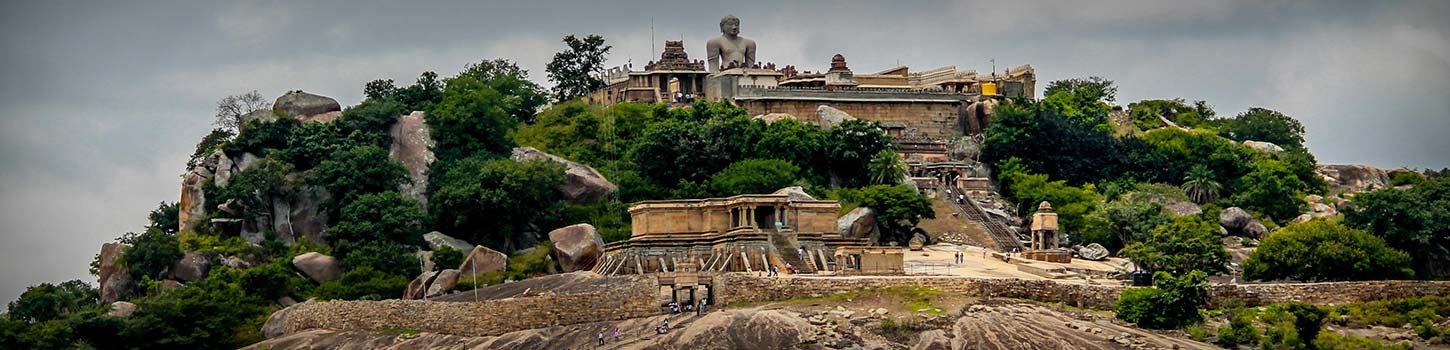
The facade of the temple is filled with no portion left blank. The Elephants, episodes from the epics, sensuous dancers are awe-inspiring in their intricate workmanship. Inside are hand-lathe-turned filigreed pillars. The Kappe Chennigaraya Temple and the smaller shrines are worth a visit. Places to See : Shravanabelagola: 51 kms South-East of Hassan, this is one of the most important Jain pilgrim centres. It proudly displays a 17 metres high monolith of Lord Bahubali (Lord Gomateshwara) and is believed to be the world tallest monolithic statue. Thousands of devotees congregate here to perform the Mahamastakabhisheka - a spectacular ceremony held once in 12 years. The naked statue is symbolic of the renunciation of worldly possessions.
This colossus is ceremonially anointed with milk, curds, ghee, saffron and gold coins. The last Mahamastakabhisheka was held in December 1993. The next Mahamastakabhisheka will be held in 2005 A.D.
Shravanabelagola is 150 kms from Bangalore. TOP
|


|
Karnataka Folk Museum
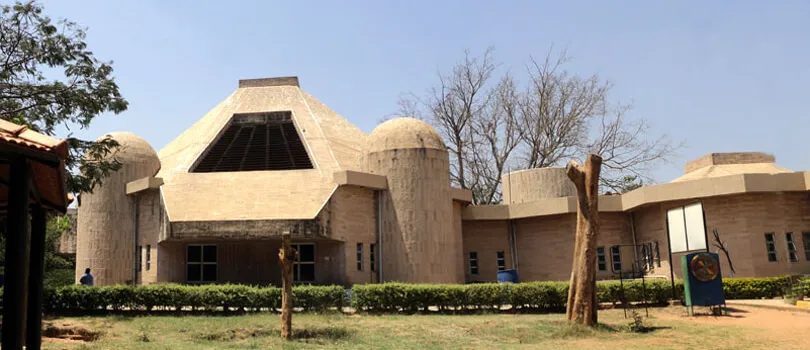
Located on the Kumara Park West, Sheshadripuram, this folk Museum is managed by Karnataka Janapada Trust and has an impressive collection of folk music and videotapes of folk dances.
Many unique masks, colourful artifacts and costumes have been displayed.
Timings: 10.30 a.m. -5.00 p.m.
The Janapada Loka or the folk museum is situated about 53 kms from Bangalore on the Bangalore-Mysore highway. It is a mere 3 kms from Ramanagaram.
This little known museum, devoted to covering Karnataka’s diverse folk life, is situated on 15 acres of land and the entire area is covered with trees. As a result even though there is much ground to be covered, all the paths leading to the different buildings are shady.
The artifacts are housed in three little buildings - Lokamahal, Lokamatha Mandira and Chitrakuteera.
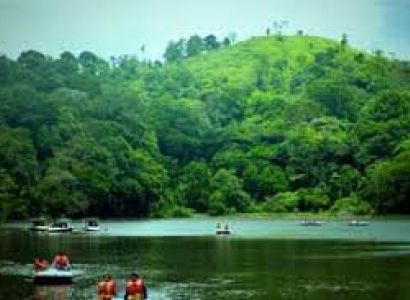
The Lokamahal is the most comprehensive, housing a number of interesting folk puppets, utensils, instruments, weapons and masks. While a variety of utensils, baskets, and earthen jars used to store grain and pickles are displayed in the Lokamatha Mandira, the Chitrakuteera has a number of photographs covering different aspects of folk life.. Information for tourists : Adjacent to the museum is a Kamat Yatrinivas. So one does not have to worry about taking food along with. Tasty Indian food is served here and there’s plenty of delicious sugarcane juice to beat the heat. Boating : Most exciting for kids is the fact that there is a small lake at the rear end of the museum where there is a pedal boat. The lake is used to show how water is drawn from it. The vast open land and plenty of trees all around make it an ideal outing for kids and grown-ups alike.
The museum is open Wednesday to Monday from 9 a.m. to 5:30 p.m. Exquisite Chariot : One of the highlights is a huge exquisitely carved temple chariot, which was extensively damaged in a fire. Besides this there are ancient carvings made from different types of stone.
The museum has a wonderful amphitheatre. There is also a recording studio with state of the art equipment. A college on folk life is also situated on the premises of the museum. TOP
|


|
Mysore:
The capital of the Wodeyars (Mysore) is about 140 kms from Bangalore. Mysore is famous for Sandalwood and Silk. Countless lights decorate the city palace, which is compared with the Bunkingham palace in England. It also has a number of ancient Hindu temples and a few monuments built by the British.
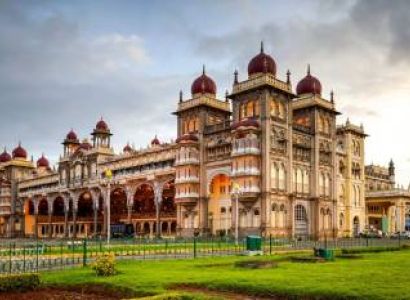
Mysore has changed very little since its days as the princely city that several royal families made their headquarters and were proud to call 'home'. The Maharajah's Palace has an ancient appearance. The palace is a surprisingly recent building, being constructed in 1911 to replace one that was partially burnt down. Illuminated by countless tiny lights on Sunday nights, the place is an outstanding piece of architecture.. Much to offer : The historic city of Mysore offers to the traveler a number of monuments belonging to Hyder Ali and Tipu Sultan, the erstwhile rulers of the place.
A beautiful city of charm and poise, Mysore is a cultural magnet for the best in South Indian art and music. Countless lights decorate the city palace during the Divali festival here and it is one of the best presevred in all India.
The musical fountain here is the major attraction for the visitors. The St. Philomena's Church and the Mysore Dussera are added attraction to this place
Mysore, aptly called the 'Sandalwood city', was once the residence of the Maharajas of Mysore. It is situated at the Northwestern base of the Chamundi Hill. With its numerous parks and palaces, it still retains the aura of grandeur and royalty.
The best time to visit Mysore is during the Dasara festival (September-October), when the city wears a bright look for 10 days, bathed in light, joy and color.
The Royal procession on the 10th day of the festival is a reminder of the pomp and splendour of a bygone era. For the locals, Dasara is both a royal as well as a religious festival. The city is also known for its sandalwood oil, incense and innumerable craft centres dealing in a wide range of ivory, sandalwood, rosewood, teak carvings and furniture. This imperial city was the capital of the Wodeyars. Also known as the City of Palaces, Mysore retains a quaint charm that never fails to enchant.
Apart from the palace you can see the Government sandalwood and silk factory, Mysore zoo, Lalitha Mahal Palace, Chamundi Hills, Krishnarajasagar dam, Srirangapattana, Ranganathittu Bird Sanctuary and many more. TOP
|


|
Nrityagram Dance Village
This is the winner of the best "Rural Architecture Award", designed by Gerard da Cunha winner of the "Architect of the Year.
Bangalore is a city encouraging the arts too. Nrityagram is a standing example of it. This village was established in the early 1990's to revive Indian classical dance under the auspices of well-known Odissi dancer the late Protima Gauri, it offers the long-term study of classical dance and its allied subjects, such as choreography, philosophy, music, mythology and painting. The village, designed by award winning Goan architect Gerard Da Cunha, welcomes visitors and accommodates guests. Her student Surupa Sen now runs it.
Nrityagram conducts the Vasantha Habba or the festival of spring. Leading musicians and dancers from all over the country participate. This brings the students as well as the connoisseurs and common man in touch with the best musical talents in the country. To get the feel of this rustic Indian charm you can also stay here overnight.. TOP
|


|
St. Andrew^s Kirk
belongs to the Presbyterian background from the Church of Scotland, nurtured by the Calvinistic division of the early Protestant Church formed after the reformation period. It is primarily and in totally so, because of the fact that the early worshippers responsible for bringing up of this Church were mostly 19th century Scottish regiment soldiers and a few Scot civilians whose faith in the Presbyterian background was the basis for establishing the same Bangalore city.
St. Andrew Kirk's walls are adorned with polished brass plaques. It contains the plaques of John Cook who was the principal of Central College in Bangalore in 1915.. The objective : The renaissance of social activity or the outreach work of the Church bloomed into execution with the formation of a registered Socio-economic Development Society in 1976 under the thoughtful leadership of the then Presbyter-in-Charge Rev. S. A. Salins.
The prime objective of the Society was to serve the poor in the slum and to improve their socio-economic conditions. Location : It is situated on Cubbon Road, Bangalore. The Formation : The 'bread of leaven' for the Church was a small prayer group which met every Sunday for worship in a house near the Cantonment area, later on renting out a tent under the leadership of a perhaps less sophisticated Chaplain that time. Private civilians, army officers, soldiers and their family members with Rev. S. Wright at the forefront, approached the Scottish Church authorities to grant permission to build a Church of their own. The foundation was laid on 22nd November 1864, and has turned into the beautiful monumental structure of St. Andrew's Church.
It was a Westernised Church with Scottish Customs, classical Scottish square dancing, western music, celebrating St. Andrew's Day, Burns' right and so on. It was generally known as St. Andrew's "Kirk". Because of the frequent Regimental transfers and the Scots in civilian positions returning to their homeland after their turn of office, the congregation in the beginning was of a floating nature.
The original congregation members were outright foreigners comprising mainly regiment soldiers and officers. There are many brass plaques on the walls inside the Church that are in memory of those soldiers and people.
After the complete independence of the Indian Church by the formation of the Church of South India (CSI) in 1947, as the influx of regimental soldiers receded with permanent transfers, the congregation members worshipping in the Church were eager to find their identify with the Indian main stream of the post independence Churches by affiliating themselves with the Church of South India. Accordingly, as recorded in the minutes dated 1st February 1959 of the Kirk Session of St. Andrew's Church, it is found that Bishop Sargant of Mysore visited the Kirk Session in December 1956 and had a dialogue with the members regarding the merger of the Church with the CSI, with the assurance that there would be no change in the form of worship and traditions and eventually St. Andrew's Church joined the CSI in September 1959. Rev. P.J. Child, the presbyter, then known as the 'moderator' of the Church, was in charge of the congregation. TOP
|


|
St. Marks Cathedral
St. Marks Cathedral was founded in 1808 and was completed in 1812. Bishop of Calcutta consecrated this Cathedral in 1816.
This Cathedral is a beautiful colonial structure having a graceful dome over a semicircular chancel that transports the visitor almost immediately into tranquility. Roman archers along the walls are the features of the Cathedral.
It has one of the best-maintained external bells and is also amongst the youngest. This cathedral was modeled along the lines of the 17th -century St Pauls Cathedral. The entrance has elaborate woodwork and ornate carvings coupled with majestically done ceilings and domes. The monument was enlarged in 1901 and rebuilt in 1927. The new structure is known for its stained glass work.. Location : It is on the Mahatma Gandhi Road. TOP
|


|
St. Marys Basilica
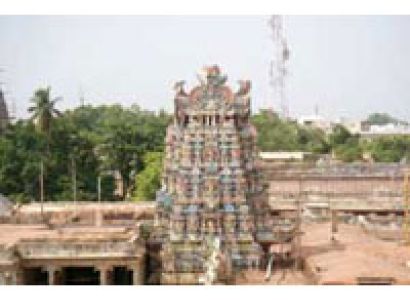
A small chapel was the original structure built by Abbe Dubois, French missionary. This chapel is right opposite the Russel Market Square. The interior is remarkable, with stained glass windows and multiple columns with a rich Corinthian capital supporting the stately arches. Many devotees dressed in orange, gather here to celebrate St Mary's Feast in September every year. A papal order from Pope John Paul VI gave the church the status of a Basilica in 1973. If you seek the Mother Mary's blessings then visit the church on Saturday. The present structure was built in 1875-1882.
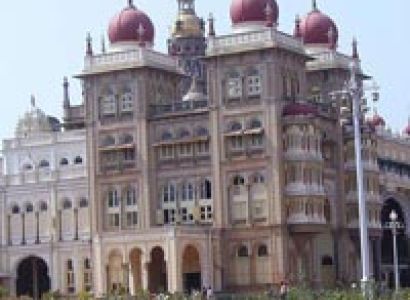
. Information for tourists : St Mary's Feast, celebrated every September, attracts a multitude of devotees clad in orange clothes. It is a grand gothic style basilica, with an impressive tower and typically gothic pointed arches. Location : This Church is situated opposite the Russel Market Square, Shivajinagar. Fascinating information : Once, it was the custom to parade the image of the Virgin Mary through the city streets in the performance of a religious ritual. But unfortunately, on one occasion a radical sect decided to stone the procession and destroy the statue at the same time. But instead, oddly enough, the majority of those who indulged in this nefarious activity were soon stricken with cholera, most of them dying from the disease.
At some stage later, the church itself was attacked and burnt to the ground; everything but the wooden statue being destroyed in the blaze. The iron remains today situated in a glass case in the Basilica; an object of deep veneration.
An additional, but larger statue of the Virgin Mother stands in a small chapel to the side of the main entrance, where this figure is given homage by all creeds, Christian, Muslim, Hindu, Jain and Buddhist.
It was decided at one stage to have the statue removed to another section of the church but this action became impossible. The figure could not be physically removed from its place of rest and remains still in its original setting.
Thus, the church, founded by the Abbe Dubois was relegated to the distinction of a minor Basilica following these miraculous events. TOP
|


|
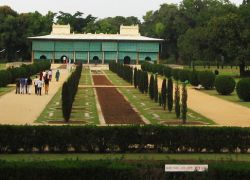
Tipus Palace
The palace was first a mud-brick defence built by Kempegowda in 1537. Hyder Ali and his son Tipu Sultan later rebuilt it 1791.The two-storied structure (replica of the a Daria Daulat in Srirangapat- nam) served as Tipu's summer retreat, which he endearingly called lask-e-jannat (the envy of heaven). An inscription on the wooden screen describes the palace as the 'abode of happiness', almost mocking the ruins that surround it. Though the palace still has elegant teak pillars, most of the painted decorations have been destroyed and it is in very bad shape. Structure : It is a two-storeyed ornate wooden structure with pillars, arches and balconies flanked by gardens on either sides leading to the palace. The entire structure is built in Teak wood. An inscription on the wooden screen describes the palace as the "Abode of Happiness". What ever remains of the fort, reminds of the struggle by Tipu against the British.
The eastern and western projecting balconies of the upper floor contained the seat of state from where Tipu conducted affairs of the state.
The summer palace of Tipu Sultan was built in Bangalore. This palace is beautifully decorated with floral motifs on the walls and ceilings.
After the death of Tipu, the British used this building as their secretariat till 1867. In the busy market place of the city are the remnants of this fort built by Tipu. Location : It is a five minute walk south-west of the Bangalore city market. TOP

|


|
Visveswaraya Industrial And Technological Museum
Visveswaraya Industrial and Technological Museum is named after M. Visveswararaya the Dewan of Mysore, who was responsible for advancing the technology in the state. One of the specialties of the museum is the mobile science exhibition, which tours the state the whole year round. It contains diverse information on the contribution of science and technology to human welfare and industrial development.
Many exhibitions are held there on electronics, motor power. Many seminars, demonstration and film shows are organised periodically on scientific subjects.. Location : It is located on Kasturba Road, Bangalore Fascinating for science lovers : One needs to browse through this building to get an idea of working models of different machines. It displays an airplane and steam engine in its compound. There is a comprehensive range of exhibits on electronics, motor power and the uses and properties of wood and metal. Visitors who have a deep interest in popular science can work on some of the exhibits here. The highlight of the museum are the five galleries: Engine hall, Electronic Technology Gallery, Kimbe Paper Metals Gallery, Popular Science Gallery and Childrens' Science Gallery. TOP
|


|


Related Cities

|