India >> North Zone >> Himachal Pradesh >> Dharamshala
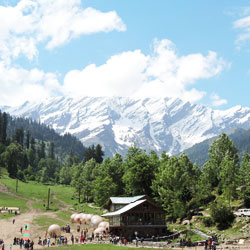
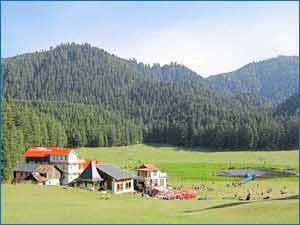
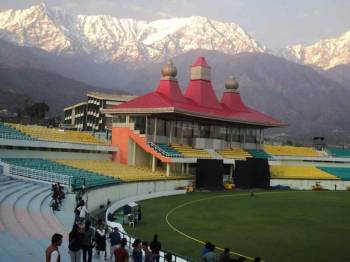
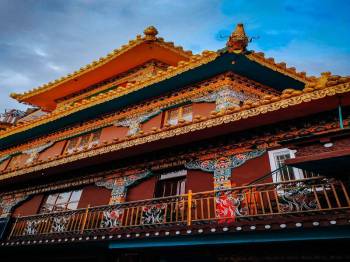
About Dharamshala Dharamshala, popularly known as the Scotland of India, stands on a spur of the Dhauladhar range amidst magnificient deodar and pine forests. It is the district headquarters of Kangra district and is also known as "The Little Lhasa in India". It has every thing for a perfect holiday and is full of life and peace. The headquarters of His Holiness the Dalai Lama are here.
| Area: | 28.81 sq. km
|
| Best Time to Visit: | April to June and September to November.
|
| Main Languages: | Hindi, Punjabi, English and Pahari
|
| Population: | 8,600
|
| Temperature: | Summer - Max: 33oC Min. 22oC Winter - Max: 15oC Min. 0oC
|


Other Attractions In & Around


|
Bhagsunag
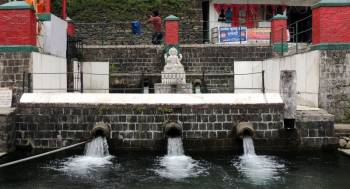
Bhagsunag-which is referred firstly by the kings name (Raja Bhagsu) and then by the Lords name Nag is believed to be historical. It is about 11 kms. from Lower Dharamshala and we find an old temple and a fresh water spring. The temple of Bhagsu is devoted to Lord Shiva.
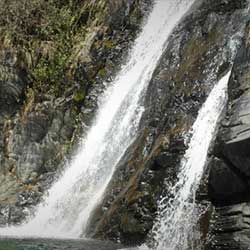
A 2 kilometre away from Mcleod Ganj connected with a motorable road, is the ancient temple of Bhagsu Nag, who once lived on the Bhagsu Hill below which the present day temple and fresh water spring are located.. Location : 11 kms. from Lower Dharamshala Interesting places around : Surrounding the temple are hills and forests that are well worth exploring. There is a small but lovely waterfall close to the temple much frequented by the Tibetans and the westerners for picnic. Above the waterfall, the mountainside has a lot of slate quarries. Legend : Legend has it that during the rule of Raja Bhagsu there was once a severe drought in his capital. The local chiefs requested the king to do something or else the people would leave his kingdom. The king promised to do something for this and set out in search of water. After about 3 days of searching he reached the Sacred Nag Dal (Lake).
This lake was very big and had a lot of water. The king used trickery to fill the water of the lake into a small vessel. He decided to spend the night there, as it had grown dark. Later in the evening, Nag - the Lord of Snakes happened to pass by the lake and was shocked to find the lake empty. Following the footmarks he reached the place where Raja Bhagsu was resting. He Challenged Bhagsu for a duel and defeated him in the ensuing fight. The moment the vessel containing the sacred water fell on the ground, water started flowing from there. Badly injured Raja Bhagsu prayed to Nag and so moved by his prayers Nag granted him a boon that this place shall henceforth be referred firstly by the kings name and then by the Lords name and he shall become popular. Henceforth, this place came to be known as "BhagsuNag". TOP
|


|
Chinmaya Tapovan
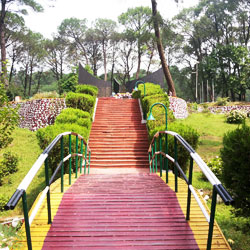
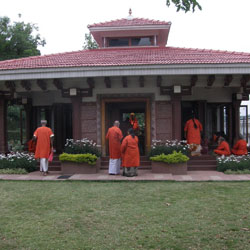
Just 10-km from the town is the tranquil ashram complex set up by the great exponent of the Gita--Swami Chinmayananda. Situated on the banks of Bindu Saras, the ashram includes a 9m high image of Hanuman, a Ram temple, a meditation hall, a school and a health and recreation center.. Location : 10-km from Dharamshala Nearby attractions : Just a few hundred yards from this ashram complex is a thick cover of pine trees. This mini forest can be a very good picnic spot with absolutely no noise around. TOP
|


|
Kunal Patheri
These are the rock temples from which the place derives its name. Kunal Patheri is a 3 kms. flat walk from Kotwali Bazaar. All around it is a sprawling tea estate. Located in the lap of the Dhauladhar ranges, this temple is dedicated to Goddess Kapaleshwari.. Attractions : There are also a lot of tea gardens near this temple, which make for some very good photography. This place is also known as "The Sunset Point" as during that time you can also see the Gaggal Airport, Pong Reservoir and the entire Kangra Valley. There are also a few tea stalls here. Legend : It has been mentioned in the Shiv Maha Puran that Daksh Prajapati, the Father of Sati, had once organized a Yajna. He did not invite Lord Shiva to this Yajna. Sati could not bear the insult to Lord Shiva and in retaliation jumped into the fire of the Yajna. Lord Shiva was shocked to learn about the death of Sati. He started roaming in a state of madness with the body of Sati on his back. On seeing this Lord Vishnu used the Sudarshan Chakra to destroy Sati's body and a part of her skull is believed to have fallen here. Since then the local people have been worshipping this place as a sacred one and they call this place as “Kunal Patheri”. Location : 3 kms. from Kotwali Bazaar, Dharamshala TOP
|


|
Masroor
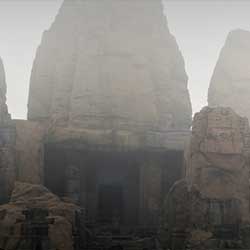
About 15 kms. south of Kangra, this is the only shrine carved out of live rock in North India. Images of Ram, Sita, and Lakshman can be found in the sanctum of the main temple. Perhaps, Lord Shiva was originally worshipped here as indicated by the presence of the figures of Lord Shiva on the top of the entrance.. Location : 15 kms. south of Kangra The Temples : Masroor, the Ellora of Himachal Pradesh is known for its monolithic temples. There are fifteen richly carved monolithic rock temples sculpted in the splendid style of the Kailash temple at Ellora. These temples date back to the 8th century. With rich ornamentation executed over staggering proportions, this temple brings to mind the remark that Indian temple builders "conceived like giants and had the finish of jewelers".
The remoteness and inaccessibility of the temples have protected them from the ravages of time and destruction at the hands of Muslim invaders, while their monolithic character has saved them from devastation during the major earthquake of 1905, which destroyed most buildings in Kangra. Architecture : Standing 800 m above sea level, these temples command a magnificent view over a beautiful, well-watered and fertile tract of land.
The monument is a complex of shrines said to contain more than 15 Shikhara type temples; of these, only about 10 are extant. In the centre of the complex stands the principal and most elaborately carved shrine - the Thakurdwara - enshrining black stone images of Ram, Lakshman and Sita facing east. This shrine faces a little to the northeast while the two subsidiary shrines of decreasing size face a slightly outer angle. A similar arrangement of these secondary shrines appears to have formed the back of the monument, so that the principal temple stood in the centre of eight smaller ones, the whole complex hewn out of a more or less rectangular mass of rock.
The principal shrine consists of a square Garbhagriha (sanctum sanctorum), an Antarala (veranda) and a rectangular Mandapa (pavilion). The magnificent doorway to the Garbhagriha has five Shakhas (vines) ornamented with graceful and dainty foliated patterns, bands of Diamonds and figural sculptures. The tall pilasters of the Antarala and the Mukhamandapa are ornately embellished with Diamonds, Ardha-padma (halves of lotus flowers), a pair of Ghattapallava (earthen pot and leaves) and other decorative motifs.
Above the cells of the main shrine, and almost level with the now lost roof of the Mandapa, the rock is cut as a flat roof, broken only by the main and the other smaller Shikharas (spires), which mark the sanctum of each of the eight smaller shrines. There is a marked difference between the heights of the main pinnacle and those of the surrounding shrines. From each side of the Mandapa a staircase ascends to the roof terrace. From here the view of the mountains is glorious.
The complex, now partially dilapidated, is made of sandstone of varying fineness and strength. In some places the carvings are hard and well preserved and give an impression that they are a later production while in other places the sculptures are so weathered that only the faintest outlines are visible. But, the actual doorway of the shrine is in a small recess. The ornamentation and technique of the pillars, door and lintels is exceedingly beautiful.
It seems that there were four shrines at the four corners of the complex. Only one of them is better preserved. Two pillars support the roof of the veranda. The shikhara of this possesses Chaitya-style window carvings. Although such temples exist in various parts of the country, the monuments at Masroor stand out as one of the finest examples of rock cut architecture. TOP
|


|
Nurpur
66 kms. from Dharamshala and 24 kms. from Pathankot, Nurpur is famous for an old Fort and a Temple of Brij Raj dedicated to Lord Krishna. Nurpur is named after the Mughal Empress Nur Jehan. The Nurpur Fort is now in its ruins, but still has some finely carved reliefs. Nurpur is also famous for its fine Pashmina shawls and textiles.
It was earlier known as Dhameri. It achieved its peak during the rule of Raja Basu (1580-1613). The remains of his impressive fort can still be seen. Raja Basu's son Suraj Mal rose in rebellion against the Mughal Empreror Jehangir. After the uprising was quelled, the town of Dhameri, was renamed Nurpur after Jehangir's beautiful wife, Nur Jehan.. Location : 66-km from Dharamshala and 24-km from Pathankot Tourist Information : There is a PWD rest house for the convenient stay of tourists. Legent : Jehangir (son of Akbar and Jodha bai) eye fell on the beautiful wife of Sher Afghan, the lovely Mehrun-Nissa. Sher Afghan was sent to wars and after his death Jehangir spent years to win the love of the winsome widow. She finally relented and the happy monarch named her, first, Nur Mahal, "Light of the Palace" and later Nur Jehan, "Light of the World".
The lovely town of Nurpur was named not only after her, following the conquest of the area, but also to reflect the glory of his favourite queen. TOP
|


|
Triund
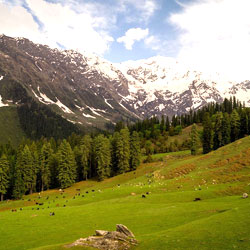
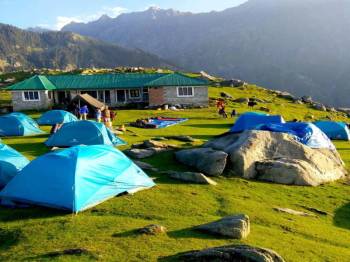
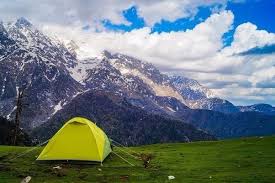
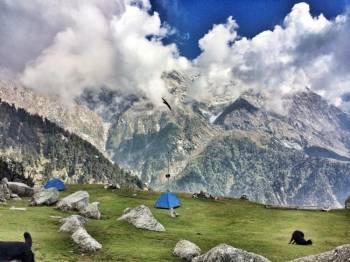
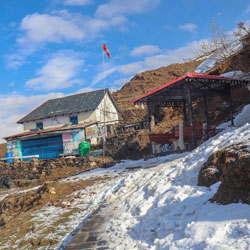
Triund is on the foothills of Dhauladhar range and is 17 kms. from Dharamshala. It is at a height of 2827m. The breathtaking views of the mountains and the valleys make Triund an ideal picnic and trekking spot. It is one of the most beautiful and must see spots around Dharamshala.
Triund is a 9 km trek from Mcleod Ganj passing through Dharamkot and Rakkar Villages via Gulu Devi, a small Temple and water point. The snowline starts from Ilaqa, 5 kms from Triund. A ropeway is being installed from Dharamshala to Triund.
Accommodation is available at the forest rest house at Triund. Being a trekking spot it is a must to carry your own food and water.. Location : 17 kms. from Dharamshala TOP
|


|


Related Cities

|