India >> West Zone >> Madhya Pradesh >> Gwalior


|
Gwalior Fort
Introduction:
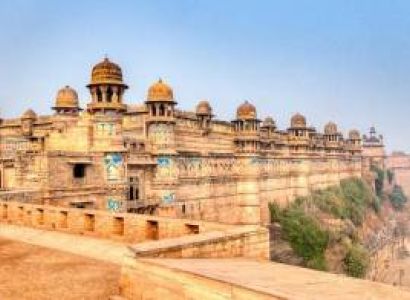
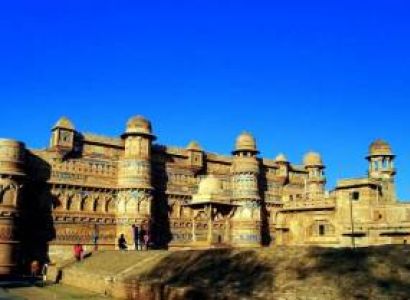
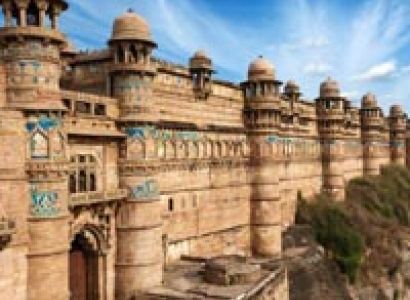
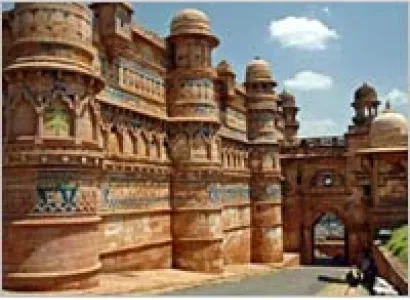
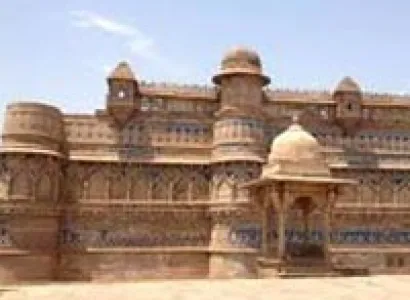
Gwalior in Madhya Pradesh is a splendid Tourist destination. Here you will find the magnificent Gwalior Fort that has stood the test of time. The fort of Gwalior is replete with architectural engravings that deserve special mention.
History of the Gwalior Fort:
The history of the Gwalior Fort dates back to over 1000 years when the sage Gwalipa came to know of the disease of the king Suraj Sen. He was infected by the terrible disease of Leprosy, which was considered as a deadly disease and there was no medicine that would cure the disease. Only sinners were supposed to get contaminated with this disease.
So, the King was very upset with his condition and the sage came to his kingdom. He gave some magic water to the king, who drank it and felt relieved. He was miraculously cured of his fatal sickness. The king was so impressed with the hermit that he changed the name of his country according to the Sage's name. It was hermit Gwalipa, so the country was named as Gwalior.
The hermit renamed the king as Suraj Pal, and also prophesized that if his descendants retained the sir name Pal given by the hermit they would prosper and never loose the kingdom. So, the descendants of the king ruled the country for a long time and afterwards when one of his descendants suddenly changed the sir name, he lost his hereditary power.
In the year 1938, the Tomar Dynasty was in power and suddenly Sikander Lodi attacked the kingdom. The fort had to be surrendered and so, Gwalior Fort went into the hands of the Mughals. The fort changed from hand to hand and it was here that Tantia Tope was overpowered and Rani of Jhansi executed in confrontation with the British.
Description of the Gwalior Fort:
The
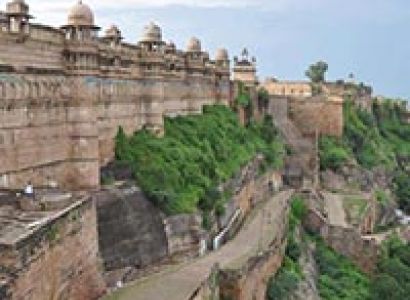
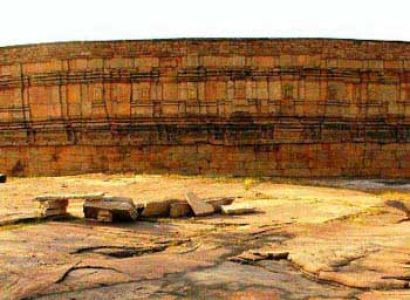
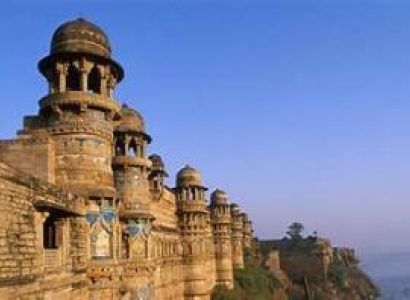
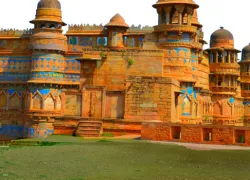
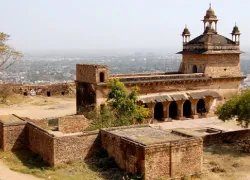
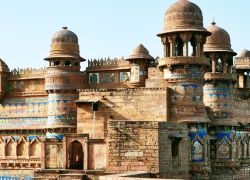
Gwalior Fort is located in Gopachal, and is above 100meters from the original town of Gwalior. The Fort is encircled by wall that is nearly 10 meters high, and in few places the edge is so stiff that it is impossible to walk or climb over it. The Mughal Emperor Babur described this fort as the "Pearl among the Fortresses in India". Since there are numerous water reserves in this plateau, the fort has an adequate drainage system..
|


|
Man Singh Palace
Introduction:
Gwalior , one of the important historical destinations of the country has excuisite palaces and Man Singh Palace, Gwalior is one of them to really watch out for. It is housed within the Gwalior fort . The fort spreads out over an area of 3kms.The Gwalior fort encloses six palaces,numerous water tanks and three temples.The Fort has been witness to many ups and downs and has gone from one ruler to another. Initially ruled by the Tomars it passed to the Mughals, then the Marathas, the British and at last the Scindhias.
Description:
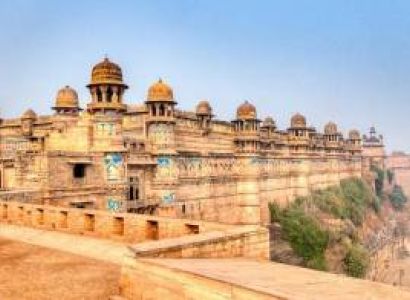
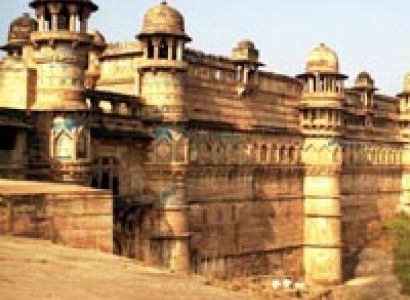
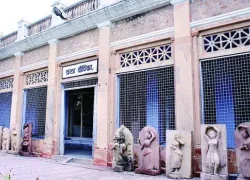
Man Singh Palace, Gwalior is regarded as one of the best tourist attractions because of its aura. It is a delightful whimsical building and is also known as the Painted Palace or the Chit Mandir. The Palace has got this name because of the painted and tiled decoration of elephants, peacocks and ducks. Painted Blue with hints of green and gold they look really captivating.There is a small museum next to the Man Singh Palace, Madhya Pradesh which has a good collection of sculptures and carvings from across the fort..
|


|
Usha Kiran Palace
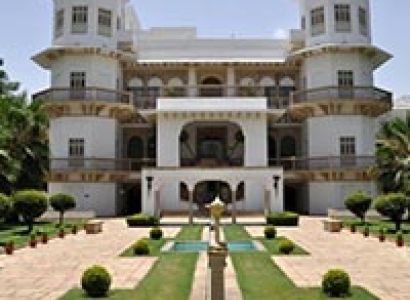
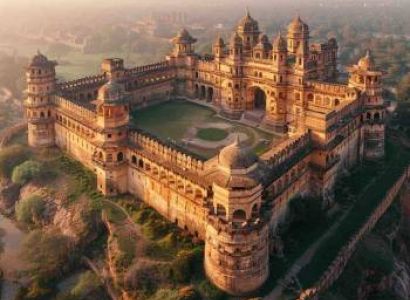
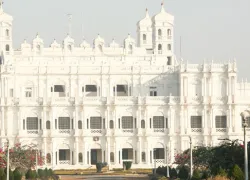
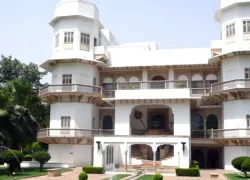
Maharaja Jiwaji Rao Scindia, built a Palace as a guest house for his European friends and visitors. The new Palace was adjoining the Jai Vilas Palace and was named after his daughter USHA RAJE. The architecture of the palace is in the spirit of Gwalior 18 -19th century period. It has Jali work on the windows, mighty pillars, stone carvings and is spread over an area of approx 100 acres. The rooms are well furnished with old furniture - beautiful and authentic..
|


|


Related Cities

|