India >> South Zone >> Kerala >> Thiruvananthapuram


|
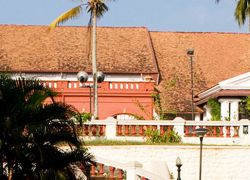
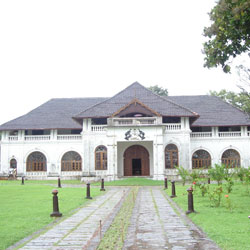
Kanakakkunnu Palace
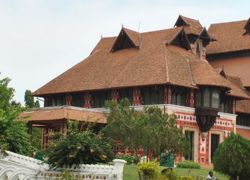
ituated on a hillock in the museum compound in Thiruvananthapuram, the capital city.
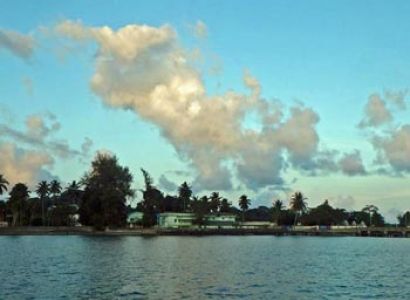
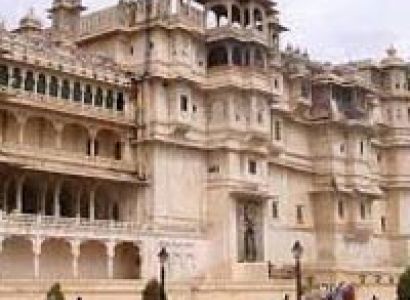
This imposing, fine-looking mansion of the Travancore Rajas is a stunning piece of architectural excellence of yore.
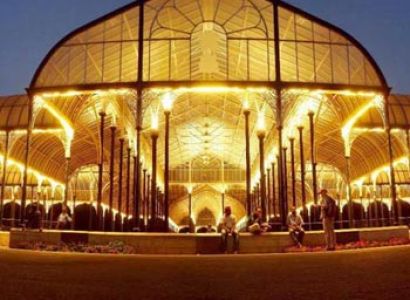
At night, when the palace premise is lit up, the gabled, pagoda style red brick structure comes alive, bringing to mind the majesty and gallantry of kings Inside one can see large crystal chandeliers and exquisite pieces of royal furniture..
|


|
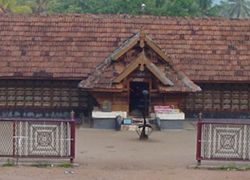
Koyikkal Palace
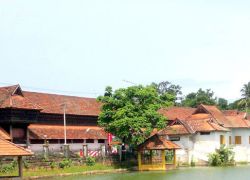
The Koyikkal Palace, situated far of away from the city, was actually built for Umayamma Rani of the Venad royal family who ruled the land between 1677 and 1684.
The palace is a double stroreyed traditional nalukettu with slanting gabled roofs and an inner courtyard. Today, the palace houses a Folklore Museum and a Numismatics Museum set up by the Department of Archaeology.
The Folklore Museum, a treasure house of quaint musical instruments, occupational implements, household utensils, models of folk arts etc, was set up in 1992.
The exhibits here draw attention to the rich cultural background of the State. The exhibits include rare articles like Chandravalayam (not found in any other such museum in Kerala), a small percussion instrument used as an accompaniment while reciting the ballad Ramakathappattu (the story of Lord Sree Rama); and Nanthuni , a sweet sounding musical instrument made of wood and string used while singing the Onappattu and Nanthunippattu during Onam the harvest festival of Kerala.
The Folklore Museum housed on the first floor of the palace also has a wide range of household utensils including wooden kitchenware, brass/copperware etc. representing the lifestyle of the Keralites during different eras. Thaliyola (old manuscripts), Chilambu (a sort of anklet) used by Umayamma Rani and Maravuri (dress material made of the bark of trees) etc. are well preserved here.
Oorakkudukku a device for intellectual exercise used by the Yogis as a pastime, Gajalekshmi - a lamp representing the goddess of prosperity - Lekshmi-seated on her elephant (this lamp is usually lighted at dusk and during the harvest season to welcome the goddess) are other interesting exhibits.
The Kettuvillakku - a ceremonial lamp (artistically made out of coloured paper and locally available light wood splits/rails), lit during festivals at the Bhagavathy temples of southern Kerala; a model of the most impressive of Theyyams - the Muthappan theyyam , a Patayani kolam model ; the headgear and dress used by Ottanthulal artistes exhibited here give an insight into the performing as well as the ritual art forms of Kerala.
The Numismatics Museum at the Koyikkal Palace is the only one of its kind in the State. Occupying the ground floor of the palace, the coins here belong to different parts of the world as well as to different eras. This rare and historically valuable collection is a vestige of the trade relation of the State in the bygone ages.
Among the exhibits are some of the oldest coins of Kerala - Ottaputhen, Erattaputhen, Kaliyugarayan Panam etc. A Venetian coin named Amaida, believed to have been presented to Jesus Christ, is also a property of this museum.
The most valuable among the Indian coins found here are 'Karsha'. These are nearly 2500 years old. Rasi, the world's smallest coins are also on display here. Sreekrishna Rasi, one of the rasis (regional coins) issued by the local kings of Kerala around the 10th century, Anantharayan Panam - the first modern gold coin of Travancore in circulation in the 15th and 17th centuries, Kochi Puthen - one of the coins of the Kochi kingdom which also had variations like Indo-Dutch Puthen (1782 AD)..
|


|
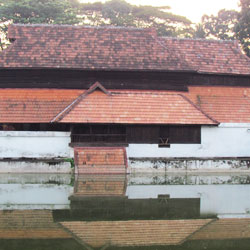
Padmanabhapuram Palace
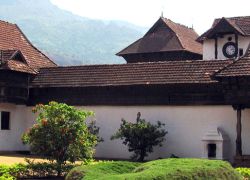
An enticing place for any lover of art and architecture, the antique interiors of the palace are replete with intricate rosewood carvings and sculptured décor. The visitor is often overwhelmed by the royal splendour of erstwhile Travancore.
Travancore, which was a princely state for over 400 years, included a large part of present-day Kerala and the western part of Tamil Nadu. Though the palace is now in the State of Tamil Nadu, it was once the traditional home of the royal family of Travancore, so it is maintained by the Government of Kerala.
The palace is one of the best examples of the traditional wooden architecture of Kerala. The Padmanabhapuram Palace is a well-preserved wooden palace, a glorious testimony to the traditional architecture of Kerala.
The extraordinary Murals, exquisite floral carvings and the black glossy granite floor have withstood the test of time. Some fascinating 18th century Murals can be seen in the puja room on the upper floors of this palace.
The Palace
A guided tour through the maze of 108 rooms leaves one breathless at the artistic expression and sheer opulence of these magnificent rooms. Even the ceilings have intricately carved floral patterns! The palace made of granite and teakwood displays a perfect combination of clean lines and gentle angles, the sloping tiled roofs of its various interconnecting buildings broken by projecting gables enclosing delicately carved screens.
The Mantrashala
The 'Mantrashala' or council chamber is placed directly above the entrance on the first floor and is gently illuminated through panes of coloured mica. Herbs soaking in water were put into the box-benched seats along the front wall as natural air-conditioning. The flooring got its gleaming patina from a unique but an obsolete technique using burnt coconut, sticky sugarcane extract, egg, white lime and sand which were mixed together.
Another amazing feat of architecture is seen in the oldest part of the complex, the "Ekandamandapam" or "the lonely place" with elaborate floor paintings. A loose ring attached to a column is tour de force of the carpenter, as both the ring and column are carved from a single piece of jack wood. Also close by, is a trapdoor, which once opened to a secret passage leading to another palace a few kilometres away, but long since destroyed.
The Pandya-style stone columned dance hall stands directly in front of the shrine of Goddess Saraswati and is very impressive. Women of the royal household watched the performance through screens on the side and the staff through holes in the wall from the gallery above.
Women's quarters were totally separate. The rajas and maharajas were equally elaborately adorned with Belgian mirrors and Tanjore miniatures of Lord Krishna. A four-poster bed made from sixteen kinds of medicinal wood dominates the Raja's bedroom. Its elaborate carvings depict inter alia human figures, birds and a central motif - the snake - a symbol of medicine associated with the Greek Physician, Ascepius.
Frescos Adorning The Walls
The murals for which the palace is famous are alive with details, colour, graceful form and religious fervour and adorn the walls of the meditation room, used by the raja and heirs apparent, directly above the bedroom. However, this section has been closed to preserve the murals. The museum across the ticket counter has beautiful wooden sculptures and displays copies of the murals from the palace..
|


|


Related Cities

|