- By Theme
-
Destinations
-
Indian Destinations
-
International Destinations
-
- Best Places to Visit
- Packages
- Search Agents
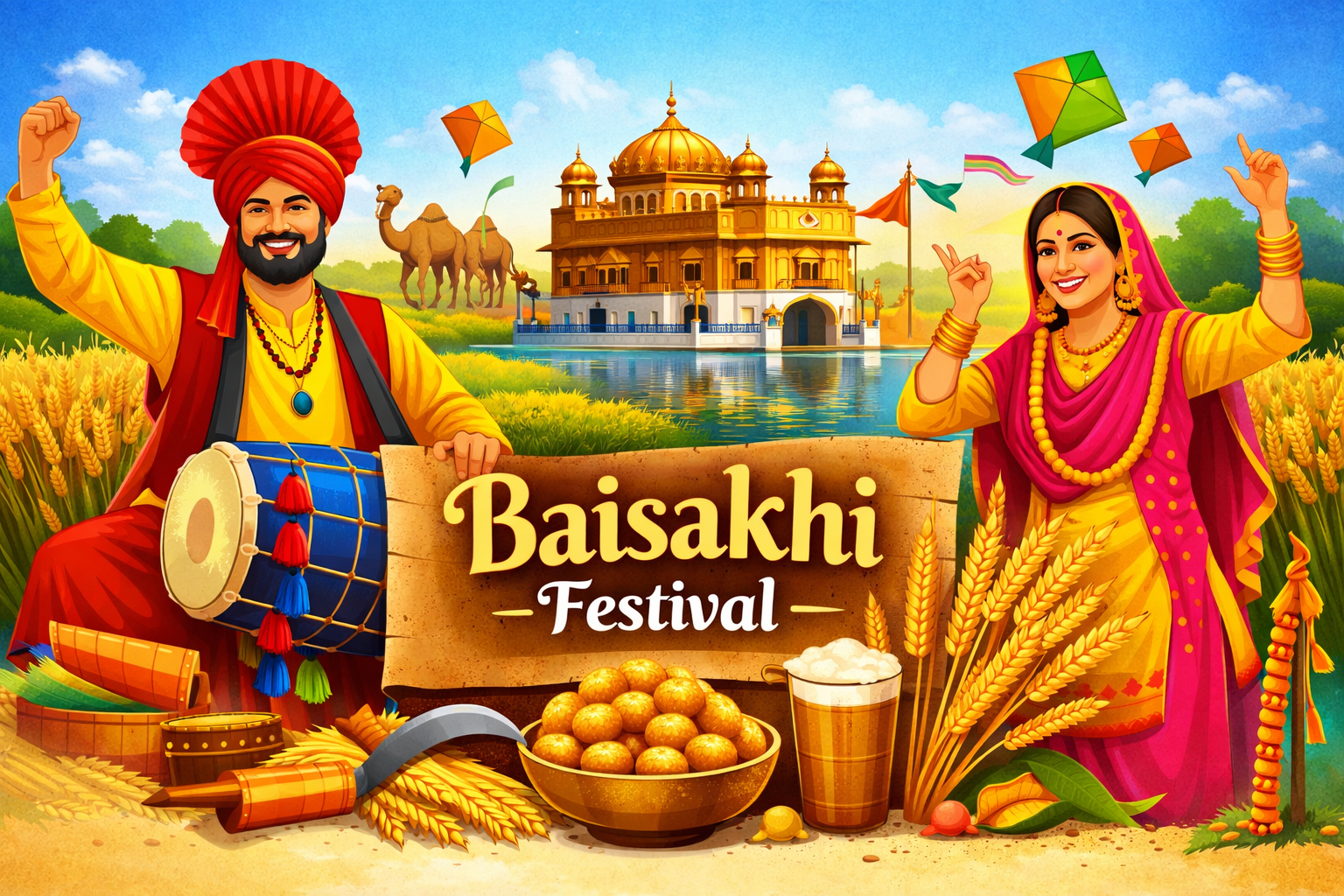
Baisakhi is one of the most colorful and meaningful festivals of India, celebrated with great joy and enthusiasm. The festival symbolizes new beginnings, prosperity, thankfulness, and strong community bonds. It marks both the joy of harvest and an important spiritual milestone, especially in Sikh tradition.
Baisakhi represents new beginnings, prosperity, gratitude, and community bonding. Whether you are a cultural enthusiast, traveler, or someone curious about Indian festivals, this guide will help you understand Baisakhi in depth.
Baisakhi, also written as Vaisakhi, is celebrated every year on 13th or 14th April. It marks the beginning of the harvest season, especially for wheat crops in North India. For farmers, Baisakhi is a moment of pride and happiness because it celebrates the success of months of hard work in the fields.
Beyond agriculture, Baisakhi holds deep religious importance, particularly for Sikhs. On this day in 1699, Guru Gobind Singh Ji founded the Khalsa Panth, giving Sikhs a strong identity based on courage, equality, and devotion. Because of this dual importance—agricultural and religious—Baisakhi is both a festival of joy and faith.
The Baisakhi festival represents thankfulness, hope, and renewal. It is a celebration of life, abundance, and unity. People thank God for a good harvest and pray for prosperity in the coming year.
New beginnings
Strong community bonds
Respect for hard work
Equality and service
These values make Baisakhi more than just a cultural event—it becomes a way of life, especially in Sikh communities.
The Baisakhi festival is mainly celebrated in the Indian state of Punjab. It is the most important festival of Punjab and is celebrated with unmatched enthusiasm in both rural and urban areas.
Apart from Punjab, Baisakhi is also celebrated in:
Haryana – as a harvest festival
Himachal Pradesh – with fairs and folk traditions
Uttar Pradesh – especially in agricultural regions
Uttarakhand – as a traditional New Year festival
Delhi – by the Sikh community
Although the name and rituals may vary slightly, the central theme of celebrating harvest, prosperity, and renewal remains the same across regions.
The history of Baisakhi goes back centuries, but its most important historical moment occurred in 1699. On Baisakhi day, Guru Gobind Singh Ji gathered Sikhs at Anandpur Sahib and introduced the Khalsa Panth.
During this historic event:
Sikhs were given a distinct identity
The Five Ks were introduced
Values of bravery, equality, and discipline were strengthened
This moment changed Sikh history forever and gave the community a strong moral and spiritual foundation.
For Sikhs, Baisakhi is one of the holiest days of the year. Devotees visit Gurudwaras early in the morning to offer prayers and listen to religious hymns.
The most famous celebrations take place at the Golden Temple, where thousands of pilgrims gather. Special prayers, readings from the Guru Granth Sahib, and Langar (community meal) are organized.
Langar holds special importance as it represents:
Equality
Selfless service
Unity beyond caste or class
Baisakhi is deeply rooted in Punjabi culture. It celebrates joy, energy, and togetherness. People dress in colorful traditional clothes, decorate their homes, and participate in cultural activities.
Traditional Punjabi dances are a major highlight:
Bhangra – performed by men to celebrate harvest
Gidda – performed by women with songs and claps
These dances reflect happiness, confidence, and pride in Punjabi traditions.
In Punjab, Baisakhi celebrations begin early in the morning with visits to Gurudwaras. After prayers, villages and cities host cultural programs, fairs, and community gatherings.
Nagar Kirtans (religious processions)
Folk music and dance performances
Village fairs (melas)
Agricultural exhibitions
Traditional Punjabi food
Cities like Amritsar, Ludhiana, and Jalandhar witness grand celebrations.
Food plays an important role in Baisakhi celebrations. Meals are prepared with love and shared with family, friends, and the community.
Popular Baisakhi dishes include:
Makki di Roti and Sarson da Saag
Kadhi Chawal
Kheer and Halwa
Lassi and Chaas
In Gurudwaras, Langar serves simple, nutritious food to thousands of people, reinforcing the spirit of equality.
Baisakhi marks the time when wheat crops are ready for harvesting. Farmers celebrate their success and thank nature for a good yield.
This agricultural importance makes Baisakhi similar to other Indian harvest festivals such as:
Pongal (Tamil Nadu)
Onam (Kerala)
Bihu (Assam)
Each festival celebrates the relationship between humans, nature, and hard work.
Baisakhi is celebrated in different forms across India.
Large Sikh communities organize Nagar Kirtans, cultural events, and community meals.
Baisakhi marks the traditional New Year and is celebrated with fairs and rituals.
People celebrate with folk dances, fairs, and prayers.
Baisakhi is celebrated internationally in countries with large Sikh populations such as:
Canada
United Kingdom
United States
Australia
Grand parades, cultural performances, and community meals are organized, helping preserve tradition abroad.
If you want to experience Baisakhi fully, visit:
Amritsar is the heart of Baisakhi celebrations, where thousands of devotees gather at the Golden Temple to offer prayers and take part in special religious programs. The spiritual atmosphere, community langar, and soulful kirtans make the experience deeply meaningful and unforgettable.
Anandpur Sahib holds great historical significance as the birthplace of the Khalsa Panth. Visiting this sacred town during Baisakhi allows travelers to witness religious ceremonies and processions that reflect the true spirit and history of Sikhism.
Patiala is known for its royal heritage and vibrant cultural celebrations during Baisakhi. The city hosts folk dance performances, music events, and fairs that showcase Punjabi traditions, colorful attire, and festive energy.
Rural Punjab offers the most authentic Baisakhi experience, where farmers celebrate the harvest with joy and pride. Travelers can see traditional farming life, enjoy local food, and witness Bhangra and Gidda in their purest form, away from crowds.
Today, Baisakhi is also celebrated in schools, colleges, and offices. Cultural programs, competitions, and educational events are organized to teach younger generations about tradition.
Digital greetings and social media celebrations have added a modern touch to this ancient festival.
Celebrated on 13th or 14th April
Major festival of Punjab
Marks harvest season and Sikh New Year
Commemorates the formation of Khalsa
Celebrated worldwide
Baisakhi is a beautiful festival that represents faith, gratitude, unity, and happiness. It brings together the joy of a successful harvest, the pride of rich history, and the values of humanity and togetherness. The festival carries a deeper message of hard work, selfless service, and fresh beginnings. It reminds us to stay thankful for nature’s blessings and to move forward with hope and positivity. Baisakhi is not just a date marked on the calendar; it is a heartfelt celebration of life, culture, and the spirit of community that connects people across generations.