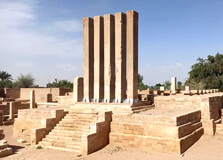
Marib, located in central Yemen, is an ancient city rich in history and cultural significance. Once the capital of the Sabaean Kingdom, it was a thriving hub of trade and civilization. Marib is best known for the Marib Dam, an engineering marvel built in the 8th century BCE, which played a crucial role in irrigation and agriculture, transforming the region into a prosperous oasis. The ruins of the dam and surrounding archaeological sites, including temples, palaces, and inscriptions, continue to attract historians and archaeologists. In recent years, Marib has become a focal point in Yemen’s ongoing conflict, with its strategic location and resources making it a point of contention. Despite the challenges, the city remains an important symbol of Yemen’s ancient heritage and resilience. Marib’s historical landmarks and its significance as a trade and cultural center in antiquity make it a fascinating destination for those interested in the region's rich past.
Explore More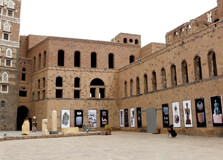
Sana'a, the capital of Yemen, is one of the most historically rich cities in the Arabian Peninsula, with a history dating back over 2,500 years. Located in a mountain valley at an elevation of 2,200 meters, Sana'a is known for its distinctive architecture, with its old city—a UNESCO World Heritage site—featuring multi-story houses made of mud bricks and adorned with intricate white gypsum decorations. The city's iconic towers and ancient mosques, such as the Great Mosque of Sana'a, reflect its importance as a center of Islamic culture and history. Sana'a has been a key political, cultural, and economic hub throughout Yemen's history, serving as the capital of various kingdoms and empires. Despite the challenges posed by political instability and conflict in recent years, Sana'a remains an enduring symbol of Yemen’s heritage. The city’s ancient souks, historical buildings, and vibrant culture make it a fascinating destination for those interested in the rich history of the Arabian Peninsula.
Explore More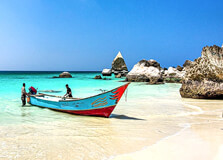
Socotra Island, located in the Arabian Sea off the coast of Yemen, is a UNESCO World Heritage site renowned for its unique biodiversity and stunning landscapes. Often referred to as the "Galápagos of the Indian Ocean," Socotra is home to over 800 species of plants, animals, and birds that are found nowhere else on Earth. Its most iconic feature is the dragon’s blood tree, known for its umbrella-like shape and red resin. The island’s rugged terrain includes sandy beaches, limestone mountains, and dense forests, making it a paradise for nature lovers and adventure seekers. Socotra’s isolation has preserved its pristine environment, with its flora and fauna being some of the oldest and most distinct in the world. Despite its beauty, Socotra faces challenges due to political instability and limited infrastructure. Nevertheless, it remains a hidden gem, attracting those interested in natural history and off-the-beaten-path travel.
Explore MoreSocotra Island Itinerary - come & discover Family adventure program
7 Days/ 6 Night
Sana
Sana'a sightseeing - Kawkaban - Manakah - Sana'a Tour
3 Days/ 2 Night
Sana
Kangra Valley Tour
7 Days/ 6 Night
New Delhi - Palampur - Dalhousie - Dharamshala - Marib
Kangra Valley Tour
7 Days/ 6 Night
New Delhi - Palampur - Khajjiar - Dalhousie - Dharamshala - Marib
Yemen, also known as Republic of Yemen, is located in Western Asia and covers nearly entire Arabian Peninsula at its south. Untouched by the influences of western world, Yemen represents its own Middle East culture. Yemen is one of the few countries which have almost every geographical feature. The travelers who come to visit Yemen can enjoy, visit to sea, high mountain ranges, fertile valleys, hot and humid plains and desert. Yemen was earlier known as Arabia Felix which means Happy Arabia, for its rich cultural heritage.
Yemeni rial (YER)
527,829 square km (203,796 square miles)
25, 130,000 (estimated)
Arabic
+967
UTC+3
The climate of Yemen is mostly hot and humid at its west coast and temperate along the western mountains which experience seasonal monsoons. Due to the presence of desert in the east, the temperature there remains usually hot, dry and harsh. Yemen experiences huge temperature difference between highest and lowest temperatures in inland areas. Summer season is classified between June to September and temperature can rise up to 40 degree Celsius in this season. Spring season ranges from March till August, while winter experiences rainfall, allowing the temperature to fall to 15 degree Celsius.
The latitudinal extent of Yemen is between 12 degrees and 19 degrees north, and its longitudinal stretch ranges between 42 degrees to 55 degrees east.
Territory & Capital : Yemen is one of the Middle Eastern countries, bordering the Arabian Peninsula at its south and South Arabia to its north. Red Sea lays to the west of Yemen and Oman forms the eastern boundary of Yemen.
Sana’a is the capital city of Yemen.
Suitable Visiting Seasons (months) : Due to diverse land features, different regions have different suitable visiting seasons in Yemen. Tihama, one of the most popular Yemen cities, can be visited between the period of November and February. Mainly the entire Yemen has almost moderate temperature in December and January. So if you plan to visit Yemen, these two months are the best time to make your hotel bookings
Yemen is very well connected by airways, roadways, marine services with all other countries of the world. Sana’a International Airport is connected to other major airports of the world while ports of Aden, Al Hudaydah, Al Mukalla, and Mocha are the harbor for international ships. One can easily hire taxi services for covering shorter distance in Yemen and travelling distance can be made convenient by railway trains.
Except Jordan, Israel and Syrian citizens, people from all other countries require visa to visit Yemen. One can get either tourist visa of two months or six months visa for any other purpose.