Home Login Register Inquiry Sitemap

Travel Packages | India Tours | Hotels & Motels | Travel Agents | Advertisment


India >> North Zone >> Delhi

About Delhi

As the capital of the India, Delhi is a centre for all the political activities within and around India. Delhi is a Union Territory and has its own assembly. Delhi is also a major Centre for foreign travellers as most of the Airlines have their offices situated in Delhi.
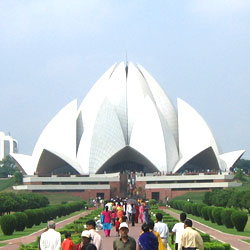
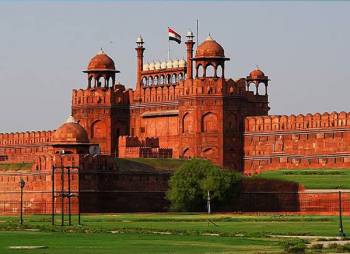
Modern Delhi spreads over the remains of several older citycentres that once ruled the country, among them are Shahjahanabad, the 7th city (Old Delhi), which was build by Shah Jahan in the 17th century. This part of Delhi consists of narrow alleyways, packed markets and houses are build very close together. Here you also find The Red Fort and Jama Masjid.

Area: Union Territory: 1,483 sq km
Population: Approx. 12 million
Climate (°C ): November - March: 21 - 30 degrees
May - June: Intolerable hot
July - September: Monsoon

Languages: Hindi, Bengali, Punjabi, Urdu and English
Climate: One can expect the extremes of climate in New Delhi as it is exposed to plains. The monsoon also brings copious rains inundating many small roads.
Temperature: Summer - Max: 41.2 Min: 21.4
Winter - Max: 33.7 Min: 6.8
Best Time to Visit: October to March
Accessibility: Air: There is an Airport in Chandigarh itself.
Rail: Chandigarh also has a railway junction.

Attractions In & Around

Tourist Attractions

Tughlaqabad Fort The Zoological Park Humayun Tomb
Alai Minar Chattarpur Mandir Hauz-i-Shamsi(Hauz)
Kalkaji Mandir Lakshmi Narayan Temple (BIRLA MANADIR) Fatehpuri Masjid
Hanuman Mandir Lakshmi Narayan Temple Abdul Nabi Mosque
Begumpuri Masjid Chirag-i-Delhi-Dargah Chauburji Masjid
Hazrat Nizamuddin Auliya Idgah Madhi Masjid
Moth ki Masjid Quwwatul Islam Mosque Sis Ganj Gurdwara
Gurdwara Rakab Ganj Akshardham Temple Old Fort of Delhi
Red Fort of Delhi Qutub Minar Parliament House
Jama Masjid India International Trade Fair Delhi Auto Expo
Delhi Book Fair Qutub Festival Bhai Dooj Festival
Chhat Festival Christmas in Delhi Durga Puja Festival
Eid Festival Guru Nanak Jayanti Holi Festival
Janmashtami Festival Muharram Festival Navratri Festival
Rakhi Festival Republic Day Maha Shivratri Festival
Arts and Crafts of Delhi National Science Centre Lal Kot in Delhi
National Childrens Museum Amir Khusrau’s Anniversary Basant Panchami in Delhi
Bhakti Festival The Delhi Flower Show The Delhi Flower Show
Diwali Festival Garden Tourism Festival Independence Day
Kite Flying Festival in Delhi Maha Shivratri Mango Festival in Delhi
Phool Walon ki Sair Republic Day Parade Surajkund Crafts Mela
Baisakhi Festival Buddha Jayanti Book Fair
Delhi Rose Show Dussehra Festival Guru Purab
International Trade Fair Lohri Festival Mahavir Jayanti
Qutub Festival in Delhi Sharad Utsav Handicrafts
Phulkari Weaving Chattarpur Mandir
Iskcon Temple Lotus Temple Gurdwara Bangla Sahib
Jama Masjid National Museum of Natural History Nehru Planetarium
National Meseum Nehru Memorial Museum and Library Air Force Museum
Archeological Museum Gandhi Memorial Museum Nehru Memorial Museum and Library
Tibet House Museum International dolls Museum India Gate
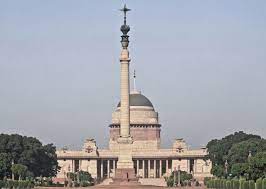
Jama Masjid Jantar Mantar Rashtrapati Bhavan
Lotus Temple Surajkund Crafts Mela Garden Tourism Festival

Appu Ghar

Introduction:
The Appu Ghar, a major name in the list of amusement theme parks in Delhi, is the oldest amusement theme park in Delhi and also in India. Appu Ghar is the favorite of all children because of its exquisite roller coasters and water slides. The Appu Ghar is quite a mini-Disneyland for the people of Delhi. This park has joy rides for people of all ages. The large range of swings and 'jhoolas' and rides here include the popular Roller Coaster, the Big Splash, Dodgem Cars, the Eerie Tunnel, Giant Wheel and Columbus Jhoola. Children love the thrill of riding in a Cable Car and the Speeding Cup. Since there is no snowfall in Delhi, the Ice Games at OYSTERS offering winter sports is quite popular here.

Appu Ghar Special:
Four acres of the Water Park blanketed with ice offering sledding, skiing, ice boating and bowling on ice are a craze among Delhiites. The couples love to dance and romance in the Rain Dance or the Ice Dance that are introduced according to the season. This water park is especially preferred by people to beat off the scorching heat of the summers. The entry to the park is through Gate No. 4 at Pragati Maidan from Mondays to Saturdays.

For more information on Appu Ghar amusement park in Delhi, please browse the following links.

TOP

Chandni Chowk

Like many other landmarks of Delhi and her adjoining areas, Chandni Chowk too owes its origin to the Mughal rulers. The foundation stone for this vibrant bazaar was laid by Jahanara, Shah Jahan's favorite daughter. Today, the largest trading center of northern India, it is also known as the Moonlit Square. Situated in the Red Fort, the erstwhile capital of the Mughal dynasty, Chandni Chowk is characterized by its many lanes and by-lanes that are filled with all the hustle and bustle associated with vibrant market places. Each of these lanes is famous for a specialty that is particular to itself. These can range from glittering jewelry to mouthwatering foodstuff.

Chandni Chowk is famous not just for its markets but also for the various places of worship that the region has. These include:
- Sri Digambar Jain lal Mandir
- Jama Masjid
- Gurudwara Shish Ganj
- Gauri Shankar Temple
- Sunehri Masjid

Chandni Chowk perhaps symbolizes the vibrant feel that characterizes India and her way of life. Besides this, it also symbolizes the unity in diversity that is present amongst Indians all around the country. It is, on a lighter note also a symbol of the versatile eating habits of the Indians, housing eateries like:
- The Ghantewala Halwai
- Natraj's Dahi Bhalle
- Kanwarji Bhagirathmal Dalbhajiwallah
- Chaatwallah
- Bikaner Sweet Shop
- Haldiram's
- Gianiji ka Falooda

.

TOP

Delhi Zoo

The National Zoological Park of Delhi is popularly known as Delhi Zoo. Adjacent to the Purana Qila, Delhi Zoo is located on the southern side of the fort. Although it is an artificial habitat, the animals here are provided with spacious enclosures and other arrangements necessary for their survival in a man-made environment. Spread over an area of 240 acres, it is one of the better laid out zoological parks of the country,

The zoo features quite an amazing range of flora and fauna. Over one thousand varieties of mammals, reptiles and avian species can be seen here. Leopard cat, Indian Rhinoceros, Hippopotamus, Black Buck, Indian Gazelle and Lion-tailed macaque are some of the commonly found animals here. It also has nearly all varieties of deer spotted in the country. Don’t miss the white tiger from Rewa, the elephant which plays a harmonica and the leopards. The zoo is home to many species now endangered in India. Several species of migratory birds have made this spot their favorite haunting ground. Winter is the time when the winged visitors including, storks, ducks and other species throng the large lake at the entrance of Delhi zoo.

Although battery operated vehicles are available for nominal charges which will take you on a tour around the park, but, you get the best deal when you are on foot. There are arrow signs placed in the park to guide you the direction. There is also a canteen where you can have good food because no eatables are allowed inside the park except drinking water. Although, there are many drinking water counters at various places in the park for convenient of the visitors.

The early hours of opening or late afternoon before the closing are the better times of the day to visit the zoo. Winter undoubtedly is the best season. Hot summer months should be avoided as animals prefer to rest in their hideouts and are not easily seen.

Location
Adjacent to the Purana Qila, Delhi Zoo is located on the southern side of the fort.


Built In
The zoo was built in 1957.


Special Feature
The zoo has a library which is a storehouse of information on birds, animals, plants and common species of birds and animals in India.


How to Reach
Delhi Zoo being located in the capital city, can be reached from any corner of the country.

Nearest International Airport: Indira Gandhi International Airport
Nearest Railway Station: Nizamuddin Railway Station
Nearest Metro Station: Central Secretariat
Nearest Bus Stop: Local buses from various points


Best Time To Visit
Winter undoubtedly is the best season to visit Delhi Zoo. .

TOP

Humayuns Tomb

Home to a phase of history that has shaped much of present day India, Delhi, is a historian's paradise. Much of this revolves around the activities of the Mughal Dynasty, who were responsible to a large extent in influencing the Indian way of life as we see it today. One of the greatest rulers of this dynasty was Humayan, whose promising reign was tragically cut short by a freak accident on the stairs of the Sher Mandal Library.

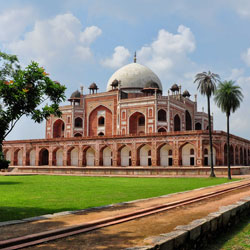
Humayun's Tomb was built in the memory of this charismatic ruler whom fate prevented from proving his charisma to the rest of the world. Built by his Persian widow, Haji Begum, Humayun's Tomb was the first architectural construction built during Akbar's reign. Built around 1562-1572 AD, Humayun's Tomb is one of the leading attractions of Delhi today, drawing thousands of visitors everyday. Exhibiting a very obvious influence of Persian architecture that owes its origin to its Persian architect Mirak Mirza Ghiyuath, the mausoleum was built on the banks of the Yamuna River, next to the shrine of Sufi saint of Chisti Silsilah, Nizamuddin Auliya. A number of other Mughal luminaries are buried here like:
- Hamida Begum, Akbar's mother
- Dara Shikoh, Shah Jahan's son
- Bahadur Shah II, the last Mughal Emperor

One of the greatest examples of architecture in India, Humayun's Tomb is known for influencing the structure of the Taj Mahal as well. The first example of the garden tomb, Humayun's Tomb is in the UNESCO's list of World Heritage Sites as well. Humayun's Tomb is also protected under the ownership of the Archaeological Survey of India. The tomb is an architectural masterpiece forming the basis of the definition of Mughal architecture that is characterized by high arches and double domes. The Tomb is maintained by the Aga Khan Trust that has to a large extent restored its lost glory to the tomb.
.

TOP

India Gate

Delhi is perhaps one of the most accurate microcosmic representations of the cosmopolitanism that characterizes India. The various influences that have sculptured the city into what she is like today include the influence of the British as well, who have left their mark on several of the architectural masterpieces in and around the city. One of these is the India gate, which can be credited to a large extent for representing India to the rest of the world.

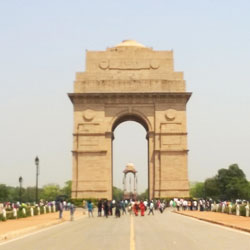
Located in Rajpath, perhaps the most prestigious area in the entirety of the city of Delhi, the India Gate was built to commemorate the death of 90,000 India soldiers, who were killed in the North West Province during the First World War and the Afghan Conquest of 1919. Constructed in sandstone and rising to a height of 160 ft., the height of the arch is 136' externally and 87'6" internally. India Gate is also credited for being the first gate to be constructed in New Delhi. The names of the soldiers in whose memory the Gate was constructed is inscribed on its walls, beside which an eternal flame called the Amar Jawan Jyoti. The foundation stone of the memorial was laid by HRH the Duke of Connaught in 1921 and the monument was dedicated to the nation 10 years later by the then Viceroy, Lord Irwin. The Amar Jawan Jyoti was added to the memorial after India had gained her independence, in memory of the soldiers of the Indo-Pakistan War of December 1971.
Today, the India Gate is one of the most important symbols of India, being at the center of the itinerary of most of the tourists who visit the country's capital city. Whether it is eating out at the roadside eateries or enjoying a monkey show outside, India Gate offers entertainment for everyone. So in case you are planning a trip to the capital, make sure India Gate plays a pivotal role in your itinerary.
.

History of India Gate : History of India Gate
Situated at the eastern end of Rajpath in Central Delhi is the 42 m high stone arch of victory, renowned as the India Gate. Formally known as the All India War Memorial previously, the foundation stone of this magnanimous structure was laid by the Duke of Connaught in 1921 and dedicated to the nation in 1931 by the then Viceroy, Lord Irwin.

Designed by Sir Edwin Lutyens, the India Gate stands on a low base of red Bharatpur stone and rises in stages to a huge cornice. Above on both sides is inscribed INDIA, flanked by MCM and to the right, XIX. The names of the 90,000 soldiers of the Indian Army who lost their lives in World War-I, and an additional 13,516 names who sacrificed their lives in the North-West Frontier in the Afghan War of 1919 are inscribed on the walls of this grand construction.

In order to honor the numerous unknown gallant soldiers who died fighting for the country, an eternal flame or Amar Jawan Jyoti was lit under the arch of India Gate in 1971. Uniformed soldiers stand guard over the flame. As a tribute to these dead soldiers, a shining rifle crowned by a soldier's helmet is placed on high pedestral near the flame.
India Gate – Annual Events : Annual Events at India Gate
Situated at the eastern end of Rajpath in Central Delhi is the 42 m high stone arch of victory, renowned as the India Gate. This magnificent edifice was constructed in 1931 in memory of the Indian soldiers who lost their lives in the battlefield. Following are the special annual events that take place at India Gate -


Republic Day Parade
Every year on 26th January, the day celebrated as the Republic Day of India, the Indian President places a wreath at the eternal flame Amar Jawan Jyoti under the arch of India Gate to pay his respects to the Indian armed forces who laid down their lives for the sake of the country. It is followed by a grand parade that moves along Rajpath, which comprise of marching contingents, tanks and weaponry, vibrant floats, folk dances and school children from different parts of India who participate in this colorful ceremony.


Swar Utsav
This three-day musical extravaganza is organized by the Delhi Tourism every October on the luxuriant lawns of the India Gate. The music lovers are kept enthralled by the performance of the best Indian Classical Musician during the event.

TOP

Jama Masjid

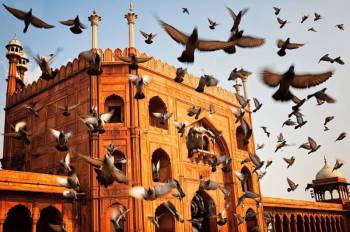
India is known for her unity in diversity. People belonging to different faiths and different mental thoughts co-exist in the country with perfect harmony within themselves, contributing thereby to the strength of the Indian fabric in general. Their places of worship too, are thus sacred not just to themselves but to their fellow-countrymen as well, irrespective of the faith they follow. One of these is the Jama Masjid in Delhi, built by the Mughal emperor Shah Jahan in 1656. Generally considered to be the largest and most respected mosque in India, the Jama Masjid is one of the most famous landmarks of the country, symbolizing for the country's Muslim population a guide to the religious doctrines.

Architecturally, the Jama Masjid is similar to many other mosques that the Emperor of Architecture, Shah Jahan built all around his realm. These include mosques by the same name in cities like Ajmer, Agra and a number of others. The courtyard of the Jama Masjid, which is completely built of red sandstone, is accessible from the east, north and south by three different flights of stairs. These steps are used to house markets, entertainers as well as food stalls. The mosque also housed a Madrassah near the southern side of the mosque which had been pulled down after the Sepoy Mutiny of 1857.

Facing west, the Jama Masjid is covered on three sides with open arched colonnades with a tower like gateway in the center. Also called Masjid-I-Jahanuma or the 'mosque commanding view of the world', the Jama Masjid is a constructional wonder with alternating strips of red sandstone and marble.
The mosque owes much of the respect associated with it to the relics of Mohammad, which it houses. These include Quran written on deerskin, a red beard-hair of the prophet, his sandals and his footprint, embedded in a marble slab, all of which are still preserved.

.

History of Jama Masjid : Showcasing India’s fine blend of religions, the Jama Masjid is one of the greatest examples of the fine fabric of secularism that envelopes the entirety of India. The mosque which is part of the historic complex of the Red Fort in Delhi draws countless of visitors each day, many of whom are drawn to this revered site by the history of the Jama Masjid.

The mosque was built by Shahjahan inside his fort city of Shahjahanabad or the Red Fort as it is known today. Planned and designed by the brilliant Mughal architect Ostad Khalil, the mosque was built at a cost that was around 10 crores, a colossal figure in the medieval era, even considering the grandeur of the enterprise. The mosque was begun in 1650 which saw over 5,000 workers involved in the labor which was to see the largest mosque in India completed six years after its foundation stone was laid.

The mosque in the medieval period had certain areas restricted for the use of the emperor and the other members of the royal family. These included the largest and the highest gate of the complex located on the eastern side of the Jama Masjid.

Besides its obvious religious significance, the mosque was also used for housing a Madrassah near its southern side, which was pulled down after the Sepoy Mutiny of 1857.

Much of the respect that is accorded to the Jama Masjid is due to the fact that the mosque is famous for housing some of the notable relics of Prophet Mohammad, which includes, the Quran written on deerskin, a red beard-hair of the prophet, his sandals and his footprint, embedded in a marble slab, all of which are still preserved
Jama Masjid – Annual Events : The Jama Masjid symbolizes to most Indians an amalgamation of religion and history where each strives to bring in a sense of unity not just amongst the Muslims but also amongst their non-Islamic brethren. The mosque which was built by Shah Jahan was originally constructed as part of the Mughal emperor’s newly constructed capital of Shahjahanabad or the Red Fort as it is known as today. At that period, the mosque had special chambers that were dedicated to the prayer sessions of the emperor and the other members of the royal family. The importance that the Jama Masjid enjoyed during the period, has, however, not diminished today and is still strongly held on to just like the other traditions and customs that are still associated with the various annual events of the Jama Masjid.

One of the most important features of the mosque is that the chief cleric of the mosque has always been till now the direct descendant of the chief cleric who was invited by Shah Jahan to come to Delhi from Bukhara at the time of the inauguration of the Jama Masjid in 1635. It is perhaps this authenticity that makes the Chief Cleric of the Jama Masjid one of the most respected figures amongst India’s Islamic brethren. Thus, the celebration of important Islamic festivals finds their greatest expressions on the premises of the Jama Masjid. These include the important Muslim festivals like Id-ul-Fitr and Id-ul-Zoha when thousands of followers of Islam throng the premises of the Jama Masjid to offer their prayers on its auspicious grounds.

Jama Masjid – Fast Facts : Location
Located on Netaji Subhash Marg, Old Delhi, the Jama Masjid is at a distance of just around 500 meters west of the Red Fort is located close to a number of other tourist attractions of Delhi.


Built by
Built by the emperor of architecture, Shahjahan inside his newly built capital Shahjahanabad, the Jama Masjid was built in 1656.


Nature & Architectural style
Showcasing a rich influence of Persian architecture, the Jama Masjid is one of the oldest mosques of India.


Timings
The summer timings at the Jama Masjid are 7 a.m. to 12.15 p.m and again from 1.45 p.m. to till sunset. The winter timings are from 8.30 am-12.15 pm & again from 1.45 pm till sunset.


Admission charges
Though the entrance to the mosque is not charged and can be accessed at any time except during the time of prayers by people of all religions, photography is charged at a rate of 1.N.R. 20 for Indian visitors and I.N.R. 150 for foreigners.


How to Reach:
Located in the heart of the city of Old Delhi, reaching the Jama Masjid can be easily accomplished as it is well-connected by:
Nearest airport Indira Gandhi International Airport
Nearest railway station Old Delhi Railway Station
Nearest metro station Kashmir Gate

TOP

Jantar Mantar

Jantar Mantar built by Sawai Jai Singh II is an example of the scientific advancements of medieval India. Constructed in 1724, this structure lies at the heart of the city as a symbol of the technological strides of the Rajput dynasty. Jai Singh built four such observatories in Jaipur, Ujjain, Mathura and Varanasi.

During Muhammad Shah’s rule, the Hindu and Muslim astrologers were involved in an unending discussion about the planetary positions. They wanted to determine an auspicious hour for the king’s expedition. So Sawai Jai Singh decided to put an end to this issue by rectifying the astronomical tables.

This resulted in the construction of Jantar Mantar. So Jai Singh sent a mission to the King of Lisbon which brought back a telescope and an astronomer called Xavier De Silva. The Jantar Mantar in Delhi was set up inspired by the observatory in Samarkand.

There are different structures in different shapes in Jantar Mantar to measure the movement of the planetary bodies.

The vast red sloping structure in Jantar Mantar is the sundial or the Samrat Yantra. It is an equinoctial sun dial. The sundial cast the shadows which are used to calculate the time and the movement of planetary positions. The Misra Yantra can measure the shortest and longest day of the year. Besides this there is the Ram Yantra and the Jay Prakash Yantra meant to monitor the movement of celestial bodies.

The Jantar Mantar is therefore a reflection of the rational mind of Indians which developed years ago.
.

History of Jantar Mantar : The history of Jantar Mantar traces the history of astronomical interest of India. The Jantar Mantar is an astronomical observatory in Delhi constructed by King Sawai Jai Singh II. Located in the bustling Sansad Marg, the Jantar Mantar is another example of the scientific achievements of ancient India.

Constructed in the year 1724, the observatory was the result of Sawai Jai Singh’s passion for astronomy related subjects. It was called the Yantra Mantra. Jai Singh built four other such observatories in Jaipur, Ujjain, Mathura and Varanasi.

Jantar Mantar was created to monitor movements of the celestial bodies. It consists of different abstract structures which were used to know the deepest secrets of the universe.

During the reign of Muhammad Shah, the Hindu and Muslim astrologers were involved in brainstorming debate about certain planetary positions. So to put an end to that and also to determine the most auspicious hour for the emperor’s expedition, Sawai Jai Singh decided to rectify the astronomical tables. This resulted in the construction of Jantar Mantar

The vast red sloping structure in the Jantar Mantar is the sundial which is known as the Samrat Yantra. It is an equinoctial sun dial. The sundial casts the shadows to calculate the time and the movement of planetary positions. There is a Misra Yantra which has a number of functions and it can also measure the shortest and longest day of the year.

Besides this, the Ram Yantra and the Jay Prakash Yantra were meant to monitor the movement of celestial bodies.
Jantar Mantar – Fast Facts : Fast Facts about Jantar Mantar:
Location:
It is located in Parliament Street in Connaught Place.


History:
It was built by Sawai Jai Singh II.


Architecture:
It is an astronomical observatory which consists of different structures in sandstone to calculate the movement of celestial bodies and the planetary positions.


How to Reach:
The tourists can take auto rickshaws, taxis, buses or the Metro Rail to reach Connaught Place. Jantar Mantar is located in Connaught Place.


Attractions:
Astronomical shows are organized yearly where you can get to know about the planets and their position.

Charges for Photography: Video filming Charges are INR 25


Nearest Shopping Venues:
Connaught Place
Janpath
Palika Bazaar
Central Cottage Industries Emporium


Nearest Tourist Attractions:
Rashtrapati Bhawan:
India Gate:
Gurudwara Bangla Sahib
Hanuman Mandir:

Nearest Metro Station: Connaught Place
Nearest Airport: Indira Gandhi International Airport
Nearest Railway Station: New Delhi Railway Station

TOP

Markets in Delhi

Introduction
Apart from being the capital of India, Delhi is a fascinating city with pleasant contradictions. Comprising of Old Delhi and New Delhi, the city is home to famous tourist destinations like the Laxmi Narayan Temple, India Gate, Jama Masjid, Red Fort, Rashtrapati Bhavan, Humayun's Tomb, etc. The markets in Delhi, including the vivacious shopping bazaar of Chandni Chowk, Dilli Haat, Janpath, JanakPuri, etc are also very popular tourist destinations. Some of the major market areas in Delhi are -

Chandni Chowk
One of the oldest and busiest markets in central north Delhi, Chandni Chowk has a variety of authentic Indian food and sarees. In the narrow lanes of Chandni Chowk are many shops selling books, clothing, shoes and leather goods, electronic and consumer goods and so on. It is the location of the original Haldiram's.

Dilli Haat
Dilli Haat has stalls representing each state of India, giving complete variety of tastes available all over India. There are also stalls of crafts showcasing the diversity of handicrafts in store in the rich cultural traditions of India, like camel hide footwear, sophisticated gems, brassware, etc.

Janpath
At Janpath, there is a Tibetan Market with a wide range of Himalayan arts and crafts. Musical instruments, wall hangings and bead shops are in abundance.

JanakPuri
All the blocks of Janakpuri have at least one local market, but the most popular shopping center in West Delhi is the District Center. It boasts of a multiplex, some multi-storied shopping-cum-office complexes, restaurants, bookshops, gift stores, brand outlets, courts, Transport Authority, Telephone Exchange, etc.

Jwala Hedi
It is the biggest market in West Delhi, providing everything from food and clothes to computers and jewelry. You can also avail of cheap cloths and electronic goods at the newly opened Tibetan Market.

Karol Bagh
This market has a galaxy of shops specializing in clothes, well-known eating places, and motorcycle and automobile parts.

Kamla Nagar
One of the major shopping centers in Delhi, the market is famous for popular brands of fashion apparel and also acts as a popular hangout for college students.

Khan Market
One of the expensive places to shop in New Delhi, Khan Market has an array of stores, including modern showrooms of renowned brands like Nike, Reebok, Benetton, etc, along with delicatessens, bookstores, electronics, kitchenware, and fabric stores.

Shopping Malls
There are also several fashionable shopping malls in Delhi such as the Pacific Mall at Kaushambi, SAB Mall at Noida, MGF Metropolitan Mall at Gurgaon, East End Mall at Ghaziabad, etc.

.

TOP

Nizamuddins Tomb

Located in the heart of the historic Nizammuddin Village about 2 kms away from Humayun's Tomb is Nizammuddin's Tomb, one of the country' s most revered places and also an important tourist attraction of Delhi.

The tomb which is the shrine of the famous humanitarian Muslim Sufi and mystic saint, Sheikh Hazrat Nizamuddin Aulia Chishti is one of the most respected places of worship in the country. Revered equally amongst both Hindus as well as Muslims of the country, the mausoleum as we see it today was built in 1562 by a rich merchant called Faridu'n Khan.
Born in the city of Badaun in Uttar Pradesh in 1236, Sheikh Hazrat Nizamuddin was the disciple and successor of the saint Sheikh Farid Shakarganj and commanded a large following of devotees which included names like Alauddin Khilji, Mohammed bin Tughlaq and the great poet Amir Khusrau. Even Mughal emperors like Babur, Humayun, Akbar, Jahangir, and Shah Jahan stopped to seek the blessings of the Sufi saint at his shrine, every time their processions crossed his sacred Dargah. Though the original shrine no longer exists, yet, the site is still considered to be one of the holiest shrines of the country and never ceases to attract thousands of devotees each year.

Today, the shrine also includes a mosque and tombs of many other famous people who wished to be buried near its sacred grounds. The architectural prowess of Shahjahan too graces this landmark, with marble arches and a majestic marble pavilion being added to the shrine. The devotees who throng this place tie red threads on the lattice screens or jails to indicate the fulfillment of their wishes. It is customary to visit the shrine during the period of the Festival of Urs which is held twice a year to commemorate the anniversaries of Hazrat Nizamuddin Aulia and the renowned poet Amir Khusrau. Besides this, Thursday Evening is considered to be the most pious time of the year to visit the shrine when millions of people from all across the city throng to the mausoleum to seek the blessings of this great Sufi saint.

.

TOP

Qutab Minar

Introduction :
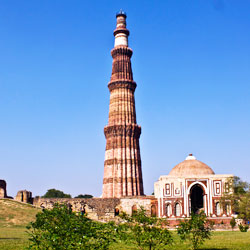
Apart from being the capital of India, Delhi is a fascinating city with pleasant contradictions. Comprising of Old Delhi and New Delhi, the city is home to famous tourist destinations like the Laxmi Narayan Temple, India Gate, Jama Masjid, Red Fort, Rashtrapati Bhavan, Humayun's Tomb, and the vivacious shopping bazaar of Chandni Chowk. One such tourist attraction in Delhi is the Qutab Minar, the highest stone tower in India.

Background :
The construction of the Qutab Minar was started by Qutab-ud-Din Aibak in 1199 and it was finished by his successor and son-in-law, Iltutmish. The Qutab Minar was named after the Sufi saint, Khwaja Qutabuddin Bakhtiyar Kaki. Though the exact purpose of the Qutab Minar is not known but it is believed that it served as a minaret to the adjoining mosque and was used by the muezzins to call the faithful to prayer.

Description :
Constructed in red and buff sandstone and covered with intricate carvings and verses from the Holy Quran, Qutab Minar has five storeys surrounded by a projected balcony and buttressed by stone brackets, which are decked with honeycomb designs. The Qutab Minar is 72.5 meters high and there are 379 steps. The diameter of the base is 14.3 meters while the top floor's diameter measures 2.7 meters.

There are numerous inscriptions on the Qutab Minar in Arabic and Nagari characters. The inscriptions state about the repair work done on the Qutab Minar by different rulers like Firoz Shah Tughlaq, Sikandar Lodi, as well as by Major R. Smith. The Qutab Minar was built on the ruins of Lal Kot, the Red Citadel in the city of Dhillika, the capital of the Tomar and Chauhana Rajputs, the last Hindu rulers of Delhi.

There are many other remarkable buildings and structures in the Qutab Minar complex, including the Quwwat-ul-Islam mosque, the first mosque built in India. It was constructed by Qutab-ud-din Aybak using materials of 27 Jain and Hindu temples. There is also the famous Alai Darwaza at the entrance of the Quwwat-ul-Islam mosque, built by Ala-ud-din Khalji. To the west of the Quwwat-ul-Islam mosque is the tomb of Iltutmish. Close to the mosque is the 4th century Iron pillar, one of Delhi's most interesting structures.
.

History of Qutab Minar : A glance at this tall imposing tower of Delhi called the Qutab Minar will give you the details about the history of Qutab Minar. This red and buff colored sandstone structure of Qutab Minar has a unique towering presence. Considered to be the tallest tower of India, the history of Qutab Minar is quite interesting as its height.

The foundation of Qutab Minar was laid by Qutabuddin Aibak in 1193 and it was completed by Illtutmish and then Firoz Shah Tughluq in 1368. Built of red sandstone, the stark differences in architecture of different periods and different dynasties can be noticed in Qutab Minar.

The monument located near Mehrauli, rises to a height of 237.8 ft. It has a series of 399 steps to reach the topmost level. When Qutabuddin Aibak was crowned the king he wanted to celebrate the victory of Islam and the fall of the Hindu empire. So he built this tower to establish the supremacy of the Islam over the Hindu monarchy.

The high standing tower has shafts and balconies and the walls are adorned with inscribed verses from Quran. Intricate carvings give an exquisite look to the minaret. There are inscriptions that tell us the history of Qutab Minar.

The tall column of red stone has been a silent witness to the changing dynasties and passing time. The meaning of the word Qutab Minar is axis minaret. The first three storeys of the tower are made of red sandstone by Qutabuddin Aibak and Iltutmish and the last two storeys are made of marble by Firoz Shah Tughluq. The Quwwat-ul-Islam mosque is located near the minaret. It is considered to be one of the oldest mosques in India.
Qutab Minar - Fast Facts : Location:
It is located in the Qutab Complex, which is in Mehrauli and it is 16 km from Connaught Place.


History:
Built by Qutabuddin Aibak it was constructed in early 12th century and was completed by Firoz Shah Tughluq in 1368.


Architecture:
Constructed in different eras by the different rulers the five storeyed minaret of Qutab Minar shows stark differences in its architecture. The red sandstone structure which overlooks the city of Delhi is known to be the tallest tower in India. Built to establish the supremacy of the Islam rule over the Hindu rulers, the mighty presence of the Minar is an integral part of the image of India.


How to Reach:
The monument is located in South Delhi and tourists vcan either take auto rickshaws, taxis, buses or the Metro Rail.


Attractions:
The Qutab complex adjoining the Qutab Minar has the tomb of Iltutmish, a mosque called Quwwat-ul-Islam, Alai Minar and other attractions.

Charges for Photography: Video Filming charges are INR 25


Nearest Shopping Venues:
Ambavata Shopping Complex
Hauz Khas Village
Both are famous boutique stores which are known for their exquisite clothes and handicrafts.


Nearest Tourist Attractions:
India Gate
Red Fort
Iron Pillar

Nearest Metro Station: Kendriya Terminal
Nearest Airport: Indira Gandhi International Airport
Nearest Railway Station: Nizammuddin Station

TOP

Rajghat

Rajghat in Delhi is the cremation site of Gandhiji, Mohandas Karamchand Gandhi who is most reveredly remembered as the Father of Nation. This memorial is located between the main Ring Road which is now known as the Mahatma Gandhi Road and the banks of the Yamuna River, just southeast of Red Fort. Set amidst deep green lawns and fountains, Rajghat is surrounded by a lovely wooded area and several exotic trees creating a serene ambience.

The mortal remains of Mahatma Gandhi were cremated at this ghat or stepped embankment at the edge of the Yamuna river on 31st January in following his assassination while walking to his customary prayer meeting at Birla House.

The structure of the Samadhi reflects simplicity. The brick platform on which his body had been burned, a black marble platform of some twelve feet by twelve feet square and two feet deep and a surrounding while marble fence were erected and the shores were landscaped. The last words of Mahatma Gandhi, 'Hey Ram' are inscribed on the memorial platform which is flanked by an eternal flame.

Earthworks around the cenotaph protect it from the flooding Yamuna. Inside this enclosure trees were planted with and little square plots of white pebble stones added for decoration.

There are trees labeled near the platform planted by visiting dignitaries such as Queen Elizabeth II, Ho Chi Minh, the former Australian Prime Minister Gough Whitman and the former US president Dwight Eisenhower.

People of every class visit the memorial to pay their homage to Mahatma whom they fondly call the ‘Bapu’. Good parking facilities are available and all basic facilities for visitors are present within the premises
.

TOP


Places of Worship