Hoi An Lantern Festival Vietnam 2026: Vietnam Most Magical Night
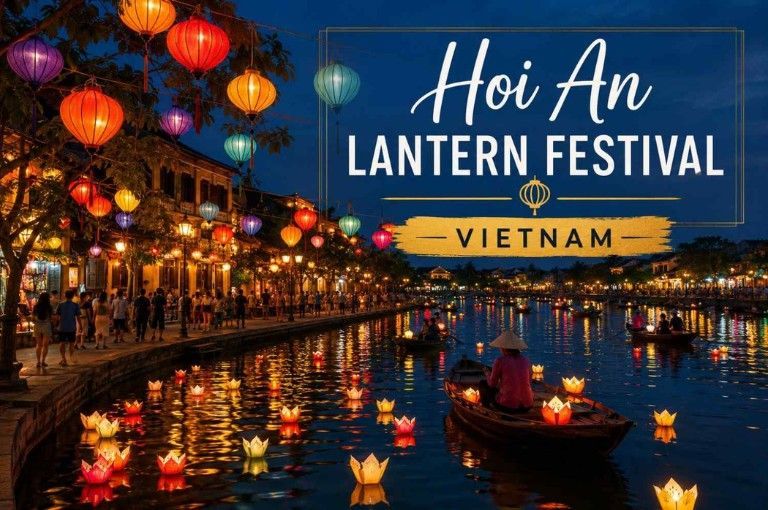
There is a night in Hoi An when time seems to slow down. The electric lights go out, the streets glow amber and crimson, and thousands of handmade lanterns sway above ancient alleyways while silk lanterns drift across the dark water of the Thu Bon River. If you have ever seen photographs from the Hoi An lantern festival and thought
The Hoi An Vietnam lantern festival is not a one-off event or a once-a-year spectacle. It happens every single month, on the 14th day of the lunar calendar — the night of the full moon — and it has been a living tradition in this ancient trading port for centuries. It is at once a religious observance, a community gathering, a cultural performance, and increasingly, one of the most photographed events in Southeast Asia. Whether you are visiting Hoi An specifically for the festival or simply happen to be in Vietnam around the full moon, here is how to make the most of it.
What Is the Hoi An Lantern Festival?
Hoi An is a UNESCO World Heritage town on Vietnam's central coast, about 30 kilometres south of Da Nang. Its Old Town has remained largely unchanged since the 17th century — wooden merchant houses, narrow tile-roofed streets, Japanese bridges, and French colonial touches all coexist within a few walkable blocks. The town grew rich from maritime trade, and at its peak hosted merchants from China, Japan, Holland, Portugal, and India.
The lantern tradition that defines the festival in Hoi An today has roots in that cosmopolitan trading history. Lanterns were practical objects — they lit the streets and marked addresses in the days before electricity. Over time they became ceremonial. During the full moon, families would hang lanterns at their doorways to honour their ancestors and welcome good fortune. Electric lights were extinguished so the lanterns could do their work without competition.
Today the Hoi An full moon festival is a structured but genuinely heartfelt community event. Shops and homes along the Old Town's main streets replace electric lighting with coloured lanterns. The night market is filled with silk goods, pottery, and street food. Musicians perform Bai Choi, a traditional Vietnamese folk game that dates back to the 17th century and involves sung verses and a kind of bingo-style card play. Boats carry lantern-holding passengers along the Thu Bon River. And visitors from all over the world come to buy a paper lantern, write a wish, and release it onto the water.
It is worth saying clearly: this is not a tourist performance staged for outsiders. Local families genuinely participate — cleaning ancestral altars, making offerings at the communal halls, and gathering in the streets as they have for generations. The tourism industry has grown around the festival, but the tradition underneath it is real.
Hoi An Lantern Festival 2025 & 2026: Monthly Dates
The festival occurs on the 14th night of each lunar month, which translates to a different date on the Gregorian calendar each month. Below are the confirmed dates for 2026:
Here is your content converted into clear points
January (13 January 2026)
Season Notes: Cool, dry — good for photography
February (11 February 2026)
Season Notes: Post-Tet — busiest crowds of the year
March (13 March 2026)
Season Notes: Warm and dry, ideal conditions
April (11 April 2026)
Season Notes: Comfortable temperatures, moderate crowds
May (11 May 2026)
Season Notes: Getting warmer, manageable visitor numbers
June (9 June 2026)
Season Notes: Hot and humid season begins
July (9 July 2026)
Season Notes: Peak summer heat
August (7 August 2026)
Season Notes: Hot, occasional showers
September (6 September 2026)
Season Notes: Monsoon edges closer
October (5 October 2026)
Season Notes: Flooding risk in low-lying areas
November (4 November 2026)
Season Notes: Flooding risk, festival may be affected
December (3 December 2026)
Season Notes: Cooler and drier, festive atmosphere
For 2025, the remaining dates follow the same lunar calendar pattern. If you are planning a trip around the festival, February through April is generally the sweet spot — the weather is pleasant, the post-Tet February festival brings the biggest energy of the year, and March and April offer all the magic with fewer visitor pressures than the peak summer months.
Best Time to Visit the Festival in Hoi An
February: Post-Tet and the Year's Biggest Night
The full moon that falls shortly after the Vietnamese Lunar New Year (Tet) is the most significant of the year. Decorations are more elaborate, performances are grander, and the local community turns out in force. If you are visiting Vietnam in February and can align your schedule with the full moon, this is the one night not to miss. Book accommodation two to three months in advance — Old Town guesthouses sell out quickly for this date.
March to April: The Sweet Spot
These months offer a reliable combination of dry weather, warm evenings, and comfortable temperatures. Crowds are large but manageable. The festival experience is authentic and full, without the extreme heat of summer or the flooding risks of the autumn season. First-time visitors who want the complete Hoi An Vietnam lantern festival experience without logistical complications should aim for this window.
May to August: Heat and Holiday Season
Summer brings heat and humidity, but also a lively travel atmosphere. European and Australian tourists are abundant during school holiday periods. The festival still happens every month and is still worth attending — just be prepared for a sweaty evening and carry water. Book early as accommodation prices are at their peak.
October to November: Monsoon Caution
Hoi An is prone to flooding during the monsoon season, and low-lying parts of the Old Town can be affected significantly. The festival in Hoi An during these months may be partially disrupted or scaled back if flooding occurs. Check local weather forecasts and news before finalising travel plans for October or November.
What Happens at the Hoi An Vietnam Lantern Festival: A Night-by-Night Guide
The festival does not have a single start time or a defined programme — it unfolds organically across the Old Town and the river. Here is a rough timeline of how the evening typically plays out:
5:00 PM – 6:00 PM: The Setup Hour
Street vendors arrange their lantern stalls along Tran Phu and Nguyen Thai Hoc Streets. Temple caretakers light incense. Boat operators prepare their vessels on the Thu Bon riverbank. This is the best time to arrive if you want to watch the transformation happen — to see the Old Town shift from a busy daytime market town into a glowing, otherworldly version of itself. Find a good position on the riverbank or near the Japanese Covered Bridge before the crowds arrive.
6:00 PM – 6:30 PM: The Lights Go Out
At dusk, electric lights are switched off across the Old Town. The effect is immediate and striking. Streets that were brightly lit just minutes earlier become corridors of coloured silk, moving gently in the evening breeze. Lanterns on shopfronts, windows, and doorways come alive. Temple interiors glow with candle and incense light. The crowd, which has been building all afternoon, lets out a collective quiet as the transformation completes.
6:30 PM – 8:30 PM: Peak Festival Energy
This two-hour window is the heart of the festival. Bai Choi performances fill the street corners — a performer sings clues while participants match bamboo cards, a tradition that was added to UNESCO's Intangible Cultural Heritage list in 2017. Food stalls are operating at full capacity. The river is active with sampan boats carrying lantern-holding passengers. This is the time to release a floating paper lantern on the water, to browse the night market, and to absorb the full visual spectacle of thousands of lights reflected on the Thu Bon.
8:30 PM – 10:00 PM: The Quieter Hours
As the evening progresses, the main crowds begin to thin. The lanterns are still glowing, the river still shimmering, but the streets become easier to navigate. This is an excellent time for photography — less jostling, better angles, and a more contemplative atmosphere. Riverside restaurants are still busy, and the night market remains open until around 10 PM.
The Hoai Lantern: What to Know Before You Release
The floating lantern release is the defining image of the Hoi An lantern festival and one of the most memorable things you can do during the evening. A few practical points:
Paper lanterns for releasing on the river cost between 20,000 and 50,000 VND each. They are biodegradable and designed to float gently downstream.
Silk lanterns, sold at higher prices (80,000 to 200,000 VND), are decorative souvenirs to take home — they are not designed to be floated.
The tradition is to make a wish as you release the lantern. Take a moment to do this genuinely — locals take it seriously, and it adds meaning to the experience.
Choose vendors selling biodegradable paper lanterns. There is growing environmental awareness around river pollution, and purchasing from sellers who use eco-friendly materials is a small but meaningful choice.
Releases happen from several points along the riverbank. The An Hoi Bridge and Bach Dang Street both offer good access to the water.
Best Spots to Experience and Photograph the Hoi An Lantern Festival
1. The Japanese Covered Bridge (Chua Cau)
This 400-year-old Japanese covered bridge is the most recognisable landmark in Hoi An and the most photographed spot during the festival. It sits at the western end of Tran Phu Street and is framed by lanterns on festival nights. Arrive at least 90 minutes before sunset to secure a position for wide-angle shots. The reflection of lantern light on the water below makes for compelling long-exposure photographs.
2. Bach Dang Riverfront and An Hoi Bridge
The stretch of riverside along Bach Dang Street offers the best views of floating lanterns on the water. During the blue hour — roughly 6:30 to 7:15 PM — the sky retains enough colour to provide a dramatic backdrop for water-level shots. The An Hoi Bridge connects the Old Town to the An Hoi Islet and offers a clear view down the river in both directions.
3. Sampan Boat Rides on the Thu Bon River
Getting onto the river during the festival gives you a completely different perspective. From a boat, you are at the level of the floating lanterns, surrounded by colour, with the lantern-lit Old Town on one bank and open sky above. Rides last around 30 minutes and cost 300,000 to 500,000 VND. Book through your hotel or with verified operators on the riverbank — negotiate prices before boarding and confirm what the fare includes.
4. Tran Phu and Nguyen Thai Hoc Streets
These two parallel streets form the core of the Old Town festival experience. Tran Phu is the main artery, lined with merchant houses and silk lanterns. Nguyen Thai Hoc runs parallel one block away and tends to be slightly less crowded while still being fully decorated. Both streets offer excellent opportunities for portrait photography of locals in traditional dress and close-up shots of individual lanterns.
5. Temple Courtyards and Communal Assembly Halls
The Old Town has several Chinese communal assembly halls — the Fujian Assembly Hall, the Cantonese Assembly Hall, and others — which hold special significance during the full moon festival. Incense burns, offerings are laid out, and the spaces are lit by traditional oil lamps and candles. These interiors are visually extraordinary but also genuinely sacred. Enter quietly and respectfully.
Getting to Hoi An for the Festival
By Air
The nearest airport to Hoi An is Da Nang International Airport (DAD), approximately 30 kilometres away. Da Nang is well-connected to major Asian hubs including Hanoi, Ho Chi Minh City, Singapore, Bangkok, Kuala Lumpur, and Seoul. Several Indian carriers and low-cost airlines in Southeast Asia operate convenient connections.
From Da Nang to Hoi An
Transport Options (Highlights)
- Taxi (Metered)
- Cost: 350,000 – 550,000 VND
- Time: 40–50 minutes
- Note: Ask for meter; use trusted companies like Mai Linh
- Grab (App-based Ride)
- Cost: 280,000 – 450,000 VND
- Time: 40–50 minutes
- Note: Fixed price shown before booking; convenient and reliable
- Hotel Transfer (Pre-arranged)
- Cost: 450,000 – 700,000 VND
- Time: 40–50 minutes
- Note: Most reliable option for late-night or early arrivals
- Shared Shuttle Bus
- Cost: 230,000 – 350,000 per seat
- Time: 60–75 minutes
- Note: Budget-friendly but slower due to multiple stops
Important note on the return journey: post-festival taxi waits can exceed 45 minutes during peak nights, especially in February. Pre-arrange your return pickup through your hotel or book a Grab in advance.
Where to Stay During the Festival in Hoi An
Old Town Accommodation
Staying inside or immediately adjacent to the Old Town gives you the most direct access to the festival — you can walk out of your guesthouse and be in the middle of the lantern streets within minutes. Boutique guesthouses in this area typically cost 800,000 to 2,500,000 VND per night. For full moon nights, especially in February, book two to three months ahead. The area is also quite pleasant for the days surrounding the festival, with excellent coffee shops, tailors, and local restaurants within walking distance.
An Bang Beach and Cua Dai Beach
About four to six kilometres from the Old Town, these beach areas offer a quieter alternative with easier access to the sea. You can taxi or motorbike into the Old Town for the festival (allow 10 to 15 minutes) and retreat to the coast afterwards. Mid-range resorts and guesthouses here typically run 1,200,000 to 3,500,000 VND per night. Suitable for families who want beach time by day and festival access by evening.
Da Nang City
If you cannot find availability in Hoi An or prefer a larger city base, Da Nang offers good hotel options at 500,000 to 2,000,000 VND per night and a 45-minute transfer to the Old Town. Useful for travellers arriving late or departing early, and for those wanting a broader Vietnam coastal experience that includes the city's beaches, the Marble Mountains, and the Ba Na Hills cable car.
What to Eat at the Festival in Hoi An
Hoi An has one of the most distinctive regional cuisines in Vietnam. Several dishes are either unique to Hoi An or done noticeably better here than anywhere else.
Cao Lau
This is the signature dish of Hoi An — thick rice noodles served with slices of pork, bean sprouts, herbs, and crispy rice crackers, with a small amount of broth. The noodles are traditionally made with water drawn from specific wells in the Old Town, which gives them their particular texture. Several restaurants on and around Tran Phu Street have been serving Cao Lau for generations.
White Rose Dumplings (Banh Bao Vac)
These delicate steamed rice dumplings are filled with minced shrimp and folded into the shape of a white rose. Only a small number of families in Hoi An produce the rice paper used for these dumplings, and they supply most of the restaurants in town. They are mild in flavour and beautiful to look at — a fitting festival dish.
Banh Mi
Hoi An's version of the Vietnamese baguette sandwich is considered by many food writers to be among the best in the country. Phuong Banh Mi, a small stall on Phan Chau Trinh Street, is particularly well known. Festival nights see long queues but the wait is usually worth it.
Street Food at the Night Market
The night market on the An Hoi Islet (accessible via the footbridge near the riverbank) has dozens of food stalls serving grilled skewers, fresh spring rolls, pho, bun bo, and various fried snacks. Prices are reasonable — expect to pay 30,000 to 100,000 VND per dish. This is a good place to eat while watching the river.
Beyond the Festival: What Else to Do in Hoi An
If you are spending more than one night in Hoi An — and the town absolutely rewards a longer stay — here are the experiences worth including in your itinerary.
Visit the Old Town During the Day
The Old Town is enchanting even without lanterns. Walk the flagstone streets, visit the Japanese Covered Bridge, explore the museum inside the Tan Ky Merchant House (one of the best-preserved examples of the town's trading history), and browse the many tailors and silk shops. Hoi An is one of the few places in Vietnam where you can have high-quality clothing made to measure in 24 to 48 hours at reasonable prices.
My Son Sanctuary
About 40 kilometres southwest of Hoi An, My Son is a complex of Hindu temples built by the Cham civilization between the 4th and 14th centuries. It sits in a jungle clearing surrounded by hills and is a UNESCO World Heritage site. The drive through the Vietnamese countryside is itself enjoyable. Tours typically depart in the morning and return by early afternoon, leaving time for the festival in the evening.
Cooking Classes
Hoi An has a well-developed cooking class industry, with half-day courses that typically begin at a local market (where you source ingredients with a local guide), move to a cooking studio, and end with a meal of the dishes you have made. Red Bridge Cooking School and Morning Glory are among the most consistently well-reviewed. Book ahead as slots fill up quickly.
Bicycle Through the Countryside
The flat landscape around Hoi An makes it exceptionally pleasant for cycling. Many guesthouses rent bicycles for minimal cost, and it is easy to pedal into the rice paddies and fishing villages surrounding the town. The route to An Bang Beach takes about 20 minutes by bicycle and passes through working farms and small local communities.
Festival Costs: A Practical Breakdown
- Festival Entry
- Cost: Free
- Note: Walking the streets costs nothing
- Paper Lantern (Floating)
- Cost: 20,000 – 50,000 VND
- Note: Used for releasing on the river
- Silk Lantern (Souvenir)
- Cost: 80,000 – 200,000 VND
- Note: Take-home souvenir, do not float
- Sampan Boat Ride
- Cost: 300,000 – 500,000 VND
- Note: Around 30-minute ride; negotiate before boarding
- Street Food
- Cost: 30,000 – 100,000 VND per dish
- Note: Available at market stalls and street vendors
- Guided Tour
- Cost: 700,000 – 1,500,000 VND
- Note: Includes cultural insights and walking commentary
- Old Town Entry Ticket
- Cost: 120,000 VND per person
- Note: Includes access to heritage sites
- Cao Lau (Local Dish)
- Cost: 40,000 – 80,000 VND
- Note: Price depends on restaurant quality
Cultural Etiquette and Safety Tips
Dress Appropriately
When entering temples, communal halls, or ancestral houses, dress modestly. Shoulders and knees should be covered. Many heritage sites offer sarongs at the entrance for those who need them. During the festival itself, the streets are relaxed in terms of dress — but keep in mind that the event has spiritual significance for local families and behave accordingly.
Photography Etiquette
Ask permission before photographing locals, particularly at temple sites or during religious observances. Many people are happy to be photographed, especially if you smile and ask first. Avoid pointing cameras into private ceremony spaces or at people who are clearly engaged in prayer or ritual.
Environmental Responsibility
Choose biodegradable lanterns for river releases. The environmental impact of thousands of non-degradable paper products entering the river has been a growing concern among local conservationists, and many vendors now stock eco-friendly options explicitly. Ask before buying.
Crowd Awareness
The Old Town becomes very crowded during peak festival hours (6:30 PM to 8:30 PM). Keep valuables — phones, cameras, wallets — secured in front pockets or bags with zips. Keep an eye on children near the riverbanks and bridges. If the crowd feels overwhelming, side streets and temple courtyards offer quieter alternatives.
Flooding in Monsoon Months
October and November bring heavy rains and occasional significant flooding to Hoi An's low-lying Old Town. In some years, the main streets are ankle-deep in water during the festival. Check local news sources and contact your accommodation before travelling during these months.
Planning your Vietnam trip? TourTravelWorld offers curated Vietnam tour packages covering Hoi An, Da Nang, Hanoi, Ha Long Bay, and more — with flights, hotels, transfers, and guided experiences all taken care of. Reach out to our travel experts and let them design a journey that fits your budget, travel dates, and wishlist.
Practical Information: Quick Reference (Highlights)
- Festival Frequencyrn
- Every full moon — 14th day of lunar month
- Festival Admissionrn
- Old Town Heritage Ticketrn
- 120,000 VND (includes 5 attraction entries)
- Best Months to Visitrn
- February to April
- Avoid flooding season: October to November
- Nearest Airportrn
- Da Nang International (DAD) — 30 km away
- Transfer Time from Da Nangrn
- 40–50 minutes by taxi or Grab
- Languagern
- Vietnamese
- English widely understood in tourist areas
- Currencyrn
- Vietnamese Dong (VND)
- ATMs widely available
- Best Photography Timern
- Blue hour — 6:30 PM to 7:15 PM
Why the Hoi An Lantern Festival Is Worth Planning Around
There are travel experiences that look spectacular in photographs and disappoint in person, and there are experiences that no photograph can adequately convey. The Hoi An Vietnam lantern festival is firmly in the second category. Walking those ancient streets when the lights have gone out and the lanterns have come on — the silk glowing red and gold and green above you, the incense hanging in the air, music coming from somewhere around a corner — produces a feeling that is genuinely difficult to describe to someone who has not been there.
What makes it particularly valuable is that it happens every month. You do not need to plan a trip years in advance or hit a single specific date. Vietnam is a destination that rewards slow travel and repeat visits, and the full moon festival offers a reason to structure your itinerary around whichever month you happen to be there.
Hoi An is a small town, but it holds a remarkable amount of depth — culinary traditions, craft traditions, architectural heritage, and a community that has maintained its cultural identity through enormous historical pressures. The festival in Hoi An is not a performance for tourists. It is a living tradition that tourists are fortunate enough to be invited to witness. Approach it with that awareness, and it will give back far more than a beautiful photograph.
Why the Hoi An Lantern Festival Is Worth Planning Around
There are travel experiences that look spectacular in photographs and disappoint in person, and there are experiences that no photograph can adequately convey. The Hoi An Vietnam lantern festival is firmly in the second category. Walking those ancient streets when the lights have gone out and the lanterns have come on — the silk glowing red and gold and green above you, the incense hanging in the air, music coming from somewhere around a corner — produces a feeling that is genuinely difficult to describe to someone who has not been there.
What makes it particularly valuable is that it happens every month. You do not need to plan a trip years in advance or hit a single specific date. Vietnam is a destination that rewards slow travel and repeat visits, and the full moon festival offers a reason to structure your itinerary around whichever month you happen to be there.
Hoi An is a small town, but it holds a remarkable amount of depth — culinary traditions, craft traditions, architectural heritage, and a community that has maintained its cultural identity through enormous historical pressures. The festival in Hoi An is not a performance for tourists. It is a living tradition that tourists are fortunate enough to be invited to witness. Approach it with that awareness, and it will give back far more than a beautiful photograph.
Frequently Asked Questions
Que1: Is the Hoi An lantern festival only once a year?
Ans: No. The festival happens every month on the 14th day of the lunar calendar. This makes it accessible to visitors at almost any time of year. The largest and most elaborate celebration of the year falls on the first full moon after Tet, typically in February.
Que2: Can I participate in the festival without being Vietnamese?
Ans: Absolutely. Buying a paper lantern, writing a wish, and releasing it on the river is something visitors from all over the world participate in, and locals welcome this. The night markets, performances, and food stalls are open to everyone. Show basic courtesy — especially near religious sites — and you will find the locals remarkably warm and inclusive.
Que3: How many days should I spend in Hoi An?
Ans: Two to three nights is a comfortable minimum for combining the festival with the Old Town, day trips, and the local food scene. If you want to include My Son, cooking classes, and beach time, four to five nights allows a genuinely relaxed pace.
Que4: Is it safe to travel during festival nights?
Ans: Hoi An is one of the safer destinations in Southeast Asia for tourists. The main risks during the festival are pickpocketing in dense crowds and minor flooding in October and November. Exercise normal caution with valuables and check weather forecasts if travelling in the monsoon season.
Que5: What should I do if I miss the full moon date?
Ans: The Old Town is worth visiting any evening, even on non-festival nights. Restaurants, street food, and nightlife continue as normal. However, if you are visiting Vietnam specifically for the hoi an lantern experience, planning your dates around the lunar calendar is strongly recommended — it is a genuinely distinct experience from an ordinary evening in the town.