- By Theme
-
Destinations
-
Indian Destinations
-
International Destinations
-
- Best Places to Visit
- Packages
- Search Agents
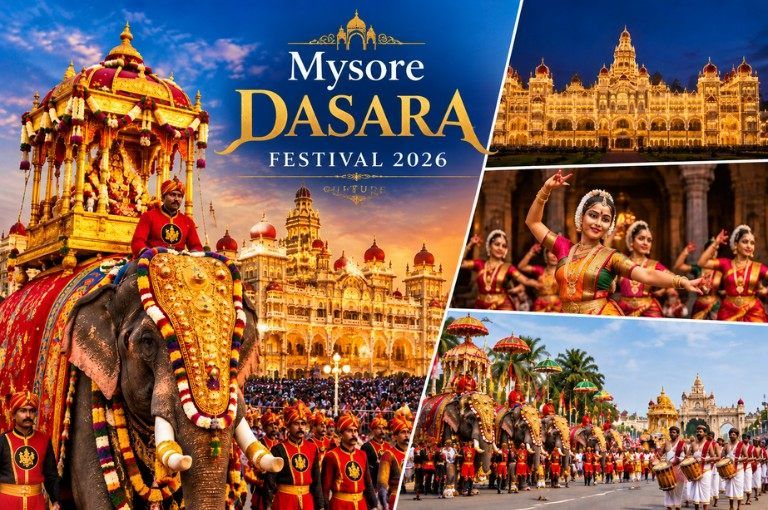
Picture a royal palace glowing with almost a hundred thousand bulbs, a golden howdah swaying on the back of a decorated elephant, and an entire city humming with drums, dance and devotion. That scene plays out in Mysuru every autumn. For ten days, the former capital of the Wodeyar kings becomes India's most regal stage, and travellers from across the world plan their year around it.
Mysore Dasara is not just an event on the calendar. It is a living royal tradition that has survived for more than four centuries, and it now stands as the official state festival of Karnataka. Whether you love heritage, photography, temple culture or simply a well-planned holiday, this festival gives you something unforgettable.
This guide walks you through everything a first-time visitor needs: the 2026 dates, the history, the palace events, the illuminations, the grand procession, ticket advice, a day-wise Mysore tour package itinerary, travel tips and answers to the questions travellers ask most. Read it once, and you can plan your journey with confidence.
Dasara in Mysuru is a ten-day royal festival that coincides with Navaratri and ends on Vijayadashami. Its highlight is the Jamboo Savari, a grand procession in which the idol of Goddess Chamundeshwari travels on a golden howdah atop an elephant from Mysore Palace to Bannimantap. Lit-up streets, cultural shows, concerts and exhibitions fill the days in between.
| Festival | Navaratri and Vijayadashami, celebrated as the state festival (Nadahabba) of Karnataka |
| Duration | Ten days |
| Expected 2026 dates | Around 11 to 20 October 2026 (confirm with the official schedule) |
Main venue | Mysore Palace, city grounds and Chamundi Hills |
| Grand finale | Jamboo Savari procession on Vijayadashami |
| Best for | Culture lovers, families, photographers and heritage travellers |
| Ideal stay | Three nights and four days |
| Distance from Bengaluru | About 145 km by road |
The story of Dasara in Mysore begins with a legend. According to Hindu tradition, Goddess Chamundeshwari, a fierce form of Durga, defeated the buffalo-headed demon Mahishasura on the hills above the city. The very name Mysuru comes from Mahishuru, which means the town of Mahisha. Every year, devotees celebrate the victory of good over evil.
The festival's royal chapter starts with the Vijayanagara emperors, who held grand Mahanavami celebrations at Hampi. After the empire fell in the sixteenth century, the Wodeyar dynasty carried the tradition forward. Raja Wodeyar I began the observance at Srirangapatna in 1610, and later rulers moved it to Mysuru, where they added the private durbar, the elephant procession and the palace pageantry that visitors admire today.
That royal heritage explains why the dussehra festival in Mysore feels different from anywhere else in India. In many regions, the day centres on burning effigies of Ravana. Here, the focus stays on Goddess Chamundeshwari, the royal family's presiding deity, and on the pomp of a former kingdom. Today the state government organises the public programme, while the Wodeyar family still performs its traditional rituals inside the palace.
The dussehra celebration in Mysore follows the Hindu lunar calendar, so the dates shift every year. For 2026, Navaratri is expected to begin around 11 October, with Vijayadashami falling on or around 20 October. The government announces the official schedule closer to the festival, so confirm the final dates before you book your hotel and transport.
Here is how the ten days typically unfold:
Day 1, inauguration: A distinguished guest offers flowers to Goddess Chamundeshwari at the Chamundi Hills temple and formally opens the festival.
Days 2 to 7: Cultural programmes, classical music and dance concerts, the palace durbar and the Dasara Exhibition run daily.
Saraswati Puja and Durgashtami: Special rituals honour the goddess of learning and the warrior form of Durga.
Mahanavami: The royal family performs Ayudha Puja, worshipping weapons, tools, vehicles and royal elephants.
Vijayadashami: The Jamboo Savari procession and the torchlight parade close the festival.
Minor details change each year, and organisers often add new shows, so treat this outline as a guide rather than a fixed timetable.
Nothing matches the mysore palace Dasara programme for royal atmosphere. Amba Vilas Palace, the main residence of the Wodeyars, sits at the heart of the festival, and its courtyards host most of the major ceremonies. During the ten days, the royal family assembles the famous golden throne in the Durbar Hall and conducts the traditional private durbar, a ritual that few other places in India still preserve.
Every evening, the palace grounds also become an open-air concert hall. Leading Carnatic and Hindustani musicians, classical dancers and folk troupes perform on the palace stage, with the illuminated facade as a backdrop. Because seats are limited and demand is high, plan these evenings early.
One quick tip: the palace normally restricts photography inside its halls, so enjoy the carved pillars, stained glass and painted ceilings with your own eyes. Save your camera for the exterior, the courtyard and the evening lights.
After sunset, the city turns golden. The Mysore Dasara lightings cover the palace with nearly 100,000 bulbs, and the illuminations extend to major roads, circles, government buildings and heritage landmarks across Mysuru. On Sundays and public holidays, organisers usually light the entire palace, which draws the biggest crowds.
These spots give you the best views:
Palace main gate and front lawn: The classic postcard view, best between 7 pm and 9 pm.
Chamaraja Circle and Sayyaji Rao Road: Decorated arches and lit-up buildings make these stretches ideal for a slow evening walk.
Chamundi Hills viewpoint: From above, the glowing city looks like a carpet of lights.
Devaraja Market area: Festive stalls, flower sellers and street food add colour to the lit-up lanes.
Reach the palace area early, park at designated lots and walk the last stretch, because roads close to traffic on peak evenings. Carry a light jacket, since the evenings turn cool, and keep young children close in the crowd.
On Vijayadashami, the city gathers for the moment it has waited nine days to see. The mysore Dasara procession, known as the Jamboo Savari, begins at the palace in the afternoon after ritual worship. The lead elephant carries the golden howdah, and inside it sits the idol of Goddess Chamundeshwari.
The Mysore Dasara ambari deserves special attention. The Ambari, as locals call the golden howdah, weighs roughly 750 kilograms, and only the strongest and calmest elephant carries it. In recent years, the veteran elephant Abhimanyu has taken that honour, while other elephants walk alongside in decorated silk and paint.
Around the elephants, folk artists, tableaux from every district of Karnataka, police bands, mounted troops and dance troupes fill the route. The procession travels about five kilometres from the palace to Bannimantap, where devotees worship the sacred Banni tree. That night, the torchlight parade at the Bannimantap grounds ends the festival with a dazzling display of skill and discipline.
You can watch the procession from the roadside for free, though the best seats inside the palace grounds need a ticket. Arrive at least three hours early, wear a hat, carry water and pick a spot on the shaded side of the road.
The palace and the procession attract most of the attention, yet the wider dasara celebration in mysore includes dozens of events that suit every age and interest:
Dasara Exhibition: Stalls, amusement rides, handicrafts and government pavilions at Doddakere Maidan, which often stay open for weeks after Vijayadashami.
Yuva Dasara: Youth-focused concerts featuring popular singers and bands.
Flower show: Elaborate floral sculptures and displays at Kuppanna Park.
Wrestling bouts: Traditional Kusti matches that continue an old royal patronage.
Food mela: Regional dishes and street food from across Karnataka.
Film festival, poetry gatherings and sports meets: Smaller programmes scattered across the city.
Even outside the official events, the mood of mysore during dasara is contagious. Shops decorate their fronts, families dress in silk, temples hold special pujas, and strangers greet each other on the street. That warmth, more than any single show, makes the trip memorable.
Many events cost nothing, but the most sought-after seats require advance booking. If you plan to buy a mysore dasara ticket, follow these simple guidelines:
Use official channels only: The Karnataka government and the Mysuru district administration release passes through an official festival website and authorised counters. Avoid touts and unofficial sellers.
Know the categories: Passes usually include options such as a Gold Card, seats for the Jamboo Savari and tickets for the torchlight parade. Categories and inclusions change from year to year.
Book early: Popular categories sell out within days of release, so watch for the announcement and book the moment sales open.
Carry proof: Keep a valid photo ID and a digital or printed copy of your booking.
Mix free and paid experiences: The lights, the roadside view of the procession and many cultural shows need no ticket, so you can combine them with one or two paid events.
A reliable Mysore tour operator can also guide you through the process and help you choose the passes that fit your schedule.
A well-designed Mysore tour package saves you from the hardest parts of festival travel: sold-out hotels, road closures and confusing logistics. The plan below fits the main Mysore Dasara celebration highlights into a relaxed four-day trip. Adjust the order to match the official event calendar.
Arrive in Mysuru by road or train from Bengaluru, check in and rest for an hour. In the afternoon, stroll through Devaraja Market for flowers, spices and sandalwood. After sunset, take a slow drive or walk through the illuminated streets, then enjoy a traditional Karnataka dinner.
Start early with a visit to the Chamundeshwari Temple and the giant Nandi statue on Chamundi Hills. Return to the city for St. Philomena's Church and a guided tour of Mysore Palace. In the evening, attend a concert or cultural programme at the palace and watch the building light up.
Spend the morning at Jaganmohan Palace and its art gallery, then reach your reserved seat or roadside spot well before the procession begins. Watch the elephants, tableaux and folk dances pass by, and, if you hold a pass, stay for the torchlight parade at night.
Drive to Srirangapatna to see the Ranganathaswamy Temple, Tipu Sultan's Summer Palace and the Daria Daulat Bagh. Stop at Brindavan Gardens near the KRS Dam for a late-afternoon walk, then begin your journey home.
Many travellers stretch the journey to Coorg, Ooty, Bandipur, Wayanad or the Hoysala temple at Somnathpur. A six-night version of the package keeps the pace relaxed and lets you see South Karnataka's hills, forests and heritage sites.
Between festival events, use your free hours to explore these favourites:
Mysore Zoo: One of India's oldest and best-kept zoological gardens.
Railway Museum: A fun stop for families and vintage train lovers.
Karanji Lake: A peaceful spot for birdwatching and a butterfly park.
Lalitha Mahal Palace: A heritage hotel where you can admire the architecture over tea.
Chennakesava Temple, Somnathpur: A masterpiece of Hoysala stone carving.
Ranganathittu Bird Sanctuary: A riverside sanctuary that suits early-morning boat rides.
By Air: Kempegowda International Airport in Bengaluru is the main gateway, about three hours from Mysuru by road. Mysuru's own airport handles a limited number of flights.
By Train: Fast trains, including the Shatabdi and Vande Bharat services, link Bengaluru and Mysuru in roughly two and a half to three hours.
By Road: The Bengaluru-Mysuru expressway makes the drive of about 145 km quick and comfortable, and buses and private cabs run throughout the day.
Inside the city, autos, taxis and app-based cabs cover most routes, while the palace area suits walking.
The festival falls in early to mid autumn, when Mysuru is usually pleasant, with mild days, cool evenings and the occasional shower. First-time visitors of mysore dussehra should pack smart and follow these tips:
Book early: Reserve hotels and transport two to three months ahead, because rooms fill fast.
Stay central: A hotel near the palace saves time when roads close.
Dress smart: Wear light cotton clothes, comfortable shoes and modest outfits for temple visits, and carry an umbrella.
Stay charged: Carry a power bank and keep some cash for small vendors.
Protect valuables: Keep bags zipped and wallets secure in dense crowds.
Add buffer time: Allow extra minutes for every transfer during peak evenings.
Dasara is a religious occasion as well as a public spectacle, so a little courtesy goes a long way. Remove your footwear before entering temples, ask before photographing worshippers and follow the instructions of volunteers and police at every gate. Keep a respectful distance from the elephants, because handlers guide them through dense crowds and need clear space.
Responsible habits also protect the city you came to enjoy. Carry a reusable water bottle, drop wrappers in bins, choose local artisans for souvenirs and avoid single-use plastic at the exhibition and food stalls. Small choices like these keep Mysuru clean and welcoming for the next batch of visitors.
The festival rewards photographers in every light. Shoot the palace exterior at dusk, when the sky still holds a deep blue and the bulbs begin to glow. A small tripod or a steady railing helps you keep night shots sharp, and a wide lens captures the full facade.
During the procession, a zoom lens lets you frame the howdah, the mahouts and the folk dancers without leaving your shaded spot. Charge your batteries the night before, carry spare memory cards and keep your camera bag light, since heavy gear becomes tiring in a long afternoon crowd.
Food is a festival in itself. Start with Mysore Pak, the ghee-rich sweet born in the palace kitchens. Follow it with a crisp Mysore masala dosa, a plate of bisi bele bath, soft idlis with coconut chutney and a tumbler of South Indian filter coffee. Many restaurants also serve special thali meals during the festival, and the food mela offers a wide taste of Karnataka.
Festival weeks test even seasoned travellers. A ready-made package removes most of the stress:
Confirmed stay: Your hotel is locked in before rates and availability tighten.
Time saved: One itinerary covers transfers, sightseeing and event timing.
Local knowledge: Guides know the best viewing spots, quiet lanes and traffic diversions.
Comfort for families and seniors: Private vehicles and planned rest breaks keep the trip easy.
Flexibility: You can add Coorg, Ooty or Wayanad without organising extra bookings.
The Mysore dussehra celebration combines faith, history and spectacle in a way few festivals can match. You watch a palace glow, hear temple bells echo across Chamundi Hills and stand among thousands as a golden howdah passes by. Those moments stay with you long after the lights dim.
Ready to see it yourself? Rooms and passes fill quickly, so start planning now. Explore the Mysore Dasara festival with TourTravelWorld, and let our team build a Mysore tour package with comfortable stays, expert guides and stress-free transfers.
Ans: Navaratri is expected to begin around 11 October 2026, and Vijayadashami is expected on or around 20 October 2026. Check the official announcement for final dates.
Ans: The festival lasts ten days, starting with the inauguration at Chamundi Hills and ending with the Jamboo Savari on Vijayadashami.
Ans: The Jamboo Savari is the grand elephant procession that closes the festival. An elephant carries the idol of Goddess Chamundeshwari in a golden howdah from Mysore Palace to Bannimantap, surrounded by folk artists, tableaux and bands.
Ans: Yes. You can enjoy the illuminated palace exterior and the decorated city streets from public roads at no cost. Special seats and select events inside the palace grounds need tickets.
Ans: Three nights and four days work well for most travellers. That schedule covers the palace, the lights, Chamundi Hills, the procession and one day trip.
Ans: Vijayadashami suits you best if you want the procession. Weekends offer the fullest palace lighting, while weekdays usually bring smaller crowds.
Ans: Yes. Police maintain a strong presence, and many events, such as the exhibition, flower show and cultural programmes, suit all ages. Keep children close during peak evenings and plan regular rest breaks.
Ans: Choose light cotton clothes and comfortable walking shoes for daytime events. Wear modest outfits for temple visits, and carry a light jacket for cool evenings and an umbrella for sudden showers.
Ans: Mysuru lies about 145 km from Bengaluru, and the drive takes roughly three hours on the expressway.