- By Theme
-
Destinations
-
Indian Destinations
-
International Destinations
-
- Best Places to Visit
- Packages
- Search Agents
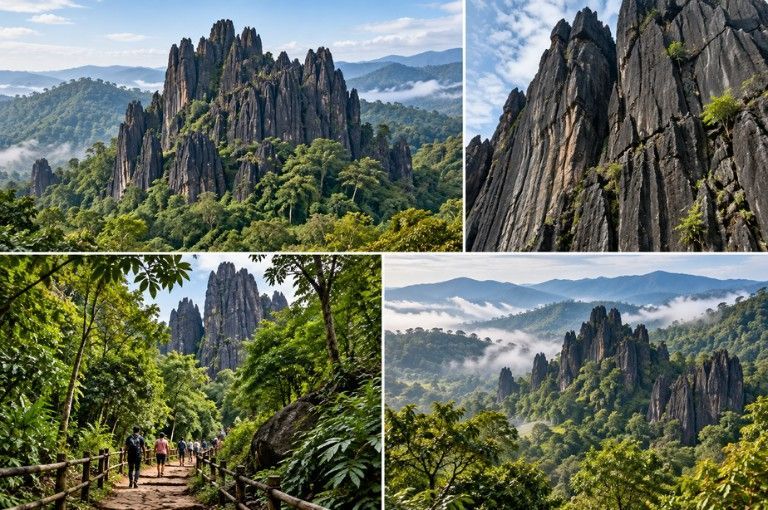
Deep inside the green forests of the Western Ghats, two giant black rocks rise straight out of the trees. Locals call them Bhairaveshwara Shikhara and Mohini Shikhara, and together they make up one of the most unusual natural sights in South India. If you search for yana caves karnataka, these are the rocks you will see in every photo.
Yana is a small village in the Uttara Kannada district of Karnataka. It sits roughly 50 to 60 km from Gokarna, so most beach travellers add it as a day trip. The visit mixes a forest drive, a short walk, a legend that people still retell, and a cave temple that stays cool even in summer. This guide tells you everything you need to plan the trip: history, location, routes, timings, the best season, nearby places, and answers to the questions travellers ask most.
| Detail | Information |
| Location | Yana village, Kumta taluk, Uttara Kannada district, Karnataka |
| Main attractions | Bhairaveshwara Shikhara, Mohini Shikhara, and the Shiva cave temple |
| Rock height | About 120 m (Bhairaveshwara) and about 90 m (Mohini), as commonly quoted |
| Distance from Gokarna | Roughly 50 to 60 km by road |
| Travel time from Gokarna | About 1.5 to 2 hours by car |
| Best time to visit | October to February; July to September for lush greenery |
| Time needed at the site | 2 to 3 hours |
| Nearest railway stations | Kumta and Gokarna Road |
| Nearest airports | Dabolim (Goa) and Hubballi |
Most caves in India form inside hills over millions of years. Yana works differently. Here, two enormous rock towers stand alone in the forest, and a small cave sits at the base of the taller one. The rocks look jet black, almost like burnt stone, and that unusual colour makes them stand out against the bright green trees around them.
Visitors come to Yana for three reasons. First, the scenery feels dramatic. The rocks look like something from a fantasy film, especially when mist wraps around their tops during the rains. Second, the place holds deep religious meaning. Thousands of devotees visit the Shiva temple under the rock every year. Third, the site stays peaceful. Unlike busy beaches, Yana gives you quiet forest air, birdsong, and plenty of space to breathe.
Photographers love the place. Trekkers enjoy the easy forest walk. Families like the short, simple climb. History and mythology fans enjoy the story behind the rocks. Few destinations in Karnataka offer so many reasons in one stop.
Yana lies in the Sahyadri hills, which form part of the Western Ghats, inside the Kumta taluk of Uttara Kannada district. The village sits close to the border with Sirsi taluk, and thick evergreen and semi-evergreen forest surrounds it on every side.
The Western Ghats rank among the world’s major biodiversity hotspots. As you drive towards Yana, you pass areca nut plantations, small streams, and patches of dense forest. Many travellers say the journey feels as rewarding as the destination itself.
Because Yana sits inland, it offers a nice contrast to the Konkan coast. A traveller who spends the morning on a beach in Gokarna can stand under a 120-metre rock tower by afternoon. That contrast is the main reason Yana has become a favourite add-on for Karnataka coastal tours, and it explains why so many people search for yana gokarna trips together.
Every old place in India carries a story, and Yana’s story is a famous one from Hindu mythology.
According to the legend, a demon named Bhasmasura prayed to Lord Shiva for many years. Pleased with his devotion, Shiva gave him a special boon: anyone whose head Bhasmasura touched would turn to ash. The demon quickly grew greedy. He decided to test the boon on Shiva himself and chased the god across the land.
Shiva ran and hid. Lord Vishnu saw the danger and took the form of Mohini, a beautiful enchantress. Mohini met Bhasmasura and challenged him to a dance contest. She copied every move he made, and he copied hers. At the right moment, she placed her hand on her own head. Bhasmasura copied the gesture without thinking, touched his own head, and burned to ashes.
Local belief says the black rocks of Yana formed from the ashes of Bhasmasura. People also say that Shiva sheltered inside the cave at the base of Bhairaveshwara Shikhara during the chase, and that is why a Shiva temple now stands there. The second rock takes its name, Mohini Shikhara, from the enchantress who saved the god.
Whether you see the tale as faith, folklore, or simple storytelling, it adds real depth to the visit. Share it with children on the way up, and the climb turns into an adventure.
The two rocks form the heart of the attraction, so they deserve a closer look.
Bhairaveshwara Shikhara is the taller of the two and stands about 120 metres high. A narrow cave opens at its base, and the main temple sits inside it. The rock face looks steep, dark, and slightly rough, with natural grooves and cracks that run down its sides.
Mohini Shikhara stands next to its taller neighbour and measures about 90 metres. Its shape looks sharper and more slender. The two rocks lean towards each other from a distance, which makes the pair look dramatic in photographs.
Geologists describe the rocks as crystalline, karst-type limestone, and the dark colour comes from natural mineral content and long exposure to weather. The surrounding landscape contains no similar outcrops, so the rocks look completely out of place. That isolation explains why people built so many stories around them.
Water seeps through the rock all year, and visitors can often hear small drips inside the cave. Moss and ferns grow along the damp surfaces during the monsoon, which adds a soft green layer over the black stone.
A flight of stone steps, commonly quoted at around 85, leads from the lower area up to the cave temple. The steps are broad and well maintained, so most people finish the climb comfortably in 10 to 15 minutes.
Inside the cave, you will find a self-formed Shiva lingam. Devotees believe that holy water drips from the rock above onto the lingam, and many people link this to the sacred river Ganga. The cave stays cool and dim, and the air smells of damp stone and incense. Priests perform daily rituals, and the temple welcomes visitors of all backgrounds.
The cave is small, so you should not expect long tunnels or deep underground passages. People who arrive expecting a large cave system sometimes feel surprised. The real charm lies in the combination of the rock, the temple, and the forest that surrounds them.
A smaller temple dedicated to the goddess Chandika also stands near the base of the rocks, so you can visit both shrines in one trip.
Yana offers more than a quick photo stop. Here are the best ways to spend your time.
Visit the cave temple. Climb the steps, offer a prayer if you wish, and enjoy the cool air inside the cave.
Walk around the base of the rocks. A short path circles the area, and every angle gives a different view of the two towers.
Take photographs. Early morning light and misty monsoon days both create stunning pictures.
Walk through the forest trail. The path from the parking area to the rocks passes through shady forest, and you may spot butterflies, birds, and the occasional squirrel.
Enjoy the silence. Sit on a step, put your phone away for ten minutes, and listen to the forest.
Try local snacks. Small stalls near the entrance sell tea, buttermilk, and simple snacks.
If you love trekking, you can explore nearby forest trails with a local guide. Always ask local people before you leave the main path, because the forest is dense and wildlife lives there.
Getting from the beach town to the rocks takes some planning, but the route is simple. Many travellers plan a yana caves gokarna day trip because the two places fit together so well.
Road travel is the easiest and most popular option. From Gokarna, drive towards Kumta, then follow the road towards Sirsi and look for the signboards that point to Yana. The drive covers roughly 50 to 60 km and takes about 1.5 to 2 hours, depending on traffic and road conditions. A private car or a hired taxi gives you the most freedom, because you can stop for photographs and refreshments along the way.
The last stretch of the road runs through forest, and mobile signals can drop. Download your map offline before you leave, and fill your fuel tank in Kumta.
Regular buses run from Gokarna to Kumta, and from Kumta you can find buses towards Sirsi. Ask the driver to drop you at the junction nearest to Yana. From there, you will need a local auto-rickshaw or a pre-booked taxi to cover the last part. Bus travel costs less, but it takes longer and needs more coordination.
The nearest railway stations are Kumta and Gokarna Road, both on the Konkan Railway line. Several long-distance trains stop at these stations. After you arrive, take a taxi or a local bus to reach Yana.
The nearest major airports are Dabolim Airport in Goa, about 140 km from Gokarna, and Hubballi Airport, which lies roughly 150 km from Yana. Hire a taxi from the airport and plan a full day for the transfer.
If you prefer to drive yourself, start early. Roads in the Ghats curve often, and fog can reduce visibility in the morning during the rainy season. Drive slowly, keep your headlights on, and avoid driving the last stretch after dark.
Yana welcomes visitors all year, but each season gives a different experience.
| Season | Months | What to Expect |
| Winter | October to February | Pleasant weather, clear skies, easy walking. This is the best time for most travellers. |
| Summer | March to May | Hot and humid. The cave stays cool, but the walk can feel tiring. Go early in the morning. |
| Monsoon | June to September | Lush green forest, mist around the rocks, and dramatic views. Steps turn slippery, and leeches appear. |
Choose October to February for comfortable travel. Choose July to September only if you love green landscapes and do not mind rain. Pack a raincoat and use shoes with a strong grip.
Maha Shivaratri brings a special atmosphere to the temple. Devotees gather for prayers and a local fair, so the site becomes much busier on that day. If you prefer quiet, avoid festival days. If you enjoy lively celebrations, this is the best day to visit.
Temple timings usually run from early morning to early evening, but they can change on festival days. Call a local contact or your tour operator to confirm the timings before you leave. Parking usually carries a small fee, and the cave temple welcomes visitors without a ticket.
The walk from the parking area to the base of the rocks takes about 10 minutes on a flat forest path. The climb to the cave adds another 10 to 15 minutes. Most people spend 2 to 3 hours at the site, including time for photographs, a prayer, and a tea break.
The walk suits children and older travellers who can climb steps at a slow pace. People with knee problems or breathing difficulty should take their time and rest on the way. The route does not need any technical trekking skills.
A few simple steps will make your trip smoother.
Start early. Reach Yana by 9 or 10 in the morning. You will avoid the midday heat and the biggest crowds.
Wear comfortable footwear. Choose sports shoes or sandals with grip. Remember that you must remove footwear before you enter the temple.
Dress modestly. Because the cave is a place of worship, wear clothes that cover your shoulders and knees.
Carry water and snacks. Shops near the entrance stock the basics, but supplies run short during busy times.
Bring insect repellent. Mosquitoes and leeches live in the forest, especially during the rains.
Carry cash. Small stalls and parking attendants rarely accept digital payments, and network coverage stays weak.
Protect your valuables. Monkeys live in the area and sometimes grab food bags and loose items.
Respect the forest. Take your rubbish with you, and do not feed the animals.
Check the weather. Heavy rain can make the steps risky, so postpone the trip if the forecast looks bad.
Plan a buffer. Leave extra time for the return journey, since the Ghat roads move slowly.
Make the most of your drive by adding one or two nearby stops.
Vibhooti Falls hides in a forest close to Yana. You reach it by a short trek, and the pools below the falls attract many visitors during and after the monsoon. The water level drops in the dry months, so plan this stop between July and December.
Magod Falls drops from a height of more than 200 metres in two stages. The viewpoint offers a wide view of the valley, and the falls look their best after heavy rain.
Unchalli Falls, also known as Lushington Falls, lies near Siddapur. A viewpoint platform gives a clear look at the water as it plunges into a deep gorge.
Sirsi is a historic town that sits in the Western Ghats. The Marikamba Temple draws many devotees, especially during its famous Jatra, which takes place every few years.
Sahasralinga, near Sirsi, features hundreds of Shiva lingas carved into rocks along the Shalmala river. The riverbed looks beautiful in the dry season, when the carvings sit fully visible.
Gokarna offers Om Beach, Kudle Beach, Half Moon Beach, Paradise Beach, and the ancient Mahabaleshwar Temple. Combine Yana with a beach evening for a perfect mix of nature, faith, and relaxation.
Use this plan if you want to cover Yana in a single day from Gokarna.
Time | Activity |
6:30 AM | Leave Gokarna by car after an early breakfast |
8:00 AM | Stop at Kumta for tea and fuel |
9:00 AM | Arrive at Yana and walk through the forest path |
9:30 AM | Climb the steps to the cave temple and offer prayers |
10:30 AM | Walk around the base of the rocks and take photographs |
12:00 PM | Eat a simple vegetarian lunch near the site |
1:00 PM | Drive to Vibhooti Falls or Magod Falls |
3:00 PM | Begin the return journey |
5:30 PM | Reach Gokarna and enjoy sunset at a beach |
If you prefer a slower pace, split the trip into two days and stay overnight in Kumta or Sirsi.
Yana itself offers very limited accommodation, so most travellers stay in Gokarna, Kumta, or Sirsi. Gokarna provides the widest choice, from beach huts and homestays to comfortable resorts. Kumta and Sirsi offer simple hotels and lodges that suit short stays.
Food near Yana stays simple and mostly vegetarian. You can try neer dosa, idli, filter coffee, and local buttermilk. In Gokarna and Kumta, look for coastal Karnataka meals with rice, sambar, coconut chutney, and fresh seafood for those who eat it. Try local specialities such as Karwari-style fish curry and kokum juice.
Yana rewards travellers who love nature, mythology, and quiet places. Two black rocks, a hidden cave temple, and a forest drive add up to a day you will remember long after you return home. Yet the trip involves a long drive, a few road turns, and some local coordination, and many travellers prefer to hand those details to experts.
A well-planned Gokarna tour package solves that problem. You get a comfortable vehicle, a driver who knows the Ghat roads, a smooth schedule, and time to enjoy each stop without stress. A good package covers the famous Gokarna beaches, the Mahabaleshwar Temple, and day-trip highlights such as Yana, Vibhooti Falls, and Magod Falls. It also lets you adjust the plan for families, couples, friends, or solo travellers.
Ready to see the black rocks for yourself? Explore a customised Yana Caves experience with a Gokarna tour package from TourTravelWorld, and let our travel team handle the planning while you enjoy the journey.
Ans: The Yana rock formations are two huge black rocks, namely Bhairaveshwara Shikhara and Mohini Shikhara, in Uttara Kannada district, Karnataka. A small cave temple of Lord Shiva sits at the base of the taller rock. People visit for the natural beauty, the legend of Bhasmasura, and the peaceful forest setting.
Ans: Yana is a village in Kumta taluk of Uttara Kannada district in Karnataka. It lies in the Western Ghats, close to Sirsi and roughly 50 to 60 km from Gokarna. Dense forest covers the entire area around the village.
Ans: Yana lies roughly 50 to 60 km from Gokarna by road. The drive takes about 1.5 to 2 hours by car. Most travellers visit Yana as a day trip from Gokarna, usually combined with a waterfall or a beach stop.
Ans: October to February is the best time to visit Yana because the weather stays cool and dry. The monsoon months, July to September, make the forest lush and green, but the steps turn slippery. Summer feels hot, so go early in the morning.
Ans: Plan 2 to 3 hours at Yana. The forest walk takes about 10 minutes, the climb to the cave takes 10 to 15 minutes, and the rest of the time goes to prayers, photographs, and rest. Add travel time if you start from Gokarna.
Ans: The cave temple welcomes visitors without a ticket, though the parking area may charge a small fee. Rules can change, so confirm the latest details with a local contact or your tour operator before you travel.
Ans: No, the Yana walk is easy. A flat forest path leads to the rocks, and a flight of stone steps takes you up to the cave. Children and older travellers can manage the route if they move slowly and rest when needed.
Ans: The rocks are made of crystalline limestone, and their dark colour comes from natural mineral content and weathering. Local legend offers another explanation: people believe the rocks formed from the ashes of the demon Bhasmasura.
Ans: Yes, you can visit Yana during the monsoon, and the forest looks beautiful then. However, the steps become slippery, leeches appear on the forest path, and heavy rain can delay your travel. Wear shoes with grip, carry a raincoat, and check the weather before you go.
Ans: Yes, Yana suits families. The path stays short and simple, and children enjoy the legend of Bhasmasura and Mohini. Hold small children’s hands on the steps, and keep food bags closed because monkeys live in the area.
Ans: You can combine Yana with Vibhooti Falls, Magod Falls, Unchalli Falls, Sahasralinga, Sirsi, and the beaches and temples of Gokarna. Most travellers pick one or two of these to keep the day relaxed.