- By Theme
-
Destinations
-
Indian Destinations
-
International Destinations
-
- Best Places to Visit
- Packages
- Search Agents
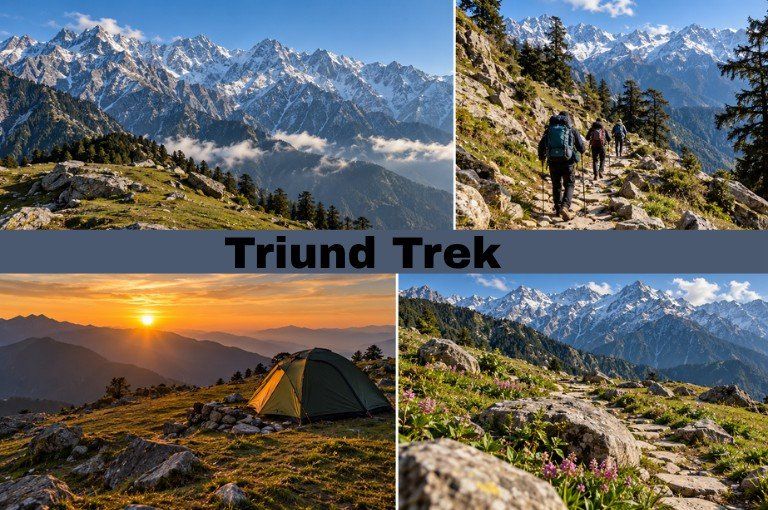
The Triund trek is one of the easiest and most rewarding short treks in Himachal Pradesh. In a single day of hiking from McLeod Ganj near Dharamshala, you reach a grassy ridge at about 2,850 metres. The snow-covered Dhauladhar range rises right in front of you, and the Kangra valley spreads out far below. No technical skills are needed, which is why beginners, families, college groups and solo travellers all love it.
This guide covers everything you need before you go: the Triund trek starting point, the best time for Triund trek, the route, Triund camping, Triund camp booking, the Snowline Triund extension and what a good Triund trek package should include.
Note:
The Triund trek starts from McLeod Ganj (via Dharamkot and Galu Devi Temple) and takes about 4 to 5 hours one way. The best time to visit Triund is March to June and September to November. Camping on the ridge is the main highlight, and booking early is wise for weekends and holidays.
| Detail | Information |
| Location | Near McLeod Ganj, Dharamshala, Himachal Pradesh |
| Altitude | About 2,850 m (9,350 ft) |
| Distance | About 9 km one way from McLeod Ganj (shorter if you start at Galu Devi Temple) |
| Duration | 4 to 5 hours one way |
| Difficulty | Easy to moderate |
| Best time | March to June and September to November |
| Snowseason | December to February |
| Nearest airport | Gaggal (Kangra), roughly 15 to 20 km from McLeod Ganj |
| Nearest | Pathankot, roughly 90 km away railhead |
| Camping | Available on the ridge, subject to local forest department rules |
Triund is a ridge at the foot of the Dhauladhar range, a branch of the Himalayas that towers above Dharamshala. The name is often linked to the three hillocks or peaks around the ridge. The trail winds through oak and rhododendron forest, past small tea stalls, and finally opens onto a wide meadow with views in every direction.
It is popular for good reasons. The trail is well marked, the climb is steady rather than extreme, and the reward is out of proportion to the effort. You can do it as a day hike, but most travellers prefer to stay overnight, watch the sunset turn the peaks gold, and wake up to sunrise over the valley.
Triund is also the gateway to higher trails. From here, hikers continue to Laka Got, Snowline and, for experienced trekkers, the Indrahar Pass.
Most people ask about the Triund trek starting point first, and the answer depends on how much walking you want to do. There are two common ways to begin.
1. From Dharamkot and Galu Devi Temple (most popular): Take a taxi or local cab from McLeod Ganj to Galu Devi Temple, which sits above Dharamkot. This is the most common starting point because it cuts down the distance and lets you begin on the main trail straight away. The walk from here is roughly 6 to 7 km.
2. From McLeod Ganj via Bhagsu or Dharamkot on foot: If you enjoy walking, you can start from McLeod Ganj itself and hike up through Dharamkot to Galu. This adds about 2 to 3 km and an extra hour or so, but it is a pleasant warm-up through the village lanes.
By air: Fly to Gaggal Airport in Kangra, then take a taxi to McLeod Ganj.
By train: Take a train to Pathankot, then continue by bus or taxi to Dharamshala and McLeod Ganj.
By road: Delhi to Dharamshala is a long overnight journey. Regular Volvo buses run from Delhi and Chandigarh, and private cabs are easy to arrange.
If you are planning from a distance, a ready-made Triund trek package usually includes pickup, which saves you the hassle of finding transport on the day.
Trekking to Triund is straightforward, but knowing the stages helps you pace yourself.
Stage 1: Galu Devi Temple to the forest trail. The path begins gently with stone steps and a wide track. This is the easiest section, so walk slowly and save your energy.
Stage 2: The Magic View Cafe stretch. After the first hour or so, the trail climbs through oak and rhododendron forest. A small cafe here is a popular rest stop with a good view of the valley. Drink water and have a snack.
Stage 3: The famous 22 curves. The last big section is a series of tight zig-zag turns known as the "22 curves". This is the steepest part of the climb. Take short breaks, keep a steady rhythm and do not rush.
Stage 4: Triund ridge. Once the curves end, the trees disappear and you step out onto the open meadow. The Dhauladhar peaks suddenly fill the sky, and most trekkers simply sit down and stare for a while.
Pace tip: Start early, ideally by 8 or 9 am. This gives you daylight to arrive comfortably, set up camp and enjoy the sunset.
The best time for Triund trek depends on what kind of experience you want. Here is a season-by-season look, which also answers the common question about the best time to visit Triund trek.
This is the most popular window. Days are pleasant, the skies are mostly clear and the forests are green and blooming, with rhododendrons flowering in spring. Daytime temperatures at the top are comfortable, while nights are cool, so carry a warm jacket. March and April can still have some snow patches near the higher sections.
This is the least recommended time. Dharamshala gets very heavy rain, trails become slippery, clouds hide the views and landslides are possible. If you must travel in the monsoon, check the weather forecast and local advisories carefully, and be ready for a cancelled plan.
Many experienced hikers consider this the best season. The air is crisp, the sky is deep blue and the mountain views are at their sharpest. Days are mild and nights get colder as November approaches. October and November are especially good for clear sunsets and star-filled nights.
Winter turns Triund into a snowy landscape, and the surrounding peaks look spectacular. It is also cold, with sub-zero temperatures at night and a real risk of snowfall blocking the trail. Winter trekking needs proper gear, a guide and flexible dates. It suits confident hikers rather than first-timers.
| Season | Months | Experience |
| Spring and early summer | March to June | Pleasant weather, green trails, popular |
| Monsoon | July to August | Heavy rain, slippery trails, avoid |
| Autumn | September to November | Clear skies, best views |
| Winter | December to February | Snow and cold, for experienced trekkers |
For the best mix of weather, views and safety, choose late September to November or April to early June.
Snowline Triund refers to the point beyond Triund, near Laka Got, where snow stays on the ground for much of the year. A small cafe known as Snowline Cafe sits at roughly 3,200 m and is a favourite stop for hikers who want a little extra adventure.
From Triund, the walk to Snowline is about 4 to 5 km and takes around 2 hours each way. The trail is more open, rockier and steeper in sections, and the weather can change quickly. Wind and cloud are common in the afternoon, so start early and keep an eye on the sky.
Good to know about Snowline:
It is best attempted in clear weather with some trekking experience.
In winter and early spring, you can walk on real snow.
Services at Snowline can be limited or closed in heavy snow, so carry your own water and snacks.
Many travellers choose a two-night plan: one night at Triund, an early morning trip to Snowline and back, and a second night or return to the base.
In trekking conversations, "Triund base camp" usually means the campsite area on the Triund ridge itself. It acts as the base for onward hikes to Laka Got, Snowline and Indrahar Pass.
The ridge is a wide, open meadow with plenty of space for tents. There are a few small food stalls offering tea, noodles, parathas and simple meals, though options are basic. Facilities such as washrooms are limited, so it is best to keep expectations simple and carry what you need.
The view is the real attraction. In the evening, the Dhauladhar peaks glow orange and pink. At night, if the sky is clear, the stars feel close enough to touch. Early morning brings soft light over Kangra valley and the town lights fade away below.
Triund camping is what turns a good day hike into a memorable trip. Spending a night on the ridge lets you enjoy the quiet, the cold air and the sky after the day crowds leave.
A twin or triple sharing tent with mattress and sleeping bag
Evening tea and snacks
Dinner and breakfast, usually simple vegetarian food
A bonfire in the evening, when allowed and weather permits
Basic toilet arrangements nearby
Carry a warm layer, cap and gloves even in summer. Nights at the top are cold.
Use your own torch or headlamp.
Keep your phone and power bank warm, as cold drains batteries fast.
Avoid loud music and respect other campers.
Do not leave any waste behind. Carry all plastic back down.
Camping rules on Triund are managed by the local forest authorities and can change by season, weather and crowd levels. Some periods may have limits on the number of campers or restrictions on bonfires. Always confirm the latest rules before you travel, or book through an operator who keeps up with them.
With crowds growing each year, Triund trek booking and Triund camp booking in advance is a smart move, especially for weekends, long holidays and peak months like April, May, October and November.
Pick your dates. Check the weather and season first. Avoid peak monsoon days.
Choose your plan. Decide between a one-night camping trip, a two-night plan with Snowline, or a customized group trip.
Compare inclusions. Check what is covered: stay, meals, guide, transfers and permits.
Confirm and pay. Book through a trusted operator and keep written confirmation.
Share traveller details. Give names, ages and any dietary or health notes, so the team can plan properly.
Is the campsite on the Triund ridge or lower down?
Are bedding, sleeping bags and mattresses included?
Who is the guide, and is he or she experienced on the route?
What is the cancellation and weather policy?
Are there any extra charges, like entry fees or porter costs?
A well-planned Triund trek package removes the small stresses and lets you focus on the hike. Packages differ, so look closely at what you are paying for.
Pickup and drop from a fixed point such as McLeod Ganj or Dharamshala
Experienced local guide
Tent stay with sleeping bag and mattress
Meals as listed, usually dinner and breakfast, sometimes lunch
Bonfire and evening tea
Basic first-aid support
Travel to and from Dharamshala
Personal expenses, snacks and extra meals
Porter or mule charges
Entry or forest fees, if applicable
Travel insurance
1 Night / 2 Days Triund Camping: Best for a quick weekend escape.
2 Nights / 3 Days Triund and Snowline: For those who want more time on the mountain and snow views.
Customised group or family trips: Flexible plans for friends, colleges, offices and families.
Prices change with season, group size and inclusions, so compare packages on value rather than the lowest price alone.
Triund is rated easy to moderate. The distance is short, but the trail climbs steadily and the last stretch of curves is steep. If you walk regularly or exercise a few times a week, you should manage it well.
Walk or jog for 20 to 30 minutes, 3 to 4 times a week, for 2 to 3 weeks before the trip.
Practice climbing stairs.
Wear shoes you have already used, so you do not get blisters.
Stay hydrated and eat light meals on the trek.
Children and older adults can do it if they are healthy and take it slowly, though families should plan extra time and check with a doctor if needed.
Trekking shoes with good grip
Light, quick-dry clothes and one warm layer, plus a jacket for the night
Woollen cap, gloves and thermals in cold months
Rain jacket or poncho
1 to 2 litres of water bottle
Sunscreen, sunglasses and a cap
Torch or headlamp
Power bank
Personal medicines and a small first-aid kit
Energy bars, nuts and dry fruits
A garbage bag to bring your waste back
Keep your backpack light. Around 5 to 7 kg is plenty for an overnight trip.
Check the weather forecast before you set out, and be ready to change plans.
Start early so you are never walking in the dark.
Stay on the marked trail, and do not take risky shortcuts.
Do not drink untreated stream water.
Tell someone your plan, or hike with a guide if you are not experienced.
Respect the mountain. Take only photos and leave only footprints.
If you feel dizzy, breathless or unwell, rest and descend if it does not improve.
Morning pickup and drive to Galu Devi Temple
Begin the trek at around 9 am, with stops at the cafes on the way
Reach Triund by afternoon, check into your tent and rest
Watch the sunset, then enjoy dinner and a bonfire
Overnight stay at camp
Wake up early for sunrise
Breakfast at camp
Optional short walk towards Laka Got or Snowline, weather permitting
Trek down to Galu Devi Temple in about 2.5 to 3 hours
Drop to McLeod Ganj or Dharamshala
TourTravelWorld is an online travel portal offering domestic and international tour packages, with a strong focus on Himachal Pradesh. If you want your Triund trip planned without the confusion, here is how we can help:
Clear Triund trek packages: Straightforward inclusions, so you know what you are getting.
Easy Triund camp booking: Choose dates and plans that fit your group, whether solo, couple, friends or family.
Flexible plans: From weekend camping to longer trips that combine Triund with Dharamshala, McLeod Ganj and nearby places.
Helpful travel support: Guidance on routes, best time and what to carry, before and during your trip.
Customised trips: Group, college, corporate and family itineraries made around your needs.
When you are ready, visit tourtravelworld.com to explore Himachal tour packages and send an enquiry for your Triund trek booking.
The Triund trek proves that a great Himalayan experience does not need a long, difficult expedition. With a clear starting point, a trail you can finish in a day and a campsite facing the Dhauladhar range, it is a perfect trip for first-time and seasoned trekkers alike.
Plan around the best season, pack smart, respect the mountain and book your stay in advance. If you would like help with a Triund trek package or Triund camp booking, TourTravelWorld is ready to plan it for you. Visit tourtravelworld.com and start your trip to Dhauladhar today.
Ans: The most common starting point is Galu Devi Temple above Dharamkot, reached by a short taxi ride from McLeod Ganj. You can also begin on foot from McLeod Ganj via Dharamkot for a longer, gentler warm-up.
March to June and September to November are the best months. Autumn offers the clearest views, while spring brings green trails and pleasant weather. Winter is good for snow but is colder and harder.
Most people take 4 to 5 hours one way, depending on fitness and how many breaks they take. The descent usually takes around 2.5 to 3 hours.
No. It is an easy to moderate trek and a popular first Himalayan trek. The final climb of 22 curves is steep, but it is short and manageable with rest breaks.
Triund sits at about 2,850 metres (9,350 feet) above sea level.
Snowline is a point beyond Triund, near Laka Got, at around 3,200 metres. It is known for lingering snow and a small cafe. It is a 4 to 5 km walk from Triund and works best in clear weather.
Yes, camping is generally available on the Triund ridge, but rules are set by local authorities and can change with season and conditions. Always check current rules before you go.
Choose your dates, select a plan, compare inclusions and confirm with a trusted operator such as TourTravelWorld. Booking early is best for weekends and peak months.
Most packages include a guide, tent stay, sleeping bag, dinner, breakfast and bonfire. Some also include transfers. Always check the exact inclusions and exclusions before paying.
Triund is a busy, popular trail and is generally considered safe for solo travellers, including women. Start early, avoid night trekking, check the weather and consider booking with a guide or group for extra comfort.
Yes, but the trail can be icy or snow-covered and nights are very cold. It is better suited to people with trekking experience, proper gear and a guide.
Triund base camp usually refers to the camping area on the Triund ridge. It is the base for further hikes to Laka Got, Snowline and Indrahar Pass.
Yes, many people do. But if you start late, you may have to rush back before dark. Staying overnight lets you enjoy the sunset, stars and sunrise without hurry.