- By Theme
-
Destinations
-
Indian Destinations
-
International Destinations
-
- Best Places to Visit
- Packages
- Search Agents
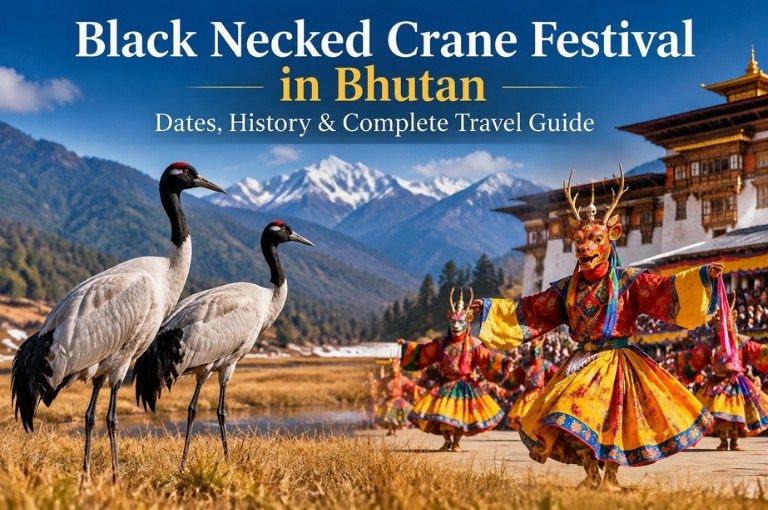
The Black Necked Crane Festival is a one-day cultural celebration held every year in the Phobjikha Valley of central Bhutan. It welcomes the return of the rare black-necked cranes from the Tibetan Plateau. Villagers, monks, schoolchildren and visitors gather in the courtyard of Gangtey Monastery for crane dances, folk songs, mask dances and conservation messages.
If you are planning a trip to Bhutan in autumn, the black necked crane festival in Bhutan is one of the best reasons to travel in November. It combines wildlife, spirituality and living tradition in one of the Himalayas' most beautiful glacial valleys. This Bhutan travel guide covers the festival's history, its meaning, what happens on the day, how to reach the valley and how to include it in your Bhutan tour package.
| Detail | Information |
| Festival name | Black Necked Crane Festival (Crane Festival Bhutan) |
| Usual date | |
| Location | Gangtey Monastery courtyard, Phobjikha Valley, Wangdue Phodrang District |
| Organiser | |
| Started | |
| Main purpose | |
| Crane season | Late October to about February/March |
| Local name for the crane | Thrung Thrung (Dzongkha) |
Confirm the exact date and programme with your tour operator before booking, as schedules can change.
The Black Necked Crane Festival is an annual event that marks the arrival of the black-necked cranes (Grus nigricollis) in Bhutan. Each winter the cranes leave their breeding grounds on the high Tibetan Plateau and fly over the Himalayas to spend the cold months in Bhutan's warmer valleys.
The main celebration is held in Phobjikha Valley, also called Gangtey Valley, at about 3,000 metres above sea level. It is a broad, U-shaped glacial valley of wetlands and dwarf bamboo, and it is the cranes' most important wintering ground in the country.
Unlike large tourist festivals, this one is small, local and community-led. The performers are mostly students and villagers, and the programme is shaped by devotion to the birds and gratitude for the valley they share.
The festival began in 1998, organised by the Royal Society for Protection of Nature (RSPN) in partnership with the local community. Its aim was to raise awareness of the black-necked crane's fragile status and to encourage people to protect the birds and their habitat.
The idea was to use Bhutan's cultural traditions to support conservation. Instead of a lecture, the festival uses dance, music and storytelling, which Bhutanese communities already treasure. Held on 11 November, it has since become a fixed date on the cultural and eco-tourism calendar.
The date is meaningful in Bhutan. It coincides with the birthday of His Majesty Jigme Singye Wangchuck, the Fourth King of Bhutan, whose reign is closely associated with the country's conservation policies.
To understand the festival, you need to understand how Bhutanese people see the crane.
The black-necked crane is known as Thrung Thrung Karmo and is regarded as a heavenly bird. It appears in Bhutanese folk songs, poems, paintings and proverbs, and it is associated with longevity, peace and good fortune. Seeing a crane in flight is considered auspicious.
The best-known tradition is that on arrival, the cranes circle Gangtey Monastery three times before settling in the valley. Before leaving in spring, they are said to circle it three times again. Local people take this as a sign of the cranes' respect for the sacred site, and many visitors are moved to see it happen.
The black-necked crane is the only crane species that lives and breeds on the high plateau. It stands over a metre tall, with a wingspan of more than two metres, grey-white plumage, a black head and neck, and a small red crown. Its global population is estimated at around 17,000 birds, and the IUCN classifies it as Near Threatened. Only a few hundred spend the winter in Bhutan, which is why every arrival matters.
Phobjikha lies in Wangdue Phodrang District in central Bhutan. It is a protected wetland and a recognised site of international importance for the cranes. Its marshes, dwarf bamboo and quiet fields give the birds food and safe roosting ground through winter.
The festival takes place in the courtyard of Gangtey Monastery, a Nyingma Buddhist monastery dating from the 17th century that overlooks the valley. Its white-walled courtyard, with the wetland below and the mountains beyond, makes an unforgettable setting for the festival.
The cranes also winter in eastern Bhutan, in the Bumdeling area of Trashiyangtse. Some years crane-related celebrations are held there as well, but the Phobjikha festival is the main, best-known and most accessible event for visitors.
The festival is short, usually one day, and best enjoyed at a relaxed pace. These are the typical highlights.
The centrepiece is the crane dance, performed by local schoolchildren in white and black costumes with long beak-like headpieces. Their slow movements copy the birds' walking, feeding and flying. It is gentle, charming and full of meaning.
Monks and villagers perform colourful mask dances in the monastery courtyard, with elaborate costumes, drums and cymbals. These sacred dances carry Buddhist teachings, and photographing them is a highlight of the day.
Community groups sing traditional songs about cranes, the valley and village life. The music is lively, and visitors are often invited to join in.
Short talks, performances and exhibitions explain why cranes and wetlands matter. Community members also share their experience of living alongside the birds.
Small stalls and nearby homestays offer Bhutanese dishes such as ema datshi (chillies and cheese), red rice, buckwheat pancakes and butter tea. Local weaving and crafts make good souvenirs.
The Black-Necked Crane Information Centre, run by RSPN, has exhibits, films and spotting scopes for watching the birds at a respectful distance. Visit it before or after the festival to see the cranes in their natural setting.
Festival date: 11 November
Crane season: late October to February or March
Peak viewing: November to January
The cranes generally start arriving in late October. Visiting around the festival gives you both the celebration and the birds, and autumn brings clear skies and sharp mountain views.
Weather in November: Days are usually cool and crisp, while nights at 3,000 metres can fall to freezing or lower. Pack warm layers.
If you cannot travel on 11 November, you can still see the cranes through the winter and enjoy the valley at a quieter time.
All visitors to Bhutan arrive at Paro International Airport (or by road from India through Phuentsholing, Gelephu or Samdrup Jongkhar). From there, the usual route is:
Paro → Thimphu → Dochula Pass → Punakha → Wangdue → Phobjikha
Thimphu to Phobjikha is roughly 5 to 6 hours by road.
The road crosses Dochula Pass, known for its 108 chortens and Himalayan views on clear days.
The last stretch climbs through forest to the valley, so allow time for stops.
Most visitors travel with a licensed Bhutanese guide and driver, which is usually required for international tourists and is included in a standard tour package
This easy walk of about 5 km, taking around 2 to 3 hours, crosses meadows, forest and villages, and is one of the best ways to experience the valley.
Explore the temple complex, see the monks at prayer and enjoy the views over the wetlands.
Stay with a local family to try home-cooked food, warm your hands by a wood-fired stove and enjoy a traditional hot stone bath.
On the way, visit Punakha Dzong, one of Bhutan's most beautiful fortresses, at the meeting point of two rivers.
Early morning mist over the marshes, cranes at dawn and sunset light on the monastery are all very rewarding for photographers. Use a zoom lens and keep your distance from the birds.
This sample can be adapted to your dates and interests.
Day 1: Arrive in Paro. Fly in, meet your guide and visit a local temple or market.
Day 2: Paro to Thimphu. Explore Thimphu's Buddha Dordenma, the Memorial Chorten and the local craft markets.
Day 3: Thimphu to Phobjikha via Dochula and Punakha. Cross Dochula Pass, visit Punakha Dzong and continue to Phobjikha for the night.
Day 4: Black Necked Crane Festival. Attend the festival at Gangtey Monastery, visit the crane centre and take the nature trail.
Day 5: Phobjikha to Paro. Drive back, with stops along the way.
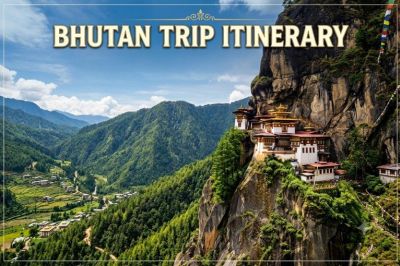
Day 6: Paro Tiger's Nest and departure. Hike to Paro Taktsang (Tiger's Nest Monastery), then depart.
A good Bhutan tour package should include accommodation, meals, a guide, a driver, transfers, entry fees and permits, so check what is covered before you book.
Book early. Rooms in Phobjikha are limited and fill quickly around 11 November.
Understand the fees. Foreign visitors pay Bhutan's Sustainable Development Fee (SDF) per night, and Indian nationals have a separate rate. Fees and rules change, so check the current position when booking.
Permits and visas. Most visitors need a visa or entry permit arranged in advance. Your tour operator can usually handle this.
Pack for cold. Bring thermals, a down jacket, gloves, a hat, sturdy shoes and sun protection.
Altitude. Phobjikha is at about 3,000 metres. Drink water, go slowly on the first day and avoid heavy meals if you feel unwell.
Respect the cranes. Keep a distance, stay quiet, never chase the birds and do not use drones near them.
Dress modestly in the monastery and follow your guide's advice.
Carry cash. ATMs are limited in the valley.
The festival is more than a cultural show. It supports real conservation work.
Community pride. It reinforces local respect for the cranes, which local people protect.
Habitat care. The valley's wetlands and dwarf bamboo are managed to keep the cranes' feeding grounds healthy.
Cranes-friendly infrastructure. Power lines in the valley have been placed underground to reduce the risk of collisions.
Responsible tourism. Visitor income helps local families see the value of protecting the birds.
Education. Children learn about wildlife and heritage in a joyful way.
When you visit, you help sustain these efforts. Staying in local homestays, buying local crafts and following wildlife etiquette all make a difference.
The Black Necked Crane Festival in Bhutan is a rare chance to see a small mountain community celebrate a bird it holds sacred. Set against the Phobjikha Valley and the ancient Gangtey Monastery, it offers dance, devotion, wildlife and a strong conservation message in one day.
If you are planning a Bhutan trip this winter, timing it for the crane festival will make it far more memorable. Speak to a trusted travel expert at TourTravelWorld to plan a customized Bhutan tour package covering the crane festival, Paro, Thimphu, Punakha and the Phobjikha Valley. Enquire today to secure your dates.
Ans: It is an annual festival in Bhutan's Phobjikha Valley that celebrates the arrival of the black-necked cranes from the Tibetan Plateau and promotes their conservation.
Ans: It is usually held on 11 November each year. Confirm the date before you travel.
Ans: It is held in the courtyard of Gangtey Monastery in Phobjikha Valley, Wangdue Phodrang District, central Bhutan.
Ans: According to local belief, the cranes circle the monastery three times when they arrive and again when they leave, as a sign of respect. Many visitors are lucky enough to see this.
Ans: They stay from late October until about February or March, before returning to the Tibetan Plateau to breed.
Ans: Yes. It is peaceful, colourful and educational. Be prepared for cold weather and high altitude.
Ans: Five to seven days works well, combining Paro, Thimphu, Punakha and Phobjikha.
Ans: Yes. The birds are in the valley through the winter, and the information centre helps you watch them responsibly.
Ans: Most packages include accommodation, meals, a licensed guide, a vehicle, permits and sightseeing. Flights and personal expenses are often extra.