- By Theme
-
Destinations
-
Indian Destinations
-
International Destinations
-
- Best Places to Visit
- Packages
- Search Agents
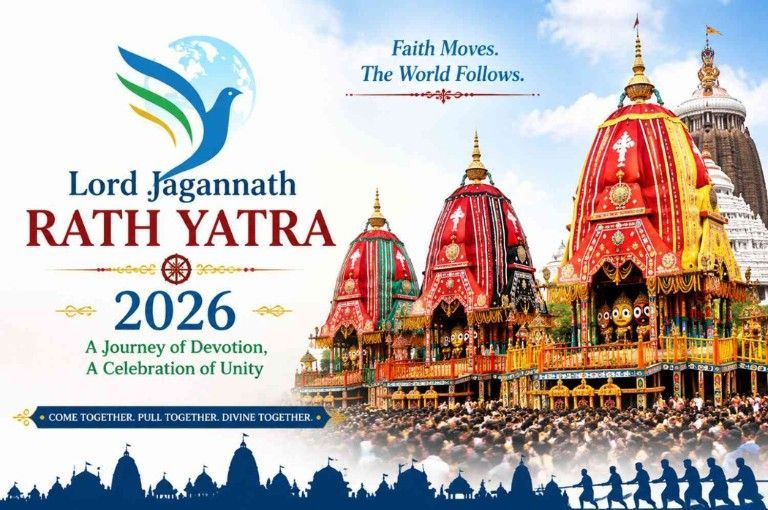
Every year, one of the world's largest religious gatherings transforms the ancient city of Puri, Odisha into a sea of devotion, colour, and faith. The Jagannath Rath Yatra — a festival so grand, so deeply rooted in culture, and so spiritually powerful that it draws millions of pilgrims and tourists from across the globe — stands as one of India's most iconic celebrations. In 2026, this sacred festival promises to be even more spectacular, and if you have ever thought about witnessing it firsthand, this is the year to go.
This complete guide covers everything you need to know about the Jagannath Rath Yatra 2026 — from its ancient origins and religious significance to the Jagannath chariot details, the procession route, rituals, and practical travel tips. Whether you are a first-time visitor or a returning devotee, this guide will help you prepare for an unforgettable spiritual journey.
The Jagannath Rath Yatra is an annual Hindu festival celebrated in honour of Lord Jagannath — a form of Lord Vishnu or Krishna — along with his siblings Balabhadra and Subhadra. The word 'Rath Yatra' literally translates to 'chariot procession' in Sanskrit. The festival involves pulling massive, elaborately decorated wooden chariots through the streets of Puri from the Jagannath Mandir (Sri Jagannath Temple) to the Gundicha Temple, located approximately 3 kilometres away.
What makes the Jagannath Ratha Yatra truly extraordinary is its democratic and inclusive spirit. Unlike many Hindu temple traditions of the past, the Rath Yatra has historically welcomed people from all castes, communities, and religions to participate in pulling the chariots and receiving the blessings of Lord Jagannath. The deities are brought out of the sanctum sanctorum — which is otherwise accessible only to Hindus — and placed on the chariots for all to see and worship.
The roots of the Rath Yatra go back more than 2,000 years, and the event finds mention in several ancient texts including the Skanda Purana, the Brahma Purana, and the Kapila Samhita. The festival is also said to have a connection with the legendary tale of Lord Krishna's visit to Vrindavan, symbolising his return to meet his childhood friends and devotees.
The Jagannath Rath Yatra 2026 is scheduled to begin on 20th June 2026, falling on the auspicious Dwitiya Tithi of the Shukla Paksha in the Hindu month of Ashadha. The full festival, including the return journey (Bahuda Yatra), spans approximately nine to ten days.
Rath Yatra (Main Chariot Procession): 20th June 2026
Hera Panchami (Goddess Lakshmi's visit): 24th June 2026
Bahuda Yatra (Return Chariot Procession): 29th June 2026
Suna Besha (Golden Attire Ceremony): 30th June 2026
Adhara Pana and Niladri Bije Re-entry of deities): 1st July 2026
Note: These dates are based on the traditional Hindu Panchanga calendar. Always confirm with official Shree Jagannath Temple Administration (SJTA) announcements as dates may vary slightly.
The most iconic element of the Rath Yatra is, without doubt, the Jagannath chariot — or Jagannath ji rath — the towering wooden vehicle on which Lord Jagannath makes his annual journey. Three distinct chariots are constructed each year for the three deities, and each one is a masterpiece of traditional craftsmanship built fresh every year from specific types of wood.
The chariot of Lord Jagannath, called Nandighosa or Garudadhwaja, is the largest and most celebrated of all. Standing approximately 45 feet tall with 16 wheels, this Jagannath rath is draped in yellow and red cloth. The chariot is adorned with carvings of deities, horses, and intricate patterns. The wooden structure is painted in vibrant colours and carries a flag called Trailokya Mohini atop its spire.
Lord Jagannath's elder brother Balabhadra travels in a chariot called Taladhwaja, which stands around 44 feet tall with 14 wheels. The chariot is covered in red and blue cloth, symbolising Balabhadra's strength and authority. Its flag is called Unnani.
Goddess Subhadra, the sister of Lord Jagannath and Balabhadra, rides in the Darpadalana chariot, which is approximately 43 feet tall with 12 wheels. Covered in black and red cloth, it represents the goddess's grace and purity. Its flag is known as Nadambika.
The construction of these chariots begins weeks before the festival, using sacred Phasi wood (a type of wood deemed pure for this purpose). Hundreds of skilled craftsmen, including carpenters called Maharana and painters called Chitrakara, work together to build and decorate these magnificent structures. No nails or metal fasteners are used; the chariots are held together entirely by wooden joints and ropes — a testament to the extraordinary traditional engineering skills passed down through generations.
Besides the main grand chariots, you will also find the concept of a Jagannath small rath at various Jagannath temples across India. These miniature chariots are replicas of the original Puri chariots and are used during local Rath Yatra celebrations held at Jagannath temples in cities like Ahmedabad, Kolkata, Delhi, and many others.
Devotees who cannot travel to Puri often participate in these local celebrations. The Jagannath small rath is crafted with the same symbolic elements — the same cloth colours, the same deity arrangement, and the same ritual of pulling the chariot through the streets. Many Hindu households and temples also keep decorative small rath models as sacred items of worship throughout the year.
The Jagannath Mandir Rath Yatra begins at the Sri Jagannath Temple in Puri — one of the four Dhams (sacred pilgrimage sites) of Hinduism. This magnificent temple, believed to have been originally built in the 12th century by King Anantavarman Chodaganga Deva, rises 65 metres above the ground and is one of the finest examples of Kalinga architecture.
On the day of the Rath Yatra, the rituals begin well before sunrise. The presiding priests perform the Mangala Arati (morning prayer) and then carry out the Pahandi — the ceremonial procession in which the deities are brought out of the temple in a slow, swaying gait that is deliberately choreographed and spiritually charged. Devotees line the route in the thousands, singing, clapping, and throwing flowers as the deities pass.
Once the deities are placed on their respective chariots, the Chhera Panhara ceremony takes place — where the Gajapati King of Puri, considered the ‘first servant’ of Lord Jagannath, sweeps the chariots with a golden broom. This deeply symbolic act reinforces the idea that before God, all are equal, even kings. Witnessing this ceremony in person is one of the most humbling spiritual experiences you can have, and it alone is reason enough to book a Puri tour package and be present on the day of the Rath Yatra.
After the ceremonies are complete, hundreds of thousands of devotees pull the three chariots using massive ropes along Puri's Grand Road (Bada Danda), which stretches approximately 3 kilometres from the Jagannath Temple to the Gundicha Temple. The Jagannath chariot leads the procession, followed by Balabhadra's Taladhwaja and then Subhadra's Darpadalana.
Pulling the chariot rope is considered one of the highest acts of devotion, and devotees believe that doing so grants them the merit of performing thousands of sacred pilgrimages. This tradition of the public pulling the Jagannath ji rath goes back centuries and forms the emotional and spiritual core of the festival.
The procession is accompanied by the sounds of conch shells, cymbals, and devotional singing. Street vendors line the route selling prasad (sacred food), flower garlands, and religious souvenirs. The entire Grand Road transforms into a moving ocean of humanity, colour, and devotion.
The deities remain at the Gundicha Temple for nine days. During this time, special rituals and offerings are conducted daily, and devotees throng the temple for darshan. On the ninth day, the Bahuda Yatra (return journey) begins, with the chariots pulled back to the Jagannath Temple along the same route.
While the Jagannath Rath Yatra is celebrated with equal fervour every year, 2026 holds special significance for several reasons. The Puri city administration and the Shree Jagannath Temple Administration (SJTA) have been undertaking significant infrastructure and heritage conservation work in the Puri Heritage Corridor project — a large-scale development initiative aimed at transforming the area around the Jagannath Temple into a world-class spiritual and tourist destination.
By 2026, many of these improvements are expected to be completed or significantly advanced, meaning visitors will experience a more organised, cleaner, and more accessible Rath Yatra environment. Wider pilgrim facilities, improved crowd management, and better viewing platforms are among the changes pilgrims and tourists can look forward to.
Additionally, the global interest in experiential and spiritual tourism has grown significantly, and the Jagannath Rath Yatra in 2026 is expected to see an even larger international audience than in previous years. For anyone on the fence about attending, 2026 is an ideal year to make the trip.
Puri is well connected to major Indian cities. The nearest major airport is Biju Patnaik International Airport in Bhubaneswar, approximately 60 kilometres away. Regular train services connect Puri to cities like Kolkata, Hyderabad, Delhi, and Mumbai. During the Rath Yatra, special trains are often operated by Indian Railways for the convenience of pilgrims.
Arrive in Puri at least two to three days before the Rath Yatra begins to secure accommodation and get your bearings. Hotels and dharamshalas fill up extremely fast during the festival period, and prices can be significantly higher than usual. Booking accommodation 3 to 4 months in advance is strongly recommended.
Arrive at Grand Road well before dawn to secure a good viewing spot. The procession begins in the morning and the best views are from the rooftops of guesthouses and hotels along the route — many of which offer paid viewing access during the festival. Follow all instructions from crowd management authorities and police, and keep children close at all times.
While the Puri Rath Yatra is the original and largest, the festival is celebrated with equal devotion at Jagannath temples across India. Major celebrations are held in:
Ahmedabad (Gujarat): One of the largest Rath Yatras outside Puri, with enormous Jagannath chariots pulling through the old city streets.
Kolkata (West Bengal): Celebrated widely in the Iskcon temple and several neighbourhood gatherings.
Vrindavan and Mathura (Uttar Pradesh): Given the Krishna connection, Rath Yatra here carries a special spiritual dimension.
Delhi: Iskcon Rath Yatra in Delhi is a major event drawing thousands of participants every year.
Surat, Patna, Hyderabad: Growing celebrations with local communities organising processions and cultural events.
Each of these local celebrations carries its own cultural flavour, but all are united by the same spirit of devotion and the same image of the Jagannath ji rath moving through the streets accompanied by the chanting of devotees.
If you are planning to travel to Odisha for the Jagannath Rath Yatra 2026, it makes perfect sense to extend your trip and explore some of the state's other magnificent attractions. Odisha is one of India's most underrated travel destinations, rich with ancient temples, pristine beaches, wildlife reserves, and tribal culture.
Konark Sun Temple: Konark Sun Temple is an UNESCO World Heritage Site and one of India's greatest architectural achievements, located just 35 km from Puri.
Chilika Lake: Asia's largest brackish water lagoon, famous for migratory birds and the rare Irrawaddy dolphin.
Bhubaneswar: The 'Temple City of India', home to over 500 ancient temples including the magnificent Lingaraj Temple.
Simlipal National Park: A biosphere reserve famous for tigers, elephants, and the spectacular Barehipani and Joranda waterfalls.
Bhitarkanika National Park: A mangrove forest sanctuary and nesting site for the Olive Ridley sea turtles.
Raghurajpur Heritage Village: A famous artisan village where you can witness Pattachitra painting, one of Odisha's most celebrated art forms.
Combining the Rath Yatra pilgrimage with a broader Odisha tour gives you a complete cultural, spiritual, and nature experience that very few Indian states can match.
If you are planning to travel to Odisha for the Jagannath Rath Yatra 2026, it makes perfect sense to extend your trip and explore some of the state's other magnificent attractions. Odisha is one of India's most underrated travel destinations, rich with ancient temples, pristine beaches, wildlife reserves, and tribal culture.
Konark Sun Temple: Konark Sun Temple is an UNESCO World Heritage Site and one of India's greatest architectural achievements, located just 35 km from Puri.
Chilika Lake: Asia's largest brackish water lagoon, famous for migratory birds and the rare Irrawaddy dolphin.
Bhubaneswar: The 'Temple City of India', home to over 500 ancient temples including the magnificent Lingaraj Temple.
Simlipal National Park: A biosphere reserve famous for tigers, elephants, and the spectacular Barehipani and Joranda waterfalls.
Bhitarkanika National Park: A mangrove forest sanctuary and nesting site for the Olive Ridley sea turtles.
Raghurajpur Heritage Village: A famous artisan village where you can witness Pattachitra painting, one of Odisha's most celebrated art forms.
Combining the Rath Yatra pilgrimage with a broader Odisha tour gives you a complete cultural, spiritual, and nature experience that very few Indian states can match.
The Jagannath Rath Yatra is not simply a festival — it is a living tradition that has endured for over two thousand years and continues to grow in scale and spiritual significance with each passing year. In 2026, as the massive Jagannath chariot rolls once again through the ancient streets of Puri with millions of devotees chanting and pulling the sacred ropes, you will witness one of humanity's greatest expressions of collective faith.
Whether you are drawn by spiritual devotion, cultural curiosity, or the sheer spectacle of the Jagannath Ratha Yatra, this is a journey that will stay with you for the rest of your life. From the towering Jagannath ji rath moving in slow splendour to the sound of a million voices rising in devotion, everything about this festival is extraordinary.
Planning your visit just got easier. If you are looking for a seamless and memorable travel experience, explore our Odisha tour package using TourTravelWorld to discover curated itineraries that combine the Rath Yatra pilgrimage with the very best of what Odisha has to offer from the Konark Sun Temple to Chilika Lake and beyond.
Yes. The Rath Yatra is an open public event and is not restricted to any religion. People of all faiths are welcome to observe, participate in pulling the chariot, and attend the celebrations on Grand Road. However, entry into the Sri Jagannath Temple itself is restricted to Hindus.
The Rath Yatra typically draws anywhere between 10 lakh to 15 lakh (1 to 1.5 million) devotees and visitors on the main day alone. Over the entire festival period, the total attendance can reach several million.
Yes. 'Chariot Festival' is the English translation of Rath Yatra. The Jagannath chariot festival in Puri is the same event referred to by both names globally.
For first-time visitors, the Rath Yatra is a completely immersive experience that combines religious ritual, folk music, traditional architecture, street food, and communal energy on a scale rarely seen anywhere in the world. It is one of those events that needs to be experienced to be fully understood.