- By Theme
-
Destinations
-
Indian Destinations
-
International Destinations
-
- Best Places to Visit
- Packages
- Search Agents
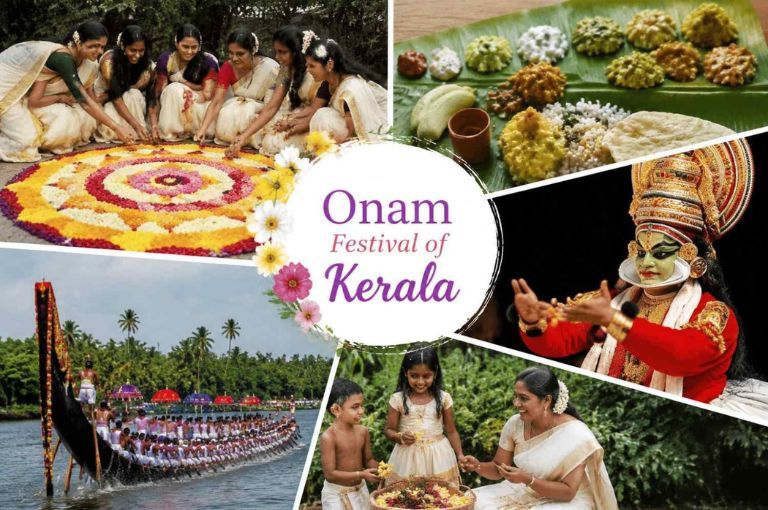
At the heart of Onam festival in Kerala is one of the most beloved stories in Hindu mythology — the tale of the great King Mahabali and Lord Vishnu’s Vamana avatar.
King Mahabali was a beloved ruler of Kerala. Under his reign, there was no hunger, no poverty, no discrimination. Everyone was equal and prosperous. His goodness was so extraordinary that his fame spread even to the heavens. The gods, feeling threatened by his growing power, appealed to Lord Vishnu for help.
Vishnu descended to earth in the form of Vamana — a small, unassuming Brahmin boy — and approached the generous king. Vamana asked Mahabali for just three steps of land. The king agreed immediately. With the first step, Vamana covered all of earth. With the second, he covered the skies. There was nowhere left to place the third step. In a moment of profound humility, Mahabali offered his own head. Vishnu placed his foot on the king and pushed him into the underworld — but moved by his devotion, granted him one boon: that he could visit his beloved people once every year.
“Onam is the day the people of Kerala open their hearts to welcome back the king who loved them more than power itself.”
That annual visit is the Onam festival of Kerala. Every celebration — the feast, the flowers, the festivities — is Kerala’s way of showing Mahabali that his kingdom is still prosperous, still joyful, still worthy of his love.
At the heart of Onam is one of the most beloved stories in Hindu mythology — the tale of the great King Mahabali and Lord Vishnu’s Vamana avatar.
At the heart of Onam is one of the most beloved stories in Hindu mythology — the tale of the great King Mahabali and Lord Vishnu’s Vamana avatar.
King Mahabali was a beloved ruler of Kerala. Under his reign, there was no hunger, no poverty, no discrimination. Everyone was equal and prosperous. His goodness was so extraordinary that his fame spread even to the heavens. The gods, feeling threatened by his growing power, appealed to Lord Vishnu for help.
Vishnu descended to earth in the form of Vamana — a small, unassuming Brahmin boy — and approached the generous king. Vamana asked Mahabali for just three steps of land. The king agreed immediately. With the first step, Vamana covered all of earth. With the second, he covered the skies. There was nowhere left to place the third step. In a moment of profound humility, Mahabali offered his own head. Vishnu placed his foot on the king and pushed him into the underworld — but moved by his devotion, granted him one boon: that he could visit his beloved people once every year.
That annual visit is Onam. Every celebration — the feast, the flowers, the festivities — is Kerala’s way of showing Mahabali that his kingdom is still prosperous, still joyful, still worthy of his love.
Onam is the day the people of Kerala open their hearts to welcome back the king who loved them more than power itself.
Onam falls during the Malayalam month of Chingam — typically between late August and mid-September on the Gregorian calendar. The festival is anchored to the Thiruvonam nakshatra (star) in the Chingam month, making it a lunisolar occasion.
In 2026, Thiruvonam (the main day of Onam) falls on Wednesday, August 26, 2026 . The Kerala government declares Onam a public holiday, and the celebrations extend across the full 10-day period — from the first day, Atham, to the grand finale, Thiruvonam.
Each day of Onam has its own name, rituals, and mood. Here is what unfolds day by day.
The festival officially begins. Families lay the first ring of their Pookkalam (floral carpet) in the front courtyard. Children go flower-gathering in the early morning. The energy is anticipatory and gentle — a quiet promise of the celebrations ahead.
A second ring is added to the floral carpet. Homes are cleaned and decorated with care. Shopping for new clothes and festive ingredients begins in earnest across markets throughout Kerala.
The Pookkalam grows larger and more intricate. Women and girls take special pride in creating elaborate symmetrical patterns. Cultural events and school programmes begin in communities across the state.
Competitions begin in many villages — Pookkalam contests, folk singing, and athletic games. The spirit of community is unmistakably alive by this point in the festival.
The famous Vallam Kali (snake boat races) of Alappuzha are traditionally held around this day. Hundreds of oarsmen row in perfect synchrony to the beat of Vanchipattu — traditional boat songs.
A quieter, reflective day in the middle of the festival. Families gather in the evenings for storytelling, local games like Kabaddi and Tug of War, and continued flower arrangements.
Pulikali (tiger dance) performances take to the streets in Thrissur — men painted as tigers and hunters enact a playful, colourful chase. One of the most photogenic events of the entire festival.
Clay idols of Mahabali and Vamana (called Thrikkakara Appan) are brought into homes and placed at the centre of the Pookkalam. Prayers and rituals mark this deeply devotional day.
Also called “Onam eve.” The grandest Pookkalam of the entire festival is arranged today. Markets are packed, kitchens are busy, and the preparations for tomorrow’s great feast reach a fever pitch.
The most sacred and joyous day of Onam. King Mahabali is believed to descend and visit his people. Families wake before dawn, bathe, dress in Kasavu attire, and offer prayers. The legendary Onam Sadya — a 26-dish vegetarian feast served on a banana leaf — is laid out at noon. Dance performances, fireworks, and celebration fill the evening. This is Onam at its most complete and most magical.
Beyond the legend and the calendar, Onam lives through its sights, tastes, and movements. Here are six experiences that define the festival.
Every morning for 10 days, families collect fresh flowers and arrange them into concentric rings on their front courtyard floor. No glue, no tools — just petals placed by hand. By Thiruvonam, the Pookkalam can have up to 10 rings and span nearly two metres in diameter, using up to 20 different flower varieties including marigolds, jasmine, wild orchids, and thumba. The result is a breathtaking mandala of colour that is made anew each day and swept away at night — a meditation on impermanence and beauty.
The Onam Sadya is arguably the most elaborate vegetarian meal in all of India. Served on a large fresh banana leaf, it includes up to 26 dishes — each placed in a specific position on the leaf, governed by centuries of culinary tradition. The full lineup includes:
Parippu: (lentil dal) and ghee
Sambar: (spiced lentil vegetable stew)
Avial: (mixed vegetables in coconut and yogurt)
Erissery: (pumpkin and lentil in coconut)
Olan: (ash gourd in coconut milk)
Four types of Pachadi (raita-style sides)
Pickles, Pappadam, and steamed rice
Palada Pradhaman and Payasam (two desserts)
Everything is eaten by hand, seated on the floor, with family. No fork required. No phone either — ideally.
Held on the backwaters of Alappuzha, the Vallam Kali is one of the most spectacular sporting events in Asia. Long, low snake boats — some carrying over 100 oarsmen — race through narrow waterways to the thunderous beat of Vanchipattu war songs. The Nehru Trophy Boat Race, held in August, draws thousands of spectators every year. The synchrony, the spray, and the sound is unforgettable.
On the fourth day of Onam, the streets of Thrissur come alive with the Pulikali — a theatrical folk performance where men paint their bodies to resemble tigers and hunters, then dance through the crowd to the beat of percussion. The body painting alone takes six to eight hours to apply. What follows is pure exuberant chaos — tigers chasing onlookers, crowds roaring back, and a city in joyful uproar.
In Thrissur’s Tripunithura, the Attachamayam procession marks the official beginning of Onam. Caparisoned elephants, classical music ensembles, performers in royal costumes, and folk artists parade through the streets in a grand ceremonial display rooted in the traditions of the Kochi royal family. It is regal, colourful, and deeply rooted in Kerala’s history.
Onam is a season of classical performance. Kathakali — Kerala’s elaborate dance-drama with face paintings, towering headdresses, and mythological storytelling — is performed in temple grounds and cultural centres throughout the festival. Thiruvathirakali, a graceful group dance performed by women in circular formation, is another hallmark of Onam evenings, its swaying movements and lamp-lit settings creating an almost hypnotic atmosphere.
Onam is celebrated across all of Kerala, but certain cities offer experiences that are truly once-in-a-lifetime.
Best for: Pulikali & Attachamayam
The cultural capital of Kerala. Home to the best Pulikali performances and the grand Attachamayam procession. The city’s markets during Onam are a spectacle in themselves.
Best for: Snake Boat Races
The Venice of the East. The Nehru Trophy Boat Race draws massive crowds. Book a houseboat stay on the backwaters for the most immersive Onam experience possible.
Best for: Cultural Events & Performances
The capital hosts large-scale government cultural programmes, Kathakali performances, and public Sadyas in parks and community centres throughout the festival.
Best for: Urban Festivities
The modern face of Onam — shopping festivals, restaurant special menus, and cultural shows. Fort Kochi’s heritage backdrop makes every celebration feel like a painting.
In a world moving faster every year, Onam asks Kerala to slow down — to sit on the floor, eat from a leaf, watch flowers bloom and fade, and remember a king who loved his people more than immortality. Experience the harvest festival of Kerala first-hand and immerse yourself in the magic of the Onam festival of Kerala.
Plan your trip and explore the full beauty of Kerala with TourTravelWorld’s Kerala tour package.