- By Theme
-
Destinations
-
Indian Destinations
-
International Destinations
-
- Best Places to Visit
- Packages
- Search Agents
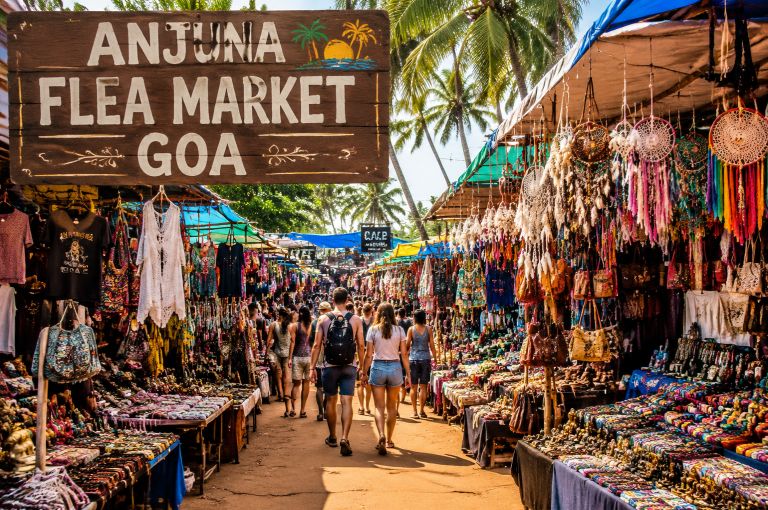
If there is one experience that perfectly captures the free-spirited, sun-soaked soul of Goa, it is the Anjuna Flea Market. Stretching across the rocky southern end of Anjuna Beach every Wednesday, this legendary bazaar has been drawing curious travellers, bargain hunters, spiritual seekers, and culture lovers for over five decades — and it shows absolutely no sign of slowing down.
Whether you are a first-time visitor to Goa wondering whether the market lives up to its reputation, or a returning traveller eager to rediscover its magic, this guide covers everything you need to know — from timings and what to shop for, to how to eat well on a budget and what to avoid.
The story of the Anjuna Flea Market is inseparable from the countercultural explosion of the 1960s and 70s. When the first wave of Western hippies — many following the famous 'Hippie Trail' from Europe through Afghanistan and India — arrived in Goa, they did not just come to stun themselves. They stayed, they settled, and they traded.
The market began organically: hippies and travellers who had run short of money would lay out their belongings on the sand — clothes, silver jewellery, records, instruments — and sell them to fellow wanderers. It was an economy built on necessity and wanderlust in equal measure.
Over the decades, the market evolved dramatically. Local Goan vendors joined in, Tibetan and Rajasthani traders made the journey south, Kashmiri carpet dealers set up shop, and international artisans found a permanent home here. What began as a ragtag gathering on the beach became one of the most recognisable open-air markets in all of Asia.
Today, the market is a registered, well-organised affair with hundreds of stalls, dedicated food sections, live music, and a steady stream of both domestic tourists and international visitors. The bohemian spirit, however, remains stubbornly intact. It is one of those rare places that has grown without losing its soul.
There is no market in India quite like the one at Anjuna. It smells of salt and incense and possibility
One of the most commonly searched questions among Goa-bound travellers concerns the Goa Anjuna flea market timings. Here is a clear breakdown of everything you need to know before you go:
The Goa Anjuna flea market timing technically runs from morning to sunset, but experienced visitors know that the sweet spot is between 9 AM and 12 PM. This is when all stalls are fully set up, the light is beautiful for browsing and photography, the heat is manageable, and the crowds have not yet peaked. By early afternoon, footfall surges dramatically — especially between November and February when the tourist season is at its height.
If you prefer a quieter, more relaxed experience, arrive early. If you enjoy the buzzing energy of a packed bazaar — complete with live music, the smell of street food, and a palpable sense of festivity — head there around 11 AM and linger through lunch.
The market operates only during the Goa tourist season, which typically runs from October to April or early May. During the monsoon months — June through September — the market does not operate due to heavy rainfall and very low tourist footfall. If you are visiting in May or October, always verify the current status with your hotel or a local contact, as start and end dates can shift slightly from year to year.
The sheer variety of goods at the flea market Anjuna can feel overwhelming on your first visit. Stalls are loosely clustered by category, though the boundaries often blur in the most delightful way. Here is a comprehensive breakdown of what you will find:
The jewellery stalls are arguably the most popular section of the entire market. From heavy oxidised silver pieces inspired by Rajasthani tribal craft to delicate Tibetan turquoise and coral work, there is something for every taste and budget. Negotiation is standard and expected — most vendors price their items with a bargaining buffer, so always make a counter-offer. If you are buying multiple pieces from the same stall, you will almost always unlock a better deal.
Bohemian fashion thrives at this market. You will find flowing palazzo pants, embroidered kurtas, hand-block-printed cotton tops, tie-dye dresses, vibrantly patterned sarongs, and kaftans in every possible colour. Many stalls source their textiles directly from Rajasthan and Gujarat, making this an excellent place to pick up authentic Indian craftsmanship at prices far below what you would find in city boutiques.
The Kashmiri stalls, typically found in a dedicated cluster, are particularly worth visiting for their beautiful embroidered shawls, pashmina scarves, and intricately carved papier-mache items. These vendors are skilled negotiators, so be prepared for a spirited back-and-forth before settling on a price.
Goa has long been a destination for those on a spiritual or wellness journey, and the flea market reflects that identity deeply. Expect an entire section dedicated to crystals and healing stones, oracle card decks, singing bowls, incense bundles, Rudraksha malas, handmade tarot decks, and beautifully hand-poured beeswax candles. Whether or not you are spiritually inclined, browsing these stalls is a multi-sensory experience in itself — the fragrance alone is worth the detour.
Towards the quieter edges of the market, you will find stalls with genuine antique items — old Portuguese-era locks and keys, colonial-era household objects, vintage cameras, old gramophone records, and original oil paintings. A few dedicated local artists also sell canvases inspired by Goan landscapes, village life, and the beach. These items tend to be higher in price and less negotiable than clothing or jewellery, but they make genuinely unique, one-of-a-kind souvenirs.
Handmade leather bags, wallets, and sandals
Wooden handicrafts and hand-carved figurines
Musical instruments — didgeridoos, hand drums, flutes, and ukuleles
Aromatherapy candles, essential oils, and incense
Yoga mats, meditation cushions, and wellness accessories
Vintage magazines, postcards, and old Goa memorabilia
Start your counter-offer at roughly 50–60% of the asking price, then work upward gradually.
Buying multiple items from the same vendor almost always unlocks a meaningful discount.
Vendors are most flexible early in the morning and close to sunset.
A friendly, relaxed attitude and a smile will get you further than aggressive pressure.
If you walk away and the vendor calls you back, you have real leverage.
No visit to the flea market is complete without eating your way through it. The food section is a market within the market — an eclectic, wonderfully chaotic mix of local Goan cuisine, international fare, fresh juices, and beachside snacks that collectively represent the multicultural DNA of Anjuna.
Start with a plate of prawn balchao or fish tikka from one of the Goan seafood stalls — the catch is genuinely fresh, often sourced from fishing boats that morning. Then make your way to the Israeli food vendors, a staple of the Goa culinary landscape for decades. Their hummus, falafel wraps, shakshuka, and fresh pita are exceptional and enormously popular with travellers of every nationality.
Tibetan momos — steamed dumplings with a choice of vegetable or meat filling — are another crowd favourite. The spiced corn on the cob (bhutta), fresh coconut water served straight from the shell, and the legendary Goan chorizo pav — a crusty local bread roll stuffed with fiery pork sausage — are experiences that every visitor owes themselves.
The market also features several shack-style sit-down restaurants where you can order a proper meal, rest your feet, and watch the world go by with a cold beer in hand. These are ideal midway stops to recharge before tackling the second half of the market.
The Anjuna Flea Market is wonderfully chaotic, and a little preparation goes a long way toward making your visit smooth and enjoyable.
Footwear: Wear comfortable, closed-toe sandals or walking shoes. Much of the market is on uneven rocky ground and sand. Flip-flops work in a pinch but can be uncomfortable over long distances.
Payment: Carry cash in Indian Rupees. While some stalls now accept UPI payments, most smaller vendors strongly prefer cash. ATMs near Anjuna can run dry on busy Wednesdays, so withdraw in advance from Calangute or Panaji.
Timing: Arrive before 10 AM for the best selection, a less crowded experience, and cooler temperatures. In peak season (December–January), the crowd can double within an hour of noon.
Sun Protection: The market has limited overhead shade. Bring a wide-brimmed hat, sunscreen rated at SPF 50 or above, and a light cotton scarf to drape over your shoulders.
Bags: Bring a large, sturdy tote bag or spacious backpack — you will almost certainly buy more than you planned. The plastic bags provided by vendors are thin and unreliable.
Hydration: Drink water consistently throughout your visit. The midday sun in Goa can be intense even in November and December. Coconut water stalls are your best friend.
Safety: Keep valuables in a zipped inner pocket, especially in the busier central sections. The market is generally safe and well-attended, but opportunistic pickpocketing is not unheard of in peak crowds.
Transport: Two-wheelers — scooters and motorcycles — are the easiest way to reach the market. Parking is available nearby. Auto-rickshaws and taxis are readily available from Calangute, Baga, Vagator, and Panaji.
While the iconic Wednesday flea market wraps up at sunset, the concept of the Anjuna night market has grown considerably in recent years. The most celebrated evening bazaar is Ingo's Saturday Night Market, located in nearby Arpora — a sister experience that runs from approximately 6 PM to midnight throughout the tourist season.
The atmosphere is electric: fairy lights strung between towering palm trees, live bands performing on a central stage, fire performers weaving between stalls, and an even more eclectic selection of food and drink than the daytime market. Shopping-wise, you will find similar categories of goods alongside more fashion-forward independent designers, furniture, home decor pieces, and exclusive handmade items not available elsewhere.
The night market is: open every Saturday during season (6 PM – midnight), located in Arpora, North Goa (a short drive from Anjuna), free to enter, family-friendly in the early evening, and particularly popular with couples and groups travelling in larger numbers.
The cooler evening temperatures also make the night market a far more physically comfortable experience than the midday heat of the Wednesday flea market, particularly if you are visiting during December or January when the daytime sun can still be surprisingly intense.
Getting to the flea market is straightforward from most North Goa accommodation hubs. Here are your best options:
Renting a scooter is by far the most popular and practical way to navigate North Goa. Daily rentals cost between Rs. 250 and Rs. 400, and riding to the market allows you to park close, explore freely, and continue to the beach and nearby cafes on the same day. If you prefer not to drive, the Goa government's Kadamba bus network connects Panaji to Anjuna with regular services throughout the morning.
The flea market makes for a perfect anchor to a full day spent in one of Goa's most characterful corners. Once you have browsed the stalls and eaten your fill, there is plenty more to explore in and around Anjuna.
The market sits right at the southern end of Anjuna Beach, so it is a natural first stop after your shopping. The beach here is rockier and more dramatically scenic than the flat stretches at Calangute or Colva — the volcanic rock formations create wonderful tidal pools, and the cliff backdrop makes for beautiful evening light photography. Several excellent beach shacks serve cold drinks and fresh seafood with unobstructed sea views.
Two of Goa's most legendary institutions, both located on or immediately adjacent to Anjuna Beach. Curlies is famous in electronic and trance music circles and has hosted some of the most memorable parties in the state's history. Shore Bar, perched dramatically on a rock ledge directly above the crashing sea, is particularly spectacular at sunset and is a must-visit for any first-time Anjuna visitor.
A 15-minute drive from Anjuna, Chapora Fort became globally famous as the backdrop for the iconic poster image in the Bollywood film Dil Chahta Hai. The fort is a beautiful Portuguese-era ruin with sweeping panoramic views of the Chapora River estuary, Vagator Beach, and the Arabian Sea stretching to the horizon. Visit in the late afternoon when the golden light transforms the red laterite walls.
Vagator's twin beaches — Big Vagator and Little Vagator (locally called Ozran) — are a short ride from Anjuna and offer a quieter, more secluded beach experience. Ozran beach in particular is dramatically scenic, with striking red-cliff formations and a cluster of beloved cliffside cafes. It is a perfect spot for a sundowner cocktail after a long, happy day at the market.
The Anjuna Flea Market Goa is not just a place to buy things — it is a place to feel something. There is a looseness to it, a sense of the world having gathered in one small patch of coastline, that you simply will not find in shopping malls or curated boutiques.
Tibetan monks selling Buddhist artefacts alongside Israeli fashion designers. Goan grandmothers selling homemade pickles next to Kashmiri carpet weavers. A Rajasthani puppeteer entertaining children while a Western expat sells handmade silver rings she has been crafting in her Anjuna cottage for fifteen years. The market is a living, breathing, cosmopolitan village that assembles itself every Wednesday and then quietly disappears by dusk.
Does it get crowded? Yes. Can it feel overwhelming in peak season? Absolutely. Are some stalls overpriced for the unknowing first-timer? Occasionally. But none of that diminishes the essential magic of the experience. Come prepared, come curious, come early — and the Anjuna Flea Market will not let you down.
Go to the Anjuna market once and you will understand why people have been making this pilgrimage for fifty years. Go twice and you will start planning your third visit before you have even left.