- By Theme
-
Destinations
-
Indian Destinations
-
International Destinations
-
- Best Places to Visit
- Packages
- Search Agents
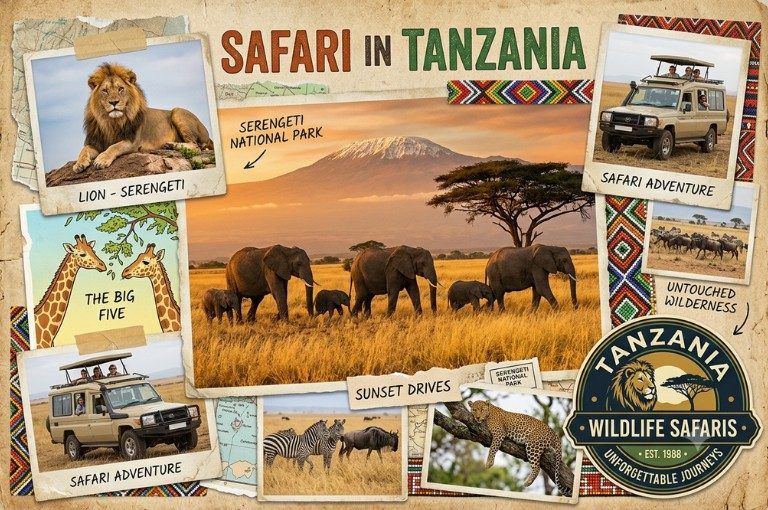
Tanzania consistently ranks among the top wildlife destinations on the planet, and for good reason. From the endless grasslands of the Serengeti to the volcanic bowl of Ngorongoro, this East African nation packs an extraordinary concentration of wildlife into a landscape few places can match. If you're dreaming of watching lions stalk the savanna, marveling at millions of wildebeest during the Great Migration, or relaxing on white-sand beaches after days in the bush, Tanzania delivers all of it in one trip.
Planning your first wildlife trip here can feel overwhelming, there is the question of when to go, how many days you need, which parks to prioritize, and how to budget sensibly. This guide walks first-time travelers through every stage of the process, from choosing the right season to packing the right gear, so you can plan with confidence and focus on the experience itself.
Tanzania is home to some of Africa's most celebrated protected areas, many of which sit within a few hours' drive of one another. The country protects roughly a third of its land as national parks and reserves, giving wildlife room to move and travelers a genuine sense of wilderness. Iconic sights include the annual Great Migration, when over a million wildebeest and hundreds of thousands of zebra cross the plains in search of fresh grazing; the Big Five, all of which are reliably spotted across the northern circuit; and diverse ecosystems ranging from open savanna to dense forest and soda lakes. Beyond the wildlife, Tanzania offers rich Maasai culture, warm hospitality, and, for those who want to extend their trip, the beaches of the Indian Ocean coast. Few countries anywhere combine this range of landscapes and experiences within such easily connected distances, which is part of why the country has become a benchmark destination for wildlife travel worldwide.
A sample seven-day itinerary illustrates how these pieces typically fit together. Day one usually involves an arrival into Kilimanjaro International Airport and an overnight stay near Arusha to rest before heading into the parks. Day two moves into Tarangire National Park for a day of game drives among its baobabs and elephant herds. Day three continues to Lake Manyara for a shorter, scenic stop before heading toward the Ngorongoro Highlands. Day four descends into the Ngorongoro Crater for a full day of game viewing, often considered one of the highlights of the entire trip given how much wildlife is visible from a single vantage point. Days five and six move into the Serengeti, allowing two full days to explore different regions of the park depending on where wildlife activity is concentrated at that time of year. Day seven wraps up with a final morning game drive before flying out, either back to Kilimanjaro or onward to Zanzibar for those extending their trip with a beach stay. Itineraries like this one are easy to shorten or extend depending on how many days you have available, and a good operator will adjust the pacing based on your interests rather than following a fixed template.
Timing shapes almost everything about your experience, so it's worth understanding the seasonal patterns before locking in dates. The dry season, roughly June through October, is the most popular window. Vegetation thins out and animals cluster around rivers and waterholes, making sightings easier and more predictable. This period also covers the dramatic river crossings in the northern Serengeti, when herds risk crocodile-infested waters to reach fresh pasture, widely considered one of the most thrilling wildlife spectacles anywhere.
The short dry spell in January and February brings a different highlight: calving season in the southern plains, when hundreds of thousands of wildebeest calves are born within a few weeks, drawing predators close behind. The long rains, typically March through May, are quieter and greener. Fewer travelers visit, availability often improves, and birdlife is at its best, though some roads become harder to navigate and certain camps close temporarily. If you're flexible and don't mind occasional showers, this shoulder season can offer excellent value and a more solitary experience, with fewer vehicles at each sighting and a noticeably calmer pace throughout the parks.
Trip costs vary considerably depending on accommodation style, group size, length of stay, and which parks you visit. Broadly speaking, options fall into three tiers: budget camping trips that keep costs down through shared group travel and basic tented camps; mid-range trips that balance comfort and value through lodges or permanent tented camps; and luxury trips built around private guides, boutique camps, and premium service. Rather than fixating on a single number, it helps to think about what matters most to you, comfort, exclusivity, or simply maximizing time in the parks, and let that guide which tier fits your trip. A reputable operator can walk you through what's typically included, such as park fees, meals, and transport, versus what's usually extra, like international flights, visas, and tips. Understanding this breakdown early makes it far easier to compare quotes later and avoid surprises once you're finalizing your itinerary.
There's no single right length for a trip, but a few common patterns work well for most travelers. A 3-4 day trip is enough to cover the Ngorongoro Crater and a portion of the Serengeti, giving first-timers a solid taste of the highlights without a huge time commitment. A 5-7 day trip allows for a fuller northern circuit, adding parks like Tarangire and Lake Manyara and giving you more time in each location without feeling rushed. For travelers with more time, 8 or more days opens up the southern circuit, parks like Ruaha and Nyerere, which see far fewer visitors and offer a wilder, more remote feel. If it's your first visit, prioritize breadth over depth; if you're returning, consider focusing on one or two parks and slowing down. Building in a buffer day or two near the start or end of your trip also helps absorb any flight delays without disrupting the rest of your itinerary.
The Serengeti National Park is the headline act for most visitors, famous for its endless plains and starring role in the Great Migration. Its sheer scale means sightings of lion, cheetah, and leopard are common throughout the year, not just during migration season, and its varying regions each offer a slightly different landscape and rhythm of wildlife activity.
The Ngorongoro Crater, a collapsed volcanic caldera, packs an astonishing density of wildlife into a relatively small area, including one of the best chances in Africa to spot black rhino. Most travelers combine a night or two here with time in the Serengeti, and a Ngorongoro crater safari is often listed as a non-negotiable stop on northern circuit itineraries thanks to how much wildlife can be seen in a single day inside the crater floor.
Tarangire National Park, known for its ancient baobab trees and large elephant herds, makes an excellent addition for travelers with an extra day, particularly in the dry season when animals concentrate along the Tarangire River. Lake Manyara, smaller and less crowded, offers a scenic contrast with its groundwater forest, flamingo-lined lake shore, and tree-climbing lions. For those chasing something quieter, the southern parks, Ruaha and Nyerere, offer a genuinely remote experience with a fraction of the visitor numbers found up north, appealing to travelers who've already done a first trip and want something less trodden.
Many first-time visitors extend their trip with a few days in Zanzibar, and it's easy to see why. After days of early wake-up calls and dusty game drives, the island's white-sand beaches and turquoise water offer a natural way to unwind. A safari zanzibar combination typically works well as a two-part trip: several days inland followed by a short domestic flight to the coast. Because the logistics are straightforward, flights between Arusha or Kilimanjaro and Zanzibar run multiple times daily, a safari tanzania zanzibar itinerary has become one of the most requested trip structures among first-time travelers, letting you experience both wildlife and beach without adding much extra travel time to an already well-planned trip.
Most international travelers fly into Kilimanjaro International Airport, the primary gateway for the northern circuit parks. Some itineraries route through Julius Nyerere International Airport in Dar es Salaam instead, particularly if you're starting your trip on the coast or heading to the southern parks. Visa requirements depend on your nationality, but most visitors can apply for an e-visa online in advance or obtain one on arrival. It's worth applying well ahead of your trip and double-checking current requirements, since visa policies can change. Domestic travel between parks is usually handled by small charter flights or safari vehicles, depending on your itinerary and budget. Charter flights save significant driving time, particularly if you're combining the northern and southern circuits or adding Zanzibar to the end of your trip.
Booking further in advance than you might expect pays off, especially for travel during the dry season or around the July to September river crossings. Popular lodges and camps in the Serengeti and Ngorongoro Crater fill up six to twelve months ahead for peak weeks, and flights into Kilimanjaro International Airport can rise in price as departure dates approach. If your dates are flexible, booking six months out generally gives you the widest choice of camps and the best availability across your preferred parks. For the shoulder seasons in March through May, a shorter lead time of two to three months is usually enough, since demand is lower and camps have more open inventory.
Packing for your trip is less about volume and more about the right essentials. Stick to neutral colors, khaki, olive, and tan blend into the environment and avoid attracting insects the way bright colors and dark blues can. Layers matter more than you might expect: mornings in an open vehicle can be surprisingly cold, even in the dry season, while afternoons warm up quickly. A good pair of binoculars will dramatically improve your ability to spot distant wildlife, and a camera with a longer zoom lens is worth the extra weight if photography matters to you. Comfortable, closed-toe shoes are essential for walking safaris and camp movement after dark. Don't forget sunscreen, a hat, insect repellent, and any personal medications, along with a basic first-aid kit for minor scrapes and stomach upsets. A dry bag or protective case for cameras and electronics is also worth packing, since dust is a near-constant companion on unpaved park roads.
With so many operators offering tanzania safari tours, narrowing down your choice can feel like the hardest part of planning. Look for operators with strong, verifiable reviews, transparent structures, and clear communication about what's included. A good operator will ask questions about your interests and pace preferences rather than pushing a one-size-fits-all itinerary. Comparing several tanzania safari packages by tanzania tour operators side by side helps clarify what you are actually getting, accommodation style, vehicle type, guide-to-guest ratio, and park fee inclusions all vary significantly between operators. If you are drawn to a slower, more exclusive experience, look specifically at luxury safari tanzania options, which typically include private guides, smaller camps, and more flexible daily schedules. Serengeti tour packages in particular vary widely in structure, from set group departures with fixed dates to fully customized private itineraries. Tanzania tour packages that bundle multiple parks, transport, and accommodation into a single itinerary tend to simplify planning considerably, especially for first-time visitors who'd rather not coordinate each leg independently.
A few planning mistakes come up again and again among first-time visitors, and most are easy to avoid once you know to watch for them. Packing too rigid a schedule is one of the most common: cramming too many parks into too few days leaves little room for delayed flights, extended game drives, or simply slowing down when the wildlife viewing is exceptional. Underestimating travel time between parks is another frequent issue, since road transfers between some regions can take several hours even though the distance looks short on a map. Skipping travel insurance is a mistake many travelers only recognize the value of after something goes wrong, and given the remote nature of many parks, evacuation coverage in particular is worth the modest added cost. Finally, booking with the cheapest available operator without checking reviews or asking what's actually included can lead to unexpected gaps once you are on the ground, so it pays to compare details carefully rather than price alone.
It also helps to think about the shape of your days once you arrive. Most lodges and camps schedule an early morning game drive, when temperatures are cool and many species are most active, followed by a break during the warmer midday hours, and a second drive in the late afternoon as animals emerge again with the cooling temperatures. Some camps offer optional night drives or guided walks in areas where they're permitted, both of which add a different rhythm to the day and a chance to see nocturnal species you won't encounter otherwise. Building a little flexibility into each day, rather than treating the schedule as fixed, tends to produce the most memorable sightings, since guides will often adjust plans on the fly when word comes through about a particularly good sighting nearby.
Tanzania is generally a safe destination for travelers, particularly when traveling with an established operator and staying within organized camps and lodges. Before you go, check current vaccination recommendations with a travel health provider, yellow fever documentation is required for entry from certain countries, and malaria prophylaxis is commonly recommended for the regions you'll be visiting. Travel insurance that covers medical evacuation is worth prioritizing, given the remote nature of many parks. During game drives, always follow your guide's instructions, particularly around staying inside the vehicle in areas where it's required and keeping a safe distance from wildlife. Simple habits, like carrying a water bottle, applying sunscreen regularly, and pacing yourself during early starts, go a long way toward keeping the trip comfortable from start to finish.
Planning your first trip doesn't need to feel overwhelming once you break it down into these stages: season, itinerary length, parks, logistics, and packing. Whether you're drawn to the drama of the Great Migration, the density of wildlife in the Ngorongoro Crater, or a quiet stretch of Zanzibar beach at the end of your trip, a well-planned itinerary makes all the difference between a good trip and an unforgettable one.
If you would rather leave the logistics to someone else, TourTravelWorld can help you build the right safari in Tanzania itinerary from start to finish, matched to your season, budget, and travel style.
Ans: Begin by deciding roughly when you want to travel, since season affects both which wildlife events you'll see and how crowded parks will be. From there, decide how many days you have and whether you want to focus on the northern circuit, southern circuit, or combine your trip with Zanzibar, then work with an operator to build out the details from there.
Ans: The dry season, from June through October, generally offers the easiest and most predictable wildlife viewing, including the dramatic river crossings in the northern Serengeti. If you're specifically interested in calving season, January and February in the southern plains is the better window, since that's when newborn wildebeest calves draw large numbers of predators into the open grasslands.
Ans: Most first-timers find that five to seven days strikes a good balance, allowing time for the Ngorongoro Crater and a meaningful stretch in the Serengeti without feeling rushed. Shorter trips of three to four days are workable if time is limited, while longer trips open up quieter southern parks that reward travelers with more flexibility.
Ans: Most visitors need a visa, which can typically be arranged online in advance through an e-visa or obtained on arrival at major entry points. Requirements vary by nationality, so it's worth confirming the details specific to your passport well before you travel, ideally as soon as your dates are confirmed.
Ans: Kilimanjaro International Airport is the main gateway for the northern circuit parks, while Julius Nyerere International Airport in Dar es Salaam suits itineraries starting on the coast or heading to the southern parks. Some travelers fly into one and out of the other, depending on how their route is structured.
Ans: Yes, particularly when traveling with a reputable operator and following standard safety guidance, such as staying inside vehicles where required and keeping a safe distance from wildlife. Travel insurance with medical evacuation coverage is strongly recommended given how remote some of the parks are, and it's a detail worth sorting out before you finalize your booking rather than after.
Ans: Yes, pairing time inland with a few days on Zanzibar is one of the most popular ways to structure a first trip, and the short domestic flight between the two makes it easy to fit into most itineraries without adding significant extra planning.
Ans: Neutral-colored clothing, layers for temperature swings between morning and afternoon, binoculars, a camera with zoom capability, comfortable closed-toe shoes, sunscreen, insect repellent, and any personal medications are the core essentials worth prioritizing before you pack anything else.