- By Theme
-
Destinations
-
Indian Destinations
-
International Destinations
-
- Best Places to Visit
- Packages
- Search Agents
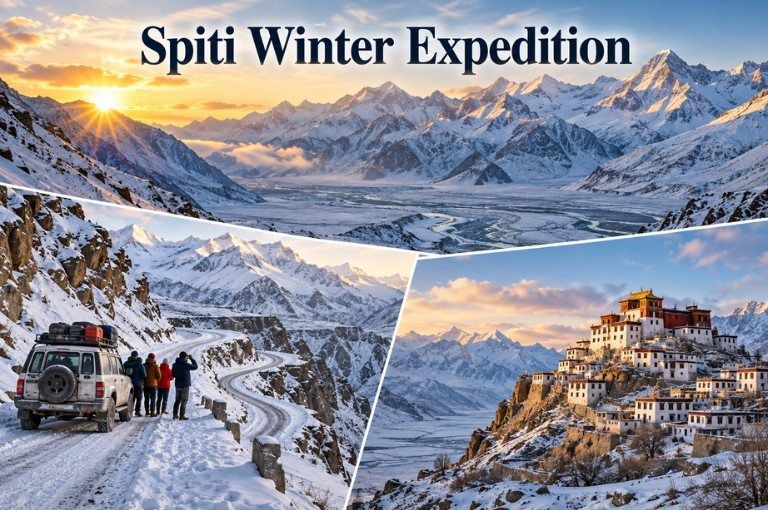
Spiti in winter is a frozen high-altitude desert where temperatures fall below -20°C, rivers turn to ice and the mountains are covered in snow. Winter Spiti Valley is open for travel from November to February, mostly through the Shimla-Kinnaur route. It is quiet, cold and very beautiful, and it suits travellers who want snow, silence and rare wildlife instead of crowds.
Most people visit Spiti between May and October. Visiting in the cold months is a different experience. The valley is almost empty, the villages move at a slow pace, and the landscape looks like a painting in white, brown and blue. This guide covers everything about a winter Spiti trip: weather, routes, places to visit, activities, costs, packing and safety.
Detail | Information |
Location | Himachal Pradesh, India |
Average altitude | 3,800 m (Kaza) to 4,500 m (high villages) |
Winter season | November to February |
Temperature range | -5°C (daytime) to -25°C (night) |
Open route in winter | Shimla – Kinnaur – Kaza |
Closed route in winter | Manali – Kunzum Pass – Kaza |
Best for | Snow, photography, snow leopard sighting, culture |
Ideal trip length | 7 to 9 days |
A winter Spiti tour is not for everyone, but those who go rarely forget it. Here is why.
Snow-covered landscapes: Monasteries, villages and mountains look completely different under snow.
Very few tourists: You get peaceful roads, empty viewpoints and more time with local families.
Snow leopard sightings: Winter is the best time to spot the elusive snow leopard around Kibber and Kaza, as the animals come down to lower altitudes in search of prey.
Frozen rivers and waterfalls: The Spiti River and many streams freeze in places, creating stunning ice formations.
Clear skies and stargazing: Cold, dry air and low pollution mean brilliant night skies and a visible Milky Way.
Authentic local culture: Winter is when villagers stay home, celebrate festivals and welcome guests warmly in homestays.
Understanding the weather is the most important part of planning spiti valley in winter. Days are bright and sunny but extremely cold. Nights are harsh.
| Month | Day Temperature | Night Temperature | Snowfall |
November | 5°C to 8°C | -5°C to -10°C | Light |
| December | 0°C to 3°C | -15°C to -20°C | Moderate to heavy |
| January | -5°C to 0°C | -20°C to -25°C | Heavy |
| February | -2°C to 3°C | -15°C to -22°C | Moderate |
These are approximate ranges. Higher villages like Langza, Komic and Hikkim can be even colder.
Sunshine during the day makes it feel bearable, but the wind chill can be sharp. Once the sun sets, the temperature drops quickly, so layered clothing and heated rooms are essential.
Spiti valley in December is the beginning of the deep winter. The first heavy snowfall usually arrives, the roads stay mostly open with careful driving, and the valley starts to look completely white.
What you can enjoy in December:
Fresh snow in Kaza, Kibber, Langza and Key Monastery
Moderate crowds, mostly photographers and adventure lovers
Good chances for a Spiti winter expedition with a local guide
Festive atmosphere around Christmas and New Year, with campfire evenings in homestays
Things to keep in mind:
Night temperatures can reach -20°C
Water pipes may freeze, so hot water is served in buckets
Roads can be closed for a day or two after heavy snow
If you want snow but slightly more comfortable conditions than January, Spiti valley December is a smart choice.
Spiti valley in January is the peak of winter. This is the month when the valley is most frozen, most silent and most photogenic.
The deepest snow and the most dramatic frozen scenery
The best time of year for snow leopard tracking
The clearest skies for night photography
Frozen streams and icicles hanging from rocks
Temperatures can drop to -25°C or lower in the higher villages
Some cafes, shops and homestays close for the season
Mobile networks and electricity can be unstable
Road delays are common, so keep 1 to 2 buffer days in your plan
January is best for experienced travellers or those who book a well-organised winter Spiti tour package with proper support.
Your route decides your safety, so this part matters.
In winter, the only reliable way to enter Spiti is from the Shimla side.
This road follows the Sutlej and then the Spiti River. It is usually open, but snowfall and landslides can cause delays, especially between Nako and Kaza.
The Kunzum Pass (about 4,590 m) closes with heavy snow, typically from November until late spring. The Manali-Kaza road is not available for winter travel. The Atal Tunnel keeps Lahaul accessible, but it does not open the route to Spiti.
Railway: Shimla (narrow gauge) or Kalka/Chandigarh (broad gauge)
Airport: Shimla (limited flights) or Chandigarh
Kaza the main town of Spiti and your base for the trip. It has the best facilities, including homestays, restaurants, a hospital and fuel. The Kaza market is quiet in winter but gives a good look at local life.
This 1,000-year-old Buddhist monastery sits on a hilltop and looks unreal with snow around it. Morning prayers with the monks are a peaceful experience.
One of the highest villages in the world connected by road (about 4,200 m). Kibber is also the top spot for snow leopard sightings in winter.
Known for its giant Buddha statue and fossil-rich land, Langza village looks like a white paradise in winter. It is cold and windy, so visit in the afternoon sunlight.
Hikkim has the world's highest post office, where you can post a postcard from the snow. Komic is one of the highest motorable villages, though road access depends on snow conditions.
Dhankar Monastery is built dramatically on a cliff. The lake above the village is often frozen, and a short trek there is possible if the weather allows.
A UNESCO-recognised heritage site with ancient wall paintings, over 1,000 years old. Tabo is lower in altitude and a good place to acclimatise.
The Pin Valley National Park is home to the Siberian ibex and snow leopards. Access can be restricted after heavy snow, so go only if the road is clear.
A beautiful village with a small lake that freezes in winter, and a good overnight stop on the way to Spiti.
A winter Spiti expedition is more than sightseeing. Here are the best experiences.
Snow leopard tracking: Join a guided wildlife tour near Kibber, Kaza and Pin Valley. Patience and local guides are the key to success.
Winter photography: Capture snow-covered monasteries, frozen rivers and star trails.
Frozen waterfall visits: Short walks to frozen streams and ice formations.
Homestay culture: Eat local dishes like thukpa, momos, butter tea and siddu while sitting around a traditional bukhari (wood stove).
Monastery visits: Spend time with the lamas and attend morning prayers.
Stargazing: The sky at -20°C is incredibly clear.
Light snow walks: Easy village walks with a guide, avoiding risky routes.
Note: Chandratal Lake and many high-altitude treks are not accessible in winter.
Accommodation in winter Spiti Valley is simple but warm if you choose right.
Homestays: Best option. Families provide hot meals, heating and local stories.
Hotels in Kaza: A few stay open all year with room heaters and hot water.
Camps: Not recommended in deep winter due to extreme cold.
Is there a room heater, bukhari or heating system?
Is hot water available?
Are meals included?
Is the property open in December and January?
Is there a power backup?
A spiti tour package in winter costs a little more than a summer plan because vehicles, fuel and operations are harder in the snow.
Approximate cost range: 25,000 to 50,000 per person for a 7 to 8 day trip, depending on group size, vehicle type, hotel choice and season dates.
| Inclusion | Usually Covered |
| Accommodation | Homestays/hotels with heating |
| Meals | Breakfast and dinner (sometimes all meals) |
| Vehicle | SUV/Tempo Traveller with local drive |
| Permits | Inner line permits where needed |
| Guide | Local guide for wildlife and sightseeing |
| Extras | Oxygen cylinder and first-aid support (in good packages) |
Experienced winter drivers
Flexible itinerary with buffer days
Heated stays
24x7 trip support
Clear safety plan for road closures
Day 1: Delhi/Chandigarh to Shimla (overnight)
Day 2: Shimla to Kalpa/Reckong Peo via Narkanda and Rampur
Day 3: Kalpa to Nako, then Tabo (visit Tabo Monastery)
Day 4: Tabo to Dhankar and Kaza
Day 5: Local sightseeing: Key, Kibber, Chicham Bridge, Langza, Hikkim, Komic (depending on snow)
Day 6: Snow leopard tracking or Pin Valley (weather permitting)
Day 7: Kaza to Kalpa/Reckong Peo
Day 8: Return to Shimla and Delhi/Chandigarh
Keep one extra day free for weather delays, which is common in spiti valley in winter.
Thermal inner wear (2 to 3 sets)
Heavy down jacket rated for -20°C
Fleece layers and woollen sweaters
Waterproof snow boots with good grip
Woollen socks, gloves, cap and balaclava
UV-protected sunglasses (snow glare is strong)
Sunscreen and lip balm
Power bank and extra batteries (cold drains them quickly)
Personal medicines, including AMS medicine on doctor's advice
Cash in small notes
Moisturiser and lip care
Altitude sickness (AMS): Kaza is at 3,800 m. Spend a night at a lower altitude like Kalpa or Tabo to acclimatise, drink plenty of water and avoid alcohol.
Don't rush: Move slowly and rest properly on the first day.
Avoid risky treks: Do not walk on frozen rivers or unstable ice without a local guide.
Stay warm: Change out of damp clothes quickly.
Check road status daily: Weather can change plans overnight.
Travel insurance: Helpful for remote areas.
Medical care: Basic care is available in Kaza, but serious cases may need transfer to Shimla or beyond.
Photographers and nature lovers
Adventure travellers and road trip lovers
Wildlife enthusiasts looking for snow leopards
Couples and friends who want solitude
Elderly travellers or those with heart or breathing issues
Families with young children
Travellers who expect luxury and fixed schedules
Spiti in winter is not an easy destination, but it is one of the most rewarding. Snow-covered monasteries, frozen rivers, clear night skies and a real chance to see a snow leopard make a winter Spiti trip unlike any other Himalayan journey. Whether you choose Spiti valley in December for its fresh snow or Spiti valley in January for its deep freeze, preparation is the key to a safe and memorable journey.
If you want a smooth and well-planned experience, you can book a winter Spiti tour package with TourTravelWorld. The team arranges heated stays, experienced winter drivers, flexible itineraries and on-ground support, so you can focus on the snow, the culture and the silence of the valley. Visit tourtravelworld.com to explore customised winter Spiti packages and start planning your trip.
Yes, Spiti Valley is open in winter through the Shimla-Kinnaur-Kaza route. The Manali-Kunzum Pass route stays closed due to heavy snow. Travel is possible but depends on weather and road conditions.
Daytime temperatures range from -5°C to 5°C, while nights can drop between -15°C and -25°C, especially in December and January.
Yes. Spiti valley in December offers fresh snowfall, fewer crowds and better road access than January. It is suitable for travellers who can handle sub-zero temperatures.
Spiti valley in January is the coldest month, with night temperatures reaching -20°C to -25°C or lower in high villages. Heavy snowfall is common, and roads may close briefly.
December and February are more manageable, while January is best for deep snow and snow leopard sightings. Pick based on your cold tolerance.
Yes, winter is the best season for snow leopard spotting around Kibber, Kaza and Pin Valley. Sightings are never guaranteed, so go with an experienced local guide and keep your expectations realistic.
A winter Spiti road trip is safe if you travel with a skilled local driver, a suitable vehicle, proper tyres and flexible dates. Self-driving without snow experience is not recommended.
A winter Spiti tour package typically costs 25,000 to 50,000 per person for 7 to 8 days, depending on stay, vehicle and group size.
Plan for 7 to 9 days, which includes travel time, acclimatisation and buffer days for weather delays.
No. Chandratal is not accessible in winter because the route is closed and covered in deep snow.
Indian citizens do not need a special permit for most of Spiti, though certain border areas may need an Inner Line Permit. Foreign nationals need a Protected Area Permit. Confirm with your tour operator before travelling.
Freshness: Add "Updated: [month year]" at the top, since AI mode favours updated content.
Facts to verify: Please double-check the approximate package costs, permit rules and temperature ranges against your latest package data and local road updates before publishing. Winter conditions change every year.