- By Theme
-
Destinations
-
Indian Destinations
-
International Destinations
-
- Best Places to Visit
- Packages
- Search Agents
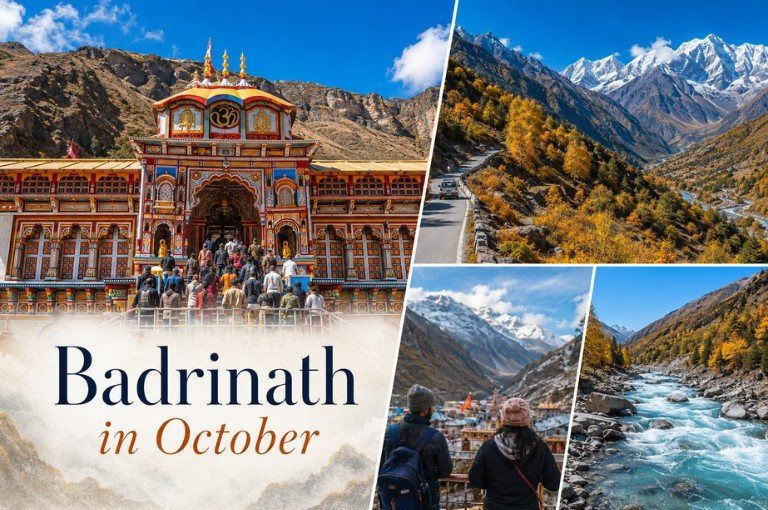
Badrinath, nestled in the Chamoli district of Uttarakhand at an elevation of over 3,100 metres, is one of the four sacred Char Dham pilgrimage sites and a destination that draws travellers long after the peak summer rush fades. As the monsoon clouds clear and the Himalayan air turns crisp, this Himalayan town enters one of its most photogenic phases of the year. Visiting Badrinath in October means witnessing snow-dusted peaks, clear blue skies, thinning crowds, and a serene atmosphere around the Badrinath Temple that is hard to find during the busier months.
This month sits at an interesting crossroads in the Himalayan calendar. The summer pilgrims have largely gone home, the monsoon landslides that plague the hill roads through July and August have stopped, and winter's heavy snow has not yet arrived to close the passes. What remains is a short, quiet window where the mountains look their sharpest and the town itself feels unhurried. This guide walks through everything a traveller needs to plan a smooth trip this month, from what to expect in the sky to what to pack in the bag, along with a sample itinerary, health precautions, and answers to the questions travellers ask most often before booking.
A commonly followed structure for a comfortable October trip looks like this:
Day 1: Arrive in Haridwar or Rishikesh, rest and acclimatise after travel
Day 2: Drive to Rudraprayag or Karnaprayag, stopping at river confluence points along the way
Day 3: Continue to Joshimath, with an optional short visit to Auli if time and weather permit
Day 4: Drive to Badrinath, check in, and attend the evening aarti at the temple
Day 5: Early morning darshan, visit Mana village and Vasudhara Falls trailhead, begin the return journey
This pacing keeps daily drive times manageable and builds in a gradual altitude gain, which matters more than the total distance covered on any single day.
A few practical notes make the trip smoother:
Book accommodation in advance, since several guesthouses begin reducing operations toward the season's end
Carry sufficient cash, as ATM access becomes sparse beyond Joshimath
Keep a printed or offline copy of key contact numbers, since mobile network coverage is patchy in several stretches
Start the day's drive early to avoid drops in visibility once clouds build up by afternoon
Respect the temple's dress code and photography restrictions inside the sanctum
Stay hydrated and pace yourself at altitude, especially if arriving directly from lower elevations
Keep vehicle documents and identification handy, since checkpoints along the route are common closer to the border area near Mana Viialge.
Badrinath holds a place among the four Char Dham sites — alongside Yamunotri, Gangotri, and Kedarnath — and is dedicated to Lord Vishnu. The temple, believed to date back over a thousand years in its current form, sits on the banks of the Alaknanda river with the Neelkanth peak rising dramatically behind it. For many pilgrims, an October visit carries a particular meaning: it is often the last comfortable opportunity of the year to complete the yatra before the temple closes its doors for winter and the deity's rituals move to Joshimath for the colder months.
Beyond its religious weight, the town has also become a base for travellers interested in the surrounding Himalayan landscape — the walk to Mana village, the trail to Vasudhara Falls, and the drive through Joshimath and Auli all extend naturally from a Badrinath visit, turning what was once a purely pilgrimage-focused trip into a broader mountain itinerary.
October sits right at the edge of the Char Dham Yatra season, which typically closes by mid-to-late November before winter snow seals the roads. This timing makes the month special: the monsoon has retreated, visibility improves dramatically, and the surrounding peaks, including Neelkanth, get their first fresh coat of snow. Travellers planning a Chardham Yatra tour package during this window often describe it as the most tranquil time to experience the temple town, as the massive crowds of May and June have thinned considerably.
Photographers particularly favour this period because the mountain air carries far less haze, and the golden light in the mornings and evenings falls cleanly on the temple's colourful facade and the Alaknanda River flowing beside it. Trekkers heading towards Vasudhara Falls or Mana Village, the last inhabited village near the India-Tibet border, also find the trails firmer and drier compared to the slippery monsoon months.
There is also a practical advantage worth mentioning: hotel and guesthouse rates in many nearby towns tend to ease once the peak season passes, and availability improves, since October no longer sees the same rush of advance bookings that May and June attract. Queues at the temple are shorter too, which means more unhurried time for darshan and for simply sitting by the river while enjoying the breathtaking Himalayan views.
Travellers often compare October against the more popular May-June window, and the differences are worth knowing before deciding when to go. May and June bring warmer days but also the year's biggest crowds, long queues, and fully booked accommodation months in advance. July and August, the monsoon months, bring the risk of landslides and road blockages along the ghat sections, which can add unpredictable delays to any itinerary. September begins the recovery from the monsoon, but the roads and trails can still be damp underfoot.
October, by contrast, offers a settled combination: clear skies, dry trails, and a noticeably calmer temple experience, all before the sharp cold of November sets in. The trade-off is that days grow shorter and nights turn considerably colder as the month progresses, which is why preparation for the cold matters more here than it would in summer.
Badrinath weather in October shifts noticeably from the earlier monsoon-affected months. Rainfall drops sharply, humidity falls, and the region settles into a stable, dry mountain climate. Mornings usually open with clear skies and gentle sunshine, but conditions can change quickly once the sun dips behind the ridgelines in the afternoon. Because the town sits at high altitude, weather here behaves differently than in the plains — a sunny mid-morning can give way to a sharp chill within hours, so layered clothing becomes essential rather than optional.
By the later half of the month, the first light snowfall is common on the higher peaks visible from the town, even if Badrinath itself may not receive snow until closer to the season's end. This gradual transition into winter is part of what makes the month so visually striking — green valleys, silver rivers, and white-capped mountains often appear in the same frame. Cloud cover, when it does appear, tends to build up in the afternoon and clear again by evening, so mornings remain the most reliable window for both sightseeing and photography.
Humidity stays low throughout the month, which means the air feels drier on the skin and in the lungs than travellers arriving from coastal or plains regions might expect. This dryness, combined with the altitude, is worth factoring into hydration plans and skincare routines during the trip.
Temperature in Badrinath in October follows a clear day-night pattern shaped by altitude. Daytime hours, particularly between late morning and early afternoon, tend to feel comfortably cool, with the sun providing enough warmth for light woollens to suffice while walking around the temple complex or the market lanes. Once the sun sets, however, the drop is steep, and nights turn genuinely cold, often requiring heavy jackets, thermal layers, and covered footwear.
Early in the month, daytime conditions remain relatively mild, while nights are brisk but manageable with standard winter wear. Moving toward the last week of October, the badrinath temperature in October drops further, and both mornings and evenings feel noticeably colder, signalling the approach of the Himalayan winter. Travellers arriving from warmer parts of the country often underestimate this swing, so checking a short-range forecast a day or two before arrival is a sensible habit, since mountain weather can shift with little warning.
Wind chill also plays a role here. Even when the thermometer reading seems tolerable, a steady breeze coming off the glaciers can make the air feel considerably colder than the number suggests. This is why experienced Himalayan travellers judge conditions as much by wind and cloud cover as by the recorded temperature alone. Indoor spaces such as guesthouses and dhabas usually offer some heating or bonfire arrangements by this point in the season, and it's worth confirming this while booking a stay, since not every property maintains the same level of warmth.
Packing correctly makes the difference between an enjoyable trip and an uncomfortable one. A few essentials stand out for this time of year:
Heavy woollen jacket or a down jacket for early mornings and nights
Thermal inners, ideally two sets for rotation
Woollen cap, gloves, and a muffler to guard against wind chill
Waterproof and insulated trekking shoes with good grip
Woollen socks, preferably two pairs to layer if needed
A light raincoat or poncho, since brief showers are still possible early in the month
Moisturiser and lip balm, as the dry mountain air can chap skin quickly
A reusable water bottle and some dry snacks for the long mountain drive
Personal medication, a basic first-aid kit, and any prescribed altitude-sickness tablets after consulting a doctor
A small power bank, since charging points can be limited in remote stretches
A torch or headlamp for early morning temple visits before sunrise
Layering is the golden rule at this altitude — it is far easier to remove a layer during a sunny afternoon than to arrive underprepared for a cold night. Packing clothes that can be added or removed in stages, rather than one single heavy outfit, tends to work best across the wide temperature swing between day and night.
Because Badrinath sits well above 3,000 metres, mild altitude discomfort such as headaches, breathlessness, or fatigue is not unusual for travellers arriving quickly from lower elevations. Building in an overnight halt at Joshimath before the final ascent gives the body a better chance to adjust gradually rather than climbing the full height in one stretch. Drinking plenty of water, avoiding alcohol during the ascent, and eating light meals in the first day or two all help reduce discomfort.
Travellers with pre-existing heart or respiratory conditions should consult a doctor before planning the trip, and it's worth carrying a note of any regular medication along with basic details of blood group and allergies, since medical facilities in the immediate area are limited compared to larger towns.
Beyond the temple visit itself, October opens up a handful of experiences that are harder to enjoy during the crowded summer season.
Attend the Maha Abhishek and evening aarti at the Badrinath Temple, which feels particularly serene with smaller crowds
Take a short walk to Tapt Kund, the natural hot spring believed to have medicinal properties, right beside the temple
Visit Mana village, the last village on the Indian side before the Tibet border, and see Vyas Gufa and Bheem Pul
Trek to Vasudhara Falls, a moderate trail rewarding visitors with a dramatic waterfall view against a mountain backdrop
Walk along the Alaknanda river ghats for quiet morning photography before the town gets busy
Explore the local market for woollen shawls, prayer items, and Garhwali handicrafts
Visit Charanpaduka, a short trek from Mana believed to bear the footprint of Lord Vishnu
Spend an evening simply sitting by the river as the temple lights come on, one of the quieter highlights of an October trip.
Badrinath is well connected by road from major towns in Uttarakhand, though it has no direct rail or air link. The nearest airport is Jolly Grant Airport in Dehradun, and the nearest railhead is Rishikesh, both of which connect onward to Badrinath via a scenic mountain drive through Rudraprayag, Karnaprayag, and Joshimath. Most travellers break the journey into two days, halting overnight at Joshimath or Pandukeshwar before continuing to Badrinath the next morning, since the mountain roads are best driven in daylight.
Shared taxis, private cabs, and state transport buses operate regularly on this route through October, though it's worth checking road conditions a day in advance, as occasional landslide-related delays can occur on the ghat sections even outside the monsoon. Travellers driving their own vehicle should keep the fuel tank topped up at Joshimath, since petrol pumps beyond that point are sparse.
A trip to Badrinath in October pairs naturally with a few nearby stops. Joshimath, the last major town before the final climb, serves as a good base for acclimatisation and also offers access to Auli, known for its meadows and ropeway views of the Nanda Devi range. Hemkund Sahib, though typically closed by this time due to snow, marks the trekking season's natural close, and travellers planning that route should confirm accessibility before setting out. Rudraprayag and Karnaprayag, the confluence towns along the route, are worth a short stop for their river-meeting points and temple architecture.
Travellers with an extra day or two often extend the trip to include Kedarnath as part of a broader Char Dham circuit, since the road network connects both sites through common junction towns, though this adds meaningfully to the total trip length and should be planned with a realistic buffer for weather delays.
Accommodation in Badrinath itself ranges from GMVN (Garhwal Mandal Vikas Nigam) guesthouses to private hotels and dharamshalas, most of which cluster within walking distance of the temple. By October, several properties begin winding down operations ahead of the winter closure, so it is worth confirming in advance that heating, hot water, and basic amenities will be available during the stay. Rooms with a river-facing view tend to book out first, given how pleasant the view becomes once the skies clear.
Travellers who prefer a more comfortable base with a wider choice of hotels often stay a night in Joshimath instead, making a day trip to Badrinath for darshan before returning to a warmer room in the evening. This approach also helps with acclimatisation, since Joshimath sits at a lower altitude than Badrinath itself.
Food options in Badrinath are simple but comforting, shaped by the altitude and the largely vegetarian nature of the pilgrimage town. Hot meals such as dal, rice, roti, and seasonal vegetables are widely available at the small dhabas and guesthouse kitchens lining the main lane, and a bowl of hot soup or a cup of ginger tea after a chilly evening walk is something most visitors come to appreciate quickly. Prasad from the temple, along with local specialities like badam (almond) and kesar (saffron) based sweets, makes for a popular treat to carry back for family and friends.
Because supply chains to this altitude are limited, menus are generally modest compared to what travellers might expect in larger towns, and it helps to keep expectations simple and enjoy the comfort-food nature of what is on offer rather than looking for variety.
For travellers carrying a camera, October's clear light rewards a few simple habits. Early morning, just after sunrise, offers the softest light on the temple facade and the surrounding peaks, before the day's haze or cloud build-up sets in. A polarising filter helps cut glare off the Alaknanda river for anyone shooting with a mirrorless or DSLR setup, while phone photographers will find that shooting into open shade rather than direct harsh sunlight gives more balanced results.
It's worth remembering that photography is restricted inside the temple's inner sanctum, so the best opportunities lie in the courtyard, the riverside ghats, and the walk toward Mana village, where the mountain backdrop opens up considerably.
Badrinath in October offers a rare balance of clear mountain views, manageable weather, and a peaceful spiritual atmosphere that is difficult to find during the crowded pilgrimage months. For travellers looking to plan this trip without the hassle of arranging transport, stays, and permits individually, a Badrinath tour package provides well-organised travel arrangements covering pickup, accommodation, and sightseeing, making it easier to focus on the spiritual journey and breathtaking Himalayan experience rather than the logistics.
Ans: Yes, October is considered one of the best months for the visit because the monsoon has cleared, skies stay largely clear, and crowd levels are much lower than the peak summer season.
Ans: Daytime hours remain cool and pleasant with sunshine, while nights turn distinctly cold, especially in the later half of the month as winter approaches.
Ans: Light snowfall is more common on the higher surrounding peaks rather than in the town itself, though the last week of the month can occasionally bring a first dusting at Badrinath as well.
Ans: Heavy woollens, thermal layers, a warm jacket, gloves, a cap, and waterproof shoes are recommended, along with a light rain layer for occasional showers.
Ans: The temple remains open for most of October before the winter closing ceremony, which typically takes place around mid-November, so travellers should confirm exact closing dates for that year before finalising travel.
Ans: A comfortable itinerary usually spans four to five days from Haridwar or Rishikesh, allowing for acclimatisation stops and a visit to nearby Mana village and Vasudhara Falls.
Ans: Yes, many travellers combine both as part of a broader Char Dham circuit, though this requires additional days and a realistic buffer for weather-related delays on the mountain roads.
Ans: A comfortable itinerary usually spans four to five days from Haridwar or Rishikesh, allowing for acclimatisation stops and a visit to nearby Mana village and Vasudhara Falls.
Ans: Yes, many travellers combine both as part of a broader Char Dham circuit, though this requires additional days and a realistic buffer for weather-related delays on the mountain roads.
Ans: Road conditions are generally more stable than during the monsoon, but travellers should still start early, check conditions in advance, and avoid driving after dark on the ghat sections.