- By Theme
-
Destinations
-
Indian Destinations
-
International Destinations
-
- Best Places to Visit
- Packages
- Search Agents
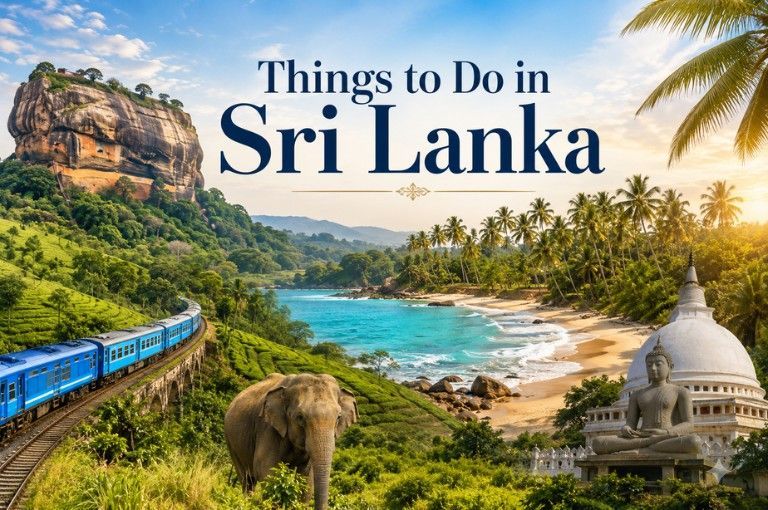
Sri Lanka packs an unusual amount of travel into one island. You can climb an ancient rock fortress in the morning, cross misty tea country by train the next day and finish the week beside the Indian Ocean. Add wild elephants, old temples, spicy food and towns where walking around without a plan becomes the plan.
The best things to do in Sri Lanka depend on your travel style. History lovers can spend days across Sigiriya, Anuradhapura and Polonnaruwa. Wildlife travellers can search for elephants, leopards and hundreds of bird species. Beach travellers have two coastlines with different surfing and swimming seasons.
Sri Lanka Tourism lists heritage trips, safaris, whale watching, Ayurveda, nature trails, adventure sports and dining among the country’s main experiences. So a good Sri Lanka itinerary usually mixes several regions instead of staying in one resort.
Sigiriya is the sight that appears on postcards, guidebooks and probably the first 6 tabs you open while planning Sri Lanka.
The fortress rises around 180 metres above the surrounding area. Its remains include royal structures, water gardens, stairways, frescoes and the famous lion-paw entrance leading towards the summit. UNESCO says the capital was built during the rule of King Kassapa I, between 477 and 495.
The climb is steep in places, though most visitors with average fitness can complete it with breaks. Start early. The rock gets hot, queues form near the narrow stairways and midday sun can turn a history lesson into a sweaty negotiation with your knees. At the top, you will see the ruins of the palace and miles of green countryside below.
Best for: First-time visitors, history lovers and photographers
Time needed: Around 2 to 4 hours
Travel tip: Carry water and wear shoes with a firm grip.
Pidurangala rock sits close to Sigiriya and has one of the clearest views of the fortress. Many travellers begin the climb before dawn, reach the top as the sky brightens and watch Sigiriya emerge from the morning haze. The final stretch requires climbing over large rocks, so both hands may be busy for a few minutes.
Take a torch, keep your phone charged and wear proper shoes. Parts of the route pass through a temple, which means shoulders and knees should be covered near the religious area.
Pidurangala works well when you want a wider view of Sigiriya. The summit is open and rocky, with enough room to sit and watch the light change.
Best for: Couples, hikers and sunrise photographers
Time needed: Around 2 hours
Travel tip: Stay in Sigiriya the previous night so you can start before sunrise.
Dambulla is a useful stop between Sigiriya and Kandy, though treating it as a quick roadside break would be a mistake. The cave temple complex contains painted interiors, Buddhist statues and religious artwork spread across several caves. Dambulla is one of Sri Lanka’s UNESCO World Heritage properties and remains an important Buddhist pilgrimage site.
There are stairs before you reach the caves. Monkeys often gather near the route, so keep food packed away and hold smaller belongings securely.
Inside, slow down. The ceilings and walls carry layers of painted detail that disappear when visitors rush from one statue to another.
Best for: Cultural travellers, families and pilgrims
Time needed: Around 1.5 to 2.5 hours
Travel tip: Remove hats and shoes where required, and dress respectfully.
Polonnaruwa was one of Sri Lanka’s historic capitals, and its archaeological zone spreads across a large area.
A bicycle makes the visit easier. You can move between palace ruins, old bathing pools, religious buildings and carved Buddha figures without spending the whole day inside a vehicle.
Start at the museum for context. Once you understand how the old city was arranged, the scattered ruins make much more sense.
Carry enough water because shade can be limited around some sections. A driver or guide can help with the history, though independent travellers can also follow the main route with a map.
Polonnaruwa is included among Sri Lanka’s UNESCO-listed historic cities.
Best for: History lovers and active families
Time needed: Half a day
Travel tip: Rent a bicycle only if you’re comfortable riding in heat.
Anuradhapura feels larger, older and more spread out than many travellers expect.
Its religious and archaeological area includes stupas, monasteries, ponds, stone carvings and the sacred Bodhi tree. Worshippers still visit many of these places, so the city feels like a living religious centre rather than a closed historical site.
You will cover more ground with a tuk-tuk, bicycle or hired vehicle. The heat can become tiring around midday, especially when walking barefoot across sun-warmed stone near sacred structures.
Anuradhapura is part of Sri Lanka’s UNESCO World Heritage collection and has deep links with the country’s Buddhist history.
Best for: Pilgrims and travellers interested in ancient history
Time needed: 1 full day
Travel tip: Keep socks in your bag. They help when temple floors become hot.
Kandy is Sri Lanka’s cultural heart and a natural stop between the Cultural Triangle and hill country.
The Temple of the Sacred Tooth Relic is the city’s main religious site. It sits beside Kandy Lake within the UNESCO-listed Sacred City of Kandy.
Visit during a puja ceremony to hear drums and see worshippers carrying flowers. These periods can get crowded, so arrive early and follow instructions from temple staff.
After the temple, walk beside the lake or visit the nearby market. Kandy’s traffic can be noisy, though the area around the lake becomes calmer towards evening.
Best for: Cultural travellers and families
Time needed: Around 2 hours for the temple
Travel tip: Wear clothing that covers your shoulders and knees.
The Royal Botanic Gardens sit outside central Kandy and give travellers a break from traffic, temple queues and tightly packed sightseeing.
The grounds contain broad lawns, tall palms, flowering plants and long walking paths. Families can spend a relaxed morning here, while photographers may stay much longer.
Bring water and leave time for slow wandering. This is a good place to place midway through a busy itinerary when everyone needs space and nobody wants another staircase.
Sri Lanka Tourism includes Peradeniya Botanic Gardens in its suggested heritage route through Kandy and the Cultural Triangle.
Best for: Families, older travellers and plant lovers
Time needed: Around 2 to 4 hours
Travel tip: Visit in the morning before the afternoon heat builds.
The train journey through Kandy, Nanu Oya, Haputale and Ella is one of Sri Lanka’s best-known travel experiences.
The route passes tea fields, forested slopes, small stations and deep valleys. Open windows bring cool air into the carriage as the train climbs through the hills.
Reserved seats can sell quickly during busy travel periods. Sri Lanka Railways has an official advance seat reservation service, so check availability before your trip rather than depending on a last-minute ticket.
Keep your body inside the train. Photos taken from an open doorway may look dramatic, though leaning outside a moving carriage carries an obvious risk.
Best for: First-time visitors and railway lovers
Time needed: Several hours, depending on your route
Travel tip: Pack water, light snacks and a layer for cooler weather.
Nine Arch Bridge curves across a green valley close to Ella. Visitors usually reach it by walking from Ella town, following a forest path or approaching from the road near Demodara. Check local train timings if you hope to see a train crossing the bridge, though schedules can change.
Early mornings are calmer and cooler. By late morning, popular viewpoints can fill with visitors waiting for the same blue train photo.
Stay off the tracks when a train approaches and follow local safety instructions. The bridge is still part of an operating railway route.
Best for: Walkers and photographers
Time needed: Around 1.5 to 3 hours
Travel tip: Combine it with Little Adam’s Peak on the same morning.
Little Adam’s Peak is one of Ella’s easier hill walks. The route begins near town and passes through tea-covered slopes before reaching a series of viewpoints. The main trail suits many travellers with average fitness, though the final ridges need more care.
Go around sunrise or late afternoon. Morning usually brings cooler air, while evening gives the hills a softer colour. There are cafés and small stops around parts of the route, but carrying your own water is still sensible. Ella’s weather can change quickly, so a light rain jacket may earn its place in your bag.
Best for: Beginners, couples and families with older children
Time needed: Around 2 to 3 hours
Travel tip: Turn back when cloud, rain or slippery ground makes the ridge uncomfortable.
Ella Rock takes more effort than Little Adam’s Peak. The walk passes railway tracks, village paths, trees and steep hillside sections before reaching the upper viewpoints. Trail directions can be confusing, so use a reliable offline map or hire a local guide.
Start early and carry more water than you think you’ll drink. Heat builds once the sun rises, even when the morning begins cool. You’ll need shoes with grip, especially after rain. The descent can be harder on the knees than the climb.
Best for: Regular hikers and active travellers
Time needed: Around 4 to 6 hours
Travel tip: Ask your accommodation about current trail conditions.
Sri Lanka’s hill country was shaped by plantation agriculture, and tea remains part of daily life across the region.
A tea-estate visit can explain how leaves are picked, sorted and processed. Some tours end with a tasting session, where the difference between grades becomes much easier to understand.
Nuwara Eliya has cooler weather than the coast. Pack a light jacket, particularly for mornings and evenings.
Look for an estate that explains working conditions and allows questions instead of rushing visitors through a gift shop. You’ll leave with a better understanding of what sits behind an ordinary cup of tea.
Best for: Families, couples and food travellers
Time needed: Around 1.5 to 3 hours
Travel tip: Confirm whether the processing area operates on the day of your visit.
Horton Plains National Park sits in Sri Lanka’s highlands and is known for grassland, cloud forest and walking routes. The usual circuit takes visitors towards World’s End and Baker’s Falls. Cloud can cover the main viewpoint later in the morning, so an early start improves your chances of seeing the valley below.
Horton Plains forms part of the Central Highlands of Sri Lanka, which UNESCO recognises for its natural importance. Bring layers. Temperatures can feel cold before sunrise, then warm quickly once you start walking.
Best for: Nature lovers and hikers
Time needed: Half a day
Travel tip: Avoid single-use plastic and take all rubbish back with you.
Yala is usually the first park travellers consider when planning a Sri Lankan safari. Its habitats include forest, scrub, wetlands and coastal areas. The park is known for elephants, leopards, deer, crocodiles and birdlife, though every safari depends on luck and animal movement. Sri Lanka Tourism records more than 200 bird species in Yala, including endemic species.
Book with an operator that follows park rules and keeps a safe distance from animals. Crowding around a leopard or blocking an elephant’s path damages the experience for visitors and wildlife.
Morning and afternoon drives each have their fans. Ask your accommodation which entrance makes sense for your route.
Best for: Wildlife travellers and families
Time needed: Half a day or a full day
Travel tip: Take binoculars. Wildlife is often easier to enjoy from a respectful distance.
Udawalawe is a strong choice for travellers whose main safari goal is seeing elephants. The park has open areas that can make wildlife easier to spot than in thick forest. Visitors may also see buffalo, deer, reptiles and many kinds of birds.
Sri Lanka Tourism records 43 mammal species and 184 bird species in Udawalawe. A safari still carries no guarantee. Wild animals choose where to move, rest and feed. That uncertainty is part of the day. Choose a jeep with enough space for everyone to sit safely. An overcrowded vehicle becomes uncomfortable after the first hour.
Best for: Elephant lovers and families
Time needed: Around 3 to 5 hours
Travel tip: Morning drives are cooler, so bring a light layer for the first hour.
Minneriya lies close to Sigiriya and Polonnaruwa, making it easy to add to a Cultural Triangle route. During suitable seasonal conditions, elephants gather around water and feeding areas. Their location can shift between Minneriya, Kaudulla and nearby habitats, so ask a local operator which park has had recent sightings.
Sri Lanka Tourism lists Minneriya among the country’s key visitor attractions and wildlife areas. Keep expectations sensible. A responsible driver looks for animals without chasing them across the park.
Best for: Wildlife photographers and Cultural Triangle visitors
Time needed: Half a day
Travel tip: Choose the park according to current animal movement rather than a fixed name on your itinerary.
Mirissa is one of Sri Lanka’s main whale-watching bases. Trips usually leave early in the morning and spend several hours at sea. Sightings may include whales or dolphins, though weather, sea conditions and animal movement affect every journey.
Sri Lanka Tourism identifies Dondra Point, reached from Mirissa and nearby southern towns, as a key whale-watching area. Trincomalee is another recognised location, while Kalpitiya is known for dolphin trips.
Pick an operator that follows viewing rules, avoids chasing animals and keeps enough distance. Carry seasickness medicine when needed, along with sunscreen and a hat.
Best for: Marine wildlife travellers
Time needed: Half a day
Travel tip: Keep the following morning free in case rough sea conditions cause cancellation.
Weligama’s broad bay and beginner-friendly sections make it a common place for first-time surfers. Lessons usually begin on the sand before moving into shallow water. A good instructor explains board control, positioning and basic safety before asking you to stand up.
Check the condition of the board, leash and rash vest. Group size matters too. A lesson with fewer students gives the instructor more time to correct your stance.
After surfing, the beachfront has cafés and casual places to eat. Your shoulders may discover several muscles they had ignored until that morning.
Best for: Beginners, young travellers and groups
Time needed: Around 2 hours
Travel tip: Book a morning lesson when wind and crowds may be lighter.
Galle Fort is made for walking without a strict schedule. Start near the main gate, follow the walls and stop around the lighthouse, old streets, churches, courtyards and sea-facing bastions. The enclosed area has cafés, shops, guesthouses and restored colonial buildings. The Old Town of Galle and its Fortifications is a UNESCO World Heritage property.
Late afternoon is a good time to walk the ramparts. The heat begins to ease, locals gather along the walls and sunset draws people towards the sea-facing sections.
Best for: Couples, families and architecture lovers
Time needed: Half a day
Travel tip: Stay one night inside or near the fort to enjoy the quieter morning streets.
Colombo gives you an energetic introduction to Sri Lankan food. Try hoppers with egg, string hoppers, kottu roti, dhal curry, fish curry and coconut sambol. Bakeries and short-eat shops are handy for snacks, while markets and local restaurants give you a much wider picture than hotel dining rooms.
Sri Lanka Tourism describes Colombo as the country’s commercial and financial capital and includes dining, markets and city tours among its visitor activities. Ask about spice levels before ordering. “Medium” can have a flexible meaning.
Best for: Food travellers and short city stays
Time needed: 1 or 2 days
Travel tip: Join a guided food walk when you’re unsure what or where to order.
A cooking class gives context to the dishes you have been eating throughout the trip. Sessions may begin with a market visit or ingredient explanation before moving to curry preparation. You’ll learn how coconut, chilli, curry leaves, pandan, lime and roasted spice mixtures change flavour. Choose a small class where guests help prepare the meal. Watching someone cook from the other side of a room gets old quickly. Write down the recipes or photograph the ingredient list. Your future attempt at coconut sambol may still go slightly rogue, but at least you will have evidence of the original plan. Sri Lanka Tourism includes dining and spice-related experiences among its main activities for visitors.
Best for: Couples, families and food lovers
Time needed: Around 3 to 5 hours
Travel tip: Tell the host about allergies and dietary needs before the class.
Jaffna gives travellers a different view of Sri Lanka through its Tamil culture, food, temples and northern coastline.
Visit Nallur Kandaswamy Kovil, walk around Jaffna Fort and try local dishes made with seafood, tamarind and strong spices. Travellers with extra time can continue towards islands such as Delft.
Sri Lanka Tourism includes northern attractions and Delft’s wild horses within its national visitor listings and tourist map.
The journey from the south takes time, so Jaffna fits better into a longer itinerary. Spend at least 2 nights rather than treating it as a rushed stop.
Best for: Repeat visitors and cultural travellers
Time needed: 2 to 4 days
Travel tip: Dress respectfully when entering Hindu temples and follow photography rules.
Sinharaja is one of Sri Lanka’s major rainforest areas and a UNESCO World Heritage property. Guided walks may include birds, reptiles, insects, amphibians and thick tropical plant life. This is a place for careful observation. Large wildlife sightings matter less than the smaller details hiding around leaves, branches and wet ground.
Expect humidity, mud and leeches after rain. Closed shoes, long socks and quick-drying clothes make the walk easier. Use a local nature guide who can identify calls and movement you’d otherwise miss. A good guide may spot a tiny frog while you’re still staring at a suspiciously damp sock.
Best for: Birdwatchers and forest travellers
Time needed: Half a day or a full day
Travel tip: Protect cameras and phones from rain and humidity.
Sri Lanka can be visited throughout the year, though the best coast changes with the monsoon.
December to February generally brings better beach conditions along the southwest coast. Areas such as Colombo, Bentota, Galle, Mirissa and the southern beaches are popular during this period.
From May to September, rain becomes more common in the southwest. The east and north, including Trincomalee, Arugam Bay and Jaffna, may have better travel conditions during parts of this period.
March and April are warm, with afternoon storms possible. October and November can bring heavier rain across several regions.
Weather patterns aren’t perfectly fixed. Check local forecasts, sea warnings and park conditions shortly before travelling.
South and west coast: December to March
East coast and Arugam Bay: April to October
Cultural Triangle: Commonly visited throughout the year
Hill country: January to April often brings clearer mornings
Wildlife parks: Timing varies by park, rainfall and animal movement
A 7-day trip gives you enough time for one major route. You could combine Sigiriya, Kandy, Ella and a short beach stay, though travel days will take a noticeable share of the week.
A 10-day trip feels more comfortable. It gives you time for the Cultural Triangle, hill country, one safari and the south coast. With 14 days, you can slow down. Add Anuradhapura, Jaffna, Arugam Bay or a longer beach stay according to the season.
Day 1: Arrive and travel to Sigiriya
Day 2: Climb Sigiriya and take an afternoon safari
Day 3: Visit Dambulla and continue to Kandy
Day 4: Explore Kandy and Peradeniya
Day 5: Take the hill-country train towards Ella
Day 6: Visit Nine Arch Bridge and Little Adam’s Peak
Day 7: Travel to Udawalawe or Yala
Day 8: Morning safari and continue to the south coast
Day 9: Beach day or whale-watching trip
Day 10: Visit Galle Fort and travel towards Colombo
This route works best when arrival and departure times allow enough road travel. Sri Lanka looks small on a map, though winding hill roads and busy towns can make journeys longer than expected.
Reserved hill-country train seats can sell out, especially around holidays and busy travel months. Use the official Sri Lanka Railways reservation service or ask a reliable travel organiser to handle the booking. Keep your schedule flexible in case of delays or timetable changes.
Cover shoulders and knees at Buddhist and Hindu religious sites. You may need to remove shoes and hats before entering. Carry socks for hot stone floors and a light scarf for unexpected temple visits.
A route that looks short may involve mountain roads, town traffic or slow railway sections. Avoid placing a long transfer, major hike and evening activity on the same day. Two-night stays feel much better than arriving late and leaving again after breakfast.
Watch wild animals from a safe distance. Avoid operators that chase wildlife, crowd sightings or encourage physical contact. Whale-watching boats should follow distance rules. Safari drivers should keep roads open and give animals room to move.
Cards are accepted in many hotels and larger restaurants, though smaller cafés, shops, tuk-tuks and rural businesses may prefer cash. Keep smaller notes available for short purchases.
Visa processes, transport schedules, attraction fees and park access rules can change. Confirm them through official government or tourism channels before departure.
Choose activities according to your season and build the route around 3 to 5 overnight bases.
Leave space between long transfers, sunrise walks and wildlife drives. The extra breathing room gives you time to enjoy the island rather than checking it off.
Browse Sri Lanka tour packages on TourTravelWorld to compare routes, hotel options, transfers and sightseeing plans from travel agents. Check what each price includes, confirm the cancellation terms and choose the coast that suits your travel month.
The smartest itinerary rarely contains the highest number of stops. It contains the right stops, in the right order, with enough time to enjoy them.
Ans: Sri Lanka is known for ancient cities, Buddhist temples, tea-growing hills, wildlife parks, railway journeys and beaches. Sigiriya, Kandy, Ella, Galle, Yala and the southern coast are common first-trip stops.
Ans: First-time visitors should combine Sigiriya, Kandy or the hill country, one safari and a suitable coastline. This route covers several major Sri Lanka tourist attractions without requiring travel to every region.
Ans: Sri Lanka can work well for families when transfer days remain manageable.
Elephant safaris, shorter train journeys, botanical gardens, beginner surf lessons and beach stays often suit children better than several consecutive archaeological days.
Ans: Yes, though the itinerary should account for stairs, heat, uneven paths and long road transfers.
Use tuk-tuks or private vehicles inside large heritage zones and choose lower-level viewpoints when steep climbs feel unsuitable.
Ans: Yala suits travellers interested in leopards and varied wildlife. Udawalawe commonly suits travellers whose main priority is elephants.
Recent sightings, crowd levels and your route should guide the final choice.
Ans: Beach walks, local markets, selected viewpoints, neighbourhood walks and exploring parts of Colombo can cost little or nothing.
Transport, parking or local access charges may still apply.
Ans: Yes. Trains, buses, tuk-tuks and ride-hailing services can support an independent trip.
A private car saves time on multi-stop routes, while public transport suits slower travellers with flexible schedules.
Ans: Sri Lanka can work well for solo travellers who use normal safety precautions and plan late-night transport carefully.
Shared tours and social guesthouses can reduce the cost of safaris, transfers and activities.
Ans: Book flights and popular hotels early during busy periods.
Reserve scenic train seats and limited-capacity experiences as soon as your route is fixed. Keep weather-sensitive activities movable where possible.