India >> South Zone >> Tamil Nadu >> Chennai
About Chennai Chennai (formerly known as Madras) is the gateway to Southern India and the largest city in southern India located on the Coromandel Coast of the Bay of Bengal, developed after 1639 when the British East India Company established a fort and trading post at the small fishing village of Chennai. It is the capital city of Tamilnadu state. This coastal center of trade has drawn traffic from all over the world for centuries and maintains a cosmopolitan quality as well as a Tamil air. The center of South India's film industry, its skyline is ablaze with bright movie billboards advertising the latest celluloid fantasies.
| Area: | 174.00 Sq. kms.
|
| Best Time to Visit: | November to February
|
| Climate: | The climate is hot and humid.
|
| Main Languages: | Tamil, Telugu, Hindi and English
|
| Population: | Approx. 5.9 million
|
| Temperature: | Summer - Max: 37 Min: 22
Winter - Max: 32 Min: 19.8
|


Other Attractions In & Around


|
Fisherman s Cove
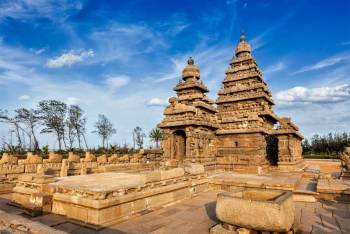
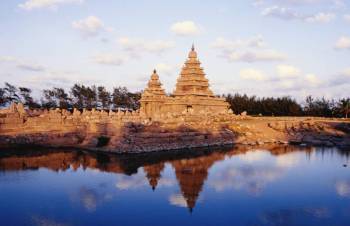
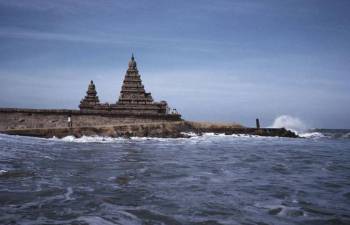
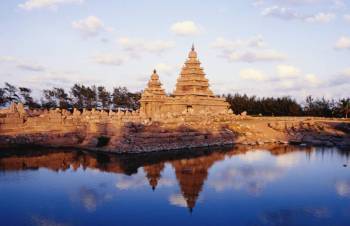
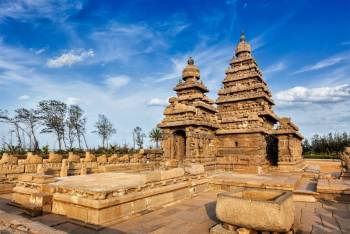
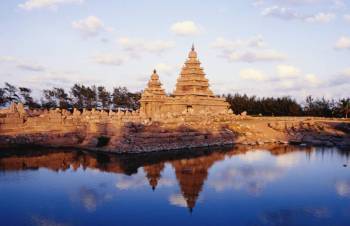
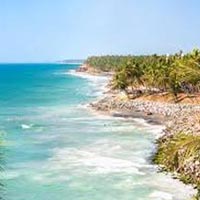
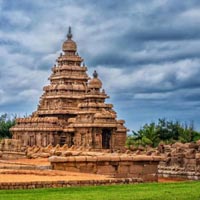
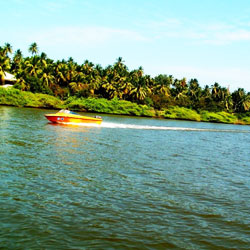
Covelong Beach (Fisherman's cove), quiet and far away from the distractions of the city lies close to Mahabalipuram, famous for its unique 7th century shore Temples. It has a host of activities designed to make your stay memorable, if you love the outdoors and culture.
It is built on the ramparts of an old Dutch Fort and set amidst whispering casuarina and palm trees. Fisherman's Cove is a snug resort.
Covelong is a nice beach between Madras(Chennai) and Mahabalipuram and a small charming fishing settlement. It was originally a port built by Saadat Ali, Nawab of Carnatic and it was here that the French General Laboudonnais landed his troops in 1746. Later taken by Clive in 1752 and destroyed. The Beach is separated from the mainland by the canal running from Madras(Chennai) to Mahabalipuram. This famous 5 star hotel is called Fishermans' Cove.
Taj Group of Hotels runs the Fisherman Cove Resort with rooms in the main buildings and cottages and the sandy beach here. It is an hour drive from Chennai city or from the airport.
Great seafood is guaranteed and the salty air ensures a healthy appetite. For recreation, there is a swimming pool, water sports, catamaran rides, tennis and more.. Attractions around : There is a Mosque, a Catholic Church and an old fortress at the Covelong Beach.
With its spectacular views of the deep blue yonder, it is a heavenly place to unwind. Facilities : It has a host of activities designed to make your stay even more memorable.
It offers a wide choice of accommodation from a range of rooms with gorgeous views of the palm-fringed beach, lapped by the waters of the Bay of Bengal. The hotel also has a number of cottages set amongst palm trees on the beach.
Each cottage has its own outdoor shower and each villa has a private garden. The hotel also has a travel desk, currency exchange and a shopping arcade. Location : It is located 32 km from Chennai airport and 28 km from the city centre. TOP
|


|
Kalakshetra
Founded by Rukmini Devi Arundale in 1936 the institution is devoted to the revival of traditional dance, textile designing, and weaving, which are taught in naturally harmonious environs.
Classical dance Bharatanatyam and Carnatic music permeate the very fabric of life in Chennai and the Kalakshetra at Tiruvanmiyur is a school of the Indian art epitomising the revival of ancient culture, crafts and heritage. Kalakshetra was established not only to seek the roots of Indian Culture but also to revive and revitalise Indian arts and crafts, so that they could take their proper place in the mainstream of modern life.. Unbelievable but true! : It was started with the express purpose of reviving and propagating the traditional arts and crafts of India. Born in an orthodox brahmin family of South India, Rukmini Devi was drawn to the Theosophical movement at an early age and was an ardent follower of Dr. Annie Besant. Together with her husband Dr. George Arundale, British born theosophist and great educationist, she founded Kalakshetra in the wake of the Indian Freedom Movement, which brought about a tremendous upsurge of patriotic feeling and search for an Indian identity.
The classical South Indian dance form Bharatanatyam was the first activity to be started under the aegis of Kalakshetra. This dance had fallen into disrepute and was not considered fit for respectable people. Rukmini Devi was quick to perceive the innate beauty of this Art form and in the face of tremendous social opposition and ostracism she not only learned the dance herself but also had the courage to start a school to teach the art.
This dance school started with one pupil and one teacher under one tree has now grown into a vast institution where students from India and all over the world come to learn the dance and its allied arts like music, theatre craft etc. The religious spirit is inculcated not in the narrow sense of the term but as a broad-minded tolerant approach to all religions. This is reflected in the morning prayers conducted before starting classes in which prayers from all religions find a place.
The Kalakshetra Foundation comprises of the following Institutions
· Rukmini Devi College of Fine Arts.
· Besant Arundale Senior Secondary School.
· Besant Theosophical High School.
· Craft Education and Research Centre
· Bharata Kalakshetra Auditorium.
A section of the institute is famed for its sarees and textiles woven in traditional patterns.
The campus also houses Hostels for residential students, a dispensary, libraries, staff quarters, a bank and vast grounds for sports and outdoor games.
In the words of Dr. Annie Besant -
"Art is an attempt to bring down within the vision of ordinary mortals some of the Divine Beauty of which the artist catches glimpses, strives to transalate these into colours, sounds, forms, words, by creating pictures, melodies, sculptures, poems and other literature."
"Beauty diversified into the arts is the true refiner and uplifter of humanity. It is the instrument of culture, the broadener of the heart, the purifying fire which burns all prejudices, all pettiness, a coarseness. Without it, true democracy is impossible, equality of social intercourse an empty dream."
"Art is the international language in which mind can speak to mind, heart to heart, where lips are dumb. The arts need no transalations, they speak the universal mother-tongue. Centuries do not age them, Custom does not stale them. Boundaries do not exist for them. Their message is for every country, for every tongue. Art will permeate the whole atmosphere of the New Civilisation which is on the threshold."
Music is a subsidiary for all dance students. They are encouraged to learn vocal music.
The art of Indian make-up, traditional costumes and theatre craft are learnt gradually by the advanced and post graduate students through participation in the various Kalakshetra productions and in their preparation.
Apart from solo Bharatanatya recitals, a considerable part of Rukmini Devi’s work in Kalakshetra pertain to new productions, which is indeed its unique contribution to art. Location : It is located at Tiruvanmiyur The fascinating environment : The institution set in sylvan surroundings bears a resemblance to the ancient gurukulas and the classes are held in rural settings in hut type rooms under the trees of the serene campus. It is home to the greatest exponents of Bharatanatyam and aspiring young dancers. Students from around the world are trained under the residential gurukula system.
Close communion with Nature is considered essential for education. Kalakshetra literally means a holy place for the arts.
It is a show window to South Indian culture, housed in a lush 100-acre plot filled with traditional Kerala architecture, on the outskirts of Chennai, in Tiruvanmiyur.
Every year from mid - December to mid - January a month-long Dance and Music festival is held in Chennai and connoisseurs from all over the country who come to witness a repertoire of performances are engrossed in the resounding of ankle bells, cymbals and musical compositions, leaving them enthralled to return for more, every year. TOP
|


|
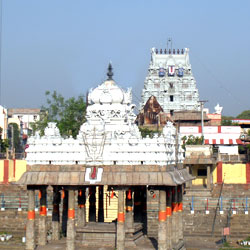
Kapaleeswarar Temple
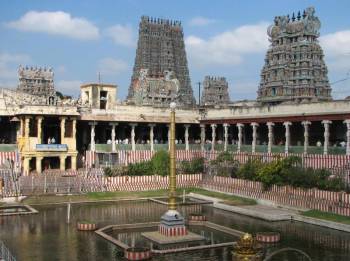
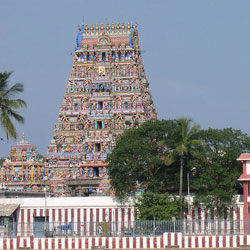
This ancient Siva temple, situated at Mylapore is little more that 350 years old and is considered by Hindus to be one of the most sacred Hindu, sites in Southern Part of India.
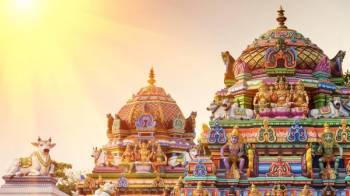
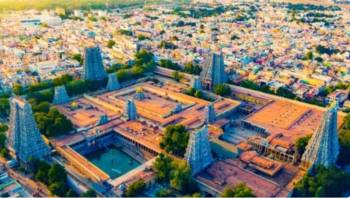
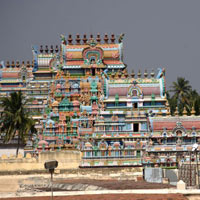
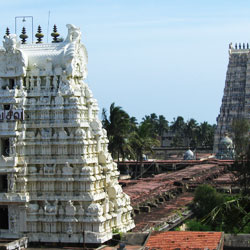
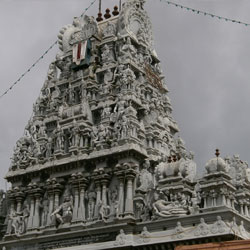
The temple is the biggest in the city and is dedicated to Lord Shiva. It contains inscriptions dating back to the 13th century AD, and is a fine specimen of the Dravidian style of architecture. The 37 metre gopuram is especially noteworthy for its intricate carvings depicting tales from Hindu mythology.. Legends : Parvati (Karpakambal) in the form of a peacock, Mayil is said to have worshipped Shiva (in a legend similar to that at Mayiladuturai), hence the name Mylapore. There are several literary works associated with this hoary shrine, which remains today, a seat of Tamil culture. According to a legend, the Shaivite saint Thirugnanasambandar brought a dead girl back to life in this temple. This event is enacted on the 8th day of the annual festival in the month of Pankuni (Pisces).
This ancient Shiva temple is a delightful introduction to Dravidian temple architecture.
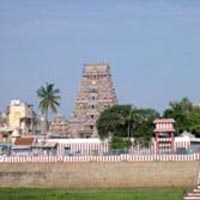
This shrine is a must-see pilgrimage spot for visiting devotees. Interesting facts : The original temple was submerged under the sea and the current temple structure was a later construction. The Moolavar is Kapaleeswarar and Amman is Karpagambal. There are separate sannadhis for several deities such as Vinayagar, Annamalaiyar, Murugar, Saneeswara. There are several other deities such as Durgai, Dakshinamurthy, Chandikeswarar located within the main Sannadhis of Kapaleeswarar and Karpagambal. The temple tank lies opposite the tower.
Karpagambal is said to have worshipped the Lord in the form of a peacock (Mayil in Tamil) and hence the area came to be called Mylapore.
The saint poet Tiruvalluvar lived here. The bronze idols of the 63 Nayanmars, the saints who were devotees of Lord Siva are placed in the Kapaleeswarar Sannadhi.
This is a well-known landmark in the heart of Mylapore, and is visited by thousands, especially during the famed 'Arupattu Moovar' festival in the month of Pisces. The Teppam or float festival in the large temple tank, and the biweekly Pradosham festival also draw huge crowds here. TOP
|


|
Sri Parthasarathy Temple
This temple, dedicated to Lord Krishna, was built in the 8th century AD under the patronage of the Pallavas, housing the idols of the five avataras of Sri Vishnu. It has a small temple shrine dedicated to Vishnu's consort called Vedavalli Ammai in this part of the country.
While dedicated to Vishnu in his incarnation as Krishna, the Parthasarathy Temple at Triplicane enshrines images of the five incarnations of Vishnu including that of a wounded Krishna. Parthasarathy literally means the 'charioteer of Arjuna'. Partha is another name for Arjuna and Sarathy means charioteer. Lord Krishna served as the charioteer of the Pandava Arjuna in the Great War of Mahabharatha. It's one of the oldest surviving temples in Chennai.
It was built by the Pallavas and later renovated by the Vijayanagar rulers. The Pandyas and Cholas contributed some changes. Traces of the architectural signs of the Vijayanagar kings, who ruled as late as the 16th century, are also evident in the temple structure.
The main shrine is for Venkatakrishnan with Rukmini, Balaraman, Satyaki, Anirudha, Pradyumna - in a standing posture facing east.
There are shrines for Ranganathar in a reclining posture with a separate sanctum for his consort Vedavalli.
There are shrines facing the east for Rama along with Sita, Lakshmana, Bharata, Shatrugna and Hanuman, Varadarajan seated on the Garuda, and Narasimhar in a seated posture.
Apart from these, there is a separate shrine for Andal.. Various celebrations : The annual Bhrammotsavam is celebrated in the month of Chittirai. Vaikuntha Ekadasi celebrated in Margazhi is one of the important festivals. The float festival is held in the month of Feb-Mar.
There is a beautiful glass palanquin. The Utsavar is Parthasarathy. The image of Krishna bears the scars from Bheeshma's arrows. TOP
|


|
Theosophical Society
Madras is also the fountainhead of the theosophical movement, which spread worldwide. The Theosophical Society is located along the Adyar River. Discourses are conducted here under a huge banyan tree, which spreads to almost 40,000 sq. ft. of area.
This society was started in 1875 with the help of Annie Besant, a foreigner to India, who wanted to revive Hindu culture and values back to India.. The Large green Ground : The society is a gated park open only a few hours in the morning and in the evening. It is full of forests, with nice buildings, a Hindu Temple, and a Jain temple. There is also a church and Buddhist temple on the premises. However, it is most known for having the largest banyan tree in the world.
People do live in private residents inside the campus; there is a post office and a bookstore with very nice books on philosophy.
Lying on the banks of the Adyar river is the international headquarters of the Theosophical Society. Well known for its Indological Research Centre, the Society is now set in picturesque environs. The world Headquarters of the spiritual society found by Madame H.P. Blavatsky and Col. Olcott, was originally formed in USA. In 1886 Adayar was chosen as the headquarters of this spiritual movement. The famous library here is a priceless storehouse of rare manuscripts and books of all faiths.
There are shrines to all faiths in its grounds, of which the Buddhist one is particularly attractive. TOP
|


|
Thousand Lights Mosque
Built in mid-1800 in the land donated by Nawab Wallajah, On Mount Road, this mosque has two tall minarets and a separate place of worship for women. The mosque also houses a library, a burial ground and guesthouses.
It is referred to as the Thousand Lights Mosque because of the legend that over one thousand lamps had to be used to light up the Assembly Hall, which stood at this same spot.
This multi-domed mosque, with sayings from the Holy Koran painted on its walls, comes alive during the annual Moharram.. Location : It is located at the meeting point of Mount Road and Peters Road. TOP
|


|
Valluvar Kottam
The Valluvar Kottam established in 1976, on the corner of Kodambakkam High Road and Village Road, honors the acclaimed Tamil Poet, Thiruvalluvar, whose classic work, the Kural, is reputed to be about 2000 years old. The shrine is designed like the temple car of Thiruvarur.. The Structure : It is a massive auditorium, constructed on reclaimed land from an unused lake filled with the city's garbage and debris. The auditorium can seat up to 4000 people.
The huge auditorium in the memorial was built with grid-type roofing to eliminate pillar support and is one the largest auditoria in Asia. Couplets from the Tirukkural are engraved on stone in the corridor running on either side of the auditorium.
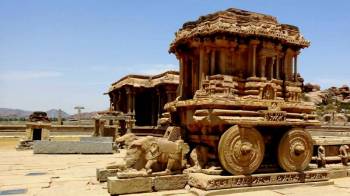
The base of the chariot shows in bas-relief the 133 chapters of the Thirukkural.
Over 3000 blocks of stone were used to create this memorial to Tamil culture. Timings : It's open daily from 8 am to 6 pm.
Closed on Fridays and National holidays.
Situated in Nungambakkam, Valluvar Kottam is a memorial to poet-saint Thiruvalluvar who wrote the sacred "Tirukkural". This book is highly valued for it's ethical content and is regarded as the purest expression of human thought. A life-size statue of Thiruvalluvar is seen in the shrine, which is a replica of the famed temple chariot of Tiruvarur. TOP
|


|
Victory War Memorial
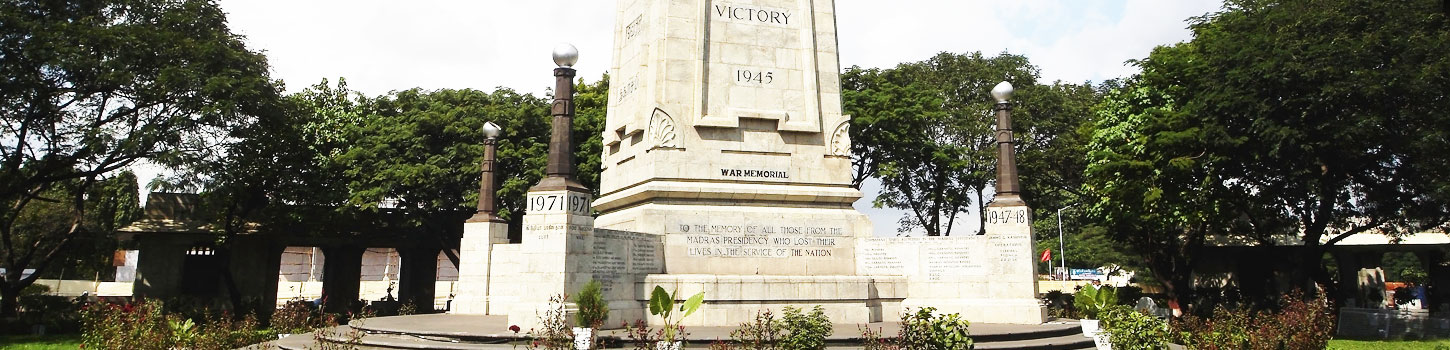
Adjacent to the Fort St. George on the south is the War Memorial, which housed the coastal battery and was formerly called 'Cupid's Bow’. The Memorial honours those who laid down their lives for their country since the First World War.
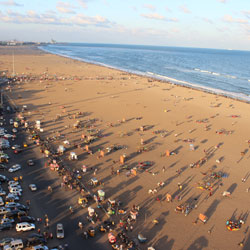
It is situated on the Marina beach road. It was constructed to commemorate the victory of the allied armies during World War I (1914-1918) and later became the victory war memorial for the World War II (1939-1945) in the memory of those from Chennai presidency who lost their lives serving the nation.. A Mark of Tribute : The Madras War Cemetery, a tribute to the valiant men and women who laid down their lives in the Second World War, was set up by the Imperial War Graves Commission, (now known as the Commonwealth War Graves Commission - CWGC). The Cemetery is maintained by the CWGC in partnership with the Indian Government. It was set up in the year 1952.
The Stone of Remembrance greets all visitors to the Madras War Cemetery with the words from the Book of Ecclesiasticus 'Their Name Liveth For Evermore'. Then there is the Cross of Sacrifice, set up on an octagonal base bearing a bronze sword upon its shaft. These two monuments are common to all large CWGC cemeteries. Madras Memorial : There is also the Madras Memorial - a Memorial to soldiers who died in the First World War between 1914 - 1918. The Madras Memorial has all the 1,039 men who died in the First World War inscribed on it. The Madras Memorial honours 936 men from the forces of United Kingdom and 103 from undivided India.
This is perhaps the most beautiful and the best-kept relics. TOP
|


|


Related Cities

|