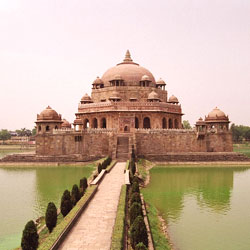
"Discover ancient heritage at this sacred site."
Laheriya Stupa is an ancient Buddhist archaeological site located in the Champaran region of Bihar, India. Though not as famous as the Kesariya Stupa, Laheriya Stupa holds historical and cultural importance as part of the larger Buddhist heritage of Champaran. The region was once an active center of Buddhist learning and pilgrimage, and several stupas, monasteries, and relic mounds can be found scattered across East and West Champaran districts.
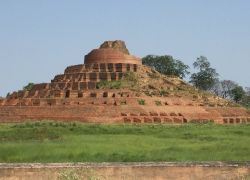
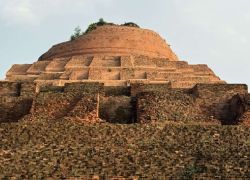
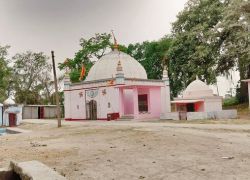
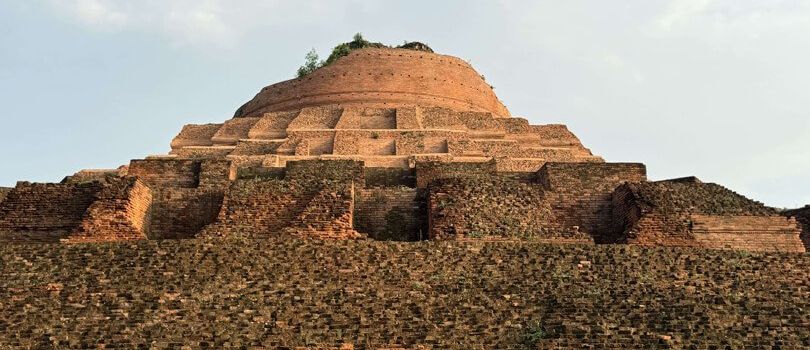
Laheriya Stupa today appears as a peaceful mound with visible brick remains and traces of an old structure. The site attracts historians, students, spiritual travelers, and those who are interested in lesser-known Buddhist monuments. The surroundings are rural and quiet, offering a calm atmosphere to explore ancient history away from crowded tourist spots.
History of Laheriya Stupa
The history of Laheriya Stupa is linked to the spread of Buddhism in Bihar after the time of Lord Buddha. Champaran region falls within the ancient Buddhist landscape that included Vaishali, Kesariya, and other important sites visited by Buddha during his lifetime. It is believed that Laheriya Stupa was built to mark a sacred spot connected with Buddhist monks and their teachings.
Archaeological studies suggest that the stupa may have been constructed during the Mauryan or post-Mauryan period and later renovated during the Gupta era. The stupa likely served as a religious monument where relics of Buddhist monks or sacred objects were enshrined. Over centuries, the structure was buried under soil and vegetation and only later identified by historians and local people as an ancient Buddhist site.
Architecture of Laheriya Stupa
The architecture of Laheriya Stupa follows the traditional Buddhist stupa design. Originally, it would have consisted of a circular base made of baked bricks, a dome-shaped structure, and a harmika (a small square railing-like structure at the top). The stupa was designed for circumambulation (pradakshina), where devotees walk around the monument as a mark of respect and meditation.
Today, only the lower portions and mound-like structure of Laheriya Stupa are visible. The brickwork shows signs of age, weathering, and partial collapse. Despite its ruined condition, the structure still reflects the simple and symbolic style of early Buddhist architecture. The site has archaeological value and offers insight into how Buddhist monuments were constructed in rural Bihar during ancient times.
How to Reach Laheriya Stupa, Champaran
Laheriya Stupa is located in a rural part of Champaran and can be accessed by road from nearby towns.
By Air: The nearest major airport is Jay Prakash Narayan International Airport, Patna, located around 150–180 km from the Champaran region. From Patna, travelers can hire taxis or take buses to reach Motihari or Bettiah and then continue towards Laheriya village.
By Train: The nearest railway stations are Motihari Junction (East Champaran) and Bettiah Junction (West Champaran). These stations are well connected to Patna, Muzaffarpur, and Gorakhpur. From the station, local transport such as autos or taxis can be used to reach Laheriya Stupa.
By Road: State highways and rural roads connect Champaran towns with nearby villages. Private vehicles and local buses are the best way to reach Laheriya Stupa. It is advisable to ask local residents for directions as signboards may be limited.
Weather and Best Time to Visit
Champaran has a typical North Indian climate with hot summers, heavy monsoon rains, and cool winters. Summers (April to June) can be very hot, making outdoor exploration uncomfortable. Monsoon (July to September) brings greenery but also muddy roads, which may make access difficult.
The best time to visit Laheriya Stupa is between October and March when the weather is pleasant and travel conditions are better. Winter mornings can be foggy, so daytime visits are recommended. Visiting during pleasant weather allows travelers to explore the site comfortably and enjoy the rural surroundings.
Timings and Entry Details
Laheriya Stupa is an open archaeological site and does not have strict entry timings. Visitors can explore the site during daylight hours, generally from 9:00 AM to 5:00 PM. Since it is not a formally managed tourist complex, there is no official ticket counter.
Entry to the site is free. However, visitors should respect the historical importance of the monument and avoid climbing on fragile structures or damaging the brick remains. It is advisable to visit during the day for safety and better visibility of the structure.
Why Laheriya Stupa Is Famous
Laheriya Stupa is famous mainly among historians and local heritage enthusiasts as one of the lesser-known Buddhist sites of Champaran. It represents the wide spread of Buddhism in rural Bihar during ancient times and adds depth to the region’s Buddhist heritage beyond famous sites like Kesariya.
The stupa is valued for its archaeological significance and its connection to the Buddhist route followed by monks and pilgrims in ancient India. Though not developed as a major tourist destination, it holds great importance for those who wish to explore offbeat historical places.
Things to Do at Laheriya Stupa
Visitors can walk around the stupa and observe the ancient brickwork and mound structure.
History lovers can study the remains and imagine how the stupa might have looked in ancient times.
Photography enthusiasts can capture rural landscapes and the historic ruins.
Visitors can combine the trip with nearby Buddhist sites in Champaran such as Kesariya Stupa for a more complete heritage tour.
Interesting Facts About Laheriya Stupa
Laheriya Stupa is part of the ancient Buddhist heritage spread across the Champaran region.
The site remained buried for centuries before being identified as a Buddhist monument.
The stupa reflects early Buddhist architectural styles made with baked bricks.
The surrounding villages preserve oral traditions and local stories about the stupa.
Visitor Tips
Wear comfortable footwear as the ground can be uneven.
Carry drinking water and basic supplies, as shops may not be nearby.
Respect the archaeological remains and avoid littering.
Visit with a local guide if possible to understand the site better.
Combine your visit with nearby Buddhist heritage sites for a richer experience.
Note on “Church of Our Lady, Bruges, Champaran”
The Church of Our Lady is a famous historic church located in Bruges, Belgium, Europe. It is well known for its tall Gothic tower and important artworks. This church has no historical or geographical connection with Champaran district in Bihar, India.
If you were referring to any local church near Champaran with a similar name, please provide the correct name and location. I can then prepare accurate travel content for your website.



Champaran
Champaran
Champaran
Champaran
Champaran

Champaran
Champaran
Champaran
Champaran