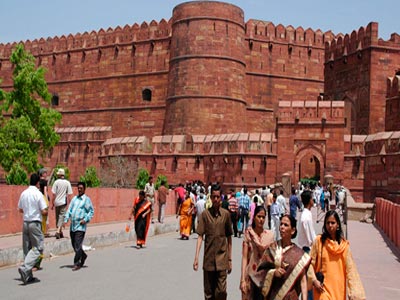
Delhi also known as the National Capital Territory of India is the capital of India. Delhi was the site of ancient Indraprastha (Khandavprastha), the ancient capital of the Pandavas during the Mahabharata. In AD 1639, the Mughal emperor Shah Jahan built a new walled city named Shahjahanabad, in Delhi, which served as the capital of the Mughal Empire from 1649 until the Rebellion of 1857.Shahjahanabad today is Old Delhi. The greater part of Old Delhi is still confined within the space of Shah Jahans walls, and several gates built during his rule-the Kashmiri Gate, the Delhi Gate, the Turkman Gate, and the Ajmeri Gate-still stand. In 1911 the British determined to shift the capital of India from Calcutta (Kolkata) to Delhi, and a three-member committee was formed to plan the construction of the new administrative centre.
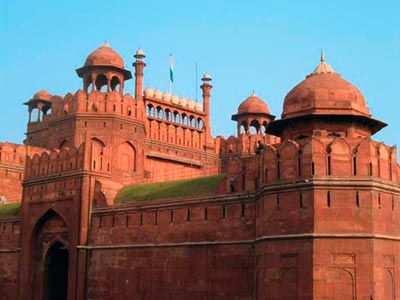
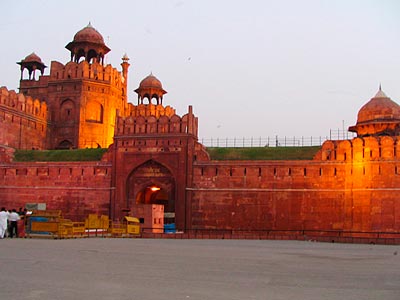
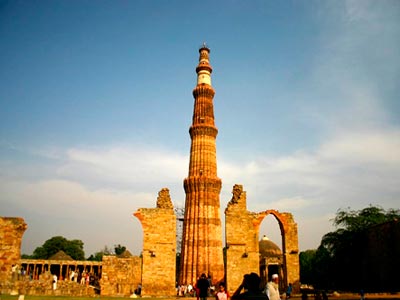
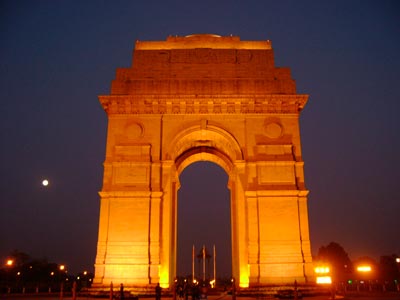
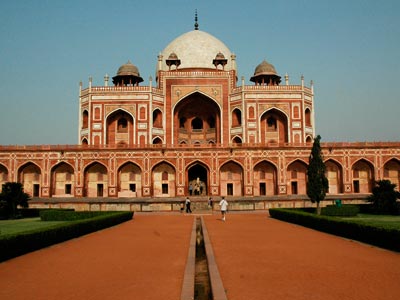
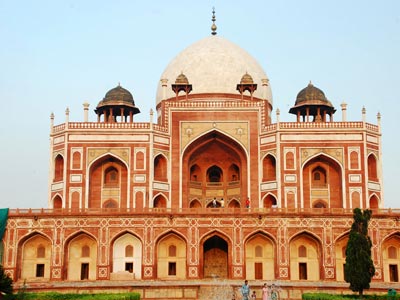
The key architect on the committee was Sir Edwin Lutyens; it was he who gave shape to the city. The British moved to the partially built New Delhi in 1912, and construction was completed in 1931. A new capital city, New Delhi, was built to the south of the old city during the 1920s. When the British left India in 1947, New Delhi became its national capital and seat of the union government.Delhi's culture has been influenced by its lengthy history and historic association as the capital of India. This is exemplified by many significant monuments in the city, the Mughals and the Turkic rulers constructed several architecturally significant buildings, such as the Jama Masjid - India's largest mosque and the Red Fort. Three World Heritage Sites - the Red Fort, Qutub Minar and Humayun's Tomb - are located in Delhi. Other monuments include the India Gate, the Jantar Mantar - an 18th-century astronomical observatory - and the Purana Qila - a 16th-century fortress.
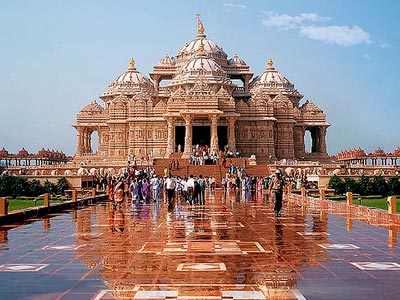
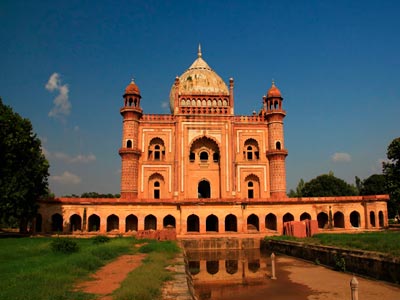
The Laxminarayan temple, Akshardham temple, the Bahai Lotus temple and the ISKCON temple are examples of modern architecture. Raj Ghat and associated memorials houses memorials of Mahatma Gandhi and other notable personalities. Several government buildings and official residences reminiscent of British colonial architecture, including the Rashtrapati Bhavan, the Secretariat, Rajpath, the Parliament of India and Vijay Chowk. Safdarjung's Tomb is an example of the Mughal gardens style. Chandni Chowk, a 17th-century market, is one of the most popular shopping areas in Delhi for jewellery and Zari saris. Delhi's arts and crafts include, Zardozi - embroidery done with gold thread and Meenakari - the art of enamelling.
Places Of Interest :- Qutub Minar, Red Fort, India Gate, Lotus Temple, Connaught Place, Birla Mandir, Jantar Mantar, Akshardham Temple, Iskon Temple etc.
Agra :- Agra is a city on the banks of the river Yamuna in the northern state of Uttar Pradesh, India. It is a major tourist destination because of its many splendid Mughal-era buildings, most notably the Taj Mahal, Agra Fort . The city is mentioned in the epic Mahabharata, where it was called AgrevaM51;a ("the border of the forest"). Legend ascribes the founding of the city to Raja Badal Singh, a Sikarwar Rajput king (c. 1475), who’s fort, Badalgarh, stood on or near the site of the present fort. However, the 11th century Persian poet Mas'ud Sa'd Salman writes of a desperate assault on the fortress of Agra, and then held by the Shahi King Jayapala, by Sultan Mahmud of Ghazni. Sultan Sikandar Lodi was the first to move his capital from Delhi to Agra in 1506. He died in 1517 and his son, Ibrahim Lodi, remained in power there for nine more years, finally being defeated at the Battle of Panipat in 1526. Between 1540 and 1556, Afghans, beginning with Sher Shah Suri ruled the area. It achieved fame as the capital of the Mughal Empire from 1556 to 1658.
It is generally accepted that Sultan i, the Ruler of the Delhi Sultanate founded Agra in the year 1504. After the Sultan's death the city passed on to his son Sultan Ibrahim Lodi. He ruled his Sultanate from Agra until he fell fighting to Babar in the First battle of Panipat fought in 1526. The golden age of the city began with the Mughals. It was known then as Akbarabad and remained the capital of the Empire under the Emperors Akbar, Jahangir and Shah Jahan. Shah Jahan later shifted his capital to Shahjahanabad in the year 1689. Since Akbarabad was one of the most important cities in India under the Mughals, it witnessed a lot of building activity. Babar, the founder of the Mughal dynasty, laid out the first formal Persian garden on the banks of river Yamuna. The garden is called the Aram Bagh or the Garden of Relaxation. His grandson Akbar raised the towering ramparts of the Great Red Fort, besides making Agra a centre for learning, arts, commerce and religion. Akbar also built a new city on the outskirts of Akbarabad called Fatehpur Sikri. This city was built in the form of a Mughal military camp in stone.
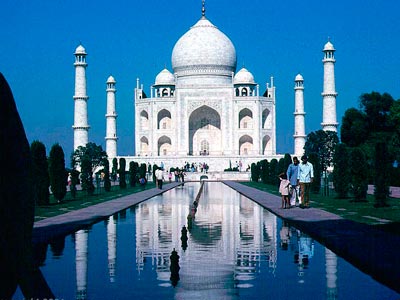
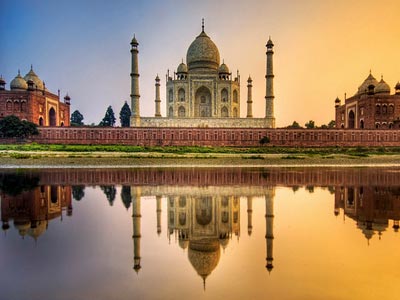
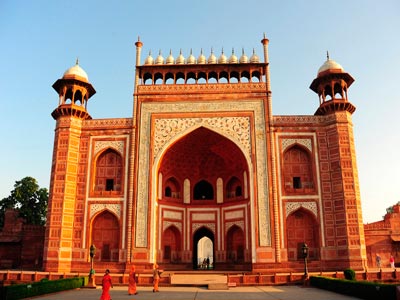
The Taj Mahal is one of the most famous buildings in the world, the mausoleum of Shah Jahan's favourite wife, Mumtaz Mahal. It is one of the New Seven Wonders of the world, and one of the three World Heritage Sites in Agra. Completed in 1653, the Taj Mahal was built by the Mughal king Shah Jahan as the final resting place for his beloved wife, Mumtaz Mahal. Finished in marble, it is perhaps India's most beautiful monument. This perfectly symmetrical monument took 22 years (1630-1652) of labour and 20,000 workers, masons and jewellers to build and is set amidst landscaped gardens. Built by the Persian architect, Ustad 'Isa, the Taj Mahal is on the south bank of the Yamuna River. It is an acknowledged masterpiece of symmetry. Verses of the Koran are inscribed on it and at the top of the gate are twenty-two small domes, signifying the number of years the monument took to build. The Taj Mahal was built on a marble platform that stands above a sandstone one.
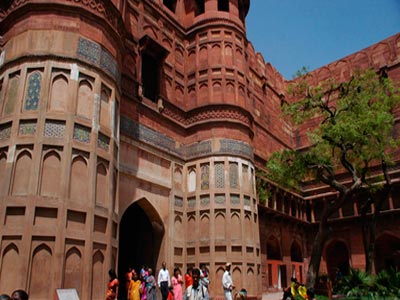
The most elegant dome of the Taj Mahal has a diameter of 60 feet (18 m), and rises to a height of 80 feet (24 m); directly under this dome is the tomb of Mumtaz Mahal. Shah Jahan's tomb was erected next to hers by his son Aurangzeb. The interiors are decorated with fine inlay work, incorporating semi-precious stones. Agra Fort (sometimes called the Red Fort), was commissioned by the great Mughal Emperor Akbar in 1565, and is another of Agra's World Heritage Sites. A stone tablet at the gate of the Fort states that it had been built before 1000 but was later renovated by Akbar. The red sandstone fort was converted into a palace during Shah Jahan's time, and reworked extensively, Notable buildings in the fort include the Pearl Mosque or Moti Masjid, the Diwan-e-Aam and Diwan-e-Khas (halls of public and private audience),Jahangir's Palace, Khas Mahal, Shish Mahal (mirrored palace), and the Musamman Burj. The fort is a typical example of Mughal architecture, effectively showing how the North Indian style of fort construction differed from that of the South. In the South, the majority of forts were built on the seabed like the one at Bekal in Kerala.
Places Of Interest :- Taj Mahal, Agra Fort, Sikandra etc.
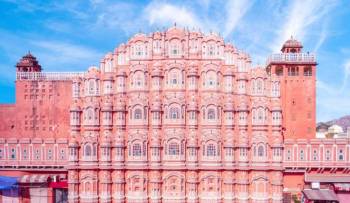
Jaipur :- Jaipur is the famous city and capital of Rajasthan. Jaipur is known as the Pink City of India because of the colour used exclusively in the walled city.The capital of Rajasthan, Jaipur is rich in history and culture. Here the past comes alive in magnificent forts and palaces. The bustling bazaars of Jaipur, famous for jewellery, fabric and shoes, possess a timeless quality and are surely a treasure-trove for the shoppers. This fascinating city with its romantic charm takes you to an epoch of royalty and tradition.
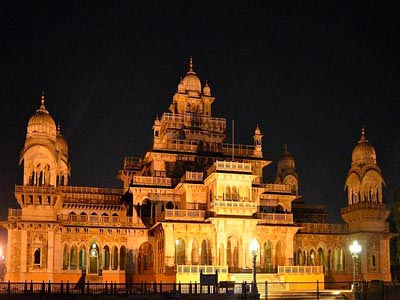
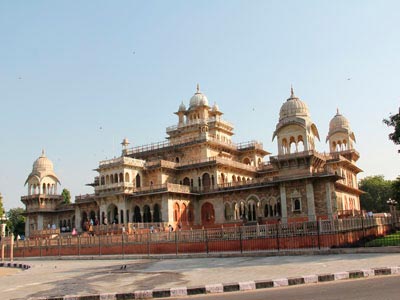
Places Of Interest :- Hawa Mahal, Galta Monkey Temple, Amber Fort and Palace, Nahargarh Fort, Jantar Mantar, Government Central (Albert Hall) Museum, Kanak Vrindavan Valley, Sisodia Rani Ka Bagh, Vidyadhar Garden.
Distance :- Agra 220 Kilometres Approx. From Delhi By Road, Jaipur 200 Kilometres Approx. From Agra By Road, Delhi 230 Kilometres Approx. From Jaipur By RoadLunch And Dinner is not included in the package.
Personal expenses are not included in the package.
X-Max & New Year supplements will be charged extra.
Any monument entrance fee/activity charges/adventure sport charges / Gaming charges etc. (if applicable).
Guide charges are not included in the package. This can be arranged at additional cost as per the guest request if available on that location.
Pick Up From Delhi Airport / Railway Station And Hotel Check-in
Morning pick up from Delhi Airport/Railway station and Check in the hotel. Fresh up at the hotel and in the afternoon go for some local half day sightseeing. In the evening come to hotel for overnight stay.
Meals & Drinks : Breakfast Only
Local Sightseeing At Delhi
Get up early in the morning have your breakfast at the hotel go for full day local sightseeing. Come back to the hotel in the evening for comfortable night stay here.
Meals & Drinks : Breakfast Only
Hotel Check-out And Drive To Agra Hotel Check-in
Get up early morning have your breakfast at the hotel and drive to next destination Agra , post lunch check-in the hotel, fresh up at the hotel and in the evening for Half Day local sightseeing, return to the hotel for night stay.
Meals & Drinks : Breakfast Only
Local Sightseeing At Agra
Get up early in the morning have your breakfast at the hotel, and go for Agra local sightseeing, Return to the hotel in the evening for night stay.
Meals & Drinks : Breakfast Only
Hotel Check-out And Drive To Jaipur Hotel Check-in
Get up early in the morning have your breakfast at the hotel and after breakfast further proceed to your next destination Jaipur, check-in the hotel post lunch. Go for local sightseeing in the evening. Return back to the hotel in the evening for a comfortable night stay.
Meals & Drinks : Breakfast Only
Local Sightseeing At Jaipur And Near by Area
Rise early morning have your breakfast and the entire day is free to explore Jaipur and nearby areas. Come to the hotel in the evening for a night stay.
Meals & Drinks : Breakfast Only
Hotel Check-out From Jaipur And Drive To Delhi
Get up early in the morning have your breakfast and check-out the hotel, further proceed to Delhi airport / Railway station and your trip ends here with lots of sweet memories.
Meals & Drinks : Breakfast Only
| No of pax | Age Limit | Price per pax (Rs) |
|---|---|---|
| Adult | Above 12 years | 23500 / Adult |
We, a Grooming Travel Agency Arrange all Inbound Tours / Outbound Tours for Individual and Group Travellers with Tailor Made Itineraries, Corporate Conferences, Exibihitions & Incentives. We Visualize a Greater Role to Be Played in the Indian Tourism Know more..

Fabulous Honeymoon At Cochin With Princes Of Hills Munnar And Thekkady
Munnar - Kochi
6Days / 5Nights
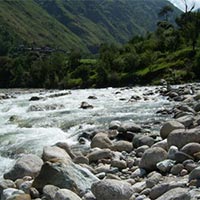
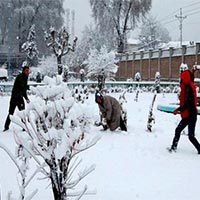
Best Of Kashmir Bonanza Srinagar With Gulmarg And Pahalgam
Srinagar - Gulmarg - Pahalgam
5Days / 4Nights
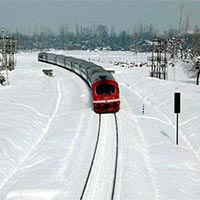
Outstanding Kashmir Srinagar With Pahalgam Gulmarg And Sonmarg
Srinagar - Pahalgam - Gulmarg
6Days / 5Nights

Srinagar - Anantnag - Jammu - Baramulla
7Days / 6Nights
Amritsar Chandigarh Delhi Agra Family Package
New Delhi - Agra - Vrindavan - Mathura - Amritsar
7Days / 6Nights
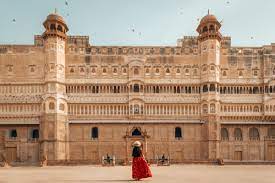
Rajasthan Tour Package 12 Night - 13 Days
Ajmer - Bikaner - Jaipur - Jaisalmer - Jodhpur - Mount Abu - Pushkar - Udaipur
13Days / 12Nights
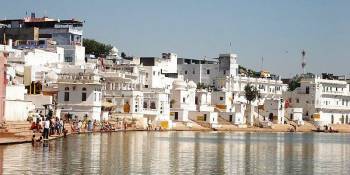
12 Nights Rajasthan Package From Jaipur
Ajmer - Bikaner - Jaipur - Jaisalmer - Jodhpur - Mount Abu - Pushkar - Udaipur
13Days / 12Nights
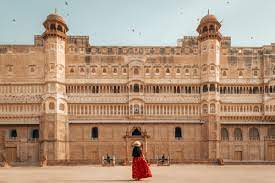
Rajasthan Tour Package 12 Night - 13 Days
Ajmer - Bikaner - Jaipur - Jaisalmer - Jodhpur - Mount Abu - Pushkar - Udaipur
13Days / 12Nights
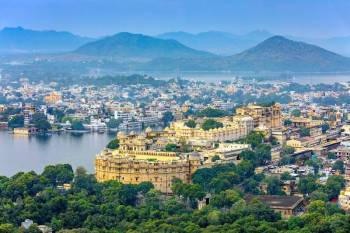
11 Nights 12 Days - Delhi Agra Rajasthan
New Delhi - Mathura - Agra - Jaipur - Ajmer - Pushkar - Udaipur - Mount Abu - Ranak..
12Days / 11Nights
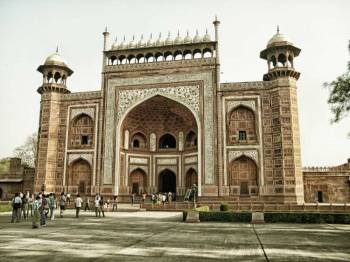
10 Nights Uttar Pradesh Tour Package From Delhi
New Delhi - Agra - Prayagraj - Lucknow - Mathura - Varanasi - Ayodhya - Vrindavan -..
11Days / 10Nights
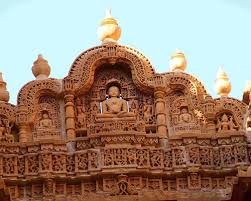
9 Night - 10 Days Rajasthan Tour Package
Ajmer - Jaipur - Jaisalmer - Jodhpur - Mount Abu - Udaipur
10Days / 9Nights
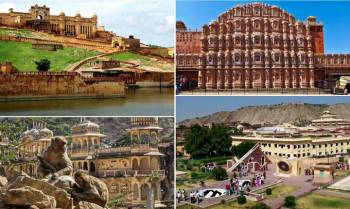
Ajmer - Udaipur - Mount Abu - Jodhpur - Jaisalmer 9N 10D Tour
Ajmer - Jaisalmer - Jodhpur - Mount Abu - Udaipur - Jaipur
10Days / 9Nights
9 Days Jaipur - Ajmer - Udaipur - Mount Abu - Jodhpur - Jaisalmer Tour
Ajmer - Jaipur - Jaisalmer - Jodhpur - Mount Abu - Udaipur
9Days / 8Nights