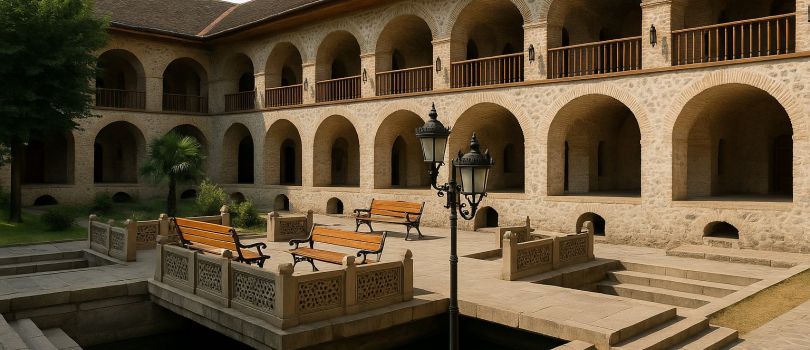
"Marvel at the exquisite craftsmanship in Azerbaijan."
Sheki Khan's Palace is one of the most beautiful and historically important monuments in Azerbaijan. Located in the charming city of Shaki, at the foothills of the Greater Caucasus Mountains, this palace is a masterpiece of 18th-century architecture. It once served as the summer residence of the Sheki Khans and today stands as a symbol of Azerbaijan’s rich cultural heritage and artistic excellence.
The palace is world-famous for its colorful stained-glass windows, detailed wall paintings, and harmonious design. Recognized as part of the UNESCO World Heritage Site “Historic Centre of Sheki with the Khan’s Palace,” it attracts visitors from around the world who want to experience history, art, and architecture in one stunning location.
How to Reach Sheki Khan's Palace
Sheki Khan's Palace is located in Shaki city, approximately 300 kilometers northwest of Baku. The most comfortable way to reach Shaki is by car or taxi, which takes around 4.5 to 5 hours through scenic mountain roads.
Visitors can also travel by bus from Baku International Bus Terminal to Shaki. Buses are affordable and run regularly, with a travel time of about 5 to 6 hours. Another option is to join a guided tour from Baku, which usually includes transportation, accommodation, and sightseeing.
Once in Shaki, the palace is located within walking distance from the historic center, or visitors can take a short taxi ride to reach the palace complex.
Weather in Shaki
Shaki enjoys a mild mountain climate compared to Baku. Summers (June to August) are warm and pleasant, with temperatures ranging between 25°C and 30°C. Winters (December to February) are cold, and temperatures can drop below freezing, with occasional snowfall.
The best time to visit Sheki Khan's Palace is during spring (April to June) and autumn (September to October). During these seasons, the weather is comfortable, and the surrounding landscapes are especially beautiful.
Timing of Sheki Khan's Palace
Sheki Khan's Palace is generally open to visitors daily from 10:00 AM to 6:00 PM. Opening hours may change slightly during winter months or public holidays.
Visitors are advised to arrive earlier in the day to avoid crowds and fully enjoy the palace interiors. A typical visit takes about 45 minutes to 1 hour.
Why Sheki Khan's Palace Is Famous
Sheki Khan's Palace is famous for its unique architectural style and exquisite craftsmanship. The palace is especially known for its shebeke windows—intricate stained-glass designs made without nails or glue. These colorful windows create stunning light patterns inside the palace.
The palace is also renowned for its beautifully painted walls, which depict hunting scenes, floral motifs, and geometric patterns. Its historical significance, combined with artistic brilliance, makes it one of Azerbaijan’s most treasured landmarks.
Entry and Visit Details of Sheki Khan's Palace
Visitors must purchase an entry ticket to enter Sheki Khan's Palace. Ticket prices are reasonable and may vary slightly for local and international tourists. Photography inside the palace may require an additional fee.
Guided tours are available and highly recommended, as they provide valuable insights into the palace’s history, architecture, and symbolism. Visitors are required to follow rules such as not touching the walls or windows to preserve the delicate artwork.
History of Sheki Khan's Palace
Sheki Khan's Palace was built in 1797 by Muhammad Hasan Khan, the ruler of the Sheki Khanate. At the time, Sheki was an important political and cultural center in the region, located along major trade routes, including the Silk Road.
The palace served as the summer residence for the khans and was used for official receptions and ceremonies. Despite political changes and natural disasters over the centuries, the palace has survived remarkably well and remains largely preserved in its original form.
Architecture of Sheki Khan's Palace
The architecture of Sheki Khan's Palace is a fine example of traditional Azerbaijani palace design. The building is two stories high and constructed primarily from stone and wood. Its exterior is relatively simple, while the interior is richly decorated.
Inside, visitors can admire elaborate frescoes, ornamental ceilings, and detailed wall paintings. The palace has six rooms, four corridors, and two mirrored balconies. The use of natural light, symmetry, and vibrant colors reflects a deep understanding of aesthetics and craftsmanship.
Things to Do at Sheki Khan's Palace
Visitors can enjoy several activities while exploring the palace:
Interesting Facts About Sheki Khan's Palace
Tips for Visiting Sheki Khan's Palace