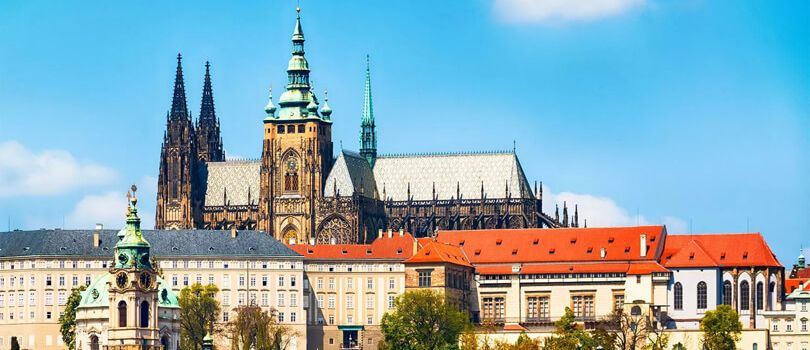
"Marvel at Gothic architecture in Prague's heart."
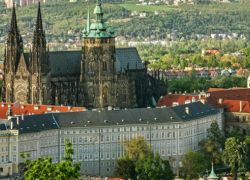
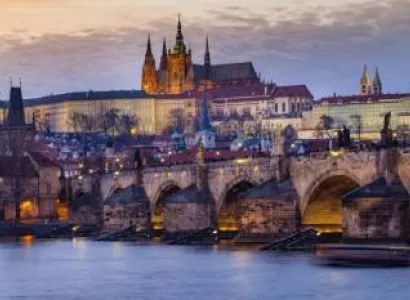
St. Vitus Cathedral is the largest and most important church in Prague, located within the grounds of Prague Castle. It is a masterpiece of Gothic architecture and one of the most visited landmarks in the Czech Republic. The cathedral serves as a spiritual symbol of the Czech state and is the resting place of many Bohemian kings and Roman emperors. With its tall spires, detailed stained-glass windows, and centuries of history, St. Vitus Cathedral is a must-see for every visitor to Prague.
How to Reach St. Vitus Cathedral, Prague
St. Vitus Cathedral is located inside Prague Castle in the Hradčany district of Prague. It can be reached easily by public transportation, walking, or by taxi.
Weather at St. Vitus Cathedral
The weather at St. Vitus Cathedral, like the rest of Prague, changes with the seasons.
Timings for St. Vitus Cathedral
St. Vitus Cathedral is open to visitors throughout the year, though hours may vary by season.
Note: The last entrance is usually allowed 30 minutes before closing. It is also closed during major religious services or events.
Why St. Vitus Cathedral is Famous
St. Vitus Cathedral is famous for being the spiritual heart of Prague. It holds a deep connection with Czech history, including royal coronations and burials. Its impressive Gothic architecture, massive rose windows, and detailed sculptures attract millions of visitors each year. Inside the cathedral, visitors can view beautiful stained glass, the tomb of St. Wenceslas (the patron saint of the Czech Republic), and the Crown Chamber which stores the Bohemian Crown Jewels.
Entry and Visit Details
The cathedral is part of the Prague Castle complex, and access depends on the type of ticket you buy.
Ticket prices vary but generally range from 250–350 CZK for adults. Discounts are available for students, children, and seniors. Audio guides and guided tours are also available in multiple languages.
History and Architecture
Construction of St. Vitus Cathedral began in 1344 under Emperor Charles IV and continued for nearly 600 years. The original architects, Matthias of Arras and later Peter Parler, brought in a mix of French Gothic and Central European styles.
The cathedral was finally completed in 1929. It showcases a blend of Gothic, Neo-Gothic, and Baroque influences. Notable features include the towering twin spires, flying buttresses, ornate doorways, and detailed gargoyles.
Inside, the stained-glass windows are breathtaking, especially the one designed by famous Czech artist Alfons Mucha. The St. Wenceslas Chapel, decorated with semi-precious stones and frescoes, is one of the cathedral’s holiest spots. The cathedral also houses royal tombs, including those of Charles IV and other Bohemian kings.
Things to Do at St. Vitus Cathedral
Facts about St. Vitus Cathedral
















Prague
Prague
Prague
Prague
Prague
Prague
Prague