"Ancient flames illuminating Zoroastrian heritage."
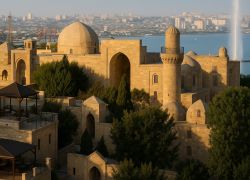
The Ateshgah Fire Temple is one of the most unique and spiritually significant historical monuments in Azerbaijan. Located on the Absheron Peninsula near Baku, this ancient temple is dedicated to fire worship and reflects Azerbaijan’s long-standing connection with natural flames. Often referred to as the “Fire Temple of Baku,” Ateshgah is a powerful symbol of religious tolerance, ancient beliefs, and cultural heritage. Today, it stands as an open-air museum and a major tourist attraction, drawing visitors interested in history, spirituality, and architecture.
The word “Ateshgah” comes from Persian, meaning “House of Fire.” The temple was built around natural gas flames that once burned continuously from the ground, inspiring fire worshippers for centuries. Although the natural flames are no longer active, the site still preserves its sacred atmosphere and historical importance.
How to Reach Ateshgah Fire Temple
Ateshgah Fire Temple is located in the village of Surakhani, approximately 30 kilometers from central Baku. Visitors can reach the temple by taxi, which is the most convenient option and takes about 40–50 minutes depending on traffic. Taxis are affordable and easily available throughout the city.
Public transportation is also an option. Visitors can take the Baku Metro to Koroğlu Station and then use local buses or a short taxi ride to reach the temple. Guided tours from Baku are another popular choice, as they often include transportation and historical explanations.
Weather Around Ateshgah Fire Temple
Baku and its surrounding areas have a semi-arid climate. Summers (June to August) are hot and dry, with temperatures often exceeding 35°C. Winters (December to February) are mild, with temperatures ranging between 3°C and 8°C. Winds are common throughout the year, especially on the Absheron Peninsula.
The best time to visit Ateshgah Fire Temple is during spring (April to June) and autumn (September to November). During these months, the weather is pleasant and suitable for exploring the temple complex comfortably.
Timing of Ateshgah Fire Temple
Ateshgah Fire Temple is generally open to visitors daily from 10:00 AM to 6:00 PM. Timings may vary slightly during public holidays or special events, so it is advisable to confirm before visiting.
Visitors are encouraged to arrive earlier in the day to explore the complex at a relaxed pace and avoid crowds, especially during peak tourist seasons. A typical visit takes about 1 to 1.5 hours.
Why Ateshgah Fire Temple Is Famous
Ateshgah Fire Temple is famous for its historical association with fire worship, particularly Zoroastrianism and Hinduism. For centuries, pilgrims from Persia and India traveled to this site to worship the eternal flames emerging from the ground.
The temple is also renowned for its unique architectural style and cultural significance. It represents Azerbaijan’s ancient identity as the “Land of Fire” and highlights the region’s natural gas heritage. Today, Ateshgah is recognized as one of the most important religious and historical landmarks in the country.
Entry and Visit Details of Ateshgah Fire Temple
Visitors are required to purchase an entry ticket to access the Ateshgah Fire Temple complex. Ticket prices are reasonable and include access to the entire site, including the central altar, monks’ cells, and exhibition areas.
The temple functions as a museum, with informational displays explaining the history of fire worship, religious practices, and the temple’s significance. Guided tours and audio guides are available and highly recommended for a deeper understanding of the site.
History of Ateshgah Fire Temple
The history of Ateshgah Fire Temple dates back to ancient times, although the current structure was mainly built between the 17th and 18th centuries. The site was historically used by Zoroastrians, who worshipped fire as a symbol of purity and divine power.
Later, Hindu merchants and pilgrims from India also used the temple, as evidenced by Sanskrit and Gurmukhi inscriptions found on the walls. The temple served as a spiritual center until the late 19th century, when natural gas reserves began to decline due to industrial extraction. In the 20th century, the site was preserved and transformed into a museum.
Architecture of Ateshgah Fire Temple
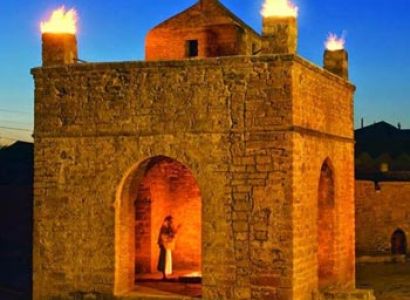
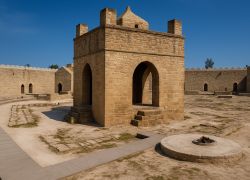
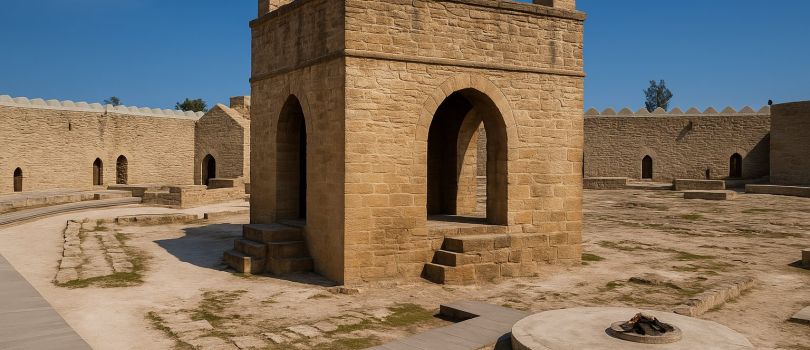
The architecture of Ateshgah Fire Temple is both simple and symbolic. The complex is shaped like a pentagon, surrounded by stone walls. Inside, there is a central courtyard with a fire altar in the middle, where the sacred flame once burned naturally.
Surrounding the courtyard are small stone rooms that were used by monks and pilgrims for meditation and living quarters. The design reflects traditional Persian and Indian architectural influences, emphasizing symmetry and spiritual functionality rather than decorative luxury.
Things to Do at Ateshgah Fire Temple
Visitors can enjoy several meaningful and educational activities at the temple:
Interesting Facts About Ateshgah Fire Temple
Tips for Visiting Ateshgah Fire Temple