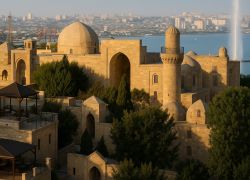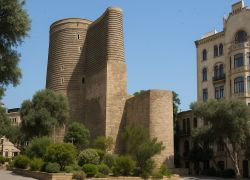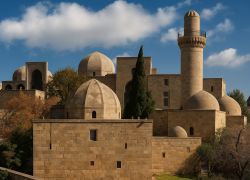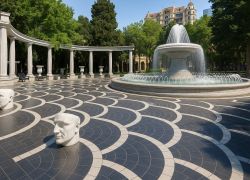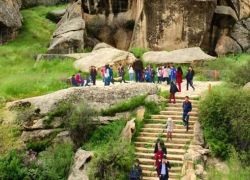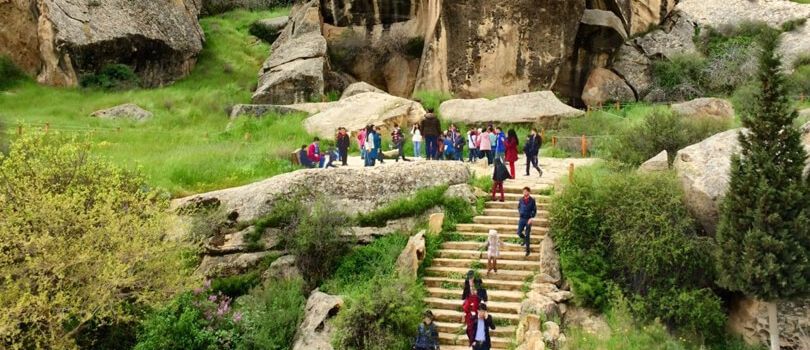
"Ancient rock carvings and stunning landscapes combined."
Gobustan National Park is one of Azerbaijan’s most fascinating natural and historical attractions. Located southwest of Baku along the Caspian Sea coast, this UNESCO World Heritage Site is world-famous for its ancient rock carvings, unique landscapes, and mud volcanoes. The park offers a rare glimpse into human history that dates back more than 40,000 years, making it a must-visit destination for travelers interested in archaeology, nature, and culture.
Gobustan is not just a park; it is an open-air museum where visitors can explore prehistoric art, ancient shelters, burial mounds, and dramatic rocky terrain. The combination of natural beauty and historical significance makes Gobustan National Park one of the most important cultural landmarks in Azerbaijan.
How to Reach Gobustan National Park
Gobustan National Park is located about 65 kilometers from central Baku. The most convenient way to reach the park is by taxi or private car, which takes around 1 to 1.5 hours depending on traffic. Taxis are widely available in Baku and are reasonably priced for day trips.
Another option is to join a guided tour from Baku, which often includes transportation, entry tickets, and a professional guide. For budget travelers, public transport can also be used. Visitors can take a bus from Baku to Gobustan town and then hire a local taxi to reach the park entrance. However, this option may take longer and require some planning.
Weather at Gobustan National Park
Gobustan National Park has a semi-desert climate, similar to Baku but slightly drier. Summers (June to August) are hot and sunny, with temperatures often rising above 35°C. Winters (December to February) are mild, with temperatures usually between 3°C and 10°C.
The best time to visit Gobustan National Park is during spring (March to May) and autumn (September to November). During these months, the weather is pleasant, making it easier to walk around the rocky terrain and explore the outdoor exhibits comfortably.
Timing of Gobustan National Park
Gobustan National Park is generally open daily from 10:00 AM to 6:00 PM. Timings may vary slightly during public holidays or special events, so it is recommended to check in advance.
Visitors are advised to arrive earlier in the day, especially during summer, to avoid the midday heat. A complete visit usually takes 2 to 3 hours, depending on interest and time spent at the museum and outdoor sites.
Why Gobustan National Park Is Famous
Gobustan National Park is famous for its collection of more than 6,000 prehistoric rock carvings, also known as petroglyphs. These carvings depict scenes of hunting, dancing, rituals, animals, boats, and daily life of ancient humans. Some of these artworks date back to the Upper Paleolithic period.
The park is also well-known for its unique natural features, including mud volcanoes and unusual rock formations. Due to its outstanding cultural value, Gobustan was recognized as a UNESCO World Heritage Site, highlighting its importance to global human history.
Entry and Visit Details of Gobustan National Park
Visitors are required to purchase an entry ticket to access Gobustan National Park. The ticket includes entry to the modern visitor center and the outdoor archaeological sites. Ticket prices are affordable and vary slightly for local and international tourists.
The visitor center features interactive displays, multimedia presentations, and detailed explanations about the petroglyphs and ancient human life. Guided tours are available and highly recommended for a deeper understanding of the site’s historical significance.
History of Gobustan National Park
The history of Gobustan dates back tens of thousands of years. Archaeological evidence suggests that early humans inhabited this area due to its favorable climate, water sources, and rich wildlife. The rock carvings serve as visual records of prehistoric life, showing how ancient communities hunted, traveled, and celebrated rituals.
In addition to petroglyphs, Gobustan also contains ancient burial mounds, stone tools, and remnants of shelters. The area remained significant throughout various historical periods, including Roman times, as evidenced by a Latin inscription left by Roman soldiers.
Architecture and Landscape of Gobustan National Park
Gobustan National Park does not feature traditional architecture but is defined by its natural rock formations and archaeological structures. The rocks serve as natural canvases for ancient carvings, and the landscape is characterized by rugged hills, cliffs, and wide open spaces.
The modern visitor center is designed with a minimalist architectural approach, blending seamlessly with the surrounding environment. Its design focuses on education and preservation, offering visitors a comfortable starting point before exploring the outdoor areas.
Things to Do at Gobustan National Park
There are many interesting activities for visitors at Gobustan National Park:
Interesting Facts About Gobustan National Park
Tips for Visiting Gobustan National Park




















Baku
Baku