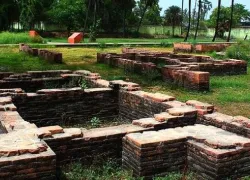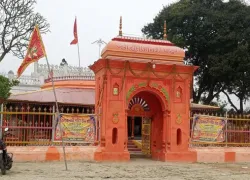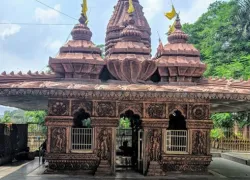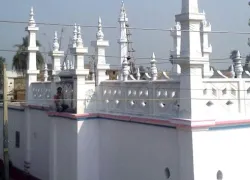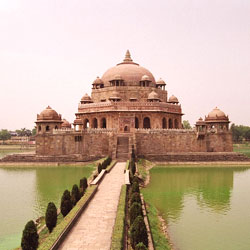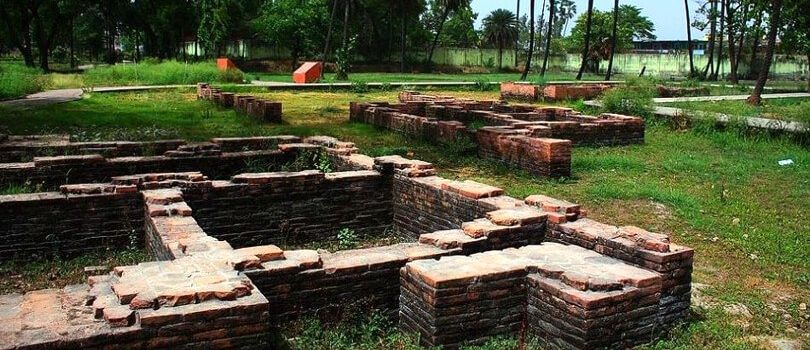
"Experience serene spirituality in lush surroundings."
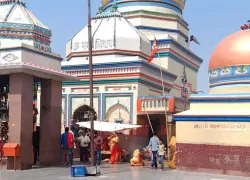
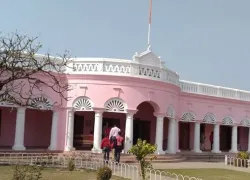
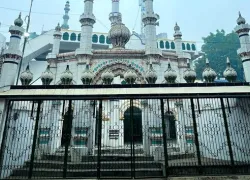
Anand Bagh Math is a spiritual and religious destination located in Bakhri village in the Siswan block of Siwan district in Bihar, India. It is one of the notable places of interest in and around Siwan, known for its serene landscape and religious significance. Along with its neighboring Sunder Bagh Math, the site serves as a memorial (“samadhi sthal”) for two revered saints — Swami Jaggannath Das Ji and his guru Bhagwan Das Ji. Thousands of devotees visit Anand Bagh Math every year to pay homage, seek blessings, and participate in religious gatherings.:contentReference[oaicite:0]{index=0}
History and Significance
Anand Bagh Math and Sunder Bagh Math have a long tradition rooted in faith, local folklore, and devotion. Both of these structures were built around the memorials of the saints who are believed to have spent much of their lives in meditation and spiritual teaching. The matheries (maths) have since become places where followers come not only for prayer but also to connect with the teachings and legacy of the saints who dedicated their lives to spiritual upliftment. Devotees from Bihar and neighboring states such as Uttar Pradesh, West Bengal, and even New Delhi visit the site, especially on auspicious days and festivals.:contentReference[oaicite:1]{index=1}
The tradition at Anand Bagh Math involves worship of the guru first, followed by reverence to Lord Hanumanji — a ritual observed with devotion by visitors. On holy occasions such as Amavasya, Purnima, Navratri, and the month of Sawan, a large number of pilgrims arrive to take part in special gatherings and ceremonies. During the Sawan Purnima period in particular, the math hosts a two-day spiritual mela (fair) drawing upwards of two hundred thousand devotees, accompanied by arrangements for prasadam distribution and spiritual discourses.:contentReference[oaicite:2]{index=2}
Location & How to Reach
Anand Bagh Math is situated near the Daha River in Bakhri village, Siswan block, in the Siwan district of Bihar. Visitors typically reach here via Siwan town — the district headquarters.:contentReference[oaicite:3]{index=3}
Weather and Best Time to Visit
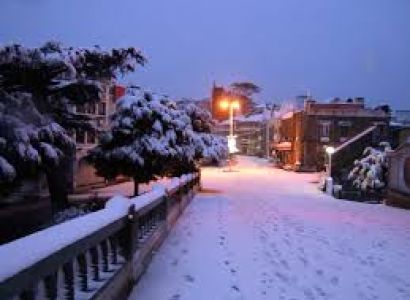
Siwan and its rural surroundings experience a typical North Indian climate. Winters (October to March) bring pleasant and cool conditions, ideal for sightseeing and long stays outdoors. Summers (April to June) can be hot and humid, while monsoon (July to September) brings moderate to heavy rainfall that enhances the region’s lush greenery but may complicate travel. The best time to visit Anand Bagh Math is during the winter months when festivals and religious events are held with greater ease and comfort.:contentReference[oaicite:7]{index=7}
Visiting Hours and Entry Details
Anand Bagh Math is an open religious site rather than a structured museum, so it is generally accessible throughout the day. Most devotees visit during early morning and evening hours, which are considered auspicious. Since it is a place of worship rather than a ticketed tourist attraction, there are no formal entrance fees. Devotees and visitors are free to explore the area, participate in rituals, or attend gatherings at their convenience. No formal ticketing or timed admission is required, but it’s advisable to check locally for event schedules if you plan to align your visit with specific festivals.:contentReference[oaicite:8]{index=8}
Things to Do Around Anand Bagh Math
Facts and Tips for Visitors
Church of Our Lady – Bruges, Belgium
Although far from Siwan, the :contentReference[oaicite:17]{index=17} in Bruges, Belgium, is among the most significant religious and architectural marvels in Europe and is often referenced by world travelers. This Roman Catholic church, known locally as Onze-Lieve-Vrouwekerk, dates mainly from the 13th to 15th centuries and is a stunning example of Gothic architecture. Its towering brick spire reaches over 115.6 m, making it one of the tallest brick church towers globally.:contentReference[oaicite:18]{index=18}
Why It Is Famous
The Church of Our Lady is world-famous for its soaring Gothic structure and its treasured artwork, most notably Michelangelo’s masterpiece Madonna and Child, one of the few sculptures by the artist to leave Italy during his lifetime. Visitors also come for the elaborate tombs of Charles the Bold and his daughter Mary of Burgundy, which sit inside the church.:contentReference[oaicite:19]{index=19}
History and Architecture
Construction of the church spanned several centuries, resulting in a mixture of styles but predominantly Gothic design. The exterior brickwork and flying buttresses date back to the 13th and 14th centuries, while the interior combines vaulted ceilings, stained glass, and rich ornamentation. Its architectural elegance, combined with historical artifacts and funerary monuments, makes it a key stop for history and art lovers.:contentReference[oaicite:20]{index=20}
Entry and Visit Details
The church is open daily, typically from around 9:30 AM to 5:00 PM, although times may vary seasonally and on Sundays. Entry to the church itself is usually free of charge, while access to the museum section or specific exhibits — including the museum housing Michelangelo’s sculpture — may require a small ticket. Guided tours, audio guides, and combo tickets with nearby attractions are also available.:contentReference[oaicite:21]{index=21}
Weather and Best Time to Visit Bruges
Bruges has a temperate maritime climate. Spring and summer (April–October) offer mild weather ideal for sightseeing, while winters can be cold and quieter, yet atmospheric — especially around Christmas. Early morning or late afternoon visits help avoid peak crowds and provide soft lighting for photography.:contentReference[oaicite:22]{index=22}
Things to Do Around the Church
Travel Tips for Visiting the Church
Siwan
Siwan
Siwan

Siwan
Siwan
Siwan