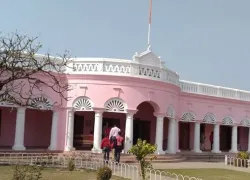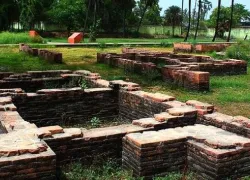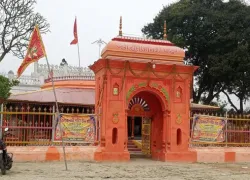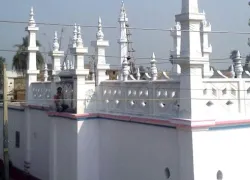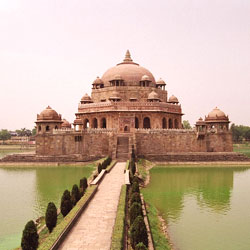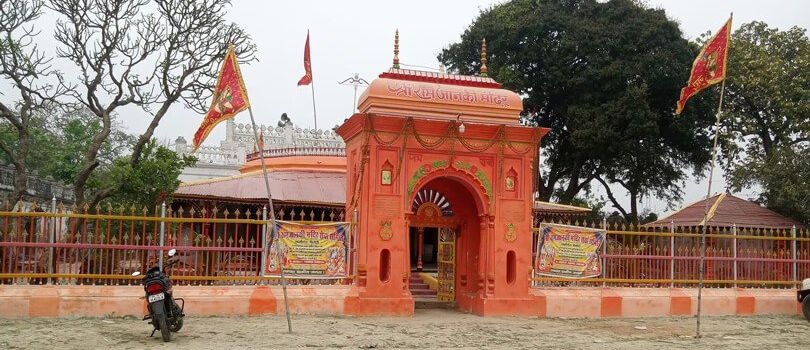
"Discover spiritual tranquility in ancient architecture."
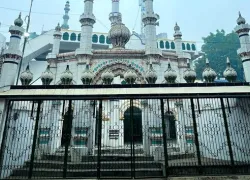
The Burhiya Mai Temple is a well-known religious site located in the heart of Siwan town, in the state of Bihar, India. Situated on the east-northern portion of Gandhi Maidan, this temple is dedicated to the revered local deity “Burhiya Mai,” whom devotees believe fulfills heartfelt wishes when worshipped with sincerity and devotion. The atmosphere around the temple is spiritual and peaceful, drawing visitors who seek blessings for prosperity, health, happiness, and fulfilment of personal desires. :contentReference[oaicite:0]{index=0}
History and Religious Significance
Burhiya Mai Temple holds immense importance for the people of Siwan and neighboring areas. Though its origins are rooted in local faith rather than documented historical texts, generations of devotees have upheld the belief that the goddess listens to prayers and grants boons to sincere worshippers. Over decades, the temple has become a symbolic and emotional centre for worship and communal devotion in Siwan district. :contentReference[oaicite:1]{index=1}
Locals often narrate personal stories of wishes being granted after prayers here, which contributes to the temple’s reputation as a place of divine intervention. Every Saturday especially, crowds grow larger as devotees come in big numbers with offerings such as new saris, flowers, fruits, and coconuts — traditional elements symbolizing respect and devotion in Hindu worship. :contentReference[oaicite:2]{index=2}
How to Reach Burhiya Mai Temple
The temple’s location in Siwan town makes it accessible for most visitors:
Best Time to Visit & Weather
Siwan’s climate is typical of interior North India:
Temple Timings and Entry
Burhiya Mai Temple is open for devotees throughout the day. Since it is a place of worship rather than a structured tourist venue, there are no fixed “ticketed” timings or entry fees. Visitors are free to visit in the morning, midday, or evening hours. Most devotees prefer early morning or evening visits, coinciding with traditional times for prayer and aarti (holy ritual of light offering). :contentReference[oaicite:10]{index=10}
Things to Do Around Burhiya Mai Temple
Facts and Tips for Visitors
Church of Our Lady – Bruges, Belgium
Though far from Siwan, the Church of Our Lady in Bruges, Belgium, is one of Europe’s iconic religious and architectural masterpieces. Known locally as Onze-Lieve-Vrouwekerk, this Roman Catholic church is a prime attraction in Bruges’ historic city centre and is famous worldwide for its art, architecture, and historic treasures. :contentReference[oaicite:20]{index=20}
Why It Is Famous
The Church of Our Lady is best known for housing the magnificent sculpture “Madonna and Child” by **Michelangelo**, carved around 1504. It is one of the few works by the Renaissance master to leave Italy during his lifetime and remains a treasured masterpiece. The church also contains the tombs of Charles the Bold and his daughter Mary of Burgundy, elaborately crafted and evocative of medieval pageantry and history. :contentReference[oaicite:21]{index=21}
History and Architecture
Constructed mainly between the 13th and 15th centuries, the Church of Our Lady is a stunning example of Gothic architecture. Its towering brick spire, standing over 115 metres tall, shapes the city skyline and is one of the tallest brick church towers in the world. The church’s construction reflects influences from Scheldt Gothic to French Gothic design, with expansive vaulted naves, stained glass, and flying buttresses characteristic of medieval European ecclesiastical architecture. :contentReference[oaicite:22]{index=22}
Entry and Visit Details
Visitors to the Church of Our Lady can explore both its role as an active place of worship and as a cultural landmark. The church itself is generally open daily, with typical hours from around 9:30 a.m. to 5:00 p.m., though hours may vary seasonally and on Sundays. While entry to the main church is usually free, a ticket fee may apply for access to the museum or specific art sections that house treasures like the Michelangelo sculpture. :contentReference[oaicite:23]{index=23}
Weather and Best Time to Visit Bruges
Bruges experiences a temperate maritime climate, with mild summers and cool, sometimes chilly winters. Spring and early autumn offer pleasant weather and comfortable touring conditions, while winter brings fewer crowds and a cozy ambience — ideal for exploring the historic centre and its churches. :contentReference[oaicite:24]{index=24}
Things to Do Around the Church
Visitor Tips

Siwan
Siwan
Siwan
Siwan
Siwan
Siwan
Siwan
Siwan