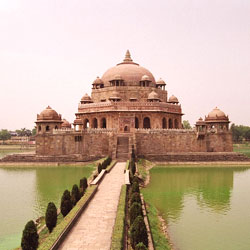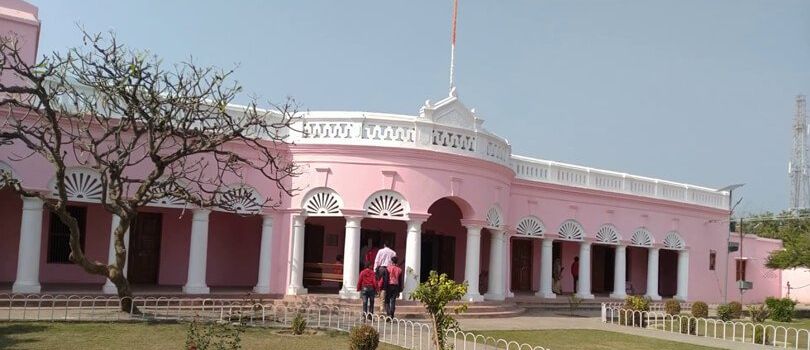
"Visit the birthplace of India's first President."
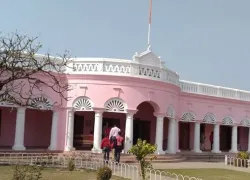
Dr. Rajendra Prasad Birthplace, located in the village of Zeradei (also spelled Ziradei) in the Siwan district of Bihar, India, is the ancestral home of India’s first President, Dr. Rajendra Prasad (1884–1963). Born on December 3, 1884, in this modest village house, Prasad would grow to become one of the most influential figures in India's freedom movement and the first President of the Republic of India. The birthplace is now preserved as a historic monument to honor his life and legacy. :contentReference[oaicite:0]{index=0}
The village of Zeradei sits about 13 kilometers from Siwan town and is deeply rooted in history and heritage. In addition to being a symbol of national pride, Zeradei represents the humble beginnings of a leader who devoted his entire life to the service of the nation. The ancestral house of Dr. Prasad is a protected site maintained by the Archaeological Survey of India (ASI) under its Patna circle. :contentReference[oaicite:1]{index=1}
History and Significance
Dr. Rajendra Prasad was born into a Kayastha family in Zeradei, where his father Mahadev Sahai was a scholar of Sanskrit and Persian, and his mother Kamleshwari Devi was devout and spiritually inclined. Growing up in a village known for harmony among diverse communities, young Prasad developed a deep sense of compassion and national consciousness early in life. :contentReference[oaicite:2]{index=2}
He excelled academically, securing a scholarship after topping the University of Calcutta entrance examination and later earning advanced degrees including a Doctorate in Law. His legal and academic prowess, combined with his commitment to India’s freedom struggle, distinguished him as a key leader. He became a close associate of Mahatma Gandhi, worked tirelessly in the Champaran and Non-Cooperation Movements, and later chaired the Constituent Assembly that drafted modern India’s Constitution. :contentReference[oaicite:3]{index=3}
His legacy continued as he became the first President of India on January 26, 1950, a post he held until 1962. He remains the only President of India to be re-elected for two terms. :contentReference[oaicite:4]{index=4}
The Ancestral House Today
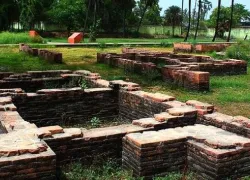
The site of Dr. Prasad’s birth is a modest brick and wooden structure reflecting the architectural style of rural Bihar from the late 19th century. It has been declared a monument of national importance and is managed by the ASI. Inside, visitors can see artifacts, photographs, and memorabilia related to the personal and public life of Dr. Prasad. :contentReference[oaicite:5]{index=5}
Despite its historical importance, the village around the birthplace has faced challenges like inadequate infrastructure and development, but locals remain proud of its significance. :contentReference[oaicite:6]{index=6}
How to Reach Dr. Rajendra Prasad Birthplace
To reach the birthplace from the nearest city:
Best Time to Visit & Weather
The region surrounding Zeradei experiences a typically North Indian climate:
Visiting Hours and Entry
Since the site is a historic landmark rather than a formal museum with fixed opening hours, it is generally open during daylight hours, typically from the morning until late afternoon. For precise opening times and tour guidance, contacting local authorities in Siwan or caretakers on arrival is recommended. :contentReference[oaicite:14]{index=14}
Things to Do Around Zeradei & Siwan
While visiting Zeradei:
Facts and Tips
Church of Our Lady – Bruges, Belgium
Although not located in Siwan, the famed Church of Our Lady in Bruges, Belgium is one of Europe’s most remarkable medieval churches — and is often referenced in world travel guides worldwide. :contentReference[oaicite:22]{index=22}
The Church of Our Lady (Onze-Lieve-Vrouwekerk) in Bruges dates primarily from the 13th to 15th centuries and is an outstanding example of Gothic architecture. Its tower, at over 115 metres tall, is one of the tallest brick church towers in the world, dominating the city skyline. :contentReference[oaicite:23]{index=23}
The church’s interior houses numerous treasures, the most famous being Michelangelo’s marble sculpture Madonna and Child — one of the few works by Michelangelo to leave Italy during his lifetime. :contentReference[oaicite:24]{index=24}
History and Architecture of the Church
The Church of Our Lady was built on the site of earlier chapels, with construction of the Gothic structure beginning around 1230. Its exterior displays characteristic brick Gothic style with flying buttresses and pointed arches, while its interior showcases a Latin cross layout and richly ornamented chapels. :contentReference[oaicite:25]{index=25}
The choir space contains tombs of historical figures like Charles the Bold and his daughter Mary of Burgundy, reflecting the church’s deep historical roots in European medieval nobility. :contentReference[oaicite:26]{index=26}
Timings and Entry (Bruges)
The church is generally open for visitors:
Visitors should dress respectfully and check official schedules before arrival, as events or services can alter opening hours. :contentReference[oaicite:30]{index=30}
Why It Is Famous
The Church of Our Lady is world-renowned not only for its towering Gothic architecture but particularly for housing the *Madonna and Child by Michelangelo*, an iconic Renaissance sculpture cherished by art lovers globally. :contentReference[oaicite:31]{index=31}
Whether you are exploring Indian heritage in Siwan or European medieval art in Bruges, both sites — though distinct — represent significant cultural and historical milestones from around the world. :contentReference[oaicite:32]{index=32}

Siwan
Siwan
Siwan
Siwan
Siwan
Siwan