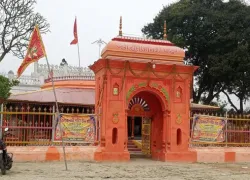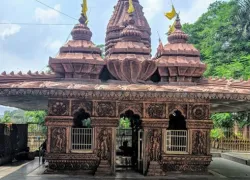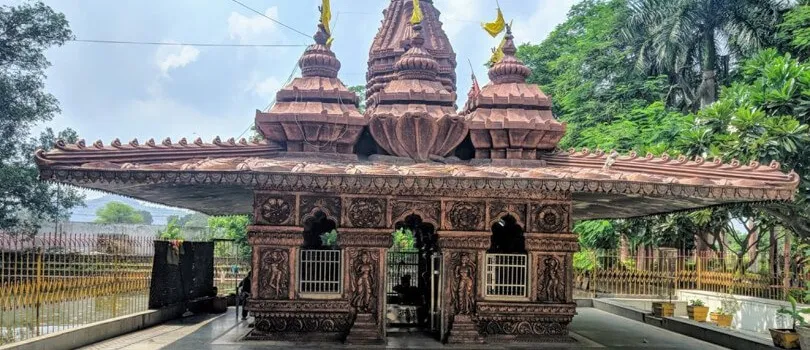
"Visit a sacred site of spiritual significance."
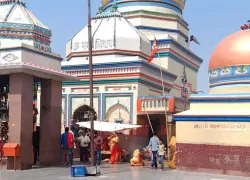
The Panchmukhi Shivalinga Temple is an ancient and spiritually significant Hindu temple located in the Mahadeva locality of Siwan town in the state of Bihar, India. This sacred site is known for housing a unique panchmukhi or five-faced Shivalinga — a representation of Lord Shiva with five distinct faces symbolizing his multiple divine aspects. Locals and devotees believe this Shivalinga emerged naturally from the earth, making it a rare and powerful object of worship. :contentReference[oaicite:0]{index=0}
History and Religious Significance
The Panchmukhi Shivalinga Temple has deep cultural and religious roots in the local community. While there are no well-documented historical records tracing its origin to a specific date, oral tradition and popular belief among devotees suggest that the Shivalinga was not installed by human hands but rather manifested on its own — a phenomenon considered highly auspicious in Hindu faith. :contentReference[oaicite:1]{index=1}
The term “panchmukhi” refers to the five faces of the Shivalinga, which are typically interpreted as representing five important aspects of Lord Shiva — Sadyojata (creation), Vamadeva (preservation), Aghora (dissolution), Tatpurusha (obscuration), and Ishana (revelation). In addition, devotees claim that carvings or natural impressions of Brahma and Vishnu may also be perceived in the structure, emphasizing the unity of the Hindu trinity. :contentReference[oaicite:2]{index=2}
The temple becomes an especially vibrant site of devotion during Mahashivratri, one of the most important festivals in the Hindu calendar. On this night, hundreds of worshippers gather to perform night-long prayers, offer water and milk to the Shivalinga (a practice called jalabhisheka), and participate in religious music and chanting. Devotees also come during the monsoon season and weekly worship days, seeking blessings for health, peace, and prosperity. :contentReference[oaicite:3]{index=3}
How to Reach Panchmukhi Shivalinga Temple
Reaching the Panchmukhi Shivalinga Temple in Siwan is straightforward due to its location within town limits:
Weather and Best Time to Visit
Siwan experiences a subtropical climate typical of northern India:
Temple Timings and Entry
The Panchmukhi Shivalinga Temple does not operate like a formal museum or ticketed site. It is open throughout most of the daylight hours, and worshippers can enter freely without any entry fee. The best practice is to visit during early morning or evening aarti (prayer rituals), when the temple atmosphere is especially charged with devotional energy. Since festivals can attract large crowds, arrive early on such days for a more pleasant experience. :contentReference[oaicite:11]{index=11}
Things to Do Around Panchmukhi Shivalinga Temple
Facts and Tips for Visitors
Church of Our Lady – Bruges, Belgium
The Church of Our Lady (Onze-Lieve-Vrouwekerk) in Bruges, Belgium, is a stunning example of medieval Gothic architecture and one of Europe’s most visited religious and cultural landmarks. Its towering brick structure dominates the Bruges skyline and houses priceless artistic treasures, including a celebrated Renaissance sculpture. :contentReference[oaicite:21]{index=21}
Why It Is Famous
The church is renowned around the world for housing Michelangelo’s “Madonna and Child”, which is one of only a handful of the artist’s sculptures to leave Italy during his lifetime. This white marble masterpiece — depicting Mary and infant Jesus — attracts art lovers and pilgrims alike. Aside from this iconic piece, the church contains detailed woodwork, stained glass, beautifully carved tombs, and Flemish paintings. :contentReference[oaicite:22]{index=22}
History and Architecture
Construction of the Church of Our Lady began around the early 13th century and continued for several centuries, resulting in a striking example of Gothic design. Its most distinctive feature is the soaring brick tower — over 115 m tall — making it one of the tallest brick church towers in the world and a defining feature of Bruges’ skyline. Inside, the church contains chapels, painted crypts, and elaborate tombs, including those of Mary of Burgundy and her father Charles the Bold, reflecting centuries of European history and art. :contentReference[oaicite:23]{index=23}
Entry and Visit Details
Visitors can enter the Church of Our Lady for free, but access to the museum section — which displays the Michelangelo sculpture and other artistic treasures — requires a ticket (around €8 for adults, with discounts for youth and children under certain ages). Guided tours, audio guides, and multilingual signage help visitors better understand the artwork and history. Typical visiting hours are from around 9:30 a.m. to 5:00 p.m. on weekdays and Saturdays, and from about 1:30 p.m. to 5:00 p.m. on Sundays. :contentReference[oaicite:24]{index=24}
Weather and Best Time to Visit Bruges
Bruges enjoys a temperate maritime climate. Spring and summer offer mild, enjoyable weather for exploring the church and surrounding historic sites, while winter brings a quieter ambience with cooler temperatures. The city’s historic centre, canals, and nearby museums complement the church visit beautifully. :contentReference[oaicite:25]{index=25}
Things to Do Around the Church