"Marvel at exquisite Islamic architecture and heritage."
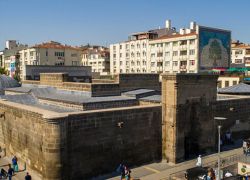
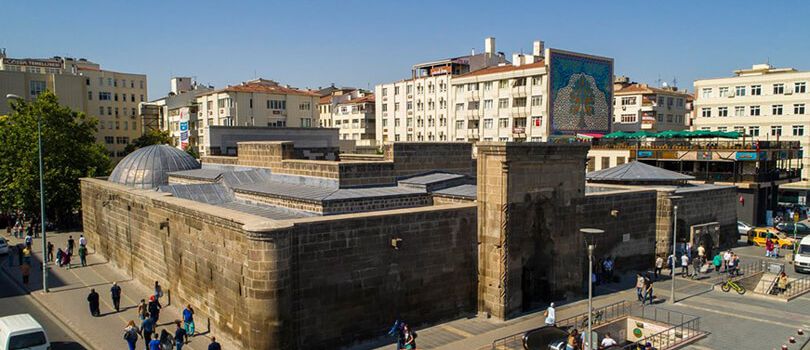
Sahabiye Medrese is a historic educational complex located in the heart of Kayseri, Turkey. Built during the Seljuk period, this remarkable structure stands as one of the finest examples of Islamic architecture in Anatolia. The medrese (Islamic theological school) served not only as a center of religious education but also as a significant cultural and social hub. With its intricate stone carvings, symmetrical design, and spiritual atmosphere, Sahabiye Medrese continues to attract history lovers, architecture enthusiasts, and tourists alike.
Situated near Kayseri’s bustling city center and close to other key historical landmarks, the Sahabiye Medrese is both accessible and deeply rooted in the city's historical fabric. Over the centuries, it has undergone restoration to preserve its grandeur, and today it serves as a monument to the Seljuk era’s contributions to education, religion, and architectural beauty.
How to Reach Sahabiye Medrese, Kayseri
Sahabiye Medrese is located in Melikgazi district, central Kayseri, making it easy to access by various means of transportation:
Weather in Kayseri
The weather in Kayseri features a continental climate with hot summers and cold winters. Being located at a high altitude, temperatures can vary greatly between day and night:
Timings and Entry Information
Sahabiye Medrese is open to visitors year-round and is generally accessible to the public without an entry fee. It is often used as a cultural space or exhibition area.
Why Famous for Sahabiye Medrese, Kayseri?
Sahabiye Medrese is famous for its rich history, architectural elegance, and educational heritage. It was built in 1267 during the reign of the Seljuk Sultanate of Rum by Sahip Ata Fahreddin Ali, a prominent vizier. The medrese served as a religious school where students learned Islamic theology, jurisprudence, mathematics, astronomy, and philosophy.
The beautifully decorated portal, featuring intricate stone carvings and geometric patterns, is a standout feature. Over the years, the medrese has been a symbol of Kayseri’s role as a center of learning and culture during the Seljuk period. Today, it continues to be a point of pride and historical significance for the city.
History and Architecture of Sahabiye Medrese
Constructed in 1267, Sahabiye Medrese is a masterpiece of Seljuk architecture. Commissioned by Sahip Ata Fahreddin Ali, the medrese was intended as both a religious school and a charitable foundation. It reflects the educational and religious priorities of the Seljuks, who invested heavily in public institutions.
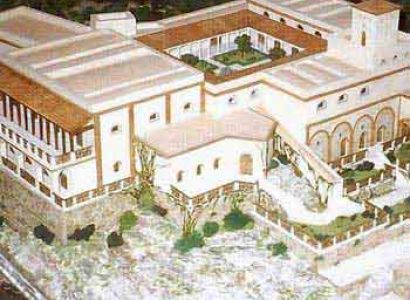
The medrese follows a typical four-iwan plan — a courtyard surrounded by vaulted halls — with a central open-air courtyard and rooms used as classrooms and student accommodations. The main entrance is adorned with muqarnas (stalactite-like decorative elements) and kufic inscriptions carved into the stone, showcasing the artistic achievements of the time.
Notable architectural features include:
Things to Do in and Around Sahabiye Medrese
While Sahabiye Medrese is relatively small, it’s part of a rich historical landscape in Kayseri. Here’s what you can do during your visit:
Facts and Tips about Sahabiye Medrese, Kayseri