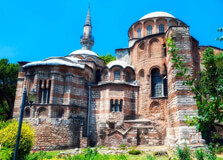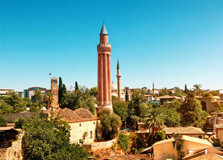
"A stunning architectural marvel of spiritual significance."
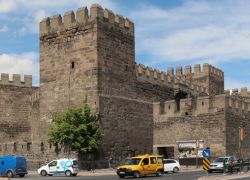
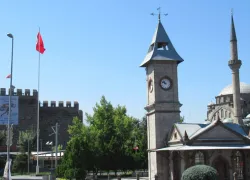
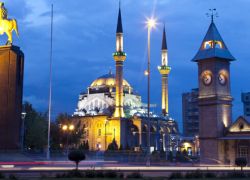
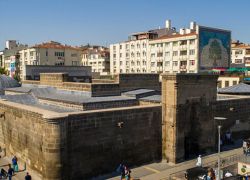
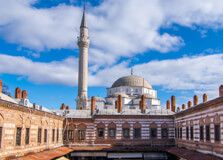
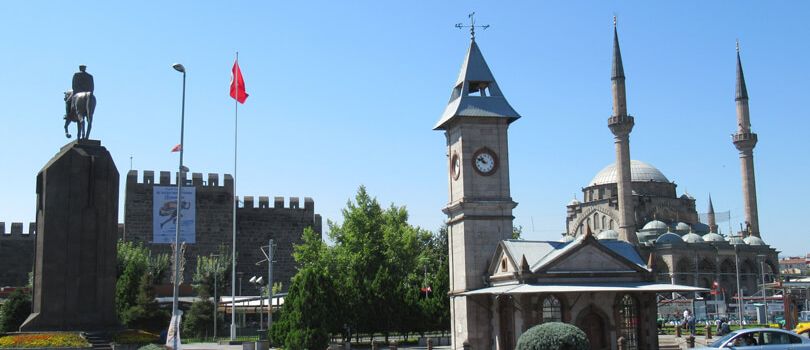
The Grand Mosque of Kayseri (Kayseri Ulu Camii), located in the city center of Kayseri in Central Anatolia, is one of the oldest and most significant religious landmarks in the region. Built during the Seljuk period, this mosque reflects a unique blend of Islamic architecture and Anatolian craftsmanship. It is not just a place of worship but a symbol of Kayseri’s religious and cultural heritage. The Grand Mosque has served as a spiritual center for centuries, attracting worshippers and tourists alike for its serene ambiance, historical importance, and beautiful stonework.
How to Reach Grand Mosque, Kayseri
The Grand Mosque is centrally located in Kayseri, making it very accessible by various modes of transport.
Weather at Grand Mosque, Kayseri
Kayseri has a continental climate with hot summers and cold winters, which affects the experience of outdoor attractions like the mosque's courtyard.
Timings and Best Time to Visit
The Grand Mosque is open daily, from early morning until late evening. It is an active place of worship, so visitors are advised to be respectful during prayer times.
Why Famous for Grand Mosque, Kayseri?
The Grand Mosque is famous for its historical value and Seljuk architecture. It is one of the few surviving mosques from the 12th century in Anatolia. Known for its serene ambiance, exquisite calligraphy, and detailed stonework, it is a prime example of early Islamic architecture in the region. The mosque remains a focal point for religious, social, and cultural gatherings, maintaining its role through centuries of Kayseri’s development.
Entry and Visit Details about Grand Mosque, Kayseri
Entry to the Grand Mosque is free for all visitors. Modest dress is recommended, and shoes must be removed before entering the prayer hall. Non-Muslim visitors are welcome outside prayer times.
History and Architecture of Grand Mosque
The Grand Mosque was constructed in 1134 during the reign of Melik Mehmed Gazi, a ruler of the Danishmendid dynasty, which controlled parts of Central Anatolia after the Seljuk conquest. Over the centuries, it has undergone several restorations, especially during Ottoman times.
The architecture showcases classic Seljuk design elements: stone masonry, geometric patterns, and pointed arches. The mosque features a large rectangular prayer hall supported by columns and decorated with Kufic calligraphy and floral motifs. Its dome, minaret, and elegant portal exhibit the Seljuk mastery of form and proportion.
Things to Do at Grand Mosque, Kayseri
Facts about Grand Mosque, Kayseri
Tips for Visiting Grand Mosque, Kayseri
The Grand Mosque of Kayseri is more than a historical building—it is a living testament to the city’s spiritual, architectural, and cultural evolution. For those exploring Central Anatolia, a visit to this majestic structure offers not only a glimpse into the Seljuk legacy but also a peaceful retreat amidst the city’s modern pace.