"Explore traditional Goan life and vibrant history."
What Is the Ancestral Goa Museum?
When most people think of Goa, images of sun-soaked beaches, shacks serving cold beer, and pulsating nightlife come to mind. But Goa has another side — one that is quieter, richer, and far more ancient. The Ancestral Goa Museum, popularly known as the Big Foot Museum, is the perfect place to discover that side.
Located in the small village of Loutolim in South Goa, the Ancestral Goa Museum is an open-air eco-tourism development that offers a vivid glimpse into Goa's past, showcasing traditional Goan rural life from centuries ago. It is one of those rare places where history does not feel like a textbook — it feels alive, colourful, and deeply personal.
The museum was created by artist Maendra Jocelino Araujo Alvares in 1995 with the objective of preserving the art, culture, and environment of rural Goa for future generations. What started as a modest personal project has grown into something extraordinary. Today, it spans an area of about 9 acres, spread across what was once a barren hillock, now teeming with life and colour.
Where Is It Located and How to Get There?
Located about 25 km away from Panaji and 10 km from Margao, the Ancestral Goa Museum sits beautifully in the small village of Loutolim. The village itself is charming and relatively unspoiled by tourism, making the drive there part of the experience.
The museum is about one kilometre from the Loutolim bus stop; you can walk or take a local rickshaw. If you are landing at Goa International Airport (Dabolim), hiring a taxi to cover the 25 km distance is the most convenient option.
Travellers staying near the southern beaches will find this museum especially easy to access. There are several beaches nearby, including Majorda Beach, Benaulim Beach, and Utorda Beach, so if you are staying near these beaches, you can hire a cab and reach the museum within an hour.
Timings and Entry Fee
The museum is open every day of the week, making it easy to plan your visit around other Goa activities. You can visit the museum throughout the week, between 9 AM and 6 PM.
The entry fee is INR 100 for adults and INR 50 for children aged three to ten years. There is an additional charge of INR 20 for using a still camera and INR 100 per person for the Sound and Light museum. For the experience it offers, this is exceptional value for money.
The Star Attraction — The Sant Mirabai Sculpture
The moment you step inside, you are in for a visual treat — but nothing quite prepares you for the centrepiece of the museum. The highlight of the Big Foot Museum is the awe-inspiring 14-metre sculpture of Saint Mira Bai, carved in just 30 days by Maendra Jocelino Araujo Alvares.
It now holds a place in the Limca Book of Records as the longest laterite sculpture in India. If you look closely, Saint Mira Bai is depicted singing with an Ektara, adorned with various ornaments. The red Kumkum on her forehead highlights her features, the armlet enhances the beauty of her arms, and the anklet adds a quintessential Indian touch.This sculpture alone is worth the trip. The sheer scale of it, carved entirely from laterite stone found locally in Goa, is breathtaking. It is the kind of artwork that makes you stand still and simply stare.
A Walk Through a Recreated Goan Village
As you wander through this open-air museum, the warm sun casts its golden glow on intricately crafted statues of farmers tilling the soil, fishermen hauling in their day's catch, and women busy with their daily chores.
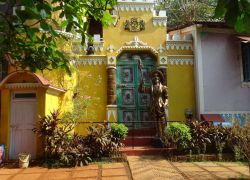
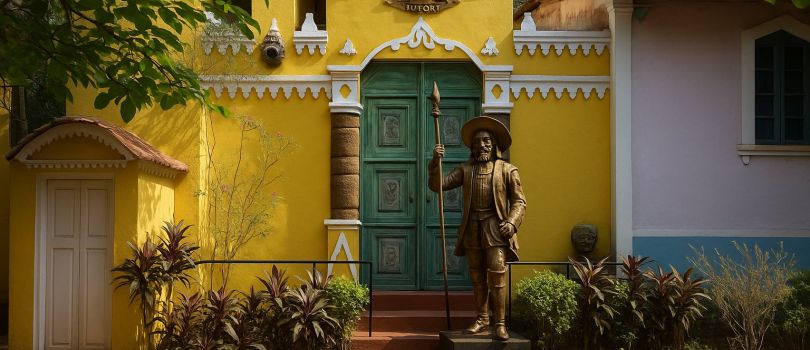
The museum has thoughtfully recreated an entire Goan village with true-to-life detail. Colourful life-size statues depict lifestyle, occupation, transportation, celebrations, weddings, religious life, and traditions of old Goa. The different coexisting cultures of that time are portrayed beautifully.
You will find exhibits dedicated to the Goan farmer (locally known as JOAO), the basket weaver (ANMARE), the blacksmith, the cobbler, the potter, and the village market seller. There is also a Taverna — the traditional Goan liquor shop — where a sculpture displays the sale of the famous Goan drink Feni between two people, along with a game called Tablam that labourers used to play after a hard day's work.
In this model village, you can also see different miniature houses that showcase traditional occupations and social classes, along with a music school known as the Escola da Musica, a village market, and a feni distillery.
The Legend of the Big Foot
The museum gets its nickname from one of its most intriguing features. There is a big footprint atop a rock inside a cave-like temple. It is said that a wish is fulfilled if asked while the heart is touching the big foot.
Tourists often place their hands on the imprint hoping for fortune to bless them. Whether or not you believe in such things, the experience of standing before this ancient rock imprint, surrounded by the hush of the surrounding greenery, is quietly magical.
Art, Crafts, and Things to Take Home
The museum is also a celebration of living Goan artistry. The art gallery contains almost twenty paintings, and thematic art shows are organised in the gallery occasionally. These shows are not restricted to paintings alone — some other kinds of artwork like clay pottery, cloth painting, and metal art are also included.
The handicraft centre features a wide range of locally made crafts, from intricate pottery to handwoven textiles, available for purchase as unique souvenirs that support local artisans. If you want to take home something genuinely Goan — not a mass-produced magnet or keychain — this is the place to shop.
Traditional and local craft items made of cane, bamboo, and clay are also sold at the Handicraft Fair within the museum complex.
Food, Entertainment, and the Full Experience
A visit to Ancestral Goa is not just educational — it is fun. There is a Big Foot dance floor, a Big Foot restaurant, a spring known as Boca da Vaca, a bird habitat, a spice yard, rubber plantations, and much more to keep visitors entertained.
The museum also offers an immersive experience through automated audio tours in two languages — Hindi and English. As you explore, electronic speakers provide information, and detailed displays on the exhibits offer even more insights.
The moment you enter the museum, you are greeted with a warm, traditional welcome. A lady at the door applies a tilak on your forehead and showers you with flowers and scented water. This kind of greeting immediately sets the tone — you are not just a tourist here, you are a guest.
Best Time to Visit
The best times to add this destination to your Goa itinerary are the winter months, from October to February. The weather is pleasant, the skies are clear, and walking through the open-air exhibits is genuinely enjoyable.
It is advisable to avoid visiting during the summer months as the intense heat can dampen the experience. The monsoon season, from July to September, is also best avoided, as Goa receives heavy rainfall during this period and many outdoor areas can be overwhelming.
For the best experience within the day, visit in the morning or late afternoon to avoid the midday heat.
Why Every Traveller Should Visit
The location has played a vital role in reshaping the tourism scene in South Goa by bringing in visitors interested in culture and history, not just the beaches and nightlife that Goa is commonly known for. It is also a source of pride for the locals, giving them a platform to display their traditions and craftsmanship.
Ancestral Goa Museum is the kind of place that reminds you why travel matters. It is not about ticking off sights — it is about understanding a place, its people, and their story. Whether you are a history lover, an art enthusiast, a family with curious children, or simply a traveller who wants more than a sunburn from their Goa trip, this museum will leave a lasting impression.
Plan at least two to three hours here. Walk slowly. Listen to the audio guide. Touch the Big Foot. And don't forget to pick up a piece of handmade Goan craft before you leave.