Home Login Register Inquiry Sitemap

Travel Packages | India Tours | Hotels & Motels | Travel Agents | Advertisment


India >> North Zone >> Uttaranchal >> Haridwar

About Haridwar

Haridwar, "Gateway to the abode of gods" blessed by the holy trinity of Brahma, Vishnu and Shiva nestles on the banks of River Ganga. Renowned for the "Maha Kumbh Mela" appearing every 12 years and the Ardh (half) Kumbh performed every six years fortunately beautifies India drawing a number of pilgrims and devotees to commemorate this divine event. Haridwar also provides plenty to learn.

Area: 12.302 sq.kms
Best Time to Visit: Round the year
Climate: Haridwar is situated at a height of almost 300 meters above sea level and the temperature usually hovers around 40°C during summers. Winters see the mercury dipping to as low as 6°C.
Main Languages: Hindi, Punjabi, Garhwali and English
Population: About 2 Lakhs
Temperature: Summer - Max: 40.9oC Min: 15.6oC

Winter - Max: 16.6 oC Min: 6.00oC

Attractions In & Around

Bhimgoda Kund

Legend has it that while the Pandavas were here, Bhim with one blow of his horse hoof drew water from the rocks at this spot.
It is about half a km upstream from Hari-ki-Pauri Ghat..

Bhimgoda Headworks : The canal which is constructed here, diverts the water of the Ganges into the Bhimgoda Headworks. The dam is worth seeing. It looks magnificent when surplus water is allowed to flow out of the dam producing soft foam. Beautiful fountains and toy canals have been constructed around the Bhimgoda Headworks.

These fountains have artificial falls enhancing the excellence of scene, flowing through the beds of lovely flowers resulting in the spread of sweet smell all around the place.
Bhimgoda Tank : It is also believed that Bhim made this tank, with a jab of his knee. The sacred tank is believed to have been excavated by Bhim and therefore this tank is named after him. The Ganges water flows into this tank.

TOP

Chilla Park

The Chila Wildlife Sanctuary, part of the Rajaji National Park is a popular destination for nature and adventure lovers. The pristine scenic beauty and rich biodiversity attracts wildlife lovers from India and abroad and has 23 species of mammals and about 315 avifauna species. Fishing in the river there is allowed with permits only..

Entry Requirements : All visitors need entry permits in order to be allowed into the park. Permits are available at each of the gates to the park.
Excursions - Rishikesh : A visit to the great pilgrim center of Rishikesh located on the banks of holy Ganga; amidst tranquil surroundings is a highly rejuvenating experience for both the nature lover and the spiritually guided mind.
Haridwar : Perched on the edge of time along the banks of the holy river Ganga, Haridwar, the foremost on a traditional Hindu pilgrims’ itinerary, is just 8 kms. from Chila.
Information for tourists : Tourists can avail to stay with prior notice at…

GMVN Tourist Bungalow.
GMVN Gujar Huts.
Irrigation Forest Bungalow.
Forest Rest House.
Wild Population In The Hills : Chila Wildlife Sanctuary, a haven for animal watchers is about 8 kms. from Haridwar. Located on the banks of the Ganga River, in the heart of Shivalik hills.
The town makes a good base for explorations of the park.

Inhabiting these dense green jungles are an impressive array of creatures- furred and feathered, docile and dangerous. The most prominent avian species include peafowl, pheasants, kingfishers and barbets, supplemented by a number of migratory species during the winter months. Besides that, the rivers, which flow through the park, harbour fish such as trout and mahseer.

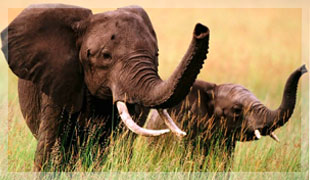
The fauna species include elephants, spotted deer, stag deer, blue bull, wild boar, fox, porcupine, jungle fowls and peacock. Besides these, one can find migratory birds also on the river Ganga. Wild animal/bird watching and photography on elephant back is a prime attraction. Pleasure walks in the jungle provide the much-needed respite from the maddening city noise.

It has 23 species of mammals and 315 fauna species. One may watch a herd of elephants roaming majestically in the jungle. Sambhar, cheetal, barking dear, wild boar, langur, ghural, sloth bear, king cobra, woodpecker, etc are cherishing sights. The river shelters fish in abundance. Fishing is allowed with permits.

The Rajaji National Park spreads across three districts of Uttaranchal- Haridwar, Dehradun and Pauri Garhwal. In 1983, the three wildlife sanctuaries of Rajaji, Motichur and Chila were amalgamated into a single contiguous park consisting of several distinct vegetation zones, which included broadleaved deciduous forests, grasslands, and pine forests in the upper reaches.

Rajaji’s history of conservation has been rather rocky in the recent past. The park’s been besieged by a host of problems, ranging from soil erosion to poaching. Despite all these issues, Rajaji continues to be one of northern India’s major wildlife reserves.
Accommodation : Within the Rajaji National Park are ten forest rest houses, at Beribara, Chilla, Ranipur, Dholkhand, Kunnao, Motichur, Kansrao, Satyanarain, Phandowala and Kasarodi. Staying outside the park, at hotels and tourist complexes in Haridwar, Rishikesh or Dehradun, is a good idea.

Further information is available from the Rajaji National Park office.
Best time to visit : Rajaji National Park is open to visitors between November and June. The best months to visit are between December and March. It is best not to travel after April.
Access : It is conveniently situated for anybody coming from Delhi, which is only 231 km from the park, and there are convenient overnight trains from Delhi to Haridwar and Dehradun, from where there are connecting buses to Rajaji. Similarly, Lucknow, is linked by bus to Haridwar and Dehradun. From Rajaji, the nearest airport is Jolly Grant, at Dehradun, while the most convenient railheads are Haridwar and Dehradun. Both have railway connections to the rest of the country.
Rajaji is accessible through different gates; the Ramgarh Gate and Mohand Gate are within 25 km of Dehradun, while the Motichur, Ranipur and Chilla Gates are just about 9 km from Haridwar. Kunao Gate is 6 km from Rishikesh, and Laldhang gate is 25 km from Kotdwar.
Kaudiyala : The rafter camp developed by GMVN is just 62 kms. from Chila, providing an excellent opportunity for river rafting and water sports.

TOP

Daksha Mahadev Temple

This temple is an ancient shrine located at Kankhal, and is one of the five sacred places around Haridwar. It is associated with Sati, the spouse of Lord Shiva who immolated herself to preserve his honour on being insulted by her father, King Daksha Prajapati. This incident provoked the disciples of Mahadev and killed King Daksha. But later Lord Mahadev brought him back to life. The temple is an attribute to this legend.

Daksha Mahadev Temple is also known as Shri Daksheshwar temple. It has a gilded image of a serpent symbolising Shiva..

Location : Four kms from Haridwar is the Daksha Mahadev temple.

TOP

Deoprayag

Deoprayag is 95 kms from Haridwar and is the most sacred Confluence of Alaknanda and Bhagirathi rivers in the vast network of tributaries that form the Ganges. It is from Deoprayag that the river starts taking the name Ganga.

At a height of 1700 feet above sea level, 70 km from Rishikesh, Deoprayag is a pilgrimage centre of great significance and is the second most important confluence in India, next to Prayag (Allahabad). In Treta-yuga, Lord Rama and Laksmana performed a yajna (sacrifice) here to atone for killing Ravana, who was a Brahmin.

The ancient Raghunath Temple here with a 15-foot tall deity of Sri Rama (Sri Raghunath) is one of the 108 most important temples in India. In front of the temple is Garuda. Behind the temple and slightly up a hill is Vamana's cave and nearby is Lord Rama's stone throne..

Temples and places to visit : Shrines dedicated to Hanumanji, Badrinathji, Kaala Bhairav, and Shiva are also here. Brahma, Dashrath and Ram are said to have prayed here. The verses of Saint Periyalwar composed in Tamil praise the glory of Tirukkandam, stating that the Vishnu revered in Mathura Dwaraka, Ayodhya and Sree Vaikunt is same as the Purushottam dwelling in Tirukkandam or Kadinagar.

Deo Prayag, the meeting point of Bhagirathi and Alaknanda Rivers, literally means the birthplace of the sacred Ganga. It is a delightful and fascinating sight to watch the rivers flowing majestically through sculptured channels carved through the rocks. Devprayag is also known as Tirukkandam or Kadinagar.

Raghunath temple and Chandrashill are worth visiting.
Accessibility - Rail : Nearest Raillhead is Rishikesh.
Best time to visit : Round the year.
Road : Deoprayag is connected by road with Dehradun, Haridwar, Srinagar and other places of Garhwal.

TOP

Gurukul Kangri University

Situated on the Haridwar-Jwalapur bypass road this is a center of learning where education is imparted in the traditional Indian way. Swami Shardha Nandji Maharaj, founder of Arya Samaj movement in India, founded this and within the precincts of the University is the Veda Mandir, housing many archaeological exhibits.

Haridwar is not only about temples. It has a great deal on offer for nature lovers as well as knowledge.

A visit to Haridwar would be incomplete without a look at the Gurukul Kangri University to experience the unique gurukul system first-hand, which follows the ancient tradition of Guru-Sishya pattern of education..

Har Ki Pauri Ghat : Also known as Brahmakund, this ghat is one of the most sacred ghats in India. People say that Vikramaditya built this ghat in memory of his brother Bhartrihari. In the evening a Maha Aarti is performed on this ghat and the floral diyas that float on the ghat in the twilight creates an impression of stars being brought in the river water.

It is believed that Bhartrihari eventually came to Haridwar to meditate by the banks of the holy Ganga. When he died, his brother constructed the Ghat in his name, which later came to be known as Har-Ki-Pauri.

Har-ki-pauri literary means legs of Lord Vishnu. These sacred ghats are named after the Charan or Footprints of Hari (Vishnu) impressed on a stone set into the upper wall of the ghats. The ghat is regarded the most sacred and auspicious point to bathe in the Ganga during the Kumbh and Ardh Kumbh.

The ghat is called Brahma-kund, since king Sveta performed penances there to get Lord Brahma's benediction. Many people come to riverbanks to offer prayers, flowers and ghee lamps on leaves. The Mandir of Ganga Maya is a must for devotees. The Ganga River flows with great intensity in Haridwar and there has been a special channel allowing devotees to be able to worship Ganga Maya where the speed is much more easier to deal with. Dating to the 11th century, the Maya Devi temple is said to be the spot where Sati’s heart and navel fell.
Did you know? : This education institution was founded with a different vision, where ancient Vedic and Sanskrit literature, Philosophy were made part of the curriculum besides Modern Sciences. This unique education institution became popular worldwide very soon.

TOP

Mussoorie

The queen of hill stations is about 89 kms from Haridwar and the salubrious climate and deep woods make it an ideal hill station. The name, Mussoorie, derives its name from plants of Mussoorie, found in abundance here. After its discovery, this place gradually developed as a center of education, business, tourism and beauty.

The hill station of Mussoorie came into being around the 1830s. What began as a small settlement grew into a large station to turn into a hill station of today overlooking the sprawling Doon valley and the city of Dehradun. Mussoorie was not named after a place in England. The British were content to follow the name given by the hill-folk.

Mussoorie, at a height of around 7000 ft above the sea level, straddles a ridge in the Garhwal Himalayas, developing into a major tourism destination..

Kempty Fall : The Kempty fall is a huge waterfall located in a valley, about 20 minutes drive from Mussoorie enroute Yamunotri. Bath at the foot of the falls is refreshing and enjoyable for children and adults alike.
Municipal Garden : This is a picnic spot with an artificial lake and boating facilities. A huge variety of Himalayan trees and shrubs are on display and about 4 km from Mussoorie, the garden is half-an-hour's pleasant walk!
Nag DevtaTemple : This is an ancient temple situated on Cart Mackenjie Road and is about 6 kms from Mussoorie. Vehicles can go right up to the spot. It provides a charming view of Doon Valley as well as of Mussoorie.
Did you know? : The first house erected on the ridge of Mussoorie was a small hut built on the Camel's back as a shooting box by Mr. Shore, the then Joint Magistrate and superintendent of revenues of the Doon and Captain Young of the Sirmur Rifles. Soon Captain Young built his large residence called 'Mullingar' as his residence. The splendid climate and the good sport obtainable gradually attracted other Europeans and as the Doon and the hills to the north became better known in 1827, the Government established a convalescent depot for European soldiers at Landour. The town gradually grew and a hundred years on it had grown into a major settlement of the home. Social life had also become hectic.
Gun Hill : This is the second highest peak in Mussoorie, offering an astounding view of the Himalayas, a bird's eye view of Mussoorie and ofcourse the entire Doon Valley. This spot may be reached through a Ropeway ride or a 20-minute trudge up a bridle path. During pre-independence days a gun mounted on this top used to be fired heralding mid-day to enable people to adjust their watches and hence this name.
History of Mussoorie : Mussoorie, as a hill station has quite an intriguing past. Its history dates back to 1827 when Captain Young, an adventurous military officer, explored the present site, laying the foundation of this holiday resort, which has few rivals now. The holy and mighty river Ganga is visible from one end of the ridge.
It was due to the conquest of the Garhwal and the Dehra in 1803 by the Gurkhas, under Umer Singh Thapa that Mussoorie came into being indirectly.

Before the British came, there were only shepherds whose animals grazed on the 'Mansur' shrub, which gives the town its name. It is natural to suppose that the officers locate the hills and eventually climb them here and there in search of sport and recreation.
Attractions - Camel's back road : This is a 3 km stretch, enjoyable for walking and horse ridding. One can get a spectacular view of the sunset in the Himalayas from here. The road passes through an old British graveyard and is named after a rock resembling the back of a sitting camel.
Childer's Lodge : This is the highest peak in Mussoorie, about 5 Kms from the Tourist Office. One can walk or go on a horse back for a glimpse of snow-clad mountains. It is fascinating to get the glimpse and never lets you go back home.
Cloud End : The resort is surrounded by thick deodar forest, ideally suited for foreigners and honeymooners. The bungalow built in 1838 by a British major was one of the first four buildings of Mussoorie has now been converted into a hotel. The place provides peace and calm and is full of flora and fauna.

TOP

Neel Dhara Pakshi Vihar

This is an excellent point to watch for migratory birds and during the winter season, fascinating birds, especially the Siberian Crane can be seen around Laljiwala on the banks of the river Ganga.

Once at Uttaranchal region, you wouldn't want to go away without journeying the other tourist attractions. There are various species of birds, which can be spotted here.

This place is definitely a bird-watcher’s delight. People sit here for hours together, spending time among birds..

Piran Kalier : On the outskirts of Roorkee is the Dargah of Hazrat Makhdum Allauddin Ali Ahmed 'Sabir, located 23 kms South of Haridwar. This Dargah is famed for its mystical powers and is visited in large numbers both by Hindus and Muslims and in fact this place is a living example of Hindu-Muslim unity.

During the Rabeeull month of Islamic calendar, an Urs is celebrated from the 1st day of sighting the moon to the 16th day.

TOP


Related Cities

Places of Worship