Home Login Register Inquiry Sitemap

Travel Packages | India Tours | Hotels & Motels | Travel Agents | Advertisment


India >> North Zone >> Himachal Pradesh >> Kullu

About Kullu

Kullu Valley -The Valley of Gods is perhaps the most delightful region in the Western Himalayas and is now the district headquarters of the valley but is not the main tourist centre. It was once known as Kulanthpitha- "the end of the habitable world”. This town has long been a centre of faith and is famous for its temples and the annual Dussehra festival.

Area: 6.68 sq.kms
Best Time to Visit: May To October
Climate: Pleasant temperatures in summer and very cold in winter with snowfall.
Main Languages: Hindi, Himachali, Punjabi, Pahari and English
Population: 16,000
Temperature: Summer- Max: 30.8oC Min: 18.8oC

Winter- Max: 16.4oC Min: 5.2oC

Attractions In & Around

Bajaura

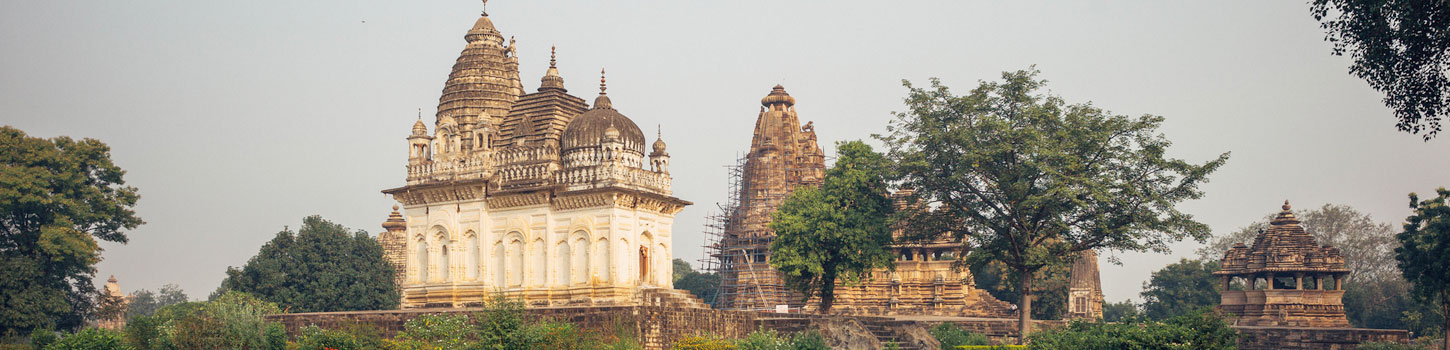
Here is the famous temple of Basheshar Mahadev with fine stone carvings and sculptures and is believed to have been built in the mid 8th century. It is truly an incredible structure.


On the banks of the river Beas, roughly about 200 m off the Kullu Mandi road at Hat (or Hatta), is situated a massive pyramidal structure temple, decorated with images of Durga, Vishnu and Ganesh in the outer 3-sided shrines. Floriated scrollwork is seen on the exterior walls and inside this Shiva temple is a large yoni-lingam..

Gaining popularity : The Beas river from the Manali to Jhiri near Bajaura has become very popular among the lovers of river rafting and many competitions have been organized in the same.
Location : About 15 kms south of Kullu, in Bajaura.

TOP

Katrain

This is the central and the widest part of the valley, and is 20 kms. from Kulu on way to Manali. Apple orchards and trout hatchery lend charm and prominence to the place and it is also famous for bee keeping..

Location : 20 kms. from Kulu on way to Manali.
This is a beautiful place to visit. It is also famous for bee keeping and Govt. trout farm at Patilkulh. There is sufficient accommodation available in Hotels of HPTDC.

TOP

Malana

Malana is famous for its traditional democratic set up and lush green hills. It is interesting to note that the villagers themselves settle all the disputes of the village and there is no interference of the outsiders.

Little ahead of the beautiful Chanderkhani Pass lies this village that is famous for the temple of Jamlu and its distinct, social and cultural life..

Location : Malana village in the Kullu valley of Himachal Pradesh is 30 kms. from Katrain.
It is nestled 6 kms. above the town of Jari in the Parvati Valley.
Significance : At the Dussehra festival in Kullu, Jamlu is the only god who does not pay obeisance to Raghunathji, and remains on the opposite bank of the Beas river.
Unique feature : The village is especially interesting with the inhabitants speaking their own language.
Malana is considered to be the oldest democracy in the world.

Any interaction of the villagers with outsiders is frowned upon, though the rigid caste-based rules have relaxed quite a bit now. Even the presiding deity Jamlu maintains his separate identity in the cluster of village deities in the region. Malana’s curious customs and legends have attracted many visitors to the village, thus giving rise to some basic tourist accommodation in the area.

It would be worthwhile to visit this village to study the style and social system prevalent there.
Legend : According to legend the village is Greek in origin. Some of the soldiers from Alexander’s army probably seem to have settled here. Habitats of Malana have strange looks, sharp features, narrow eyes and dark bronze skin. An ancient temple is situated in middle of the village and no one is allowed to touch the sacred stones there.

TOP

Manikaran

45 kms. from Kullu, here are hot sulphur springs which bubble next to the icy waters of the Parvati river. The place is revered by the both Hindus and Sikhs. The route finally reaches the Pin Parvati Pass, which opens into the Sutlej Valley.

At 1737 m, here are hot sulphur springs bubbling next to the icy waters of the Parvati river. Treks from here lead to Pulga, Khirganga and Mantalai- a strech of considerable natural beauty..

Information for tourists : At Manikaran Himachal Tourism runs the Hotel Parvati.

Manikaran offers hiking and trekking facilities to the tourists.
Legend : Manikaran means 'jewel of the ear' and according to legend a giant serpent stole Lord Shiva's consort Parvati's earrings while she was bathing. When Lord Shiva threatened him, he snorted the jewels out from under earth. Hot springs of water flowed from the places where the jewels were thrown by the snake. These hot springs are said to cure a number of diseases and the water is so hot that one can boil rice in it.
Location : Manikaran is 45 kms. from Kulu and just 3 kms. from Kasol.
Significance : Thousands of people take a holy dip in hot waters here. The water is so hot that dal and rice can be cooked in it. These hot springs are famous for their healing powers.
Manikaran is also famous for the Shri Guru Nanak Dev Ji Sikh gurdwara. In the centre of the town is Shri Ram Chander Temple.

TOP

Naggar

Once the capital of erstwhile Kullu state, Naggar is delightfully situated on a wooded slope. One finds a large number of famous temples of Vishnu, Tripura Sundari and Lord Krishna. Roerich art gallery houses the paintings and sculptures of Nicholas Roerich. Naggar is also a base for undertaking treks to Chanderkhani Pass.
This is a lovely small village on a hill surrounded by the forests. The old castle provides marvelous views. The Roerich Gallery situated 1 km from the Castle is worth seeing. The gracefully built castle has a temple in the courtyard and also houses a small museum.
The monuments in the region are witnesses to the glory it had once lived in..

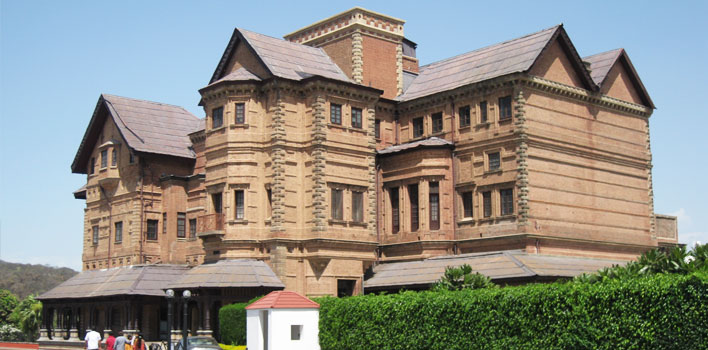
Attractions : Naggar Castle: Now converted into a hotel since 1978 it is an imposing structure, which was built by using a local stone, the layers of which are punctuated by long pieces of cut wood. The style of construction ensured a lot of resilience in the structure, and it successfully withstood the mighty and disastrous earthquake of 1905.

Gardhak: The stones, picked up from the ruins of Gardhak, a fortified palace of Rana Bhosal, gave Raja Sidh Singh his castle. The site commands a stupendous view of the valley and the snow-laden peaks.
Chatar Bhuj Temple : In this little Chatar Bhuj Temple of Lord Vishnu every morning and evening, the temple bells toll the music of compassion, peace and brotherhood, unrestrained.
Location : Naggar is 5 kms. from Katrain.

Raja Sidh Singh, who built the Naggar Castle, has been converted into a hotel.
Muralidhar Krishna : Built on the ruins of an ancient town of Thawa the shrine is set in a large courtyard. Murlidhar Mandir looks down on the town of Naggar, with superb views up the valley to the snow peaks around Solan and the Rohtang Pass.
Shiva Temple : This grey sandstone Shiva temple of Gauri Shankar is at the foot of the bazaar beside the castle. It was erected during the 11th-12th century.
The Nicholas Roerich Gallery : The paintings and photographs of late Nicholas Roerich are exhibited in this gallery, who was an artist, writer, photographer, archeologist, explorer and a mystic.
Tripura Sundari Devi Temple : This temple is unusually built like a pagoda and on the sloping twin tapering roofs; there is a monkey and a lion carved in wood at each corner.

TOP


Related Cities