India >> North Zone >> Uttar Pradesh >> Rishikesh
About Rishikesh Rishikesh located in the laps of lower Himalayas about 24 Kms from Haridwar represents the Gateway to the Himalayas and is often claimed as the `Yoga Capital of the World". Today Rishikesh is fast emerging as a centre for curing ailments through yoga and meditation. Meditation at this place leads to attainment of salvation and the whole place is considered to be sacred.
| Area: | 11.20 sq.kms
|
| Best Time to Visit: | Throughout the Year
|
| Climate: | The climate is continental type but its location in the foothills gives it a pleasant weather throughout the year.
|
| Main Languages: | Garhwali, Hindi, Punjabi, English
|
| Population: | Approx. 1,00,000
|
| Temperature: | Summer - Max: 44.4oC Min: 29oC
Winter - Max: 32.2oC Min: 18.3oC
|


Other Attractions In & Around


|
Auli
It is India’s promising ski-spot and is considered the best skiing slope in Asia. Both sides of the slope are covered with oak and coniferous trees that break the speed of the wind and this makes it ideal for skiing.
In the summers, when there is no snow, Auli temples with abundance of fresh air and tranquil environs. It is not only an ideal health resort, but also a perfect vacation spot.
One of the well established Sports Circuit of the state of Uttar Pradesh. With their wide-open spaces above the snowfields of Garhwal and Kumaon, the place offers an exciting possibility - ski touring amongst the glaciers. The cross-country runs of 10-20 km with added advantage of fresh powder snow from crisscrossing streams, tearing down the snowlines of the European Alps.. Venue For Winter Games : Apart from skiing festivals that are held here since 1986, national championships under the aegis of Winter Games Federation of India have been held at Auli, with technical and other backup assistance provided by various governments and adventure-related agencies.
Its pristine natural beauty and the alpine atmosphere lure many a tourist. Auli sure has something to offer to all, whether to seek a respite from the hustle and bustle of the city life, or conquering the challenging heights of the glorious peaks. People come here simply to savour the tranquil nature in its most pristine self or may be to throw snowballs at each other. Training Courses offered : Auli is not only the battle- ground for experienced skiers, but is also a training ground for those aspiring to ski with dexterity, with the help of expert guidance.
Training courses are conducted in modules of 7 and 14 days giving training to the enrolled persons, in modern skiing techniques by qualified instructors from skiing and tourist resorts.
The 7-days courses are non-certificate courses with a total of 25 seats. These courses are conducted in January, February and March.
The 14- days module is a certificate course, each one having 15 seats. Spectacular view from atop : Auli is nestled in the lap of the snow-capped peaks of Garhwal Himalayas in the Chamoli District of western Uttar Pradesh, near the world famous religious shrine of Badrinath.
It offers a panoramic view of Mt. Nanda Devi, Mana Parbat, Dunagriri, Beethartoli, Nilkanth, Hathi Parbat And Ghori Parbat.
The rugged and snowy terrain is so challenging that it used to be a training ground for India's para-military forces in the 1970's.
Realising the potential of Auli as a ski-resort, the Government of U.P. had it surveyed by French and Australian experts, who favourably compared the slopes of Auli to the best in the world. Location : Auli is nestled in the lap of the snow-capped peaks of Garhwal Himalayas Reaching Auli : The most popular way to drop in at Auli is by the famed cable car service.
Auli is only a 13 kms. drive from Joshimath. Services and Facilities : The Garhwal Mandal Vikas Nigam (GMVN), a U.P. Government Undertaking, provides many facilities at Auli for the convenience of tourists:
(A). A state-of-art ski lift, which has been imported from France.
(B). The slopes of Auli also have the luxury of an 800-m long chair lift, linking the lower slopes with upper slopes.
(C). Two snow-beaters are imported from Germany.
(D). The dressed and improved ski slopes, make the slopes of Auli ideal for hosting skiing festivals and competitions.
(E). A 3.9 km. long ropeway links Joshimath with the upper slopes of Auli, tracking a distance of 4.15 kms. and is the longest ropeway in Asia in zig-back system. It has ten towers of self-supporting steel structures with saddles and shoes. Remote controlled hydraulic and pneumatic braking systems make it the safest ropeway.
Besides, most sophisticated electronic circuitry with telemetry, and storm-warning devices are used to minimize human error. Information for tourists : Adequate medical facilities are available at Auli and Joshimath. Medical assistance can be obtained from Army and Civil hospitals, including, emergency rescue by helicopters.
There is no time to plan to visit Auli. Any time is the right time to be at Auli. TOP
|


|
Devprayag
Situated on the Rishikesh - Badrinath road, this mountainous spot is the site of the holy meeting of the rivers Alaknanda and Bhagirathi. When they flow out of here, they are together called the Ganga. An old temple of Ram here is well known.
It is believed that the town is named after Deosharma, a sage, who led a life of penance here and succeeded in having a glimpse of God.
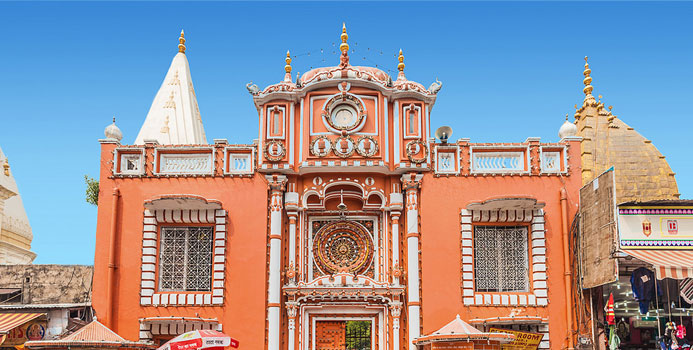
Devprayag, meaning "holy confluence", is essentially the site of the beginning of the Ganges River. The Ganges begins with the confluence of two streams here, and its considered a place of powerful natural forces as well as spiritual forces. Devprayag is a popular destination for Hindu pilgrimages. Location : It is on the metalled road running from Rishikesh to Badrinath, and about 87 kms. from Narendra Nagar. Interesting facts and places around : The great temple of Raghunathji is claimed to have been erected some ten thousand years ago. It is built of massive uncemented stones, standing upon a terrace in the upper part of the town consisting of an irregular pyramid capped by a white cupola with a golden ball and spire.
Religious ablutions take place at 2 basins excavated in the rock at the junction of the holy streams. One on the Bhagirathi known as the Brahm Kund and the other on the Alaknanda called the Vasisht Kund. An earthquake shattered the temple, along with the other buildings of the town, in 1803 but the damage was subsequently repaired through the munificence of Daulat Rao Sindhia. This temple is visited by a large number of pilgrims every year.
The town is the seat of the pandas of the Badrinath Dham and possesses a post and telegraph office, a public call office, a police out-post, a dak bungalow of the public works department and a hospital.
Besides the temple of Raghunathji, there are Baital Kund, Brahm Kund, Surya Kund and Vasisht Kund, the Indradyumna Tirth, Pushyamal Tirth, Varah Tirth, Pushpavatika, Baitalshila and Varahishila, the shrines of Bhairava, Bhushandi, Durga and Vishveshvara and a temple dedicated to Bharata. A bath at Baithalshila is claimed to cure leprosy.
Nearby is the Dasharathachal Peak, containing a rock, known as Dashrathshila, on which Raja Dasharatha is said to have led a life of penance. A small stream, the Shanta running down from the Dasharathachal, is named after Shanta, the daughter of Raja Dasharatha and is considered sacred. TOP
|


|
Kunjapuri
This holy shrine is dedicated to the Goddess Shakti, the consort of Lord Shiva the Destroyer and is located at 1645 meter above Sea level. Folklore has it that this is the spot where the Chest or Kunja of Shakti's body was found after the Sudarshan Chakra of Lord Vishnu, had disseminated it.. Legend : Legend claims that the original temple was built at the dawn of time, however the present temple was built in 1983. Offering a spectacular 360 degrees view, this is one of the most breathtaking spots in the region and is worth visiting. Kunjapuri Temple : The very name takes us to think about Sun Rise Or Sun Set
Drive to Kunja Puri, one of the 13 most important Goddesses of Shivalik range. One can witness excellent sunrise or sunset on the Greater Hiamalayan Peaks and the vast Indo Gangetic plains. One can see almost all the peaks of Garhwal Himalayas from here like the Banderpunch, Swarga Rohini, Gangotri, and Chaukhamba etc.
It is located at a high altitude lending a panoramic view of the Himalayan peaks to the North and Rishikesh, Haridwar and Doon valley to the South. Being a prime religious centre, thousands of visitors come throughout the year especially during 'Navratras' (April & October).
Grand celebrations are held during the 'Dussehra' festival.
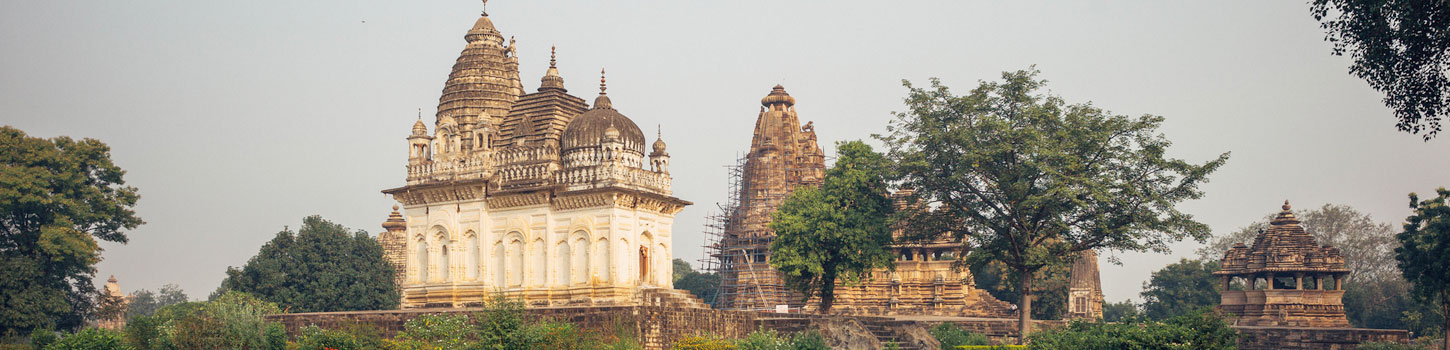
Both Nilkanth and Kunjapuri have incredibly intricate roofs, apparently a custom of many temples in India.
If you're interested in visiting unique and beautiful temples, Kunjapuri is definitely worth going to see, as you also get a great view of the area. TOP
|


|
Lakshman Jhula
It is a suspension bridge across the Ganga along the old route to the holy shrines of Badrinath and Kedarnath, about 3 kms. from Rishikesh This is where Lord Rama's brother Lakshman is said to have crossed the river on a jute rope.
LakshmanJhula is the bridge where Lakshman crossed. There are two garishly painted temples on the other side of the river, one thirteen stories high with a great view of town.
This suspended iron bridge was built in 1939 and has been a major attraction among the tourists. Ram Jhula- The other suspended Iron Bridge was recently constructed between Shivanand Ashram and Swarg Ashram. It is similar to the Lakshman Jhula. Ram Jhula is also known as Shivanand Jhula.. Unforgettable memories to take back with : The Ganges appears very panoramic from the bridge, where one can enjoy the picturesque surroundings and the cool breeze from the River while standing on the bridge. If you feel like feeding the fish in the Ganges, take a boat and cross the river.
The boat ride makes the bridge appear more gorgeous. The Ganga abounds in fish. Offerings of puffed rice are made to these creatures. The fresh air, sound of flowing water, the scenic beauty of the region and the distant sound of bell chimes create an unforgettable experience for those who visit this ancient pilgrimage town.
The area around LakshmanJhula is filled with numerous shops selling Rudraksha beads and other religious paraphernalia. TOP
|


|
Nilkanth Mahadeo
Neelkanth Mahadev, a place where Lord Shiva is believed to have drunk the venom that came out during the churning of the Ocean. It is 12 kms. away from Rishikesh surrounded by peaceful forests.
Situated at a height of 1675 m, on a hill above Swarg Ashram, Neelkanth Mahadev is one of the most revered temples of Rishikesh.
This is an important Siva temple. Siva received the name Neela Kantha after drinking the poison produced from the churning of the Milk Ocean. It turned his throat blue, which is why he is also called Nilkanth. Neela meaning “blue” and kantha meaning “throat.”
Every Shivratri And Shravan (mid-July to August) fairs are held here.. Legend : Legend has it that in the ancient times when the ocean was being churned for 'amrit' (Potion for immortality), first venom oozed out. Lord Shiva drank the venom at a place, which is now called Nilkanth Mahadeo. Temples around : From the Neela Kantha temple you can climb 2 kms. to the Parvati temple, located on top of a high hill. Another 2 kms. further up the hill is a Cave (gufa), where there is a small temple. There are good views along the way. It is a fairly hard climb to the Parvati temple and a fairly easy walk to the cave. Reaching there is Fun and Adventurous : If it is hot it is best to do this walk early in the day. The path to the temple starts behind Swarg Ashram and then goes past Mahesh Yogi ashram. There are regular shared jeeps to this temple from Laksman Jhula. There is a holy tree here that women tie a string to as an offering in order to get blessed with a child.
An important fair is held in the Hindu month of Bhadrapad (July/August), when a visit to the temple is considered auspicious.
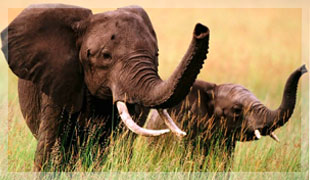
It goes through a thick forest that borders on a wild animal preserve. Walking to Nilkanth, which is a tough trek uphill, can lead to sights of wild elephants, monkeys, and other assorted creatures. However, it is told to stay very clear of the wild elephants. As long as they are not teased, they leave one alone without troubling; else there are chances that they attack. TOP
|


|


Related Cities

|