Loktak lake, 48 kms. from Imphal, is the largest fresh water lake in eastern India and this lake is like a miniature inland sea. Sendra Island, about 50 odd kilometres from Imphal, offers a bird's eye view of the park and its occupants. One can explore the park by travelling around in tiny small boats and also climb up the watchtower, located on the hillock of Bebet Ching.
Its shores were increasingly reclaimed for cultivation and excessive siltation caused problems with the eco-system and endangered its famous deer. Therefore, 25 square kilometres of it were declared a national park.
The beds of phumdi are also home to a migratory tribe of fishermen. There are buses and cycle rickshaws to cover the last 3 km. to Sendra.
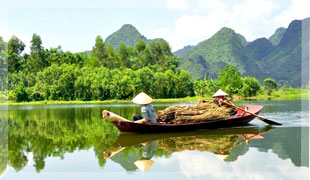
The lake is rich in minnows and carp. And water chesnuts. Fisherman cruise in and out of the hummus floats on graceful flat-bedded boats and net the fish and singhara (water chestnut). Their main occupation is fishing. The fisherman and their families living in neat huts on its shores make full use of their watery environment. They cast their nets on it, rear fish farms in it using nets as floating walls, harvest it for the water chestnut known as Heikak. They even build their houses on the islands of floating weed that dart around the lake.
Its vast expanse of water with both resident and migratory birds offers scope for shooting, fishing and boating. The importance of Loktak Lake is the little Islands Thanga and Karang in the centre of the lake, labyrinth of boat routes amidst the floating marshes.
This is a saucer shaped fresh water lake attracting many species of birds. Part of it forms a rare ecosystem. It joins the mainland by a low causeway.
Giant mats of reeds and weeds dot Loktak lake. The reeds, which are covered with soil, support large populations of Manipur's world famous brow-antlered deer.
The hog deer, wild cats, boar, panthers and an interesting population of migratory birds that arrive in November and December inhabit the sanctuary.