|
|
|
|
| |
| |
| About Bandhavgarh National Park
|
Bandhavgarh national park is set amidst the Vindhya ranges with a series of ridges running through it and with the highest known density of tiger population in India. Initially this park was the royal hunting ground for the rulers of Rewa but in 1968 it was declared a park. This is also known as White Tiger territory but the other species found in abundance are the gaur or Indian bison, the Sambar, the barking deer and the Nilgai.
At present, the Bandhavgarh Park covers 448 sq km.
|
| Do you know?
|
The tigers once roamed freely here but due to extensive hunting (Maharaja Venkat Raman Singh shot 111 tigers by 1914), their population came down drastically. Numerous steps were taken to conserve the wildlife here without spoiling the natural beauty of the park. Even today, this national park has retained its unspoilt look.
The last known capture of the white tiger was in 1951. He is believed to have fathered many a cub in Indian zoos and outside. 'Mohun' is now stuffed and on display in the palace of the Maharaja of Rewa.
This is where Rudyard Kipling found inspiration for his famous Jungle Book and this is where the tiger still roams- although now protected by dozens of laws, some effective, some not.
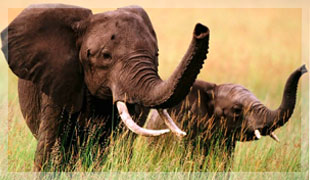
Bandhavgarh is densely populated with other animal species too. The great gaur, Indian bisons can be easily spotted when they come to graze on the meadows at dusk. There are 22 species of mammals, which include langurs and rhesus macaque as the primary group. The jackal, bangal fox, bears, ratel, mongoose, hyena, jungle cat, leopard and tiger form the core carnivore population. The animals frequently sighted are wild pig, spotted deer, dhole, the small Indian civet, palm squirrel and lesser bandicoot rat are seen occasionally.
Among the herbivores, the gaur is the only coarse feeder.
The national park holds some 250 odd species of birds along the streams and marshes. Reptilian fauna include cobra, krait, viper, rat snake, python, turtle and a large number of lizard varieties, including varanus.
|
| Park Population
|
The vegetation of the park is dry deciduous. About half of the park is covered with sal trees. There are mixed forests in the higher reaches of the hills. Stretches of Bamboo and grasslands extend to the north of the park and the park sustains all those species, which are typical to Central India.
|
| Attractions Nearby
|
The most fascinating and most popular excursion from the national park is to the Bandhavgarh fort, adding grace to the park. To get a bird’s view of the park, climb the fort. One should not miss the small population of naughty black bucks that live here, protected from the predators below.
This fort is in ruins now but the strong high walls of the fort tell a saga of valour and splendour. The fort blends with the wilds of the park and has become a part of the park. No one knows when the fort was constructed but scripts as old as Shiv Purana have mention about the fort which is believed to be almost 2000 years old.
The signs of early habitation can be seen in the caves excavated from the cliffs to the north of the fort. Brahmi inscriptions here date back to the 1st century BC.
It is an amazing diversity of flora and fauna, which certainly makes a trip to this wildlife, preserve utterly worthwhile.
|
| Best time to visit
|
The best season to visit this park is between November and June. The best time to visit the park is early in the morning or after 4 p.m., as it is during this time that the animals are most active and can be easily spotted.
The park can be entered on elephant back or in a jeep or by car. A forest department guide always accompanies you, directing and telling about the flora and fauna of the park.
|
| Information for tourists
|
The park is closed from 1st July to 31st October. These are monsoon months.
|
| Accommodation
|
The forest department and the PWD arrange good accommodation facilities here and are sufficient to fulfill the needs of the visitors. The Madhya Pradesh Tourist department maintains the White tiger Forest Lodge.
|
| Getting There
|
Air: The most convenient route to Bandhavgarh is by air to Khajuraho from where it is a five-hour drive (about 237 kms.).
Rail: The nearest railway stations are Jabalpur (164 km), Katni (102 km) on the Central Railway and Umaria (35 km) on the South Eastern Railway.
Road: State/Private transport buses ply between Katni, Umaria Satna and Rewa. Taxis are also available.
|
|