|
|
|
|
|
 The Western Group
|
| |
| About The Western Group
|
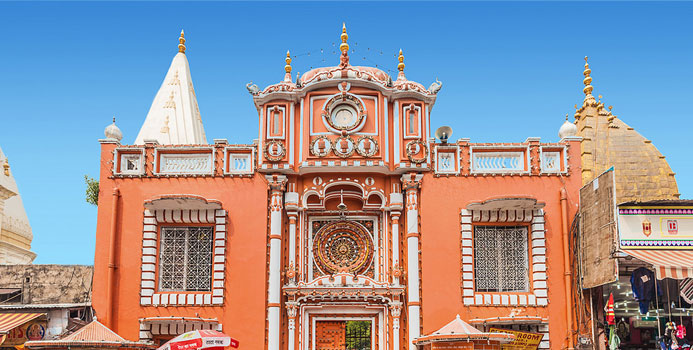
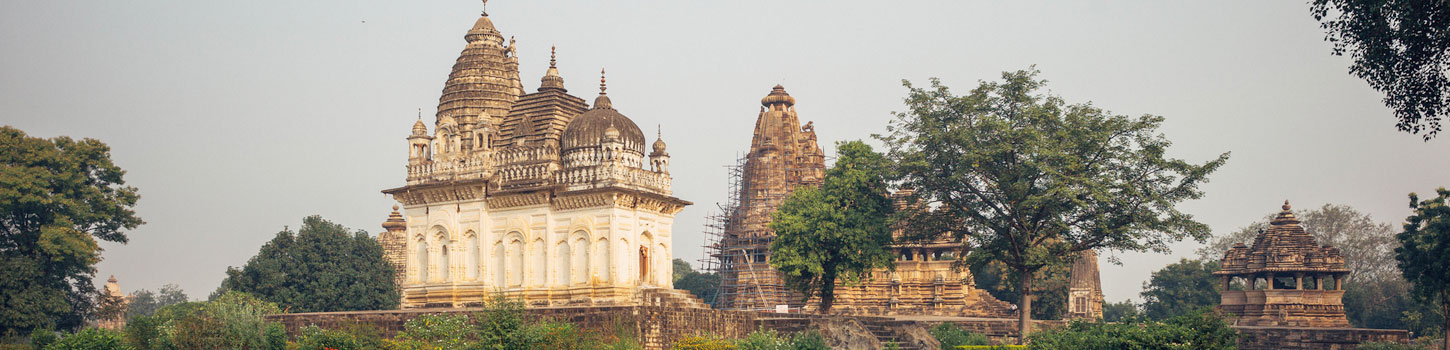
The western group is near the tourist part of town containing the Varaha Temple dedicated to Lord Vishnu, in the form of a boar, the best-preserved Lakshmana Temple, the Kandariya Mahadeva Temple dedicated to Lord Shiva and the Chitragupta dedicated to the Sun God, Surya. The white-plastered temple built by Maharaja Pratap Singh of Chhatarpur state, rests on the platform of an ancient temple, dedicated to Shiva.
|
| Under western group
|
Varaha Temple: This small rectangular temple, supported on 12 pillars, is built on a rock foundation and has a pyramidal roof of receding tiers. In the middle of the shrine stands a colossal monolithic image of Varaha (Boar), one of the ten incarnations of Lord Vishnu, in glossy yellow sandstone.
The Varaha Temple dates back to the 10th Century. According to mythology, the Rat-Demon Hiranyaksha stole the earth, pulled it under the waters to his abode and created 1000 replicas of him to confuse his pursuer. Vishnu, on the request of the other Gods, incarnated himself as a boar, and retrieved the earth from the clutches of the Demon and saved the world. The huge sandstone polished Varaha is shown, along with hundreds of deities flanked about his and the three worlds-water, earth and heaven, perched on the serpent Shesha, with the broken figure of Prithvi of his feet.
|
| Remarkable temples
|
Most of the temples in Khajuraho are dedicated to one of the holy trinity of the Hindu Gods (Brahma the creator, Vishnu the preserver and Shiva the destroyer)
The western group of temples, which the visitor encounters, first, is situated along the main approach road to Khajuraho. This is the largest and most important group with most of its constituent temples laid out roughly in two rows.
The Kandariya Mahadev, perfectly symmetrical, soars 31 km high. The very stone seems to have taken on the living, breathing quality of the carved figures. The outer walls have three horizontal panels showing deities of the Hindu pantheon, and groups of lovers, a pageant of sensuous imagery vibrantly alive.
Also in the western group is the Chaunsat Yogini, the only granite temple in the Khajuraho group. Dedicated to Kali, it is also unique in being quadrangular in plan. This has the earliest surviving shrine of the group dated to 900 AD. Another Kali Temple is the Devi Jagadambe Temple. North of it facing eastward to the rising sun, is the Chitragupta Temple, dedicated to the Sun God, Surya - driving a seven-horsed chariot. The group scenes depicted are equally spectacular: royal processions, elephant-fights, hunting scenes, and group dances.
The Lakshmana Temple, the Matangesvara Temple and the Varaha Temple form one complex and the Visvanatha and Nandi temples are not far from this complex. These temples form an irregular row running north-south, while the Chitragupta, Jagadambi and the Kandariya Mahadeva temples form a more regular, parallel row, about a furlong to their west.
The Archaeological Survey of India amidst a setting of green lawns, colourful shrubs and flowerbeds best maintains this group of monuments.
The Western group has the most remarkable temples, set around a beautiful park, and takes the longest to visit.
|
|