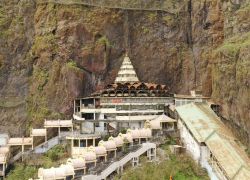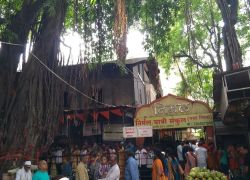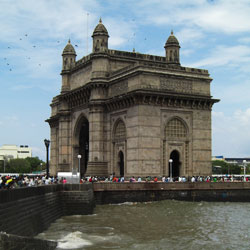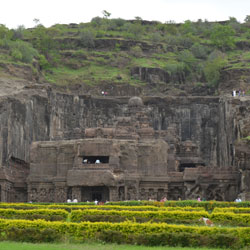
"Explore ancient caves steeped in mythology."
Sita Gufa, also known as Sita Gumpha, is one of the most revered religious and historical attractions in Nashik, Maharashtra. Located in the sacred area of Panchavati, Sita Gufa holds immense significance in Hindu mythology as it is believed to be associated with the epic Ramayana. According to popular belief, this cave is the place where Goddess Sita stayed during her exile with Lord Rama and Lakshmana. The cave is also linked to the legendary incident that eventually led to Sita's abduction by Ravana.
Situated near the famous Kalaram Temple and Ramkund, Sita Gufa attracts thousands of devotees, pilgrims, and tourists every year. The cave is relatively small but holds tremendous spiritual importance for Hindus. Visitors come here to experience the sacred atmosphere, explore the mythological site, and learn more about the events of the Ramayana.
Surrounded by temples and religious landmarks, Sita Gufa forms an integral part of Nashik's spiritual heritage. The site is especially crowded during festivals such as Ram Navami, Dussehra, and the Kumbh Mela, when devotees gather in large numbers to seek blessings and pay homage to Lord Rama and Goddess Sita.
Why is Sita Gufa, Nashik Famous?
Sita Gufa is famous for its direct connection to the Ramayana, one of the most important epics of Hinduism. It is believed that Lord Rama, Goddess Sita, and Lakshmana spent part of their fourteen-year exile in the Panchavati region of Nashik.
The cave is particularly known for:
For devotees of Lord Rama, Sita Gufa is considered one of the most important pilgrimage sites in Nashik.
History of Sita Gufa
The history of Sita Gufa is deeply rooted in Hindu mythology rather than documented historical records. According to the Ramayana, Lord Rama, his wife Sita, and his brother Lakshmana spent a significant portion of their exile in Panchavati, which is now part of modern-day Nashik.
It is believed that Sita stayed in this cave while residing in Panchavati. The cave is also associated with the famous episode where Ravana, disguised as a saint, approached Sita after Lord Rama and Lakshmana had left the area. This event eventually led to Sita's abduction and became one of the central episodes of the Ramayana.
Over centuries, devotees recognized the site as sacred and established shrines within the cave. Today, Sita Gufa remains an important religious landmark that preserves the spiritual traditions associated with the Ramayana.
Architecture of Sita Gufa
Sita Gufa is a natural cave that has been modified to accommodate devotees and pilgrims. Although not a grand architectural monument, the cave's religious significance makes it a unique attraction.
Architectural and structural features include:
The cave's compact dimensions add to its uniqueness, allowing visitors to experience an ancient and sacred environment.
How to Reach Sita Gufa, Nashik, Maharashtra
By Air
The nearest airport is Nashik Airport (Ozar Airport), located approximately 25 kilometers from Sita Gufa.
Visitors can hire taxis or use local transportation to reach Panchavati.
By Train
The nearest railway station is Nashik Road Railway Station, situated about 10 kilometers from the cave.
The station is well connected with Mumbai, Pune, Delhi, Hyderabad, and other major Indian cities.
By Road
Nashik has excellent road connectivity with Maharashtra and neighboring states.
Auto-rickshaws, city buses, taxis, and private vehicles are readily available.
Weather at Sita Gufa
Summer (March to June)
Temperatures range from 25°C to 40°C. Early morning visits are recommended during summer.
Monsoon (June to September)
Nashik receives moderate rainfall, making the city greener and more pleasant.
Winter (October to February)
Temperatures range between 12°C and 28°C. This is considered the best season for sightseeing and pilgrimage.
The ideal time to visit Sita Gufa is between October and March.
Sita Gufa Timings
The cave generally remains open throughout the week.
Timings may vary slightly during religious festivals and special occasions.
Entry and Visit Details of Sita Gufa
Entry to Sita Gufa is generally free for all visitors and devotees.
Visitors can explore:
The site can become crowded during weekends and major Hindu festivals.
Things to Do at Sita Gufa
1. Explore the Sacred Cave
Enter the narrow cave passage and experience one of Nashik's most important mythological sites.
2. Offer Prayers
Seek blessings from Lord Rama, Goddess Sita, Lakshmana, and Lord Shiva.
3. Learn About Ramayana Legends
Understand the events associated with the exile of Lord Rama and the story of Sita's abduction.
4. Visit Nearby Temples
Explore famous religious attractions nearby such as:
5. Photography
Capture images of the surrounding temple complex and Panchavati area where permitted.
6. Participate in Religious Festivals
Experience vibrant celebrations during Ram Navami and Kumbh Mela.
7. Explore Panchavati
Walk through the sacred neighborhood associated with several episodes of the Ramayana.
Interesting Facts About Sita Gufa
Travel Tips for Visiting Sita Gufa
Conclusion
Sita Gufa in Nashik, Maharashtra, is a sacred destination that beautifully connects visitors with the timeless stories of the Ramayana. Its association with Lord Rama, Goddess Sita, and Lakshmana makes it one of the most important pilgrimage sites in the region. Despite its small size, the cave holds immense spiritual significance and attracts devotees from across India. Combined with the rich religious heritage of Panchavati and nearby temples, Sita Gufa offers a meaningful experience for pilgrims, history enthusiasts, and cultural travelers. A visit to this revered cave provides a unique opportunity to explore mythology, devotion, and the spiritual traditions that continue to inspire millions of people.









Nashik
Nashik

Nashik
Nashik