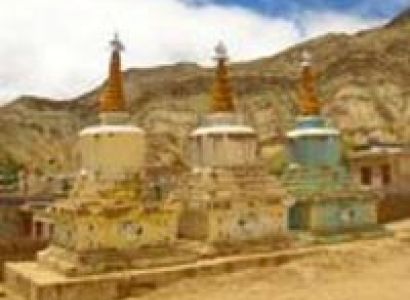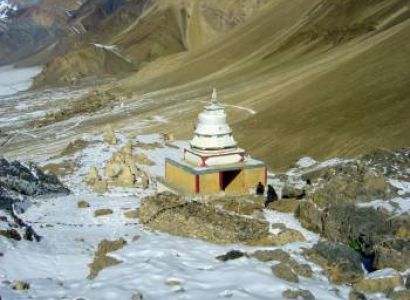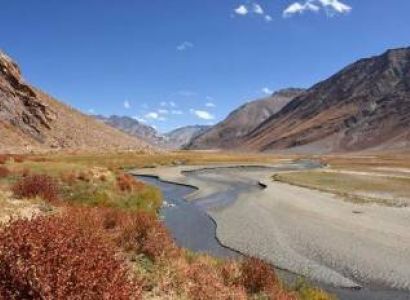
"Discover remote serenity in a breathtaking landscape."
Phugtal Monastery is one of the most extraordinary and remote Buddhist monasteries in India, located in the Zanskar region of Ladakh, Jammu & Kashmir. Famous for its cave-like structure built into a cliff, this monastery is a masterpiece of Himalayan architecture and spiritual devotion.
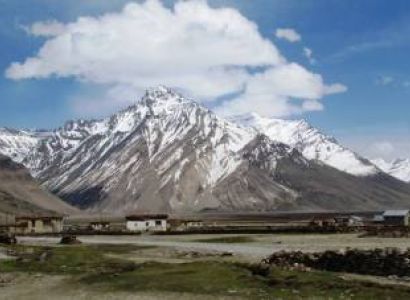
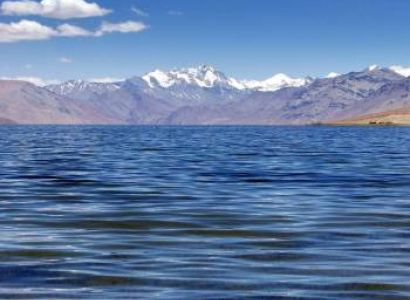
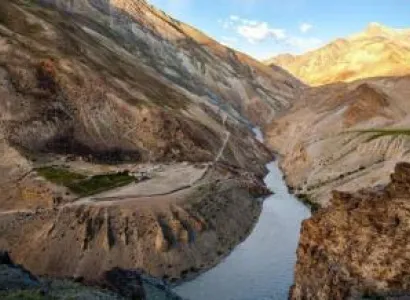
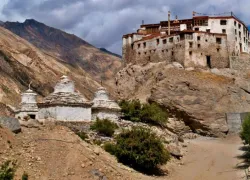
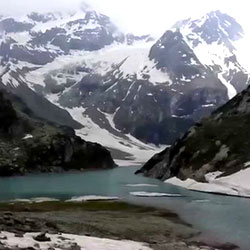
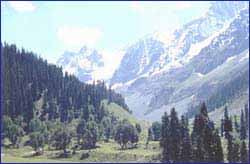
Situated near Padum in the Zanskar valley, Phugtal Monastery is surrounded by deep gorges, rugged mountains, and the untouched beauty of the Himalayas. It is one of the most isolated monasteries in the world, accessible only by trekking or difficult mountain routes.
Phugtal Monastery, Padum, Jammu & Kashmir is a must-visit destination for adventure seekers, spiritual travelers, and those looking to experience the raw beauty of the Himalayas.
History of Phugtal Monastery
Phugtal Monastery was founded in the 12th century by the great Buddhist teacher Lama Jangsem Sherap Zangpo. It belongs to the Gelugpa and earlier Bon traditions of Tibetan Buddhism and has been a center for meditation and spiritual learning for centuries.
The name “Phugtal” comes from the word “Phukthal,” meaning “cave of leisure,” reflecting its origin as a meditation cave used by monks and sages.
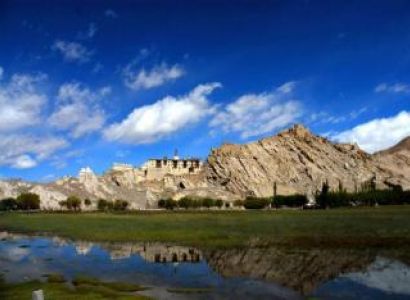
Over time, the monastery expanded into a complex structure built around natural caves, housing monks, prayer halls, and learning centers.
Architecture of Phugtal Monastery
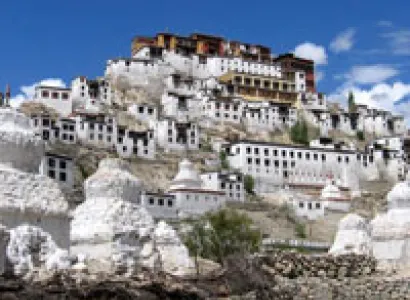
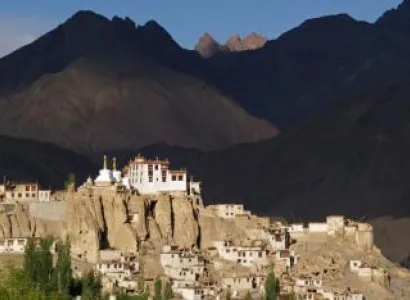
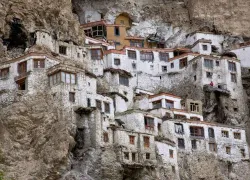
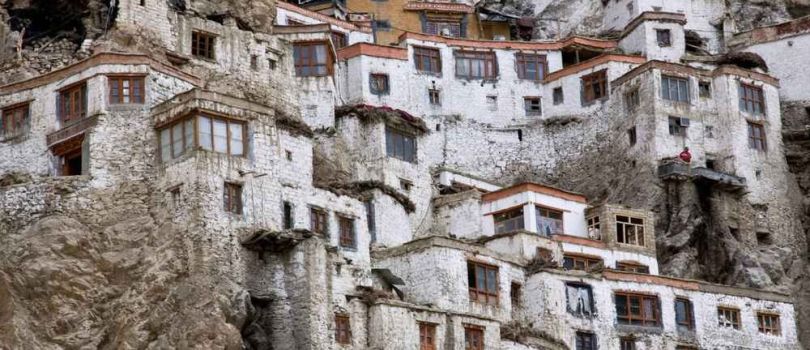
Phugtal Monastery is uniquely built into a cliffside cave, making it one of the most visually striking monasteries in the world. The structure appears like a honeycomb of rooms, corridors, and prayer halls carved into the rock face.
The monastery features traditional Tibetan Buddhist architecture, including prayer rooms, assembly halls, libraries, and monk residences.
Inside, visitors can see ancient murals, thangka paintings, wooden carvings, and statues of Buddha and other deities that reflect deep spiritual heritage.
The monastery is built in a way that blends perfectly with the natural rock formation, creating a breathtaking fusion of nature and spirituality.
Why Phugtal Monastery is Famous
Phugtal Monastery is famous for its remote location, cave-based architecture, and spiritual significance in Tibetan Buddhism.
It is considered one of the most isolated monasteries in India, accessible only by trekking, making it a true hidden gem of the Himalayas.
The monastery is also known for its peaceful environment, attracting monks and travelers seeking solitude and meditation.
How to Reach Phugtal Monastery
Reaching Phugtal Monastery is challenging and requires trekking through remote Himalayan terrain.
By Air: The nearest airport is Leh Airport (Kushok Bakula Rimpochee Airport), approximately 200–250 km away. From Leh, travelers must continue by road to Padum.
By Road: From Padum in Zanskar, the journey continues through rugged mountain roads followed by trekking to reach the monastery.
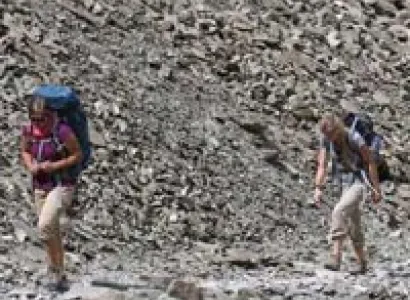
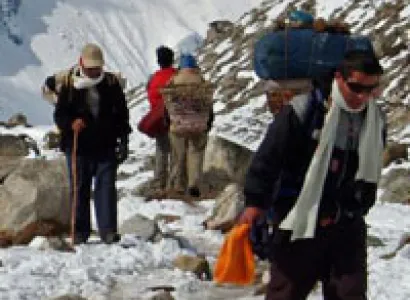
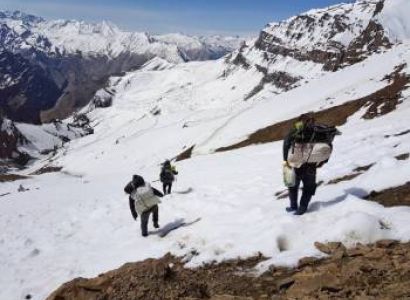
By Trek: The final access to Phugtal Monastery requires a trek of several kilometers along river valleys and mountain paths, making it an adventurous journey.
Travel is possible mainly between June and September when the region is free from heavy snow.
Weather at Phugtal Monastery
Phugtal Monastery experiences extreme Himalayan weather conditions.
Summer (June to September): The best time to visit, with temperatures ranging from 10°C to 20°C. Roads and trekking routes are accessible during this period.
Winter (October to May): Extremely cold with heavy snowfall, making the monastery inaccessible.
Rainfall is minimal, but weather conditions can change rapidly in high-altitude regions.
Timing and Entry Details
Phugtal Monastery is generally open from 8:00 AM to 5:00 PM during the summer season.
There is no formal entry fee, but donations are appreciated for maintenance and support of the monks.
Visitors should plan visits during daylight hours for safety due to remote terrain and limited facilities.
Things to Do at Phugtal Monastery
Visitors can explore the monastery’s prayer halls, meditation caves, and living quarters carved into the cliff.
You can interact with monks and learn about Tibetan Buddhist philosophy and daily monastic life.
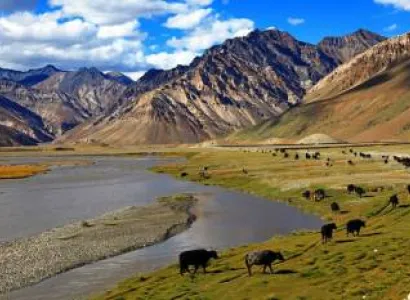
Trekking to the monastery is itself a major adventure, offering stunning views of the Zanskar valley and river landscapes.
Photography enthusiasts can capture one of the most dramatic monastery landscapes in the world.
Interesting Facts About Phugtal Monastery
The monastery is built entirely into a natural cave system, making it one of the most unique monastic structures in the world.
It is home to a small community of monks who live in complete isolation from urban life.
The monastery has preserved ancient Buddhist manuscripts and teachings for centuries.
It can only be reached on foot, making it one of the most remote monasteries in India.
Travel Tips for Visitors
Carry warm clothing even in summer due to unpredictable mountain weather.
Prepare physically for trekking as the journey is long and challenging.
Carry essentials like food, water, and medical supplies due to lack of facilities.
Acclimatize in Leh or Padum before attempting the trek to avoid altitude sickness.
Conclusion
Phugtal Monastery is a breathtaking blend of spirituality, isolation, and natural beauty. Its cliffside architecture and remote location make it one of the most extraordinary monasteries in the Himalayas.
For adventure travelers, spiritual seekers, and culture enthusiasts, visiting Phugtal Monastery is a once-in-a-lifetime experience that offers peace, challenge, and unforgettable Himalayan views.