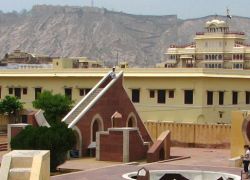
Largest of the five remarkable observatories made by Jai Singh in five different cities, this is the best-preserved one. It shows the Maharaja passion for astronomy. Translated into 'Instruments of Measuring the Harmony of the Heavens', Jantar Mantar was built between 1728 and 1734. It is a grand celebration of astronomical science. It appears to be a collection of sculptures with each sculpture serving a specific purpose of measuring attitudes, azimuths, calculating eclipses or counting of stars. This is the only observatory out of five built in running condition. Situated within the City Palace Complex, it is cut off from the main buildings.
Explore More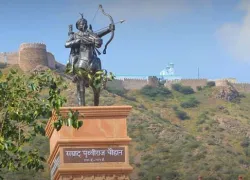
Prithviraj Chauhan was a great emperor in the history of Ajmer. His valor is glorified everywhere as he never gave up and fought till the end before getting martyred. Being the last ruler from the Chauhan lineage, he will always be remembered. To commemorate his bravery and reign in Ajmer, a memorial has been erected. This memorial is visited by the people on a huge scale. It Is Known For:-1) Prithviraj Smarak is a well-known memorial in Ajmer. It has the backdrop of the Aravalli Hills2) The statue of the king is carved out of the black marble. It is depicted as seated on a horse and aiming his weapon at the enemy 3) Visitors often visit this memorial on a daily basis but, the footfall increases on the birth and death anniversary of Prithviraj Chauhan. Many folk musical concerts are also held at this place. Best Time To Visit:-There's no special season or day for paying a casual visit at Prithviraj Smarak. This memorial stands in a bustling area and is visited by millions of people on a daily basis. Whether it is summer or winter, day or night, any time is suitable for visiting Prithviraj Smarak and paying homage to a great warrior king. Reaching There:-Prithviraj Smarak stands in a lively area. Hundreds of vehicles cross past it and thus, there's no hassle in reaching this place. It can be easily reached via any means of transport. Nearest Railway Station- Ajmer JunctionNearest Airport- Sanganer Airport
Explore More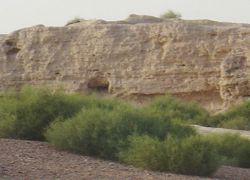
The extensive remains of the pre-Harappan and Harappan civilizations, found at this place in the Hanumangarh district, are of immense interest. This place houses immense treasure of our past and is of particular interest to archaeology enthusiasts.
Explore More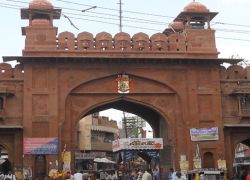
Bikaner is a golden city established in the year 1488 AD by a Rajput prince, Rao Bika Ji. The city has every bit of Rajput territory and houses various havelis, places, museums, temples, and many other places of interest that bring to one mind the magnificence of pastime. Offering a brief look of the stunning architectural work in Bikaner, Kote Gate is the main entrance gate of the city. This structure is an excellent example of intricate artistry of the workers of the olden days. Made of bricks and red sand stones, Kote Gate is standing tall in the middle of the road and separates the old town, and the new town of Bikaner. While one side of the gate is the modern city, the other side has beautiful old havelis or mansions that are the finest architectural pieces. Many visitors from all across the country and even from other parts of the world visit this place to experience and admire the old world charm. This place is most frequented by history buffs, photo fanatics and shopaholics. Things To Do Here: One of the most popular activities to do near Kote Gate is to go for shopping in the local market (bazaar) that is situated around it. The noisy street beside the Kote Gate is filled with plenty of shops and you can shop for some stunning stuff in this market. Attractive options are abundantly offered here. Things you must purchase from here include beautiful accessories made from camel hide, and open-toed shoes that are worn traditionally by the men. Other interesting things that you can fetch here are utensils, miniature paintings, handicrafts, colorful attires, beautiful khadi items like kurtas, wooden carvings or artifacts, Kundan jewelry, fragrant spices, and much more. You can find a number of big hand-loom showrooms and high-end shops in the market, but some of the finest wares can be found and bought from the smaller shops and street stalls. This popular street market in Bikaner has something for everyone. You should use your bargaining skills to a great extent when you enter this market. You never know you might end up purchasing the most exclusive souvenir at never-before prices in this market. And when you get tired of from shopping, you can enjoy some local delicacies here. You also find some eating joint selling specialties like Bikaneri bhujiya, Bikaneri sweets, tea made from camel’s milk, etc. in this street market. The Best Time To Visit Here: Bikaner is a place which experiences extreme climate throughout the year. While the summers of Bikaner are hot and humid, winter days are chilly. So, the best time to visit Kote Gate and the other places of interest in Bikaner is from month of October to March when the climate remains cool and pleasant. Nearby Places To Visit Here: As Bikaner houses many forts, havelis, temples and many more, visitors can explore many interesting places while visiting Kote Gate. Some places of interest near Kote Gate are Ganesh Mandir, Matyasadarshini, Karni Mata Mandir, Ratan Behari Temple, Narsingh Bhagwan mandir, Junagarh Fort, Lallgarh Palace, kharnada Hanuman Mandir, Jagdish Mandir, Bhandsar Jain Temple, Shiv Bari Temple, Kodamdeshwar Temple, Shri Laxminath Temple, Bhandeshwari Jain Temple, Karan Mahal, Phool Mahal, Anup Mahal, Chandra Mahal, Gajner Palace, National Research Center on Camel, Imperial Art Gallery, Visakha Museum, Ganga Golden Jubilee Museum, Prachina Museum, Sadul Singh Museum, Gajner Wildlife Sanctuary, Ramakrishna Beach,etc. How To Reach Here: Bikaner is well-connected with all the major cities of the country like Mumbai, Delhi, Jaipur, Ahmedabad and Chennai. Once you reach Bikaner, you can easily reach Kote Gate as public transport is abundantly available at all parts of the city for easy commutation. • By Air- The nearest airport to reach Bikaner is the Jodhpur International Airport that is at a distance of about 251 km from the place. You can hire private taxi or cab from the airport to reach Bikaner and Kote Gate. • By Train- Bikaner Junction (BKN) and Lalgarh Junction (LGH) are the two railway junctions in the town. As Kote Gate is situated at a walking distance from Bikaner Junction (BKN), you can take public transport like buses, taxi, cab, auto rickshaw to reach the place from this railway station. Visiting Time For Kote Gate: The timings for shopping at Kote Gate market in Bikaner is from morning 10:30 am to evening 8:30 pm. The suggested duration for shopping in the market is around 1 to 2 hours.
Explore More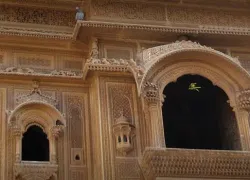
Nathmal Ki Haveli is a famous heritage monument in the city of Jaisalmer. It was built as a residence for the Prime Minister of Jaisalmer, Diwan Mohata Nathmal. It is a unique grandeur that never fails to catch the attention of visitors on a huge scale. This building is known for its architecture. The onlookers usually get astonished on seeing such a mansion in Jaisalmer. It Is Known For:- Nathmal Ki Haveli is known for its unique architecture. Although it is built in the traditional Rajasthani style of architecture, it has a structure that is different in terms of style on both sides. It was designed by the architect brothers named Lulu and Hathi. Since the right instruments didn’t exist in the previous times for measuring the apt size, the Haveli was built without the blueprint and finally came up with an irregular design. Nathmal Ki Haveli holds beautiful carvings on the exterior as well as the interior walls. It has the sculptures of the lions and elephants at the entrance gates. Interestingly, this mansion is one among those monuments all over Jaisalmer that do not have an Islamic touch in their architecture. Best Time To Visit:- Nathmal Ki Haveli is a must-see attraction in Jaisalmer. Due to its unique but, eye-catchy architecture, it never fails to attract the visitors from different cities and states. It can be visited throughout the year without any hassle. A visitor should be careful and should carry the sunscreen and water, especially when he/she is planning to visit this Haveli during summers Reaching There:- Nathmal Ki Haveli is located in a well-known area of Jaisalmer that has a wider connectivity of the roadways. Thus, an individual can reach this amazing site either by bus or by a taxi. Nearest Railway Station:- Jaisalmer Railway Station Nearest Airport:- Jodhpur Airport
Explore More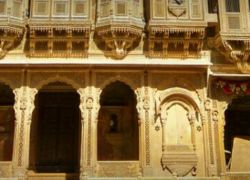
Patwon Ki Haveliyan stands among the heritage monuments in Jaisalmer. Standing adjacent to each other, Patwon Ki Haveliyan is a cluster of 5 mansions that were built by a wealthy banker named Guman Chand Patwa. He built each Haveli for each of his 5 sons. These mansions are an amazing example of the Rajasthani style of architecture. People who visit Jaisalmer do not miss taking a glance at these beautiful Havelis. It Is Known For:- Patwon Ki Haveliyan are monuments of interest and are protected by the Archaeological of India as they have beautiful and unique carvings done on the interior as well as exterior walls. These Havelis are also known by the name of 'Mansion of Brocade Merchants' because the Patwa and his sons used to deal in the threads of gold and silver for stitching the dress. Presently, Patwon Ki Haveliyan are frequented by the locals and visitors alike. The largest Haveli incorporates the Department of Art & Craft in its premises. Best Time To Visit:- Patwon Ki Haveliyan are simply enchanting and leave no chance to impress the visitors. Across the year, thousands of visitors arrive at Jaisalmer and admire the beauty of these mansions. Without visiting Patwon Ki Haveliyan, a trip to Jaisalmer remains incomplete. The entry to this tourist attraction is paid for all. No foreign tourist is charged with the special amount for entering Patwon Ki Haveliyan. Reaching There:- Patwon Ki Haveliyan are located near a residential area in Jaisalmer. Thus, any mode of transport can be chosen for visiting the place. Since the cabs and jeeps cannot enter the narrow lanes, taking a rickshaw or walking is the righteous choice for all. Nearest Railway Station:- Jaisalmer Railway Station Nearest Airport:- Jodhpur Airport
Explore More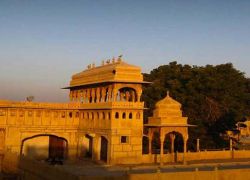
Tazia Tower is a beautiful and a frequently visited travel attraction in Jaisalmer. It lies in the vicinity of Badal Palace that used to be the residence of the royal family in the bygone times. It was built as a gift to the king of Jaisalmer by the Muslim architects and their workers. This tower is located near the roof of the palace and is visible from a distance. It Is Known For:- Tazia Tower is an example of the amalgam of the Rajasthani and Islamic styles of architecture. It was constructed in 1886 AD. The royal guards used to keep an eye on the fort vicinity and nearby village from this place. The tower has five storeys and each storey boasts the serpentine carvings different from each other. Its intricate carvings tell about the skillful craftsmanship of the bygone era. Presently, Tazia Tower is a great attraction where people get themselves clicked. It is a favorite point for a pre-wedding photoshoot. Best Time To Visit:- People visit Jaisalmer on a huge scale. Tazia Tower is one among those places that are not missed by the visitors and thus, it witnesses a vast crowd of visitors on a daily basis. The locals and tourists are attracted to this place alike throughout the year. Reaching There:- Due to a wider connectivity of the roadways, Tazia Tower can be reached without any chaos. The local transit is the perfect option for visiting this place and admiring the beauty. Nearest Railway Station:- Jaisalmer Railway Station Nearest Airport:- Jodhpur Airport
Explore More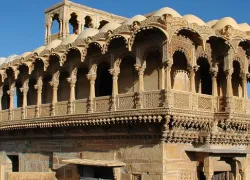
Salim Singh Ki Haveli, Jaisalmer is one of the foremost well-known places in Jaisalmer and is immensely thronged by the locals and wayfarers. This haveli is an architectural wonder and happens to possess around 35 balconies. The haveli is structured in resemblance to the posture of a dancing peacock. The haveli may be a landmark is that the city of Jaisalmer and maybe a prime destination for each tourist. This 300-year-old piece of architecture maybe a piece of sheer elegance and when built was way before its times. These architectural feet also are referred to as the Jahaz Mahal and even the rulers envied the shine of royal news that this haveli glittered everywhere the town. The marvelous blue cupola roof that this haveli had is simply another reminder of how blissful this haveli was. But aside from the elegance this haveli also will portray the shrewdness of Salim Shah. This place carries tons of history and thus is one place for History lovers to go to. Travel Tips Salim Singh ki Haveli, Jaisalmer is famous for its historical significance, local sightseeing, seeking experience ancient architecture, local heritage, and blissful peace. The entry fee for Indians is 10 rupees and people from other countries need to pay rupees 15. The charges for carrying a camera is rupees 50 and for a camcorder is rupees 100. One can visit this haveli from 6 in the morning till 5 in the evening. The visiting duration is 1-2 hours Things to do You can look at the structure of the dancing peacock from all sides and the blue cupola rooftop that makes this haveli even more elegant and extraordinary. Savour the amazing craftsmanship that is visible in every direction of this amazing structure. Treat your eyes with the chiseled glass window screen that has been decorated with minute detailing. If you are being a guide then ask him to show you all the places of the king where he had hidden secrets. The Availability of Guides Guides are readily available here and are more than willing to tell you all the secrets that this place has enclosed within its boundaries. Make sure you choose the perfectly trained guide to make you experience the best one in Salim Singh Ki Haveli, Jaisalmer. The best time to visit As Rajasthan is one of the hottest states and Jaisalmer is almost a desert city, the best or the simplest time to go and visit the place would be between the months of October to March when the sun is not as harsh as it is on the rest of the year. The weather is but blissful during this time and you will like to explore more than normal. How to reach? Reaching the place is quite easy, fast, and affordable. You can get a rickshaw which will take you to the place directly without much trouble. You can also hire a cab and reach the destination. This is as per your choice and convenience. Some Interesting Facts about Haveli The haveli is structured distinctly looking just like the posture of a dancing parrot. The haveli is believed to be actually seven stories but the upper two tiers were demolished due to the orders of the ruler. This haveli is one of the foremost famous and most visited haveli in Rajasthan. This haveli is flushed with corridors and rooms which show that Salim Singh wanted quite one exit point just in case of trouble. The haveli may be a mark of luxury and its architecture is believed to be much before its times. The haveli is crammed with incredibly stone carvings that show the wonders of art during the time. Some of the Nearby Attractions Some of the nearby attractions which you can also go to and explore are the Jaisalmer fort, Gadisar lake, Jain Temple, Tilon ki pol, the Vishnu temple, etc. Jaisalmer Fort is found within the magnificent city of Jaisalmer in Rajasthan. Assail the Trikuta Hill within the midst of the vast Thar Desert, this fort is an epitome of strength and symbolizes the facility of the Rajput dynasty. Constructed way back within the 12th century by the mighty Rawal Jaisal, this imposing fort is famed to be one among the most important ever. Gadisar Lake has been a landmark within the beautiful city of Jaisalmer. This lake has carried on the culture and heritage of this land in Rajasthan and is one of the foremost valuable assets that this city possesses. Some nearby restaurants Some of the nearby restaurants are the trio, the golden roof, the mystic Jaisalmer, the first gate home shop, the Kuku house coffee. They serve good food and provide you with the best service. Go and explore more and enjoy the delicacy of Rajasthan at an affordable price. Therefore get the best of it. Explore and have the best in these restaurants. Salim Shah ki Haveli, Jaisalmer may be a place that everybody will find interesting and will definitely visit. This place isn't just all about history and culture but how the fate of this city was made. This haveli is one place that will cause you to feel this place may be a great destination to be together with your close ones. Memories made here will never be forgotten and can be cherished forever. Confirm to visit this awesome haveli during your trip to Jaisalmer, Rajasthan
Explore More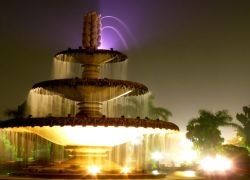
Panchwati is where Sukhadia Circle, Udaipur is located, which is one of the largest landmarks in the area. It is a garden that is built in a circular form and it is home to a small pond, which has a fountain that is 21 feet high. The fountain is a 3 tiered one and made to resemble a wheat-ear, which is a symbol of prosperity over the region. This is an area where many people come on a daily basis to relax and enjoy a day out with family and friends, so make sure you know plenty about this area. Things to Do: There is so much that you would be able to do while you are here, including walking around the gardens. However, if you want to enjoy something that is different, then you can take a horse or even a camel ride around the area for a nominal fee. You can also take a boat ride on the pond, which would have a nominal fee of ?40 per person as well, and you can do the paddling of the boat yourself. There is also a 2-seater boat that you can rent for ?100 or ?200 for a 4-seater depending on how many are in your group. Also, there are other activities that you can engage in here and they would vary depending on the time of the year and the vendors. At night time you should make sure to come here and see the fountain as it is lit up with various colors of lights. There will also be numerous food stalls here where you can enjoy all types of food, including panipuri, Chinese and much more depending on what you want. Availability: Another thing that you need to make sure that you know about Sukhadia Circle, Udaipur is what time it is available. You can come here every single day of the week from 6 am until 9.30 pm and there will be plenty of food stalls that you can enjoy while you are here. However, if you want to come when space will be relatively empty, then coming early in the morning on the weekdays and even on the weekends would be best. History Construction on the Sukhadia Circle, Udaipurbegain in 1968 and it was opened to the public in 1970. This site was named after Mohan Lal Sukhadia Ji, who was the former Rajasthan chief minister, who also hailed from this area. The statue is in his memory and people come here to enjoy a bit of peace in a city that is otherwise full of chaos and people rushing to and fro. Best Time to Visit: You can always come here and visit any time of the year, but the best time to plan your trip is during the monsoon season (mid-June until mid-September). This is going to be because the garden would be blooming and you won’t have to deal with the intense heat that comes along with the summer. The water-based activities can be enjoyed at any time of the year, but you might not want to enjoy them during the winter when the temperatures will be colder. How to Reach? There are 3 different ways that you can reach Sukhadia Circle, Udaipur, including by driving, train and even by air. If you are coming from the airport it is going to be Maharana Pratap Airport and it is just 24.8 kilometers away. From the airport, you can take a taxi cab or even a private car to the location and arrive within 40 minutes. Also, you can arrive at the Udaipur Railway Station, which is just 4.6 kilometers away and easily reached by taxi or auto-rickshaw. You can also come here by driving or by other public transportation means, including buses. Hop any of the buses and they will drop you at the Old City area of Udaipur, which is just 10 minutes away from the final destination. There are numerous buses that you can get to the city that are both private and state-owned. Nearby Attractions: You should also make sure that you know what some of the main attractions are that would be nearby. Some of these include: • Saheliyon Ki Baari • Lal Bagh • Lake Garden • Nehru Garden • City Palace • Jagdish temple • Jag Mandir • Lake Pichola • Bhartiya Lok Kala Mandal • Udaipur Solar Observatory • Under the Sun • Maharana Pratap Memorial • Bara Palace These are also places that are close by that shouldn’t be missed, so ensure that you are starting to plan your upcoming trip. It is important that you are thinking about what you want to see and what you can miss, so think about what you want to enjoy. FAQs and Information When you come to Sukhadia Circle, Udaipurthere isn’t going to be any fee for entrance into the site. There will be, however, fees for the various activities that you can enjoy here, so make sure that you know what they are so that you are ready to pay and enjoy. You also don’t have to pay any fees for taking photographs and this is a popular place for many to take photos with stunning backgrounds. Also, this can be extremely crowded in the evenings, so if you come here with your family and small children you are going to want to ensure you are keeping an eye on them so that they don't get lost in the huge crowd. Start planning your trip to the city and you need to make sure you are visiting Sukhadia Circle, Udaipur. This area is somewhere that people come to hang out with family and friends and to take photographs along with enjoying the activities that are here. You can take boat rides or even a ride on a camel or a horse to fully explore the area, so consider what you are going to want to do while you are here.
Explore More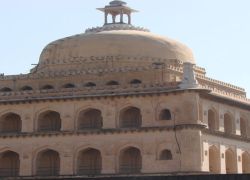
Being one of the most historic states of India, Rajasthan houses a number of monuments, palaces, and forts as a symbol of the heritage of the country. The unique appeal of this place and the amalgamation of innumerable attractions make it such a famous tourist destination. Alwar is a famous place in Rajasthan that has numerous attractions for history lovers. Tomb of Fateh Jang is one such monument located in Alwar that is entrenched with both architectural excellence as well as historical significance. This marvelous structure is one of the finest specimens of Indo-Islamic architecture in Alwar. It is a big delight for architecture lovers to visit this stunning monument in lesser-known areas of Alwar. The Tomb of Fateh Jung is a famous mausoleum built in the honor of Fateh Jang (a very important official in the court of Mughal Emperor Shah Jahan), who was known for his greatness and kindness. Being one of the most historic states of India, Rajasthan houses a number of monuments, palaces, and forts as a symbol of the heritage of the country. The unique appeal of this place and the amalgamation of innumerable attractions make it such a famous tourist destination. Alwar is a famous place in Rajasthan that has numerous attractions for history lovers. Tomb of Fateh Jang is one such monument located in Alwar that is entrenched with both architectural excellence as well as historical significance. This marvelous structure is one of the finest specimens of Indo-Islamic architecture in Alwar. It is a big delight for architecture lovers to visit this stunning monument in lesser-known areas of Alwar. The Tomb of Fateh Jung is a famous mausoleum built in the honor of Fateh Jang (a very important official in the court of Mughal Emperor Shah Jahan), who was known for his greatness and kindness. Architecture Of Tomb Of Fateh Jang: The architectural grandeur of the Tomb of Fateh Jang is also a great attraction for the tourists. This five-storied structure boasts a perfect blend of Mughal and Indo Islamic architecture in India. Shah Jahan had a very keen interest in the Mughal architecture. So, during his reign, several monuments and forts were built in Rajasthan and Delhi illustrating the influence of Mughal architecture. The Tomb of Fateh Jang is one of these amazing structures and hence comprised of features of the exclusive architectural styles. Some of the features of this magnificent tomb that will undoubtedly grab the visitor’s attention are round domes, high minarets, and superior quality sandstone. The ceiling and walls of the tomb have raised plaster reliefs and fine calligraphic engravings on the first floor definitely a treat to the eyes. The exterior of the tomb that consists of a huge dome-shaped structure and the unique miniature design of the monument manifest the excellent skills and talents of the artisans and the architectural style of that time. The structure is surrounded by beautiful lush green gardens adding to the charm of the monument. This famous historical monument is now maintained by the Archaeological Survey of India. Best Time To Visit Here: The favorable time to visit the Tomb of Fateh Jang is between the months of September and March. Summer days in Alwar could get slightly warm and not comfortable for sightseeing although the nights in Alwar are cooler even during summers. Nearby Attractions Here: Alwar is located on the fringe end of the Aravali range in Rajasthan and is one of the most frequented destinations in the princely state of Rajasthan. This historic city is replete with a number of tombs, forts, temples, palaces and many other attractions that bear shreds of evidence to its glorious past. While on a visit to Tomb of Fateh Jang, visitors can explore some of its major nearby attractions including Bhangarh Fort, Bala Quila Fort, Rani Moosi Ki Chhatri, Kesroli, Purjan Vihar, Siliserh Lake Palace, Moti Dungri, Neelkanth Mahadeo Temple, City Palace, Company Bagh, Vijay Mandir Palace, Sariska National Park and many more. How To Reach Here: As Tomb of Fateh Jang is situated at a very convenient location in Alwar, it can be easily reached by taxi, cab, and auto-rickshaw. Visiting Time Of Tomb Of Fateh Jang: The tomb is open to the public on all days from 9.00 am till the evening. The architectural grandeur of the Tomb of Fateh Jang is also a great attraction for the tourists. This five-storied structure boasts a perfect blend of Mughal and Indo Islamic architecture in India. Shah Jahan had a very keen interest in the Mughal architecture. So, during his reign, several monuments and forts were built in Rajasthan and Delhi illustrating the influence of Mughal architecture. The Tomb of Fateh Jang is one of these amazing structures and hence comprised of features of the exclusive architectural styles. Some of the features of this magnificent tomb that will undoubtedly grab the visitor’s attention are round domes, high minarets, and superior quality sandstone. The ceiling and walls of the tomb have raised plaster reliefs and fine calligraphic engravings on the first floor definitely a treat to the eyes. The exterior of the tomb that consists of a huge dome-shaped structure and the unique miniature design of the monument manifest the excellent skills and talents of the artisans and the architectural style of that time. The structure is surrounded by beautiful lush green gardens adding to the charm of the monument. This famous historical monument is now maintained by the Archaeological Survey of India. Best Time To Visit Here: The favorable time to visit the Tomb of Fateh Jang is between the months of September and March. Summer days in Alwar could get slightly warm and not comfortable for sightseeing although the nights in Alwar are cooler even during summers. Nearby Attractions Here: Alwar is located on the fringe end of the Aravali range in Rajasthan and is one of the most frequented destinations in the princely state of Rajasthan. This historic city is replete with a number of tombs, forts, temples, palaces and many other attractions that bear shreds of evidence to its glorious past. While on a visit to Tomb of Fateh Jang, visitors can explore some of its major nearby attractions including Bhangarh Fort, Bala Quila Fort, Rani Moosi Ki Chhatri, Kesroli, Purjan Vihar, Siliserh Lake Palace, Moti Dungri, Neelkanth Mahadeo Temple, City Palace, Company Bagh, Vijay Mandir Palace, Sariska National Park and many more. How To Reach Here: As Tomb of Fateh Jang is situated at a very convenient location in Alwar, it can be easily reached by taxi, cab, and auto-rickshaw. Visiting Time Of Tomb Of Fateh Jang: The tomb is open to the public on all days from 9.00 am till the evening.
Explore More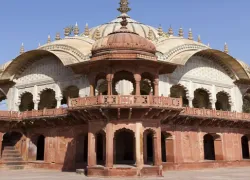
One of the most popular and magnificent royal tomb (cenotaph) located in Alwar, Moosi Rani Ki Chhatri is built in the memory of one of the Alwar’s Ruler Maharaja Bakhtawar Singh and his queen Rani Moosi. The dual attraction of the Moosi Rani ki Chhatri with numerous historical significance and a remarkable architecture manages to attract a large number of tourists. This wonderful structure showcases typical Rajputana architecture where chhatris are considered as the essential aspect of honor and pride. These chhatris are the dome-shaped pavilions which are elevated above the ground and look like an umbrella. History Of Moosi Rani Ki Chhatri: Moosi Rani Ki Chhatri is a double-storied cenotaph, constructed by Vinay Singh in the year 1815 in the memory of his father Maharaja Bakhtawar Singh and his mistress Moosi Rani. This structure was named Moosi Rani Ki Chhatri after Moosi Rani performed sati here when the Maharaja died. After the Rani Moosi performed sati, she came to be accepted as Maharaja’s wife. Architecture Of Moosi Rani Ki Chhatri: The architectural grandeur of the monument gives it a spectacular view. This elegant monument is shaped like a flower and is built with a blend of brown or red sandstone and white marbles. It is a two-storey building built with red sandstone and based on many small white marble pillars. The domed pavilions or chhatris on the ground floor of the structure are the major attractions here. The elephant structural design based on red sandstone pillars is also an important attraction in the monument. The upper storey of the building is built with marble stones housing unique rounded roofs, beautiful bends and arches. The insides of the structure are highly decorated with intricate carvings, eye-popping mythological wall paintings, and frescoes on its ceiling. There is also a colossal water tank with beautiful carvings built near the chhatri. Things To Do Here: • Visitors can enjoy the architecture and intricate designs of the fort that shines brilliantly under sunlight. • The complex provides a visual treat to its visitors with hundreds of peacocks and colorful birds moving around the place. • Visitors can enjoy the picturesque location of the Aravallis, the lush greenery and colorful flowers that add to the charm of the place. Best Time To Visit Here: One should avoid visiting Moosi Rani Ki Chhatri in summers, as summers of Alwar are extremely hot and exhausting. The sporadic rainfalls during the rainy season make Alwar look very beautiful, so you can visit Moosi Rani Ki Chhatri between the months of July to September. The best season to visit Alwar and Moosi Rani Ki Chhatri is the winter season. The temperature during this period remains comfortable and is suitable for visiting this monument and other places of interest in Alwar. The best months to visit here are October, November, December, February, and March. Nearby Attractions Here: As Alwar houses many forts, places, national parks and many more, visitors can explore many places while visiting Moosi Rani Ki Chhatri. Some of the major nearby attractions are Bhangarh Fort, Bala Quila, Kesroli, Tomb of Fateh Jang, Sariska National Park, Siliserh Lake Palace, Moti Dungri, Neelkanth Mahadeo Temple, City Palace, Vijay Mandir Palace, Company Bagh, and many more. How To Reach Here: Alwar is well connected to several major cities like Udaipur, Kolkata, Mumbai, Jodhpur, and Delhi. You can take trains, buses, and flights from major cities including Jaipur, Delhi, Bangalore, and other major cities. Once you reach Alwar, you can hire a taxi or cab or auto-rickshaw to reach Moosi Rani Ki Chhatri. Visiting Time Of Moosi Rani Ki Chhatri: The visiting time for Moosi Rani Ki Chhatri is from 9:00 am till 4:30 pm. It is opened on every day except Fridays.
Explore More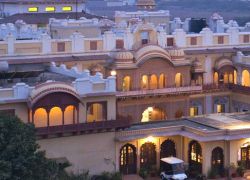
Bharatpur, popularly known as ‘Eastern Gateway of Rajasthan’, is a small city of the state. Plan a weekend trip here as Bharatpur has lots of things to offer its tourists and among them Bharatpur Palace and Museum is definitely one of the best attractions. It portrays the reflection of legacy and culture of old Rajasthan. History: Bharatpur was strongly ruled by the Jats till 17th century. It is due to their strength, Mughals were not being able to conquer Bharatpur especially due to the powerful rulers like Churaman and Badan Singh. In the 18th century, with the leadership of their revailing ruler Badan Singh, Bharatpur farmers raised a riot against the Mughals and defeated them. In 1733, Suraj Mal, the adopted son of Badan Singh, defeated Khemkaran and founded the Bharatpur City. During his rule, Bharatpur was in its golden era. Today, Bharatpur falls between the Golden Triangle tourism and thus easy approachable to all the tourists. Architecture: The architecture of Bharatpur Palace has a perfect blend of Rajput and Mughal styles and thus is recognized as a unique piece of monument. Its walls and floors include rich decoration patterns that only add more glamour to the extravagant apartments. The palace contains Kamra Khas which is actually a museum including 580+ stone sculptures, 860+ local arts and crafts and many antique scriptures depicting the culture and art of classic Bharatpur. Festival: Though there are various festivals celebrated here in different times of year but among them Brij festival is the most hyped one. It is celebrated vigorously in the Bharatpur Palace, Bharatpur. It is believed that people here rejoice the festival to attain positive vibes to their minds and souls. Beautiful programs of dance and music are performed all through the day. A spiritual prayer is performed in the morning and evening times. Best time to visit: Winter – You can visit Bharatpur Palace, Bharatpur during the winter time which is between November and February and temperature varies between 7-27°C. This is the best time to explore Bharatpur as weather remains pleasant this time. Avoid visiting during April-May as temperature remains super-hot during this time. How to reach? • By Air: The nearest airport is Indira Gandhi International Airport, Delhi, which is at 184 km away from Bharatpur. After reaching airport, you can ride on a bus or private cab to reach the destination. You can also board a flight to Kheria Domestic Airport of Agra which is only 45 km away from Bharatpur. • By rail: Simply take a train to Bharatpur railway station. This city is connected through railways to most of the major cities of India. After reaching the station, hire a cab or taxi to reach the Palace. • By road: Take any state transport bus service or private Volvo buses to reach Bharatpur. Buses are the most convenient and affordable option. You can also hire a cab to reach Bharapur Palace, Bharatpur. Nearby attractions: Bharatpur is a great palace city. Before making a visit to Bharatpur list out places to visit here this includes – • Keoladeo National Park • Lohagarh Fort • Government Museum • Ganga Mandir Bharatpur is at a short distance from Delhi, the capital of India. It is also nearby to Agra, Mathura and Vrindavan. Thus it is a favourite weekend gateway for most of the people from these regions. Also, people who are in search of solitude and peace should visit Bharatpur Palace, Bharatpur, as it suits best their purpose of holidaying!
Explore MoreBest-Selling 5-Day Rajasthan Tour Package For Couples
5 Days/ 4 Night
Jaipur - Udaipur
7 Days Delhi Agra Jaipur Tour Package - Golden Triangle Odyssey
7 Days/ 6 Night
New Delhi - Jaipur - Agra
4-Day Jaisalmer Tour Package For Family - Forts - Desert - Culture
4 Days/ 3 Night
Jaisalmer
5 Days Udaipur Tour Package For Families
5 Days/ 4 Night
Kumbhalgarh - Udaipur - Chittorgarh
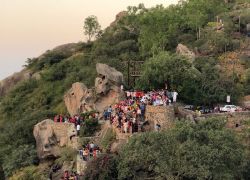
Mount Abu is the only hill station in Rajasthan and one of the most popular tourist destinations in western India. Known for its cool climate, lush greenery, serene lakes, and ancient temples, it offers a refreshing escape from the desert landscape of Rajasthan. Located in the Aravalli Range in Sirohi district, Mount Abu is a scenic hill town that attracts nature lovers, honeymooners, pilgrims, and adventure seekers throughout the year. Mount Abu, Sirohi, Rajasthan is widely recognized as a peaceful retreat offering a mix of natural beauty, spirituality, and colonial charm. History of Mount Abu Mount Abu has a rich historical background dating back to ancient times. According to Hindu mythology, it is believed that sages and saints performed penance here, making it a spiritually significant location. The region was also ruled by various dynasties, including the Rajputs, who built several forts and temples. Later, during British rule, Mount Abu became a popular summer retreat due to its cool climate. Today, it continues to be an important cultural, religious, and tourist destination in Rajasthan. Architecture and Heritage Mount Abu is famous for its stunning architecture, especially the world-renowned Dilwara Jain Temples. These temples are masterpieces of marble carving and are considered among the finest examples of Jain architecture in the world. The town also features colonial-style buildings, ancient temples, and beautifully designed resorts that blend with the natural surroundings. The intricate stone carvings, domes, and pillars of the temples reflect exceptional craftsmanship from the 11th to 13th centuries. Why Mount Abu is Famous Mount Abu is famous for being the only hill station in Rajasthan and for its pleasant climate throughout the year. It is also known for its religious significance, especially the Dilwara Temples and Guru Shikhar. The scenic Nakki Lake, lush green forests, and sunset viewpoints make it a favorite destination for tourists. It is also a popular honeymoon destination due to its peaceful atmosphere and romantic landscapes. How to Reach Mount Abu Mount Abu is well connected by road, rail, and air through nearby cities. By Air: The nearest airport is Maharana Pratap Airport in Udaipur, located around 175 km away. Taxis and buses are available from the airport. By Train: The nearest railway station is Abu Road Railway Station, about 28 km away. It is well connected to major cities like Delhi, Mumbai, and Jaipur. By Road: Mount Abu is easily accessible by road from Abu Road, Udaipur, Ahmedabad, and Jaipur. Regular buses and taxis operate frequently. A scenic uphill drive from Abu Road leads directly to Mount Abu hill station. Weather at Mount Abu Mount Abu enjoys a pleasant climate compared to the rest of Rajasthan. Summer (March to June): Mild and comfortable, with temperatures ranging from 23°C to 33°C. Monsoon (July to September): Heavy rainfall enhances greenery and makes the surroundings extremely beautiful. Winter (October to February): Cool and chilly, with temperatures dropping to 5°C, making it the best time to visit. Timing and Entry Details Mount Abu is an open hill station, so there are no fixed entry timings. However, tourist attractions inside Mount Abu have individual timings. Most temples and viewpoints are open from 9:00 AM to 6:00 PM. Entry fees may apply to specific attractions like boating at Nakki Lake or visiting certain heritage sites. Things to Do in Mount Abu Visitors can enjoy boating at Nakki Lake, one of the most famous attractions in Mount Abu. The lake is surrounded by hills and markets, offering a peaceful experience. You can visit the famous Dilwara Jain Temples and admire their intricate marble carvings. Trekking to Guru Shikhar, the highest peak in the Aravalli Range, is another popular activity. Sunset Point and Honeymoon Point are ideal for photography and enjoying scenic views of the sunset. Interesting Facts About Mount Abu Mount Abu is the only hill station in Rajasthan, making it unique in the desert state. The Dilwara Temples are considered one of the most beautiful marble temple complexes in the world. The region is part of the ancient Aravalli mountain range, one of the oldest mountain systems on Earth. It is also home to rich biodiversity, including rare plant and animal species. Travel Tips for Visitors Carry light woolens during winter as temperatures can drop significantly at night. Wear comfortable shoes for sightseeing and walking around hilly areas. Book accommodation in advance during peak tourist seasons. Respect local customs and maintain cleanliness in tourist areas. Conclusion Mount Abu is a beautiful blend of nature, spirituality, and heritage. Its cool climate, scenic lakes, ancient temples, and peaceful atmosphere make it one of the most loved hill stations in India. Whether you are a nature lover, pilgrim, or traveler, Mount Abu offers a refreshing and memorable experience in the heart of Rajasthan.
Explore More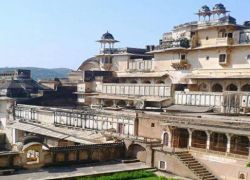
Located at a distance of about 36 km from Kota and 206 km from Jaipur, the town of Bundi has remarkable history and are much acclaimed for It's amazing paintings, and murals. The city is one of the most famous tourist destinations in Rajasthan. Gifted with abundant natural beauty, this place is great to visit. The Bundi city dwells near a narrow gorge and is surrounded from three sides by Aravalli Ranges. A huge wall with four gateways encircles the charm of this incredible city. In fact, the city is known for its baolis or step wells and water tanks. However, the palaces, and forts in Bundi are also a great attraction for tourists. The monuments of Bundi and their structural design illustrate the grandeur of the erstwhile local Rajput chiefs. Among the stunning palaces and forts in Bundi, Bundi Palace is the most popular structure famous for its rich heritage. Situated adjacent to the Taragarh Fort, this outstanding palace was built during 16th and 17 centuries, which represents the classic Rajasthani architecture. This beautiful palace is visited by hordes of tourists to witness the outstanding craftsmanship of Rajasthan. A number of exhibits of the palace offer its visitors a great window in to the history of this place. History Of Bundi Palace: Bundi is one of the ancient cities of Rajasthan, which is about 1000 year old. The city came under the rule of Rajputs in the 14th century and was remained under their control till the year 2009. The Bundi city became a flourishing place of Rajasthan as the Rajput rulers had an excellent political sense and had friendly relationship with British, Mughals and the government of India. The history of Bundi Palace has got emerged because of Rao Raja Ratan Singh, who was a well-known ruler of Bundi and tied a close bond with Mughal emperor Jahangir. The palace was constructed by Ratan Singh between 1607 A. D to 1631 A.D. The history of Bundi Palace is still phenomenal because of the Rajput kings. Highlights of Bundi Palace: The Bundi Palace is an excellent example to showcase the craftsmanship of the place. The prime attraction of the Bundi Palace is the traditional murals. These murals give you a detailed idea about the tradition of the place. The murals portray the Bundi royalty and cover the entire palace. However, tourists won't be allowed to visit all the aspects of this palace. There is a Chitrasala segment in the Bundi Palace, which is only open for public viewing. You can also find an art gallery in the Chitrasala segment. This particular gallery features a number of miniature colorful murals. The murals that are found in the art gallery have a special significance as they portray pictures of Ragmala and Raaslila- the story of Radha and Krishna. You can also explore some part of the palace which is otherwise prohibited for tourists if you can avail a special permission from the secretary of Maharaja of Bundi. When the palace is illuminated in light during night-time, it is an awe-inspiring sight for the visitors. Various displays of the palace including the art and architecture that begins with a wooden gate are simply superb. You can see a wonderful Chinese-inspired ceiling, divided into petal shapes and decorated with peacocks and Krishnas. There is a Phool Mahal, Chhatra Mahal and Badal Mahal within the vicinity of this palace. You can also see Hathi Pol (Elephant Gate), Ratan Daulat or Diwan-i-Am (Hall of Public Audience) made with a white marble coronation throne in this palace. There are certain rules and regulations for tourist to follows in Bundi palace. Photography is strictly prohibited in this palace. However, following these rules and regulations is very important to witness this stunning palace. Best Time To Visit Here: The favorable time to visit Bundi is during winters, i.e. in the months of October to April. Winter days in Bundi are the most pleasant days and summer days are quite hot. While in the monsoons, Bundi receives average to heavy rainfall. How To Reach Here: As Bundi is well-connected to major cities of the country, one can easily reach here. Once you reach Bundi, you can easily get public transport which is abundantly available at all parts of the city to reach Bundi palace. • By Air- Nearest airport is Kota Airport, which is nearly 39 km. • By Rail- Train links are from cities like Kota, Agra and many other cities. Bundi Railway Station is just about 4.9 km away from the Bundi palace. • By Road- Bundi is accessible by the roadways from Kota, which is 40 km away from the place, Jaipur, which is 206 km away from the place and many other cities. State buses or private buses are easily available from all important places of Rajasthan. Additional Information To Visit Bundi Palace: The visiting time of the palace is from 8.00 am to 7.00 pm in summer and from 8.00 am to 5.00 pm in winter.
Explore More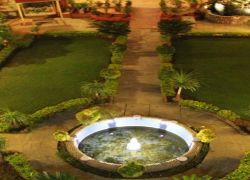
For those who want to experience history and luxury when they are traveling to Bundi, then they must stay at Ishwari Niwas, Bundi. This was once a palace before it was converted into a resort and it is full of history and there is so much that you can enjoy while you are here. Here is everything that you are going to want to know about this location and how you can fully experience it. Things to Do: There will be so much that you can enjoy while you are here and you are going to want to know what there is to do. Not only can you enjoy wandering around the hotel, which is where you can see and enjoy the architecture of the 100-year-old building, but you can also see the courtyard. This is a very old building, which means there is plenty to explore and you and your family can enjoy seeing everything that was created over 100 years ago. Not only that, but you can visit the courtyard that is part of the grounds and you can even visit the old fort. There are a number of tour guides available for hire, who can acknowledge you about the area and the staff here is also extremely knowledgeable about the history of the hotel. This is a great place where you can come and relax and get away from the chaos that goes on in the city and it is also ideal for a corporate getaway or a family gathering. Availability: Ishwari Niwas, Bundi is always available and there are different rooms that you can book, such as deluxe and luxurious ones. There are different rates that you would have to pay for the rooms depending on where you book from and they start from Rs 2,999 per night. You should make sure that you are looking ahead to ensure that you are getting the room that you want at the right rate and if you are coming during the peak season you are going to want to book a few months ahead. History This hotel originally started out as a palace for the Bundi state Diwan by Maharao Raja Ishwari Singh. However, back in 1945, the palace was given to Maharaj Kesari Singh to become his primary residence before it was converted into a guest house. These days it isn’t just a guest house, but it is also the primary residence of Maharaj Balbhadra Singhji, who is the nephew of Maharao Raja. It homes guests from all over the world who come to the area to experience the history as well as those who come from inside India to enjoy the luxury. Architecture The Ishwari Niwas, Bundi has a few different types of architecture that were combined into one, which has changed and evolved over time. The main architecture types that are featured in the buildings are European as well as Indian and the building is over 100 years old. There are plenty of features here that you can enjoy, including the pillars, the fountain, the ornate hallways and so much more. This is going to be one of the finest types of architecture that you can see and even stay in that is in great condition. Best Time to Visit: The fact that this is a resort makes this extremely easy to visit whenever you are ready and willing. You can book your rooms for a few days or even a single night depending on how much time you want to spend in the area. If you want to enjoy the cool weather, then you should come during the monsoon season, which is June until September or during the winter, which is from November until February. How to Reach? There are numerous ways that you can reach Ishwari Niwas, Bundi easily and that includes by road, by air and even by train. The city has a railway station, which means that you can easily hop a train and arrive here without having to stop anywhere else. However, the nearest airport is going to be Jaipur, which is 210 kilometers away along with Udaipur, which is 261 kilometers away and finally Jodhpur, which is some 351 kilometers away. Also, you can come here by road and the closest major city is going to be Jaipur, which is 210 kilometers away and you can easily drive here if you have a vehicle. Nearby Attractions: You should make sure that you are thinking about the attractions that are close to Ishwari Niwas, Bundi that you would be able to enjoy. There are plenty of places to visit while you are staying here, including: • Garh Palace • Taragarh Fort • Raniji-ki-Baori • Bijasan Mata Temple • Dhabhai Kund or the step wells • Chitrashala - Ummed Mahal • Bundi Fort These are just a few of the closest attractions that you are going to want to ensure that you are visiting. Make sure that you are planning to take all of these in and that you are deciding when you want to go and where you want to go so you can spend your time wisely. Ensure that when it comes to visiting Ishwari Niwas, Bundi that you are planning everything in advance. You need to ensure that you are booking so that you can get the rooms that you want and there is so much that you can enjoy here. Not only are there courtyards where you can enjoy the peace and quiet of the area, but there are also some great restaurants to enjoy as well. Go ahead and start booking your upcoming trip so you can be fully prepared for everything.
Explore More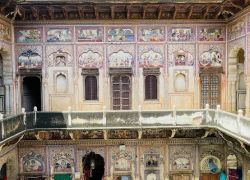
Located in the enchanting city of Mandawa, the Bawari Gate stands as a testament to the rich history and natural beauty of this region. This iconic tourist attraction not only captivates visitors with its historical significance but also offers a glimpse into the diverse biodiversity that thrives in its vicinity. History of Bawari Gate The Bawari Gate holds a deep historical background, dating back to its origins as a former royal hunting ground. Over the years, concerted conservation efforts have transformed this area into a sanctuary for various species of flora and fauna, earning it recognition from UNESCO for its ecological importance. Architecture and Natural Beauty of Bawari Gate Surrounded by lush wetlands, forests, and sprawling grasslands, the Bawari Gate provides a picturesque setting for nature enthusiasts. The landscape is dotted with bird habitats, offering a haven for migratory birds, and is home to the historic Keoladeo Temple, adding a touch of cultural charm to the surroundings. Why is Bawari Gate Famous? Bawari Gate has gained fame among birdwatchers, photographers, and wildlife lovers due to its diverse avian population and stunning natural vistas. The serene ambiance and abundant wildlife make it a must-visit destination for those seeking an immersive nature experience. How to Reach Bawari Gate Travelers can easily access Bawari Gate by air, rail, or road. The nearest airports and railway stations provide convenient transportation options, ensuring a hassle-free journey to this captivating destination. Weather and Best Time to Visit Bawari Gate The weather at Bawari Gate varies throughout the year, with distinct seasons of summer, monsoon, and winter. The best time to visit is during the cooler months, when the pleasant climate enhances the overall experience. Timings of Bawari Gate Visitor timings at Bawari Gate are structured to optimize the wildlife viewing experience. Seasonal variations may impact accessibility, so it is advisable to plan your visit accordingly to make the most of your time at this enchanting location. Entry Fee and Visit Details Entry procedures at Bawari Gate are straightforward, and guide services are available for those seeking a more in-depth exploration of the area. Safari options, bicycle rentals, and visitor facilities cater to the diverse needs of guests, ensuring a comfortable and enjoyable visit. Things to Do at Bawari Gate Visitors to Bawari Gate can indulge in a myriad of activities such as birdwatching, photography, cycling, and walking trails. The park offers ample opportunities for nature observation and educational experiences, making it a paradise for wildlife enthusiasts. Interesting Facts About Bawari Gate Bawari Gate is renowned for its diverse migratory bird population, highlighting the importance of conservation efforts in preserving its ecological balance. The park's achievements in biodiversity conservation serve as a beacon of hope for future generations. Travel Tips for Visiting Bawari Gate When visiting Bawari Gate, it is advisable to dress comfortably and carry appropriate photography and birdwatching equipment. Understanding the best seasons to visit and practicing responsible tourism are essential for preserving the natural beauty of this pristine location. Conclusion The Bawari Gate in Mandawa offers a harmonious blend of history, natural beauty, and wildlife conservation, making it a must-visit destination for travelers seeking an immersive and enriching experience. Explore the wonders of Bawari Gate and immerse yourself in the captivating allure of Mandawa.
Explore More
Nagaur, a city rich in history and culture, is home to the mesmerizing tourist attraction known as Devi Kund Sagar. Situated in the heart of Nagaur, this hotspot offers a blend of natural beauty, historical significance, and biodiversity that attracts visitors from all around the globe. History of Devi Kund Sagar Devi Kund Sagar has a rich historical background, once serving as the royal hunting grounds for the former rulers of Nagaur. Over the years, dedicated conservation efforts have transformed this area into a sanctuary for wildlife and migratory birds, earning it recognition from UNESCO for its ecological importance. Architecture and Natural Beauty of Devi Kund Sagar The park boasts of picturesque wetlands, lush forests, sprawling grasslands, and diverse bird habitats. One of the prominent features within the park is the historical Keoladeo Temple, adding to the serene landscapes that make this destination a photographer's paradise. Why is Devi Kund Sagar Famous? Devi Kund Sagar is renowned for its appeal to birdwatchers, photographers, nature enthusiasts, and wildlife lovers alike. The abundance of avian species and the tranquil surroundings make it a haven for those seeking to connect with nature's beauty. How to Reach Devi Kund Sagar Traveling to Devi Kund Sagar is convenient, with options available by air, rail, and road. The nearest airports and railway stations provide easy access to this enchanting destination, ensuring a smooth journey for visitors. Weather and Best Time to Visit Devi Kund Sagar The weather conditions at Devi Kund Sagar vary across summer, monsoon, and winter seasons. The best time to visit is during the cooler months when the natural surroundings are at their most vibrant, offering a delightful experience for travelers. Timings of Devi Kund Sagar Visitors can explore Devi Kund Sagar during specific timings, with seasonal variations that may impact accessibility. It is advisable to plan your visit accordingly and make the most of your time in this picturesque setting. Entry Fee and Visit Details Entry procedures to Devi Kund Sagar are hassle-free, with guide services, safari options, bicycle rentals, and visitor facilities available for a memorable experience. Exploring the park is made convenient for tourists of all ages and interests. Things to Do at Devi Kund Sagar Engage in popular activities such as birdwatching, photography, cycling, walking trails, nature observation, and educational experiences at Devi Kund Sagar. Immerse yourself in the beauty of the surroundings and create lasting memories in this natural paradise. Interesting Facts About Devi Kund Sagar Devi Kund Sagar is home to a myriad of migratory birds, showcasing the region's rich biodiversity and conservation achievements. The ecological significance of this hotspot highlights the importance of preserving such natural habitats for future generations. Travel Tips for Visiting Devi Kund Sagar When planning your visit to Devi Kund Sagar, consider factors such as appropriate clothing, photography gear, birdwatching equipment, ideal visiting seasons, and responsible tourism practices. Adhering to these tips ensures a fulfilling and sustainable travel experience. Conclusion In conclusion, Devi Kund Sagar in Nagaur stands as a testament to the harmonious blend of history, nature, and conservation efforts. With its captivating landscapes, diverse wildlife, and serene ambiance, this hotspot offers a unique and enriching experience for visitors exploring the beauty of Nagaur.
Explore More
Welcome to Haldighati, a mesmerizing tourist attraction located in Nathdwara, known for its rich historical significance, natural beauty, and diverse biodiversity. This enchanting destination captivates visitors with its picturesque landscapes, making it a popular spot for nature enthusiasts, photographers, and birdwatchers. History of Haldighati The history of Haldighati dates back to ancient times, once serving as royal hunting grounds for the Maharajas of Rajasthan. Over the years, the area has undergone significant conservation efforts to preserve its natural charm. Haldighati's historical importance is further highlighted by its UNESCO recognition as a heritage site. Architecture and Natural Beauty of Haldighati Haldighati boasts a natural environment characterized by lush wetlands, dense forests, sprawling grasslands, and diverse bird habitats. Nestled within this scenic setting is the historic Keoladeo Temple, adding a touch of architectural beauty to the landscape. Why is Haldighati Famous? Haldighati is renowned for its abundant birdlife, making it a paradise for birdwatchers and wildlife enthusiasts. The captivating beauty of the surroundings attracts photographers and nature lovers from far and wide, seeking to immerse themselves in the tranquility of this natural haven. How to Reach Haldighati Traveling to Haldighati is convenient, with options available by air, rail, and road. The nearest airports are located in nearby cities, while railway stations provide easy access for those traveling by train. Well-connected roads make reaching Haldighati a seamless journey for visitors. Weather and Best Time to Visit Haldighati Haldighati experiences varying weather conditions throughout the year, with summers being warm, monsoons bringing lush greenery, and winters offering a pleasant climate. The best time to visit is during the cooler months, from October to March, to enjoy the scenic beauty to the fullest. Timings of Haldighati Visiting hours at Haldighati may vary seasonally, so it is advisable to check ahead for updated timings. Planning your visit accordingly ensures that you make the most of your time exploring the natural wonders and historical treasures of this destination. Entry Fee and Visit Details Entry to Haldighati may involve nominal fees, with additional services such as guide assistance, safari options, and bicycle rentals available for visitors. The park also offers facilities to enhance the overall visitor experience, catering to the needs of tourists. Things to Do at Haldighati Engage in a variety of activities at Haldighati, from birdwatching and photography to cycling through picturesque trails. Explore the natural beauty of the surroundings, observe wildlife in their habitats, and partake in educational experiences that enrich your understanding of the ecosystem. Interesting Facts About Haldighati Haldighati is home to a diverse range of migratory birds, contributing to its ecological significance and conservation efforts. The park's biodiversity and conservation achievements underscore its importance in maintaining a balanced ecosystem and preserving natural heritage. Travel Tips for Visiting Haldighati When planning your trip to Haldighati, consider packing appropriate clothing for the season, ensuring you have essential photography and birdwatching equipment on hand. Visit during the recommended seasons to witness the beauty of the park at its peak and practice responsible tourism to help protect the environment. Conclusion In conclusion, Haldighati in Nathdwara is a destination that offers a harmonious blend of history, nature, and wildlife. With its historical roots, architectural splendor, and natural charm, Haldighati provides visitors with a memorable experience that celebrates the beauty and diversity of this enchanting location.
Explore More
Make sure that you are starting to plan when you are going to be taking your next vacation and if you are going to see Bhawani Natyashala, Jhalawar while you are there. It is important that you are considering what you are going to need to know when it comes to this building, including that you would need permission to gain entrance. Here are a few more things that one is going to have to think about before planning any trips here. Availability: You should ensure that you are asking the locals when this is going to be open, but it should be open from 9 am until 6 pm every day. However, despite the fact that you can’t go in there might be some plays that are taking place when the renovations are complete. You should make sure that you are asking about this and seeing what you would be able to enjoy while you are coming here. History The Bhawani Natyashala, Jhalawar was originally constructed back in 1921 under the orders of Maharaja Bhawani Singh. It was used to promote culture, theatre, and art and this has become a huge part of the identity of the city. When it was first built there was plenty of Parsi theatre shows that were held here. There are numerous theatre shows that are happening here, so make sure to book your tickets now. Architecture You might not be able to see it, but there is a stunning construction that is underground in this building. This was built to allow the larger pieces that would be required for the theatre to have access, including tanks and even horses. The outside is extremely well kept up and it is red and yellow, which makes it stand out even more. Best Time to Visit: For those who want to visit the Bhawani Natyashala, Jhalawar, there is no bad time to visit this area. However, you should make sure that if you are coming during the summer months, which is from March until June and September until October, you must be wearing light clothing. Also, ensure that you are bringing an umbrella with you if you are coming between June and September, as this area does tend to get quite a bit of rain during this time of the year. How to reach? This is going to be extremely easy to reach since it is right in the middle of the city. Once you have reached Jhalawar, which can be reached by the train station and you would have to get down at Kota station and then take another train to the city. You can also come here by road, which means you can rent a vehicle or drive yourself or you can book a government bus that would come from Kota and other locations nearby. Make sure that you are thinking about which way is going to be the easiest for you and your family and then plan how you would reach the main city from here. Once you reach the main city, then you can easily walk to the site from any hotel in the city or you can get a taxi or auto-rickshaw to drop you off. Interesting Facts and Trivia About This is just 1 of the 8 theatres that were created to allow large items to come into the scene due to the underground construction. When it was popular and showing Parsi shows you would often see horses and even some chariots that were brought here to be part of the show. This is part of the architecture of the space and it is definitely something that makes this space unique. However, these days nobody can go inside it unless they have permission, so think about if that is going to interest you and if you want to try to get permission. Nearby Attractions: There is plenty that you can enjoy when you are visiting here, such as: • Jhalara Patan • Jhalawar Fort or Garh Palace • Chandrabhaga Temple • Buddhist stupas and caves • Bhimsagar Dam • Kakuni • Jain Swetambar Nageshwar Parshwanath Temple • Prithvi Vilas Palace • Government Museum • Ben Basera • Gagron Fort Ensure that you have enlisted all of these places before making a visit. The more that you know about what is going to be around, the more fun factor will add to your trip FAQs and Information Due to the fact that Bhawani Natyashala, Jhalawaris not public property, but rather private you are going to need to get permission before you can enter. You might not be able to even go inside and you would be able to see the outside of the building, which is gorgeous. There might also be some plays going on, so make sure that you are enquiring about this and that you are picking the right one to enjoy. You always want to make sure that you are visiting some of the treasures for the country and that includes Bhawani Natyashala, Jhalawar. This is a gorgeous building that has a deep theatre and stage that would allow for larger set items to come into the arena, including horses and even chariots. This is only 1 of 8 of this type of theatre in the world and it was originally constructed in 1921. Even though you wouldn’t be able to go inside unless you had permission it is still a site that you would want to check out from the outside while you are in the city.
Explore More
Alsisar Gate is a captivating tourist attraction located in the city of Alsisar, known for its historical significance, natural beauty, and rich biodiversity. This iconic gateway serves as a portal to a world of wonder, attracting visitors from around the globe with its unique offerings. History of Alsisar Gate Steeped in history, Alsisar Gate stands as a testament to the bygone era of royalty and grandeur. Originally serving as a monumental entrance to the city, it holds stories of ancient traditions, former royal hunting grounds, and efforts towards conservation. Its historical importance has garnered recognition, with UNESCO acknowledging its cultural value. Architecture and Natural Beauty of Alsisar Gate Surrounded by lush wetlands, serene forests, and sprawling grasslands, Alsisar Gate boasts a mesmerizing natural environment that is home to a diverse range of bird species. The picturesque landscapes offer a tranquil escape for nature enthusiasts, with the historic Keoladeo Temple adding a touch of architectural splendor to the surroundings. Why is Alsisar Gate Famous? Alsisar Gate has gained fame as a haven for birdwatchers, photographers, and wildlife lovers due to its rich avian habitats and scenic beauty. The abundance of birdlife, including migratory species, makes it a paradise for those seeking to immerse themselves in the wonders of nature. How to Reach Alsisar Gate Traveling to Alsisar Gate is convenient, with options available by air, rail, and road. The city is well-connected to major transportation hubs, including nearby airports and railway stations, ensuring easy access for visitors from various locations. Weather and Best Time to Visit Alsisar Gate The weather at Alsisar Gate varies across seasons, with summer bringing warm temperatures, monsoon offering lush greenery, and winter providing a pleasant climate. The best time to visit is during the cooler months when the natural beauty of the surroundings is at its peak. Timings of Alsisar Gate Visitor timings at Alsisar Gate are structured to accommodate different preferences, with seasonal variations influencing the overall experience. Planning a visit during the ideal time can enhance the enjoyment of exploring this enchanting destination. Entry Fee and Visit Details Entry procedures at Alsisar Gate are designed to ensure a seamless experience for visitors, with guide services, safari options, bicycle rentals, and essential visitor facilities available on-site. These amenities cater to the needs of individuals looking to make the most of their visit. Things to Do at Alsisar Gate Engaging in popular activities at Alsisar Gate offers a chance to connect with nature on a deeper level. From birdwatching and photography to cycling and walking trails, visitors can partake in a range of experiences that showcase the beauty and serenity of the surroundings. Interesting Facts About Alsisar Gate Alsisar Gate is not just a tourist spot; it is a hub of ecological significance and conservation efforts. The site's role in preserving biodiversity, supporting migratory birds, and achieving conservation milestones adds to its allure, making it a destination of both beauty and purpose. Travel Tips for Visiting Alsisar Gate When planning a trip to Alsisar Gate, it is essential to consider practical aspects such as clothing choices, photography equipment, ideal visiting seasons, and responsible tourism practices. By adhering to these tips, visitors can ensure a fulfilling and respectful experience at this remarkable location. Conclusion In conclusion, Alsisar Gate in Alsisar stands as a beacon of natural splendor, historical significance, and conservation efforts. Its unique blend of architecture, biodiversity, and tourism appeal offers a memorable experience for all who venture through its majestic entrance, leaving a lasting impression of beauty and tranquility.
Explore More