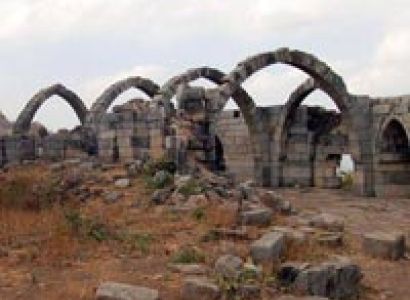
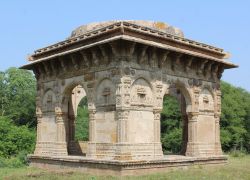
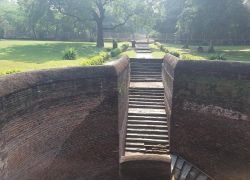
"Architectural marvel showcasing ancient water management."
Helical Step Well in Champaner, Gujarat, is one of the most unique and fascinating historical water structures in India. Located within the famous Champaner-Pavagadh Archaeological Park, this stepwell stands out for its rare spiral (helical) staircase design, which is different from the traditional straight-step wells found across Gujarat. It is an excellent example of ancient engineering, water management, and architectural creativity.
Why Famous for Helical Step Well, Champaner, Gujarat?
The Helical Step Well is famous for its circular design and spiral staircase that winds down to the water source. This unusual structure makes it one of the rare stepwells not only in Gujarat but in the entire country.
It is also admired for its efficient water conservation system, which was designed to store and provide water throughout the year. The stepwell reflects the advanced knowledge of hydrology and architecture during ancient times.
Being part of a UNESCO World Heritage Site, it attracts historians, architects, and tourists who are interested in heritage and unique structures.
History of Helical Step Well, Champaner, Gujarat
The Helical Step Well dates back to the 15th century and is believed to have been constructed during the rule of Sultan Mahmud Begada, when Champaner was developed as the capital of the Gujarat Sultanate.
Stepwells were an essential part of life in arid regions like Gujarat, serving as water reservoirs and community gathering places. This particular stepwell was designed to ensure easy access to water even during dry seasons.
Over the centuries, the structure has survived as a symbol of the region’s rich heritage and innovative engineering practices.
Architecture of Helical Step Well
The architecture of the Helical Step Well is simple yet highly innovative. Unlike typical stepwells with straight descending steps, this structure features a spiral staircase that circles around a central shaft.
Key architectural features include:
• Spiral Staircase: A helical path that winds down to the water level.
• Circular Shaft: The central well where water is stored.
• Stone Construction: Built using durable local stones.
• Functional Design: Focused on water access and storage rather than decoration.
The design allowed people to descend gradually and safely, even when water levels changed. It also helped in maintaining the structure’s strength and stability.
Things to Do at Helical Step Well, Champaner, Gujarat
Visitors can enjoy several activities at this site:
1. Explore the Structure: Walk around and observe the unique spiral design.
2. Photography: Capture the rare architecture and historical setting.
3. Learn History: Understand ancient water management systems.
4. Combine with Nearby Sites: Visit other monuments in Champaner.
5. Educational Visits: Ideal for students and history enthusiasts.
Entry and Visit Details
Entry Fee: Entry to the Helical Step Well is usually included under the Champaner Archaeological Park ticket, which has a nominal fee.
Visit Duration: Visitors typically spend around 30 minutes to 1 hour exploring the site.
Facilities: Basic facilities like parking and guides are available nearby.
Timings of Helical Step Well
The stepwell is generally open from 8:00 AM to 6:00 PM. Daytime visits are recommended for safety and better visibility.
Weather at Helical Step Well, Champaner, Gujarat
The weather in Champaner is seasonal:
Summer (March to June): Hot, with temperatures up to 38°C.
Monsoon (July to September): Pleasant with greenery but humid.
Winter (October to February): Cool and comfortable, with temperatures between 12°C and 25°C.
Winter is the best time to visit the Helical Step Well for a comfortable experience.
How to Reach Helical Step Well, Champaner, Gujarat
By Air: The nearest airport is Vadodara Airport, approximately 50 km away.
By Train: The nearest railway station is Vadodara Railway Station, well connected to major cities.
By Road: Champaner is easily accessible by road from Vadodara and nearby cities. Buses, taxis, and private vehicles are available.
The Helical Step Well is located within the archaeological park and can be reached by local transport.
Interesting Facts about Helical Step Well
• It is one of the few helical stepwells in India.
• The spiral design is unique compared to traditional stepwells.
• It reflects advanced water management techniques of ancient times.
• It is part of a UNESCO World Heritage Site.
Travel Tips for Helical Step Well
• Wear comfortable footwear for walking.
• Be careful while exploring as the structure is old.
• Carry water, especially during summer.
• Visit along with other nearby attractions in Champaner.
• Respect the historical significance of the site.
Conclusion
Helical Step Well in Champaner is a remarkable example of ancient engineering and architectural innovation. Its unique spiral design and historical importance make it a must-visit destination for travelers interested in heritage and history. Exploring this stepwell offers a deeper understanding of how ancient civilizations managed water resources efficiently.