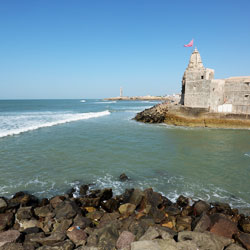
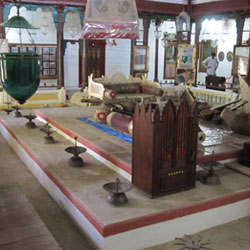
"Witness stunning Mughal architecture and history."
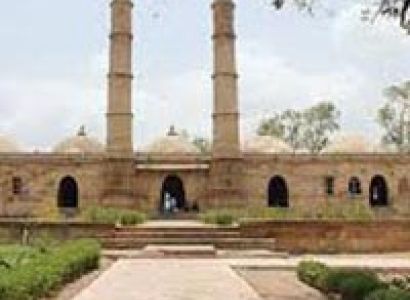
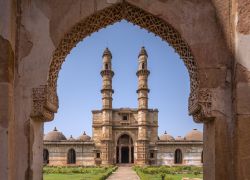
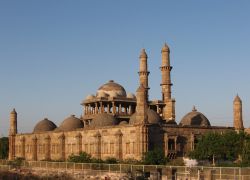
Jama Masjid in Champaner, Gujarat, is one of the finest examples of Indo-Islamic architecture in India. Located within the historic Champaner-Pavagadh Archaeological Park, this grand mosque reflects the artistic brilliance and cultural richness of the Gujarat Sultanate period. Built during the reign of Sultan Mahmud Begada, Jama Masjid is a must-visit destination for history lovers, architecture enthusiasts, and tourists exploring Champaner.
Why Famous for Jama Masjid, Champaner, Gujarat?
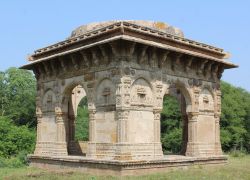
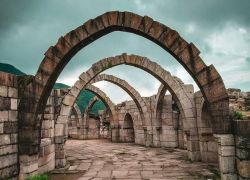
Jama Masjid is famous for its magnificent architecture, intricate carvings, and historical importance. It is considered one of the most beautiful mosques in India due to its perfect blend of Islamic and Hindu architectural styles.
The mosque is also known for its symmetrical design, grand entrance, tall minarets, and beautifully carved pillars. Its peaceful atmosphere and well-preserved structure make it a major attraction within the UNESCO World Heritage Site of Champaner.
History of Jama Masjid, Champaner, Gujarat
The Jama Masjid was built in the 15th century by Sultan Mahmud Begada, who made Champaner his capital after conquering Pavagadh. The construction of the mosque began around 1485 and was completed over several years.
This mosque served as the main congregational mosque of the city and played an important role in religious and social life during that period. It stands today as a symbol of the prosperity and cultural development of Champaner under the Gujarat Sultanate.
Architecture of Jama Masjid
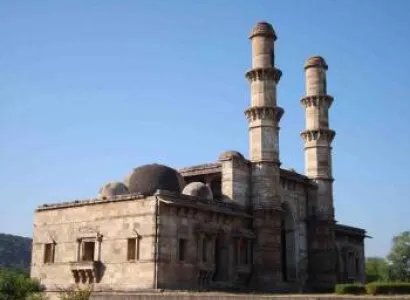
The architecture of Jama Masjid is a remarkable blend of Islamic and Hindu styles, showcasing detailed craftsmanship and artistic excellence.
Key architectural features include:
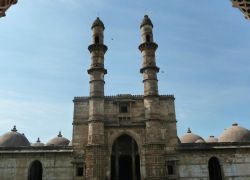
• Grand Entrance: A beautifully carved main gateway that leads into the mosque complex.
• Minarets: Two tall minarets rising above the entrance, adding to its grandeur.
• Prayer Hall: A large hall supported by numerous intricately carved pillars.
• Domes: Several domes with detailed interior designs.
• Jali Work: Stone lattice screens allowing light and air to pass through.
The use of yellow sandstone and detailed carvings makes the mosque visually stunning and historically significant.
Things to Do at Jama Masjid, Champaner, Gujarat
Visitors can enjoy several activities at the site:
1. Explore Architecture: Admire the detailed carvings and structural design.
2. Photography: Capture the beauty of the mosque and its surroundings.
3. Learn History: Understand the importance of the mosque in the Gujarat Sultanate.
4. Peaceful Visit: Experience the calm and spiritual atmosphere.
5. Explore Nearby Sites: Visit other monuments in the Champaner-Pavagadh Archaeological Park.
Entry and Visit Details
Entry Fee: A nominal entry fee is charged by the Archaeological Survey of India. Charges may differ for Indian and foreign visitors.
Visit Duration: Visitors usually spend around 1 to 2 hours exploring the mosque.
Facilities: Basic facilities like parking and guides are available near the site.
Timings of Jama Masjid
The mosque is generally open from 8:00 AM to 6:00 PM. Visitors are advised to visit during daylight hours for the best experience.
Weather at Jama Masjid, Champaner, Gujarat
The weather in Champaner varies throughout the year:
Summer (March to June): Hot and dry, with temperatures up to 38°C.
Monsoon (July to September): Pleasant with greenery and moderate rainfall.
Winter (October to February): Cool and comfortable, with temperatures between 12°C and 25°C.
Winter is the best time to visit Jama Masjid for a comfortable sightseeing experience.
How to Reach Jama Masjid, Champaner, Gujarat
By Air: The nearest airport is Vadodara Airport, approximately 50 km away.
By Train: The nearest railway station is Vadodara Railway Station, well connected to major cities.
By Road: Champaner is easily accessible by road from Vadodara and nearby cities. Buses and taxis are available.
Jama Masjid is located within the archaeological park and can be reached by local transport or private vehicles.
Interesting Facts about Jama Masjid
• It is considered one of the finest mosques in Western India.
• The mosque combines Hindu and Islamic architectural elements.
• It is part of a UNESCO World Heritage Site.
• The mosque has over 170 pillars supporting its structure.
Travel Tips for Jama Masjid
• Dress modestly while visiting the mosque.
• Remove footwear before entering the prayer area.
• Carry water, especially during summer.
• Hire a guide to understand the history better.
• Respect the religious and cultural significance of the site.
Conclusion
Jama Masjid in Champaner is a masterpiece of architecture and a symbol of Gujarat’s rich history. Its intricate design, historical importance, and peaceful environment make it a must-visit destination. A visit to this mosque offers a glimpse into the glorious past and cultural harmony of India.